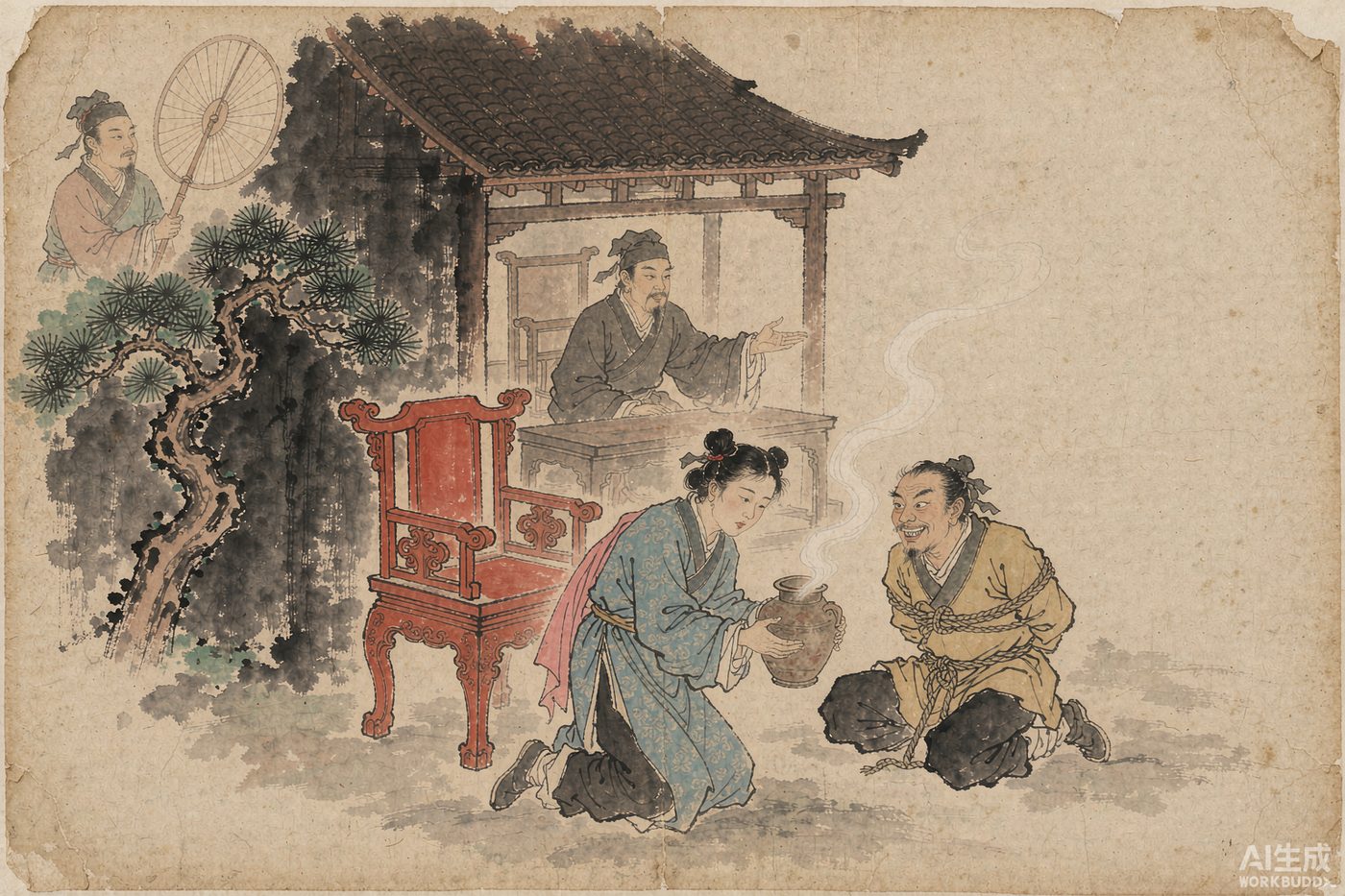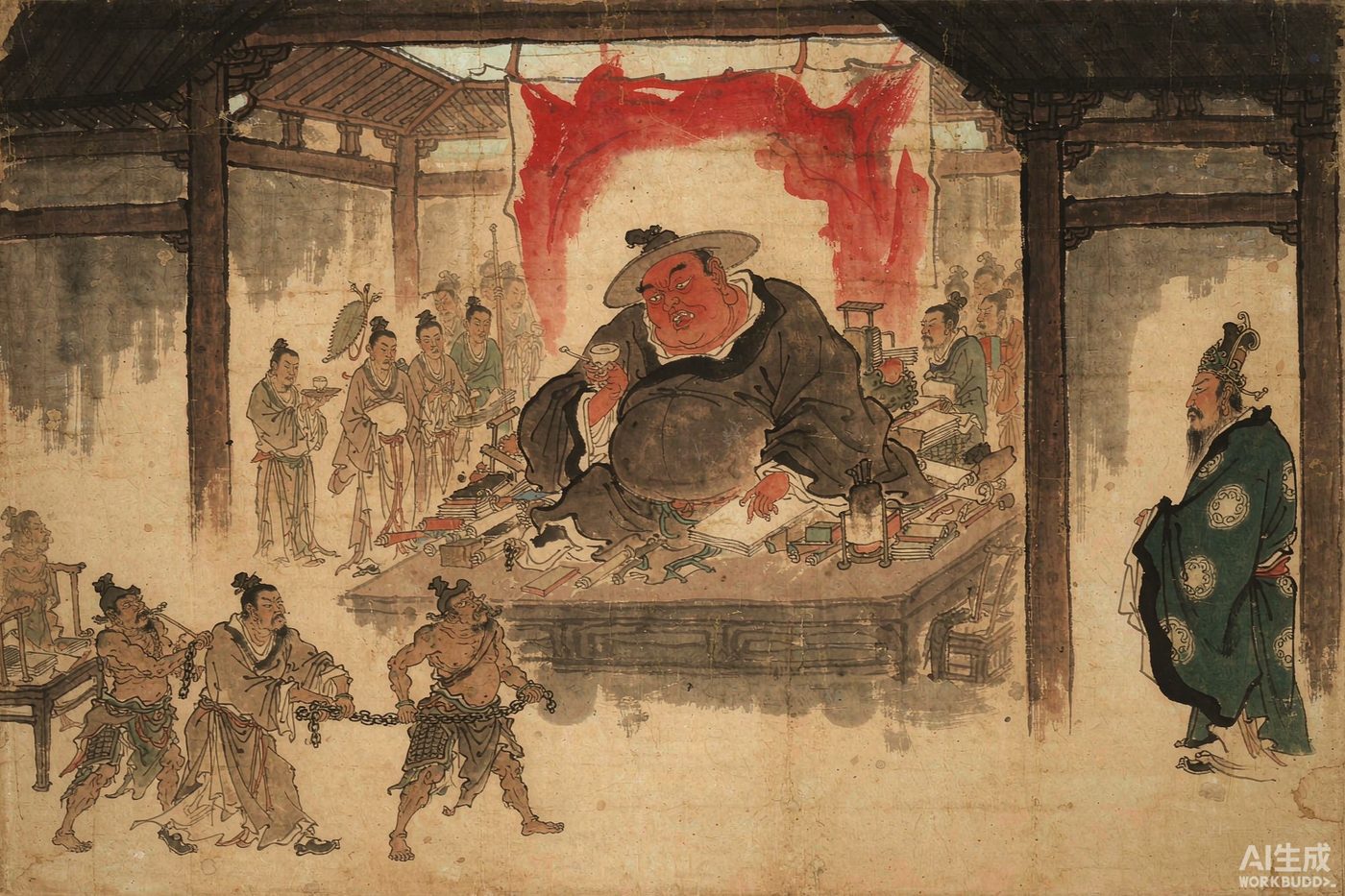
Zeng, a retired minister lodging at Changshu, had been dead a long time and had four sons. In the spring of the first year of the Chunxi era he appeared in a dream to his eldest, the county magistrate, and said: “I have received a celestial document appointing me Earth God of the Fushan mountain shrine. At the beginning of the handover the whole yamen of officials owes private gifts, and the rite cannot be dispensed with. In my eastern study, in the black kitchen, there are several thousand sheets of good paper. Take them all out, dye them yellow, print the Great Brahman Hidden Words, and burn them respectfully. Do not neglect my warning.”
The magistrate woke and thought nothing of it.
Then his father appeared in a dream to his second son, who asked a Daoist named Zheng whom he knew: “What scripture is the Great Brahman Hidden Words? I do not know it.” Zheng said: “It is the last chapter of the Book of Salvation.” He showed it to him, and the second son laughed and said: “It is of no great importance. How can it help on the road of the dead?” And would not use it as his father had said.
Then the third and fourth sons dreamed the same night. Those two were fond of drink and idle, and paid no attention at all.
There was a provincial scholar named Chen in the district who had long been received at Zeng’s gate. He dreamed the minister came to him in a rage, cursing his sons for unfiliality and saying he meant to complain to God Above and have them punished. Chen did not wait for dawn but hurried to tell them, and they half believed and half doubted.
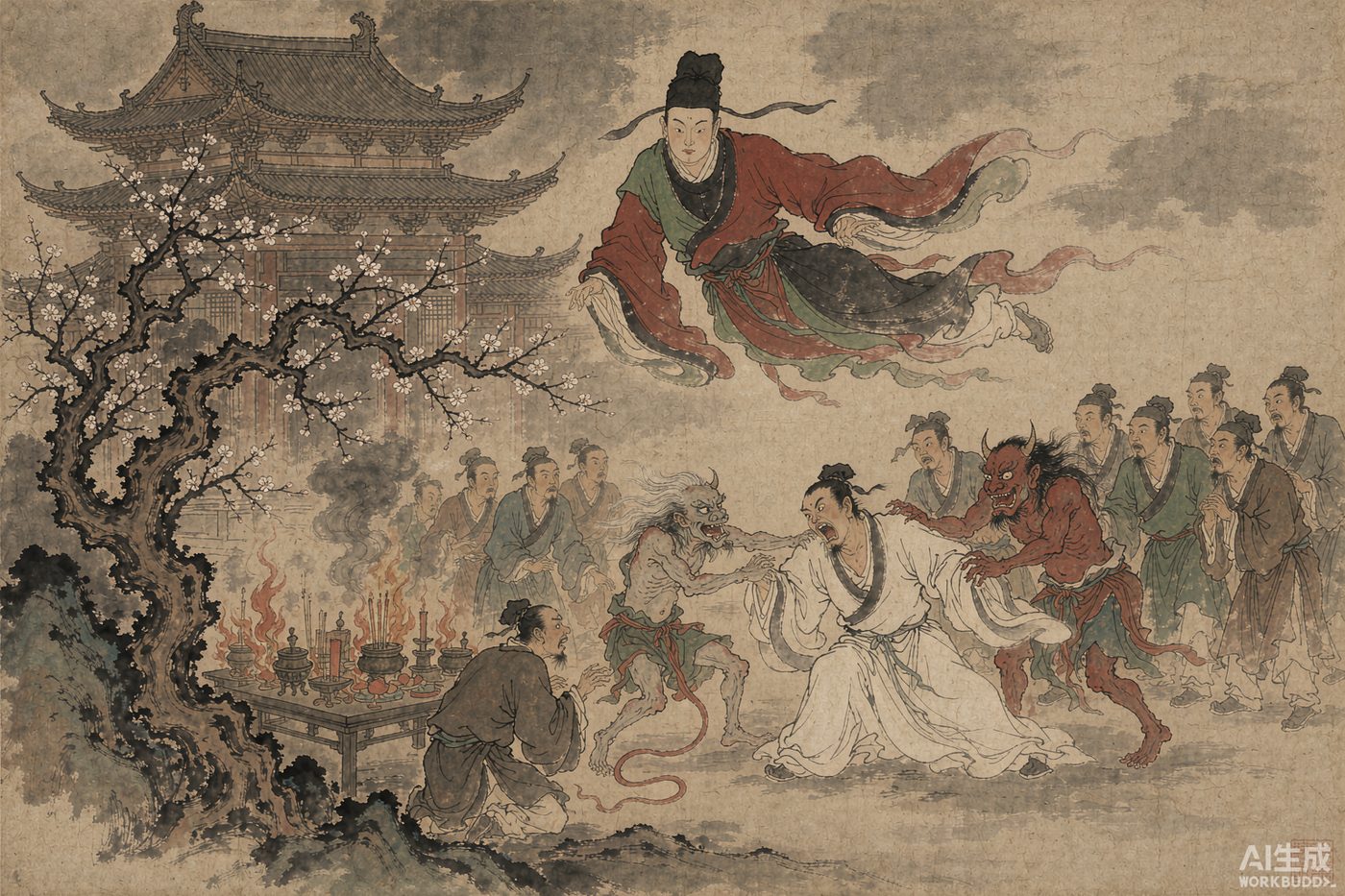
On the twenty-sixth day of the third month the people of the district went in a crowd to the foot of the shrine. Zeng’s youngest son was strolling about with three or four young men, and passing through the west gallery he met a woman of extreme beauty. He stared hard at her — and it was the retired minister. She stood fixed in the courtyard, looked round at two ghosts, who threw him down and stripped off his clothes, and shouted: “Unfilial son! You still dare come here!” Everyone coming and going on all sides saw it. The youngest son groaned and cried out in pain as though he could not bear it.
The keeper of the shrine burned incense and prayed for him, and ordered his attendants to send him home. When he got back to his room he knew nothing, and every object in the house began to strike against the others for no reason until it broke.
The next day the eldest son invited the ritual master Chen Guoqian to the house to perform a prohibition and drive it out. Chen summoned the officers and questioned them privately, and said: “This is no demon. It is the retired minister, who has asked God Above to punish his four sons for disobeying his command.” Chen had wine and food set out and a mat laid in the main hall, and offered a prayer and sacrifice. The whole household saw the dead spirit appear and sit facing Chen at the mat, and Chen pleaded with him again and again, and so the punishment was lifted.
The youngest son woke after a long while, streaming with sweat all over, and told his three brothers and Chen everything he had seen. That same day five hundred copies of the scripture were printed and burned in apology.