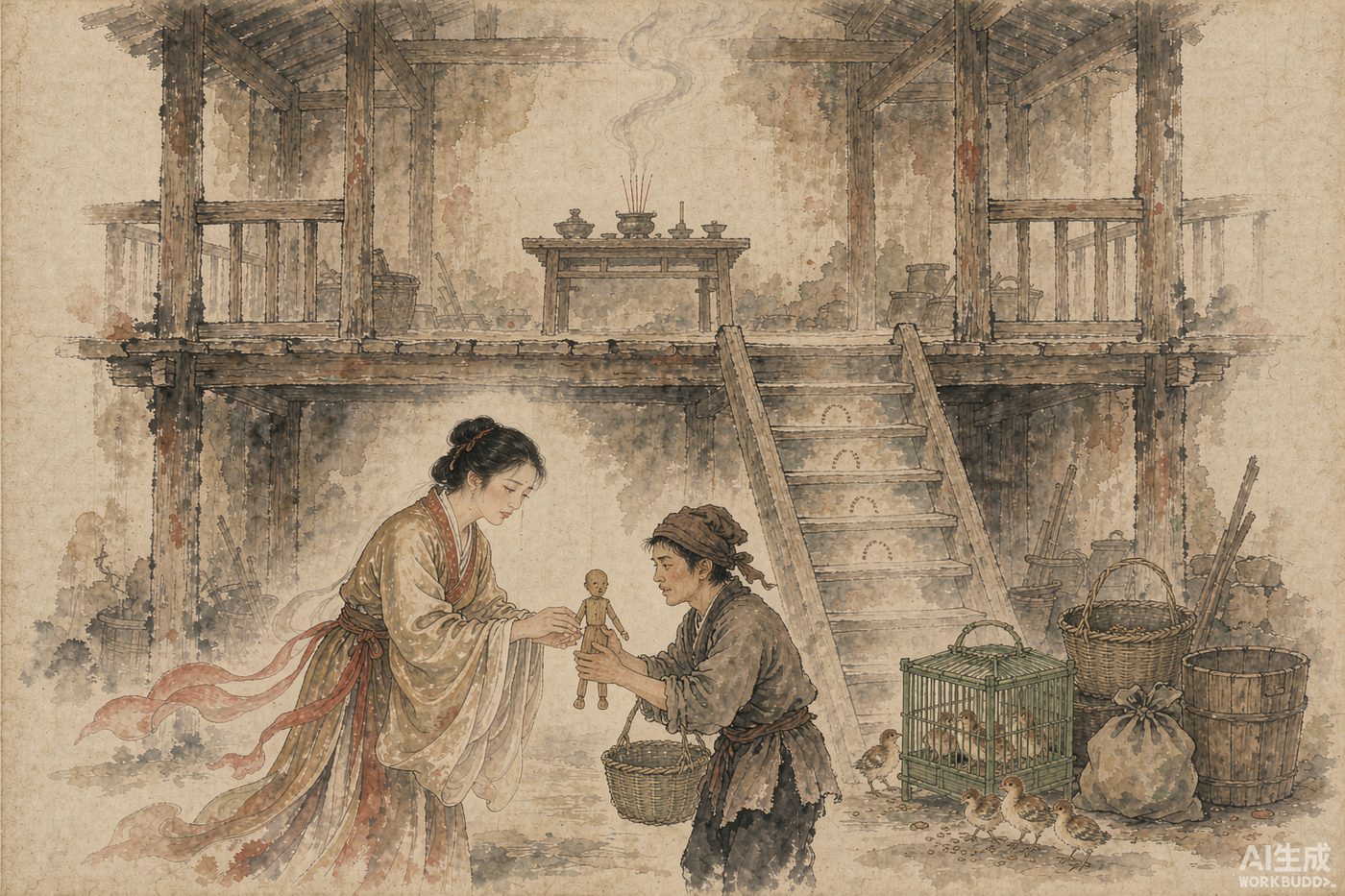
Zhang Yacheng, a scholar of Xinjian, played as a child by making helmets, armour and phoenix hairpins out of gold foil paper, and hid them in a small upper room, making them and playing with them alone and never showing anyone.
Then a woman of thirty or so came upstairs and asked him to make several dozen hair clasps, bracelets and swaying hairpins for her, promising generous payment. Zhang agreed, and asked: “What are they for?”
“They are what a daughter needs in her dowry.” Zhang thought it was a game and saw nothing odd in it.
The next day the woman came and told him: “My name is Tang. Tang of the house next door has an official post, and I want to trouble you to ask him for a sheet of his official title and rank, to borrow the same surname and add lustre to my poor house.”
Zhang wrote one out as a joke and gave it to her. The next evening the ornaments were finished, and the woman brought several dozen cakes and a few hundred cash to thank him. When it grew light, the cakes were all lumps of earth and the cash was all paper money, and he knew the woman was a ghost.
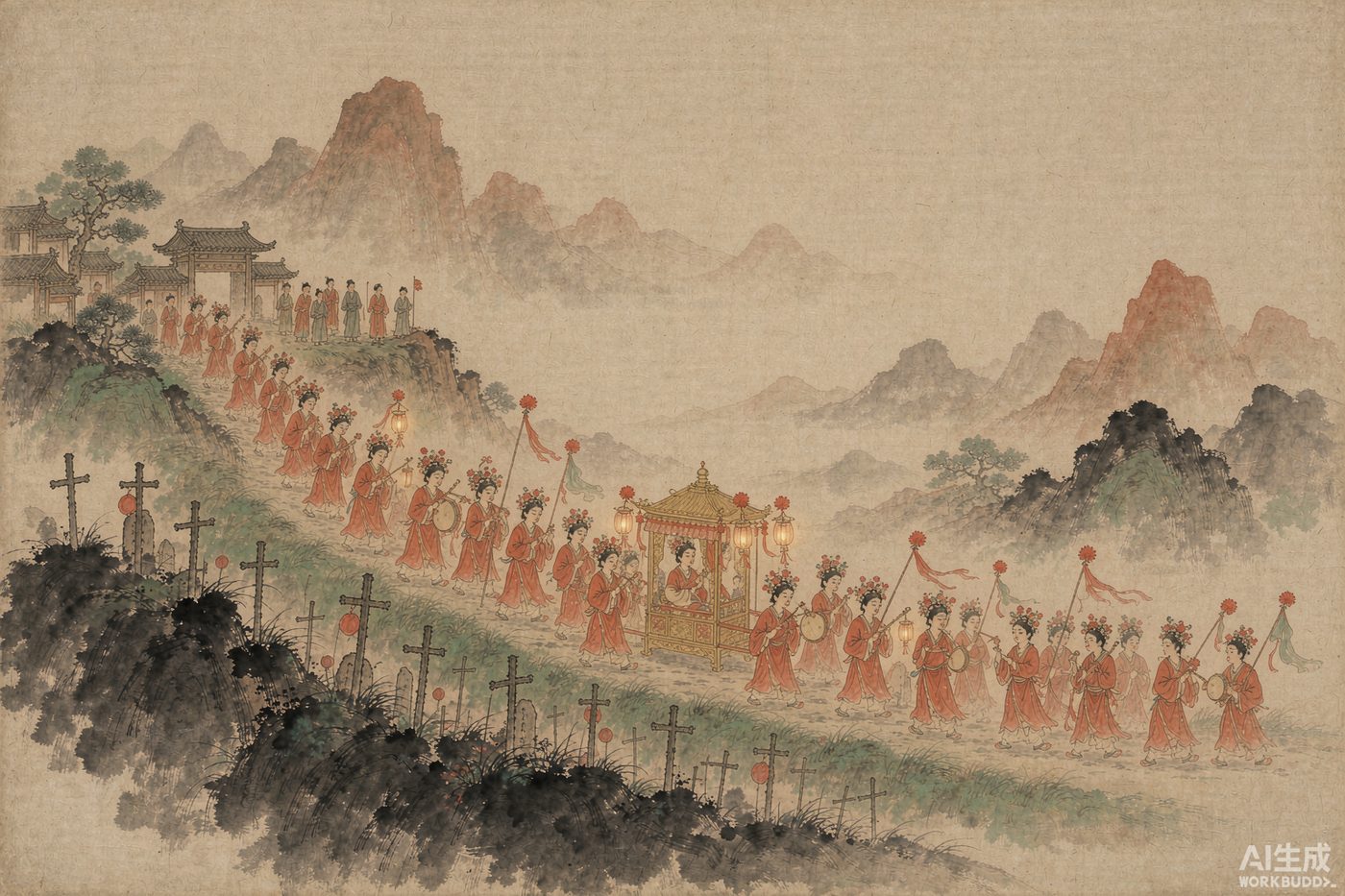
Some days later, at midnight, there was bright candlelight in the hills and a deafening noise of drums and music, and the villagers all opened their doors and looked into the distance, thinking some family had come to choose a burial site. Looking closer, every one of the people was dressed in red with flowers in their hair — it was a wedding.
Among the thousand graves on the hillside, where no one had ever lived, the curious wanted to follow and watch, but the procession went further and further away, and all they could see was that the lanterns bore the official title of a man named Tang.
And so it was known that ghosts also love face and worship rank as men do. Strange!