Stories/ 夷坚志/ The Peacock Sutra

The Peacock Sutra

鄒智明

SourceYijian Zhi (Record of the Listener)
AuthorHong Mai
EraSouthern Song dynasty · Shaoxing jiaxu (1134)
Writtenc. 1160–1200
DeityGhostJustice
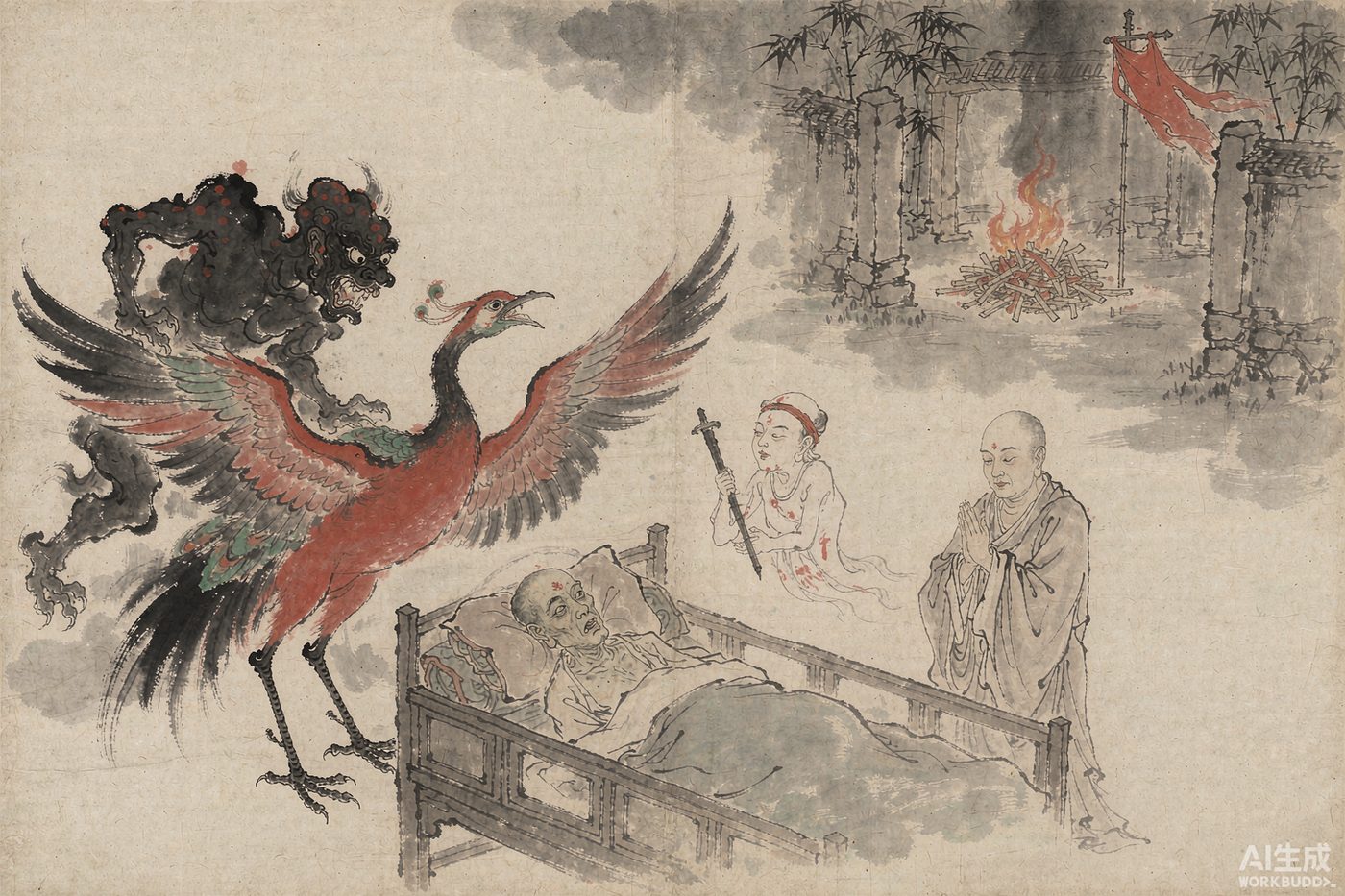
A great peacock with a spreading tail driving a plague demon from a sick man bed while a small ghost holds up an iron nail above him
Illustration generated by AI, based on the ancient Chinese text.

Zou Zhiming of Yihuang in Fuzhou had a family rich in goods and suddenly fell ill of a plague disease, unconscious and not knowing people. One day in a lucid interval he told his wife to invite his uncle — his uncle, that is, his father’s cousin, who was a monk in charge of the Linjiang temple and could recite the Peacock King Sutra.

When he came he said: “Set out Buddha images outside my room and recite the scripture at the bedside.” The wife did as he instructed. The monk recited two scrolls and went out to eat.

Zou looked at the place where the image was hung, and saw a peacock driving the plague demon away with its tail. When the monk finished reading the scripture and burned the memorial, he left, and it was nearly dusk.

A small ghost came to report: “We bear the Buddha’s command and must leave here, but there is a nail in the gentleman’s head that has not been pulled out. Burn plenty of underworld money for me and I will remove it for you.”

So he called his foreman Rao Shan and bought paper money wholesale, and burned it in a heap in the courtyard. The ghosts, a dozen or so in strange shapes, danced their thanks in delight, and the one who had reported first went straight up onto the bed, pulled the nail out, and said: “Tomorrow I am going to the county market, to the house of Zeng the silversmith, to spread the disease.”

Now Zou’s greatest suffering had been an unbearable pain in his head, and at that moment it suddenly cleared as though lost. At dawn he could get up, and wanting to verify the matter, he sent a man to ask at Zeng the silversmith’s house, and indeed they said he had suddenly caught a chill.
Original classical Chinese text · 原文

可於房外鋪設佛像,而即床前誦經。妻如其戒。僧誦兩卷畢,出就飯。智明望見挂像處,一孔雀以尾逐癘鬼。僧竟經讀疏去,日將暮,一小鬼來告曰:「我輩佩佛勅,行當去此,但公頭上有釘未拔,願多燒冥錢與我,便相為除之。」於是呼幹僕饒山,散買楮幣,聚焚於庭。諸鬼奇形異狀以十數,舞謝歡喜。其先告者,徑登床拔釘而出,且言曰:「我明日往縣市曾打銀家行病矣。」先是,智明最苦頭極痛,登時豁然如失。

From 《鄒智明》, Yijian Zhi bing 2. 孔雀明王經 is the Peacock King Sutra, a Tang translation used against poison and disease.

Source. From Yijian Zhi (Record of the Listener) (夷坚志), by Hong Mai , c. 1160–1200. The original text is in the public domain; this English rendering and the accompanying notes are original work.

Keep Reading

Related Stories

Qing dynasty · Qianlong era, c. 1736–1788 · 子不语

The Man Who Entertained the Plague God

苏耽老饮疫神

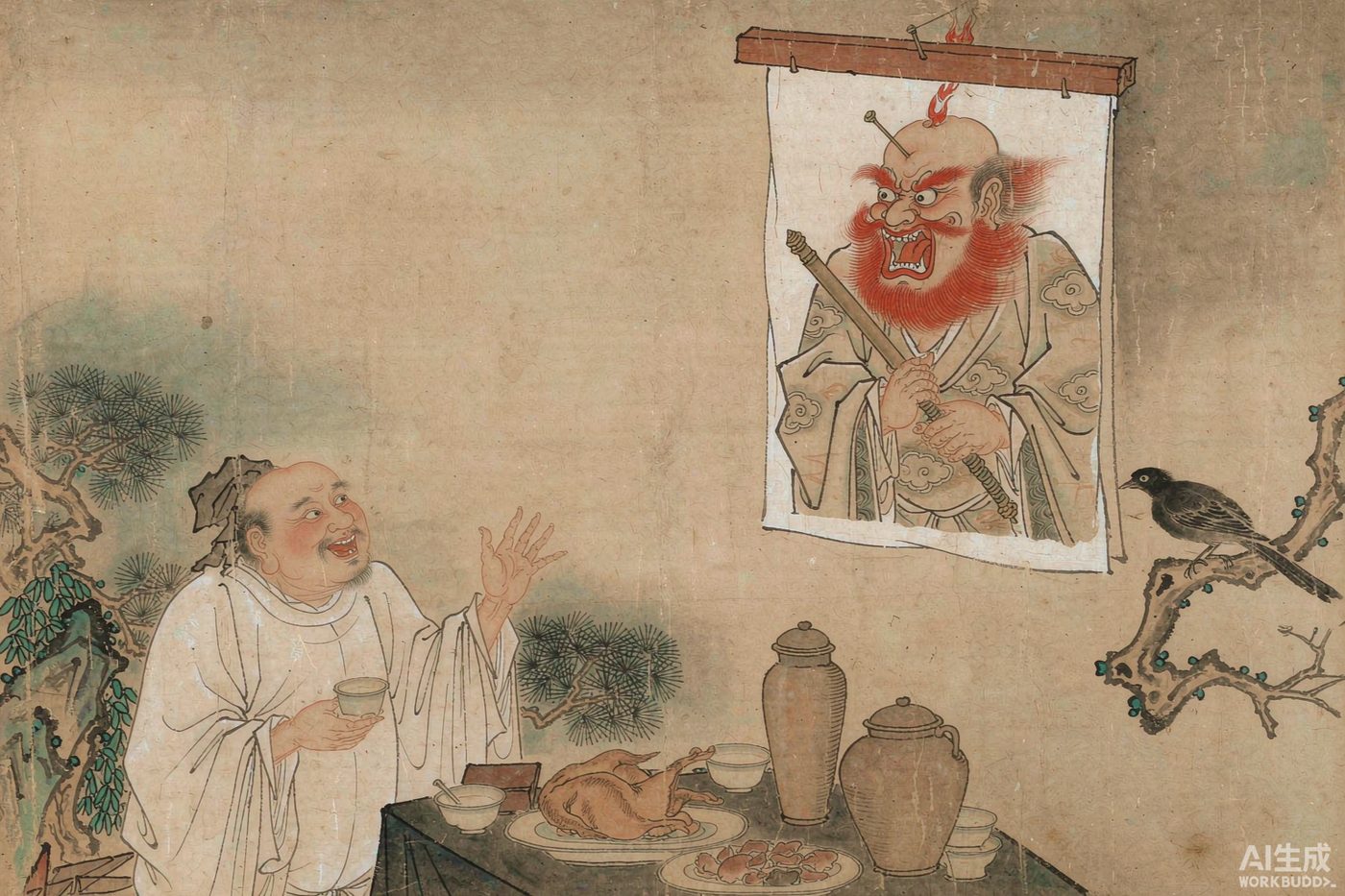
On New Year's morning somebody paints the Plague God on paper and nails it to his door as a curse. He finds it, laughs, brings it in, gives it the seat of honour, drinks with it, and burns it.

DeityTrickster
Qing dynasty · Qianlong–Jiaqing era · 续子不语

The Ghost Who Seized Surplus

掠剩鬼

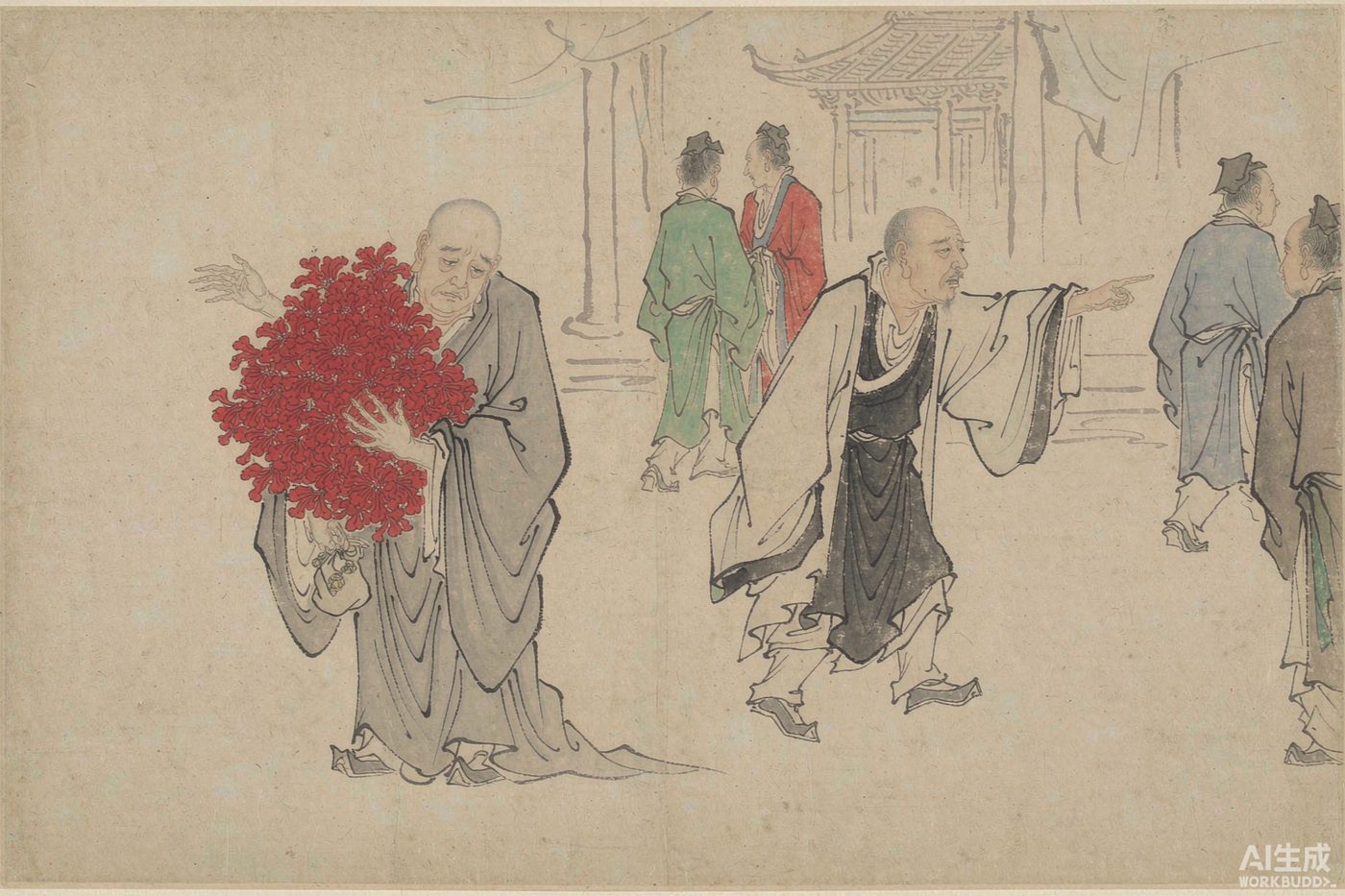
A dead merchant buys his old friend lunch and explains his new appointment: he has been assigned to seize the surplus. Then he gives him a bouquet that is very heavy.

GhostTricksterUnderworld
Southern Song dynasty · Daguan 3 (1109) · 夷坚志

The King Who Wanted a Record

順濟王

A god demands that a disgraced official write the record of his shrine. The man suggests a famous name instead. The god's voice goes harsh: who says this district lacks stone, and who is this high official I do not know?

DeityJustice