Stories/ 夷坚志/ The Boys Who Chased Butterflies

The Boys Who Chased Butterflies

李氏二童

SourceYijian Zhi (Record of the Listener)
AuthorHong Mai
EraSouthern Song dynasty · 1153, the guiyou year of Shaoxing
Writtenc. 1160–1200
ImmortalTaoistMountainSilver
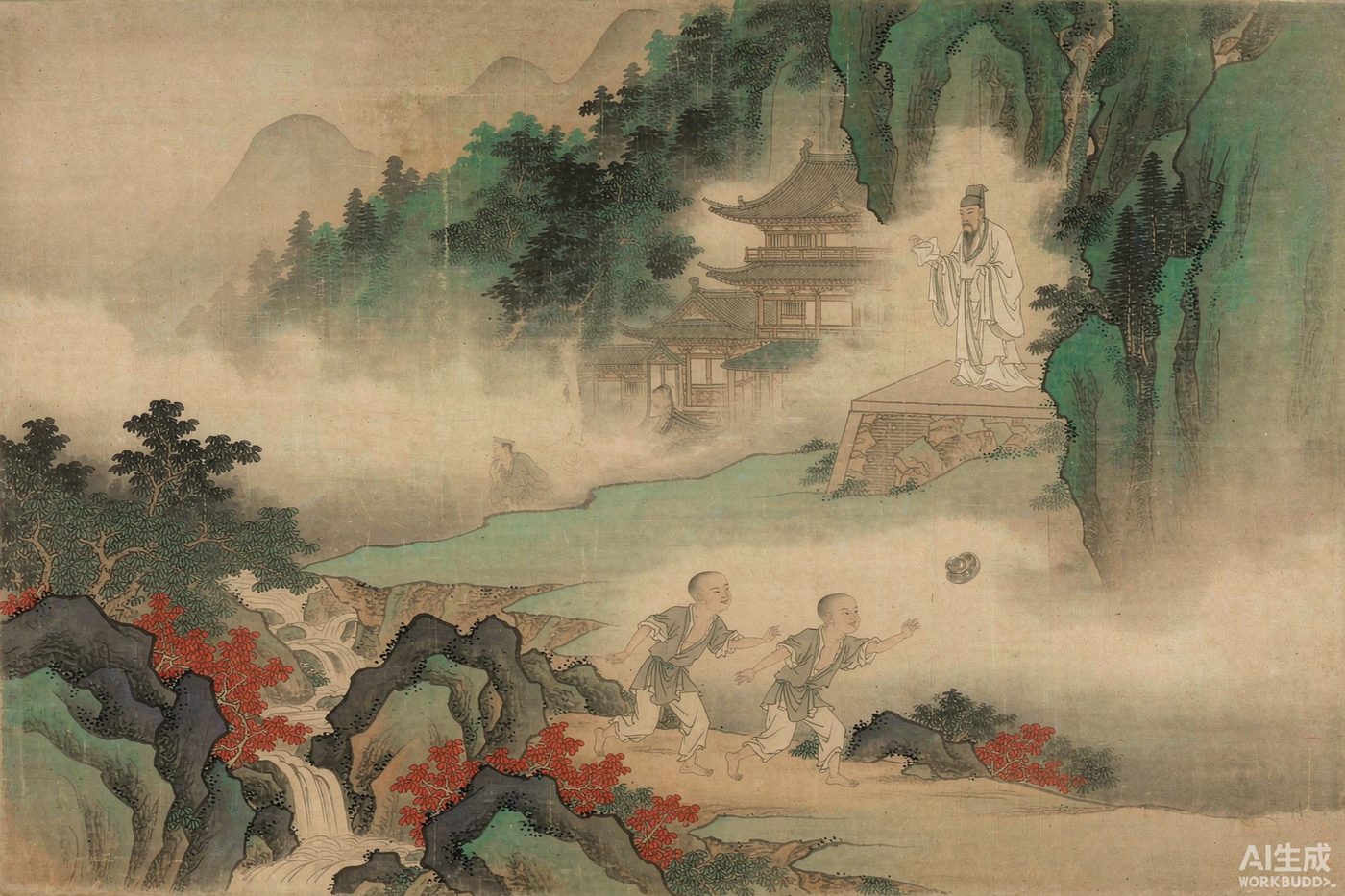
Two servant boys in the deep shade of a mountain valley chasing butterflies, a Taoist in flowing robes holding a headscarf beside a fine house that is half dissolving into mist, and a small lump of silver tumbling after them, ink-wash painting
Illustration generated by AI, based on the ancient Chinese text.

When Li Yuanzuo was magistrate of Nancheng, he once took his family to visit Mount Magu. His sons were still young, and took with them the two serving boys who travelled in their company. Climbing to the Cloud-Level Pavilion, they saw butterflies fluttering over the mountain stream, and thought them delightful, and told the boys to catch some.

The boys went into the deep woodland and were a long while coming back, and did not answer when they were called. The matter was reported to Li; he sent runners to search the whole mountain; and after a good while the boys came out, saying only that they had lost their way, and would not explain further.

A month or more later, the young masters noticed the boys wearing new clothes, and often buying meat and wine to eat together. They grew suspicious, and fearing the boys had turned thieves, they had them bound and questioned.

Then the story came out.

“When we were catching butterflies,” the boys said, “we met a Taoist carrying his headscarf in his hand. He called us to where he lived. The buildings were splendid and the scenery pure beyond compare, not like the world of men. He told us to boil tea, and was about to give us drink — but before it was ready we heard your voices calling, urgent, and we ran home.”

He threw something after us. We picked it up and saw it was silver; and when we looked back, the man and the house had both vanished. We were secretly delighted and dared not speak of it. We sold the silver to a shop in the market — it weighed ten taels and fetched twenty-two strings — and left the money on deposit there, drawing on it for food and clothes as we needed.

The young masters did not believe it, and made inquiry at the shop: it was true.

Li Yuanzuo thought the silver must be an immortal’s, and so different from ordinary metal; he wanted to buy it back at the price that had been paid. The shopkeeper said a traveller had already bought it.

Later, inquiring among the Taoists of Immortal City, they all said: the one who carries his headscarf in his hand is the Ziyang real man Deng. Only then did they understand what the two boys had met.

That year was the guiyou year of Shaoxing; and in the bingzi year, Li handed over the county seal. The two boys disappeared one after the other, and no one ever learned where they went. One was the fortune-boy, surnamed Dai; the other the long-life boy, surnamed Fu. Both were men of Nankang.
Original classical Chinese text · 原文

李元佐宰南城嘗挈家游麻姑山諸子尚少挾隨行二童登齊雲亭覩山澗花蝶翻飛可愛令撲之童入林樾深處久不返呼之莫應走白于父遣吏卒於山遍索移晷方出但云迷路而不言所以後月餘諸子見童著新衣又常常買酒肉相對飲啗心疑之恐其為盜縛詰之始曰向者撲蝶時遇一道士手提頭巾喚我至所居見屋宇華麗風物清絶不似人境命童煎茶將飲我未至而聞呼聲急乃奔歸道士擲一物與我拾取視之銀也回顧間人屋俱失竊喜而不敢說持銀賣與市舖其重十兩得錢二十二千就寄鋪中時取以供衣食費諸子未之信詢諸鋪實然元佐謂其銀蓋仙家物必異於常品欲以元直取之鋪人云為過客買去矣後訪之仙都黄冠皆云手提巾者紫陽鄧真人也始知二童有所遇是歲紹興癸酉及丙子年李解縣印相繼佚去莫究所之其一福童者姓戴其一夀童者姓傅皆南康人也

From 《李氏二童》, Yijian Zhi. Translated in full. 李元佐 is Li Yuanzuo, magistrate of Nancheng county in Jiangxi; 麻姑山 is Mount Magu, the Taoist mountain of Jiangxi associated with the immortal Magu; 齊雲亭 is the Cloud-Level Pavilion; 林樾 is deep woodland; 移晷 is a good while, literally a movement of the sundial's shadow; 紫陽鄧真人 is the Ziyang real man Deng, an immortal of the Taoist canon; 黃冠 are Taoist priests, literally yellow hats; 十兩 is ten taels of silver; 二十二千 is twenty-two strings of cash; 紹興癸酉 is 1153 and 丙子 is 1156; 南康 is Nankang in Jiangxi.

Source. From Yijian Zhi (Record of the Listener) (夷坚志), by Hong Mai , c. 1160–1200. The original text is in the public domain; this English rendering and the accompanying notes are original work.
Where this fits in the universe: Gods and Immortals · Penglai and the Isles of the Immortals

Keep Reading

Related Stories

Liu Song dynasty · 5th century · 南朝·刘义庆《幽明录》

The Peach-Blossom Spring of Mount Tiantai

刘晨阮肇入天台

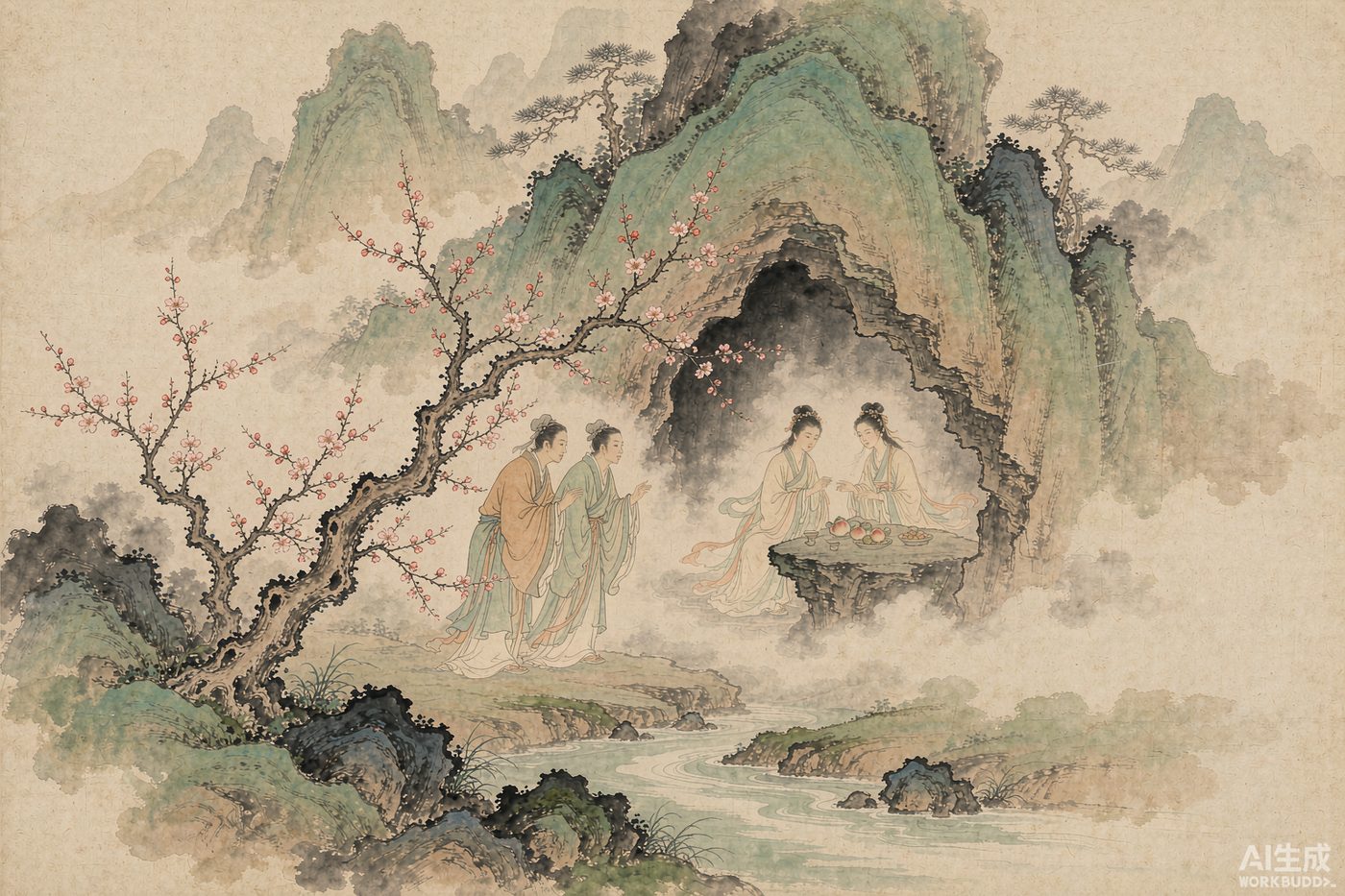
Two men go into Mount Tiantai to gather bark, lose the path, and are fed hyssop cakes by two women who seem to know them already. They stay half a year. When they go home, seven generations have passed.

ImmortalLove
Southern Song dynasty · 12th century · 夷坚志

One Pear a Day

茅山道士

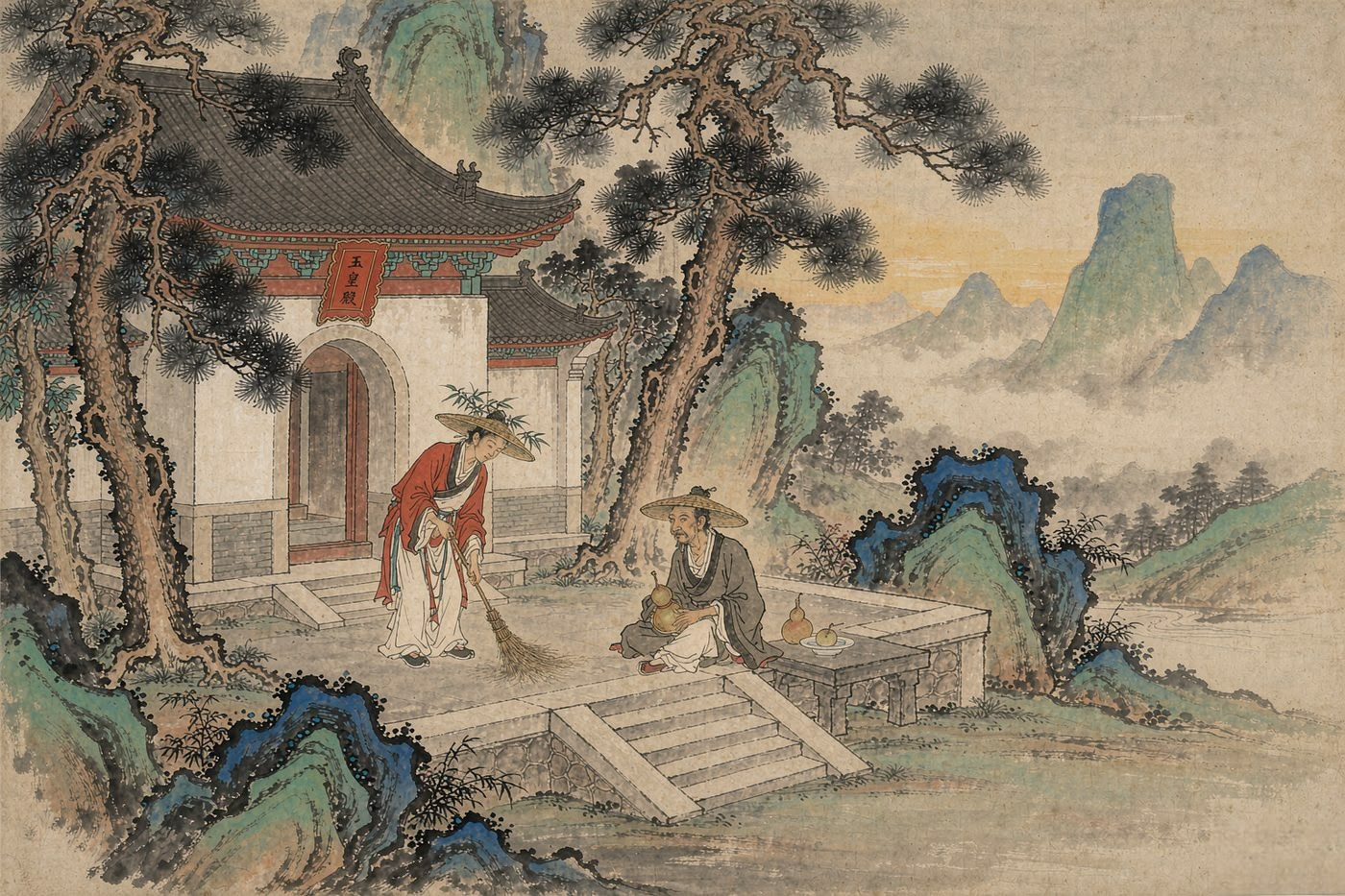
The best doctor in Yangzhou says: your heat is at its extreme, your blood and breath are all but burnt away, and in three years you will die of a tumour on the back. Nothing can be done. So the patient puts on a servant's coat and goes to Maoshan to carry firewood.

TaoistHealerImmortal
Qing dynasty · Qianlong era, c. 1750–1795 · 子不语

The Folding Immortal

折叠仙

A man of the Hu Pass shuts himself in a locked house, gives up rice and then vegetables and then water, and lives on one jug of lake water a month — taken in through the door, answered by a note pasted on the lid. He survives on a spoonful a day for a hundred and twenty years, and his own teacher was carried about folded up like a paper figure in an embroidered box.

ImmortalTaoistTransformation