Li Mengdan, a student of Raozhou, saw his whole household taken by pestilence in the fifth month of the first year of Qingyuan; only his younger brother Mengshuo was spared. All the salt-and-rice labors of the house fell to the younger brother.
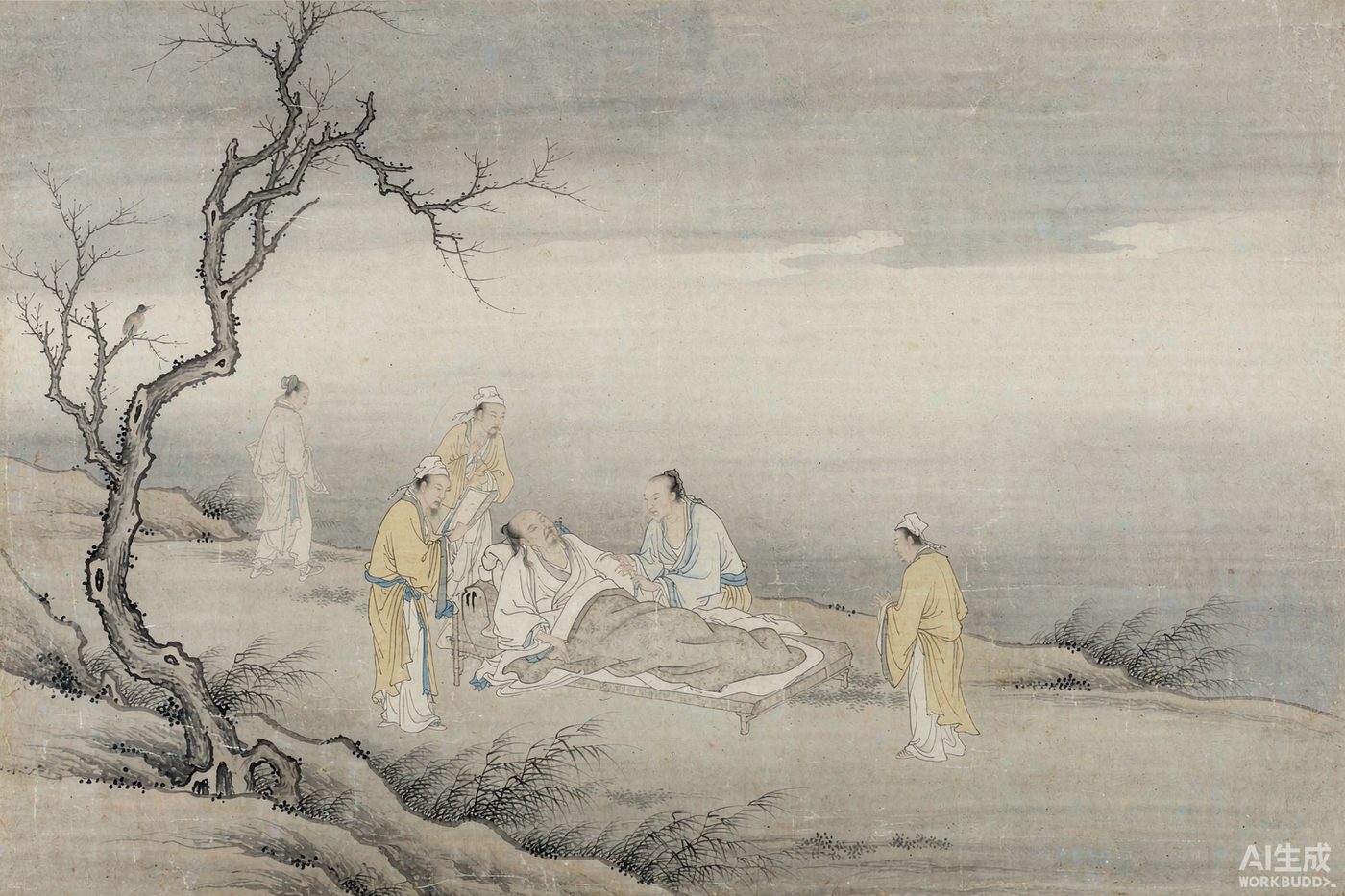
Earlier, when Mengdan lay ill — though gravely, he recovered in five days — he had dreamed of gods speaking together. “Mengshuo too is due five days of sickness,” one said, “but if he is unwell, who will manage the household affairs?” Another at his side asked, “Shall we let his elder brother stand in?” The god said, “Let him wake,” and Mengdan woke with his whole body burning, the illness returned as before.
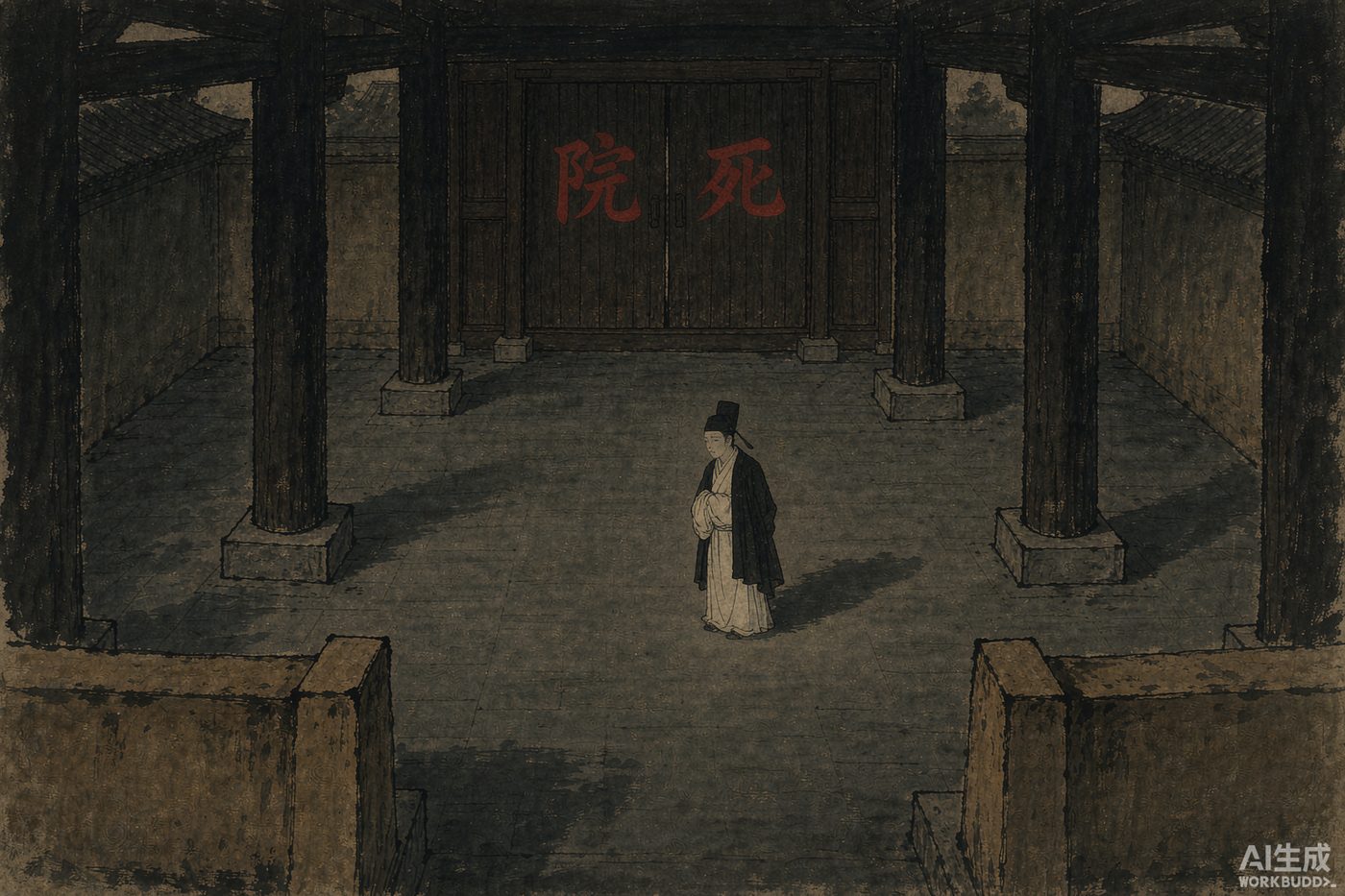
After four days, in a dream he submitted a formal plea to the god, begging to be excused the remaining days. He seemed to arrive at the central hall — the temple inside the prefectural gate — and, looking up at the curtained dais, heard only a voice directing the attending clerks to take his petition. Soon he heard an angry scold: “You take no medicine yet want to be excused!” Mengdan said he had none; the god said, “The Decoction of Peony to Drain the Heart is it.” Mengdan said he had none of that either, and the petition went undecided.
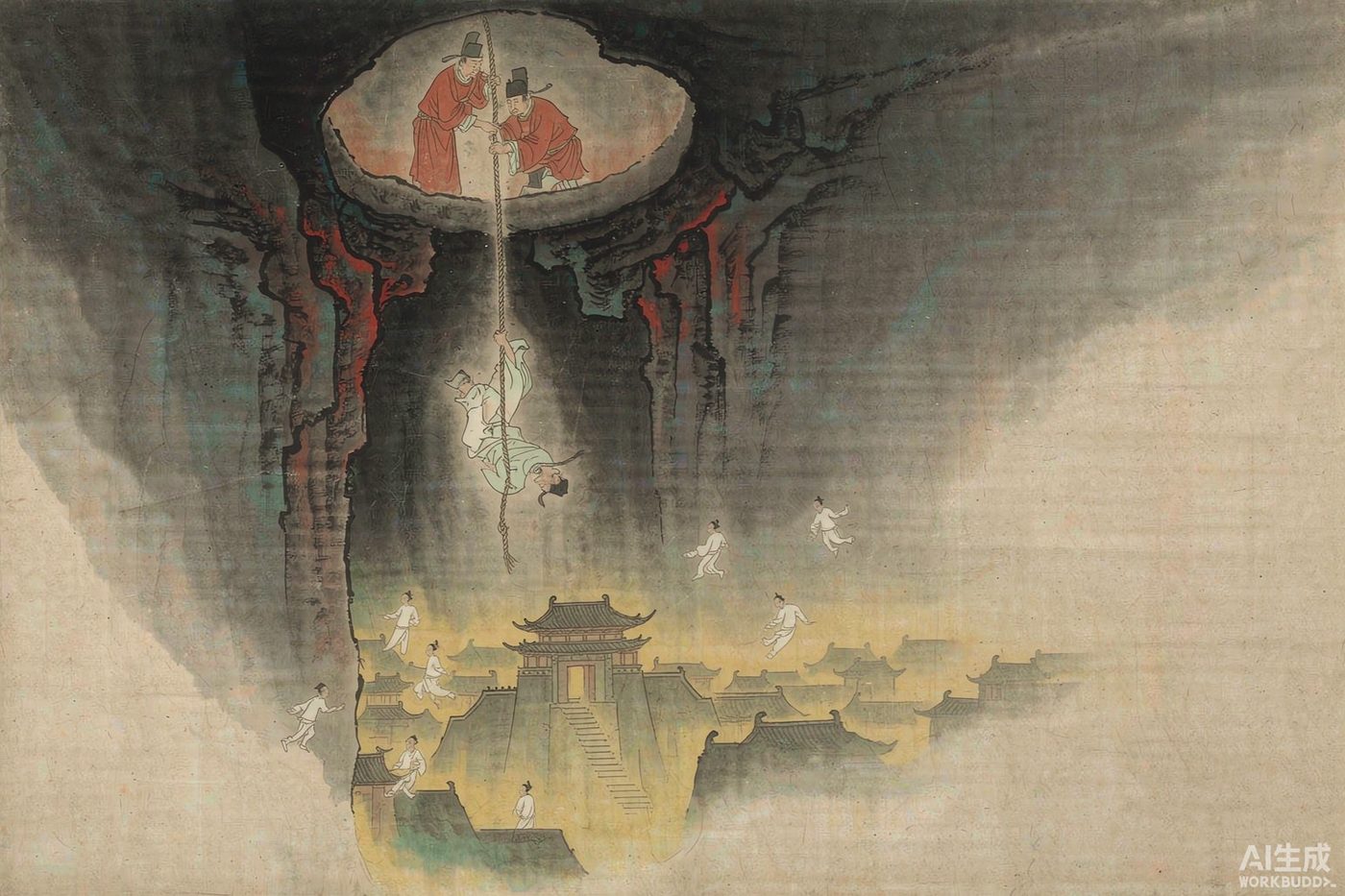
Unaware, he saw his brother before him decocting medicine, and asked his name — “Sent by Doctor Zou: the Decoction of Peony to Drain the Heart.” Pleased it matched the dream, he drank it at once. Soon he slept again and in a dream submitted his plea once more; arriving again at the god’s seat, he was asked whether he had taken the medicine, and said he had. The god ordered a clerk to bring a jar and made him vomit; his five organs all came out, then were told to be put back. Then the god took the petition and wrote on the back: “Li Mengdan was to stand in for his brother Mengshuo’s five days of sickness; now he has petitioned to be excused. As this officer has newly taken up his post and does not know the prior particulars, he now dispatches Zhang Wang, Li De, Ji, and the others — four men — who must attend to Li Mengdan’s sickness, to see him break into sweat by noon tomorrow, and to forward the petition.”
Presently a separate yellow placard summoned the four away. Mengdan said, “Let me stay and watch,” and was told no. Then the messenger returned and said, “Two are to oversee the cooling sweat, two the decoction.” Yet by noon the next day he had not reached the five days; only at the first watch was it complete.
After a while a figure in a yellow silk jacket came and said, “Your household has been troubled by plague; I have escorted you to Fengdu.” Then he understood, and just as foretold the sweat poured over his whole body and he was at once relieved. It was the middle of the ninth month. All told, it had spanned a hundred days.