Lü Heng was a man of Changzhou who made his living trading in foreign goods. In the fortieth year of Qianlong he was caught by a sea wind, and everyone else in the boat was drowned. Only Lü, clinging to a plank and tossed by the waves, drifted into a country.
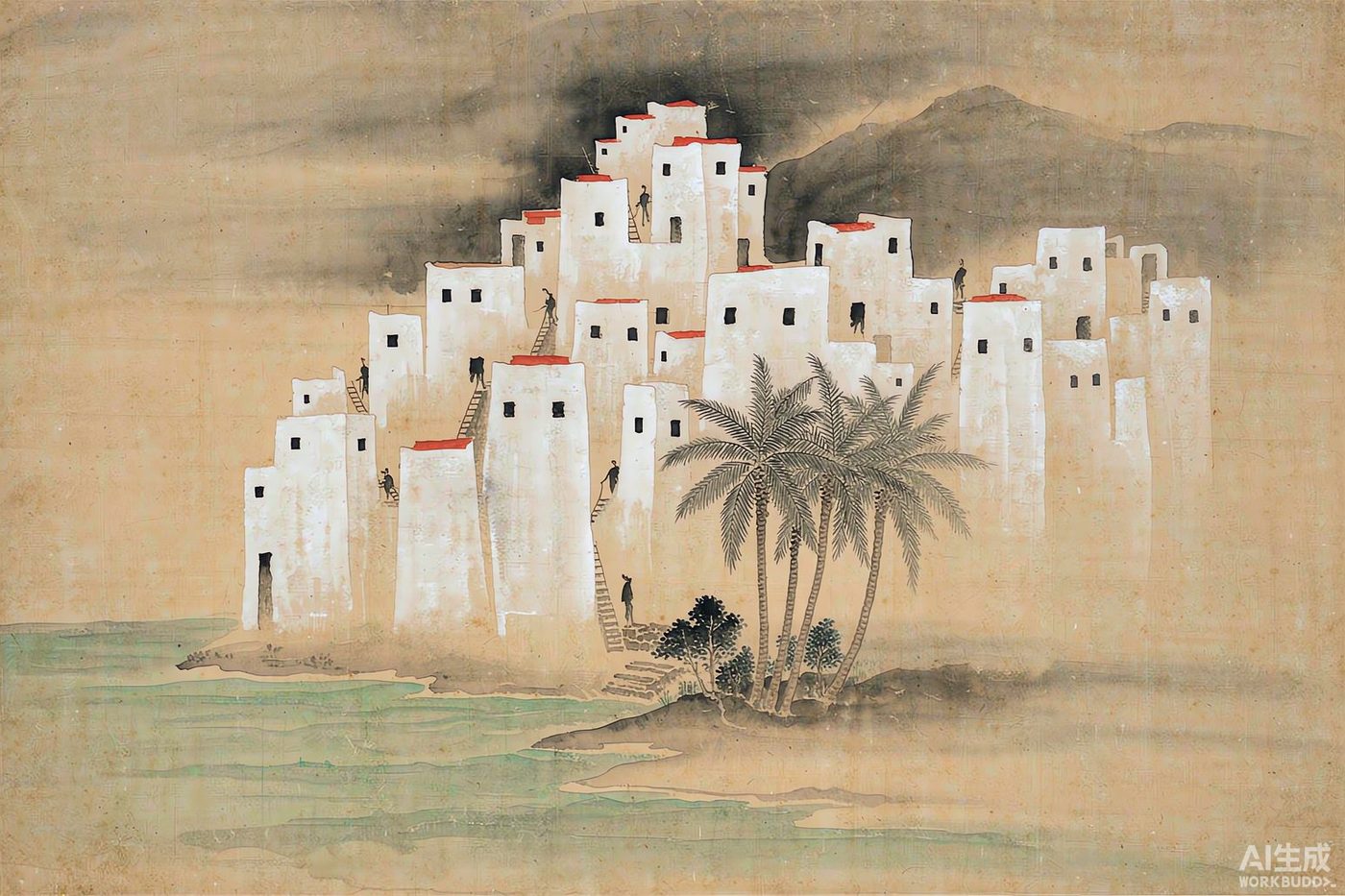
The people all lived in towers, three storeys or five. The grandfather lived on the third floor, the father on the second, the son on the first, and the highest floor of all was kept for the great-great-grandfather. There were openings to pass in and out of and no doors to shut. The people were very wealthy and there was no thieving.
When Lü first arrived he could not speak the language and made himself understood by pointing and drawing. After a while he began to understand them a little. When they heard he was a man of the Middle Kingdom they treated him with a certain respect.
Their custom divides one day into two days: they rise at cockcrow and trade back and forth; at noon the whole country goes to bed; they get up as the sun goes down and carry on as usual; and at the first watch they sleep again.
If you ask their age, a man they call ten is five by the reckoning of China, and a man they call twenty is ten.
The place where Lü lodged was still a thousand li from the king, so that he had no way to see him. There were very few officials; those with attendants were called baluo, and he never learned what office that was.
Men and women married by mutual liking, and the handsome and the plain, the old and the young, each followed their own kind, with no crossing of the line and no forcing of anyone, so that there were no complaints.
Their penal code was stranger still. Whoever severed a man’s foot had his own foot severed; whoever injured a man’s face had his own face injured, to the inch and to the part, without the least deviation. And where the mirror could not be applied literally, a wooden substitute was made and the same thing done with that.
Lü lived in that country for a year and three months, and then, taking advantage of a southerly wind, got passage on a ship back to China. According to the old China-sea traders: “The island is called the Country Without Doors. Since ancient times nobody has ever come from it to China.”