In the territory of Jingshan in Ying prefecture there is a place called Biandun, and there a great commoner family, the Zhangs — Zhang Xiang, dominant in his village — had land registered and strings of cash buried, gold and silver and cloth and silk all reckoned in hundreds of millions. So the country people called him Ten-Thousand.
In the early Shaoxi era the great bandit Sang Shen ranged across the country between the Han and the Mian, and left it bare wherever he passed.
Zhang heard that he was coming, and since he could neither move his wealth nor get his household out of the way, he set the guest-rooms in order, boiled oxen, slaughtered pigs, brewed a great quantity of wine, and went out on the road to invite him in.
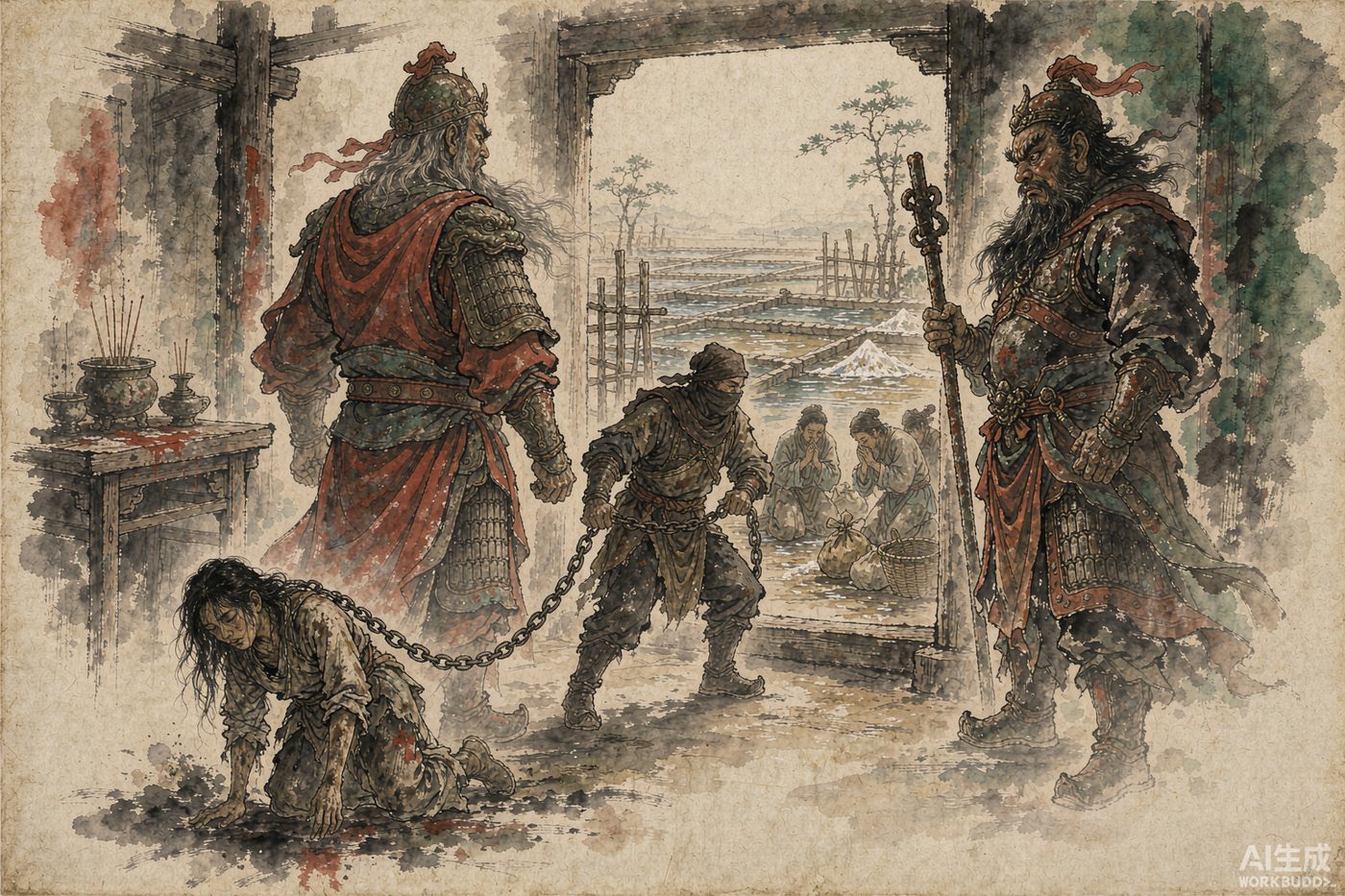
Sang was highly pleased. He stayed for the sake of it, month upon month. His ruffians came along with him and were fed and drunk from morning to night, and each of them had presents of silk and silver besides. Sang gave strict and repeated orders, and not an autumn hair was harmed.
Zhang had a daughter who had just put up her hair. She was peeping out from behind the blind, and Sang saw that she was young and handsome, and wanted her.
Zhang would not agree.
Sang was angry. “I have made iniquity my trade,” he said. “I kill men as I tread on ants. I have kept your whole household whole — you may call that a kindness. And you still grudge me one girl?”
Zhang was terrified, and married her to him at once.
When they had been there a long while, the band had gathered tens of thousands, and there was nothing left for them to eat; and so he slaughtered the household after all — except that, for his wife’s sake, he gathered up their bones and buried them in the hall, and made one great mound of it, and closed it up and went away, taking only his wife with him.
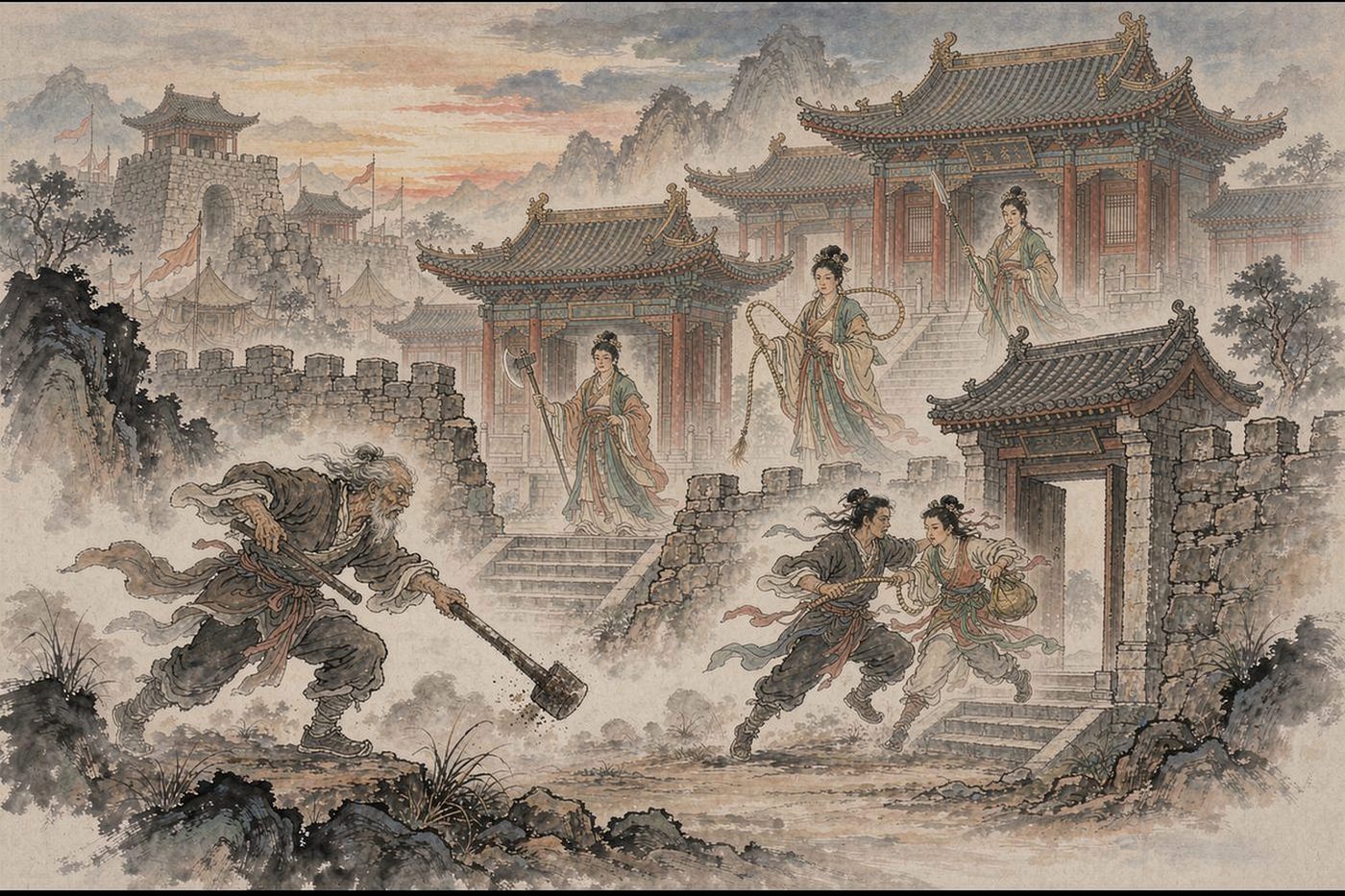
One other daughter ran out of the house and escaped. Whether she lived or died, nothing more was ever heard of her.
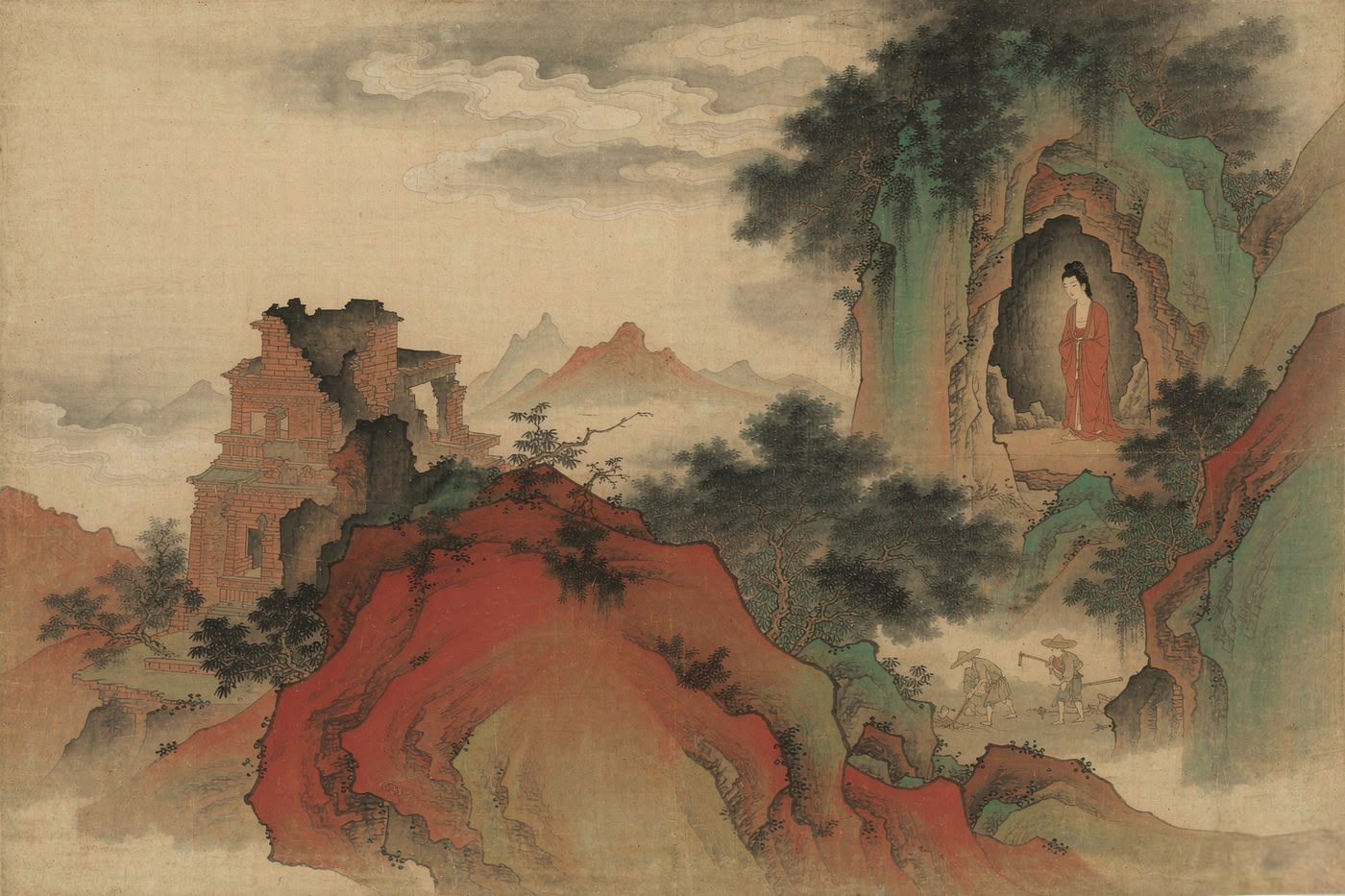
Forty or fifty years afterwards, country people cutting wood on the hills would still sometimes see her in the rock-caves there — with a face like a woman of no more than twenty. And she comes to the old house sometimes, and there is faint weeping. So it is still, to this day.
Whether she is a ghost, or a sprite, or — as some say — met an immortal and attained the Way: none of it can be known.
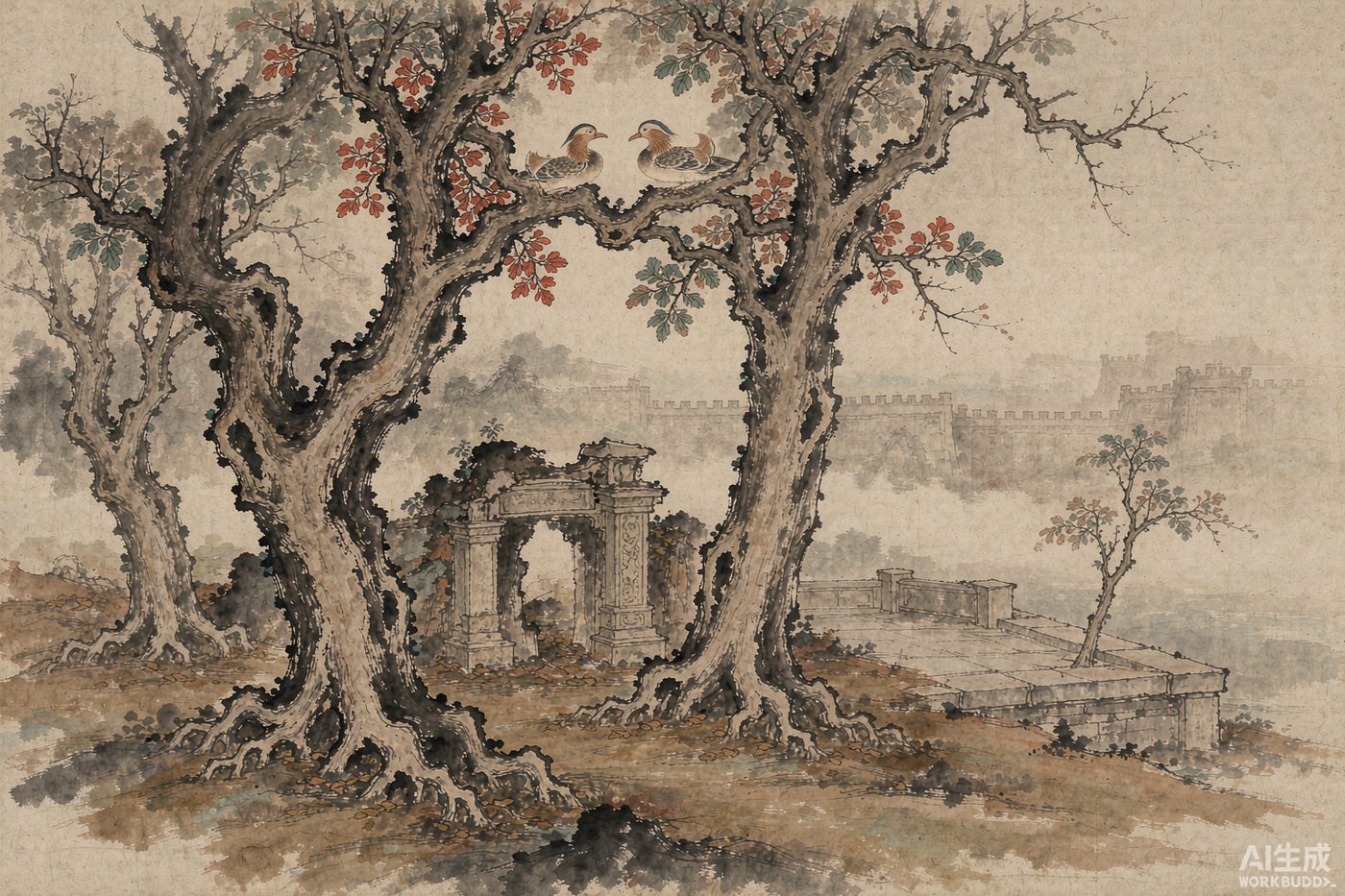
The foundations of Zhang’s house are still there. There is a wonderful rock, more than a fathom high, with caverns and hollows pierced through it as though it had been made so by nature. In the Xuanhe era the flower-and-rock tribute fleet wanted it for the capital; it was too heavy to shift, and then the wars came, and that was the end of the matter. To this day no official passes by who does not stop and gaze at it and sigh over it. The stone with the Hall Record cut into it still stands — Fan Qianshu wrote it; and there is the Orchid Terrace Record, written by Zhu Zifa.
Of the house itself only the gate-tower remains. The people of the place have moved it to serve as a small hall of the Eastern Peak temple — from which you may judge how large the house must have been.