Wang Jin of Yuzhang took his family to the graves at Qingming. Behind their plot there was an old abandoned mound, its earth sunk level, its coffin wood rotted through, and no one knew whose it was. Wang had a boy, Zhaoqing, who saw wild flowers in full bloom on the ground there and ran over in play to pick them. His foot went through the coffin lid and the bones beneath snapped. He screamed in fright, and Wang pulled him out.
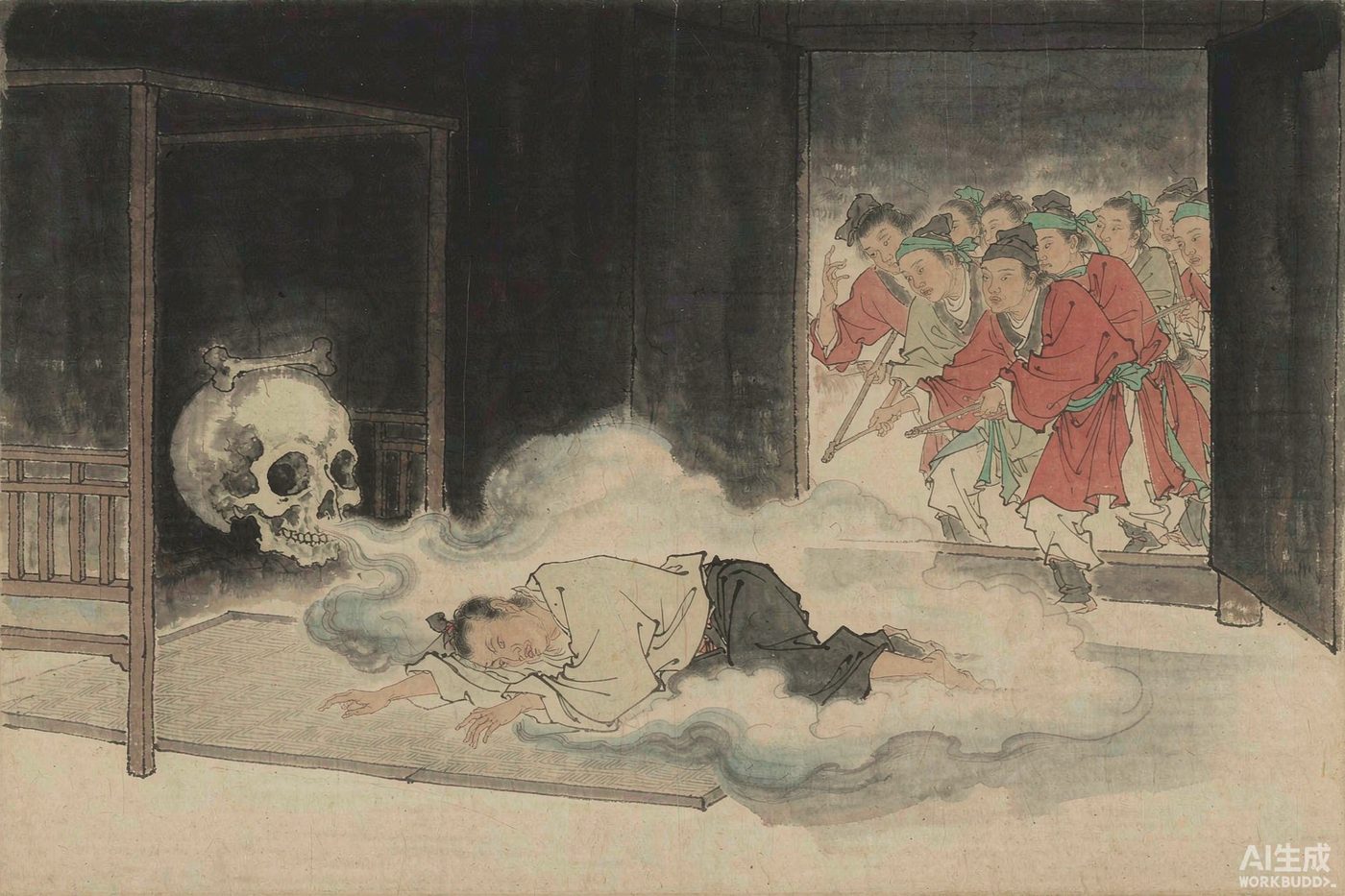
When they got home the boy ran hot and cold by turns. Wang sat by the bed to tend him, and suddenly the child’s face changed and his eyes stared straight, and he said:
“I am Luo Hanzhang, a great name in kanyu. In life there was no capped and belted nobleman who did not treat me as his honoured guest. You, a clan of decayed gentlefolk, let a snivelling brat trample my grave and crush my bones. How is this to be pardoned?”
Wang hastened to apologise and promised masses for his release.
“This hatred has entered my marrow. I will not stop until I have his life.”
Wang fell to the ground weeping, but the thing would not be moved. Left with no other course, he went to the City God temple of the capital to pray for protection.
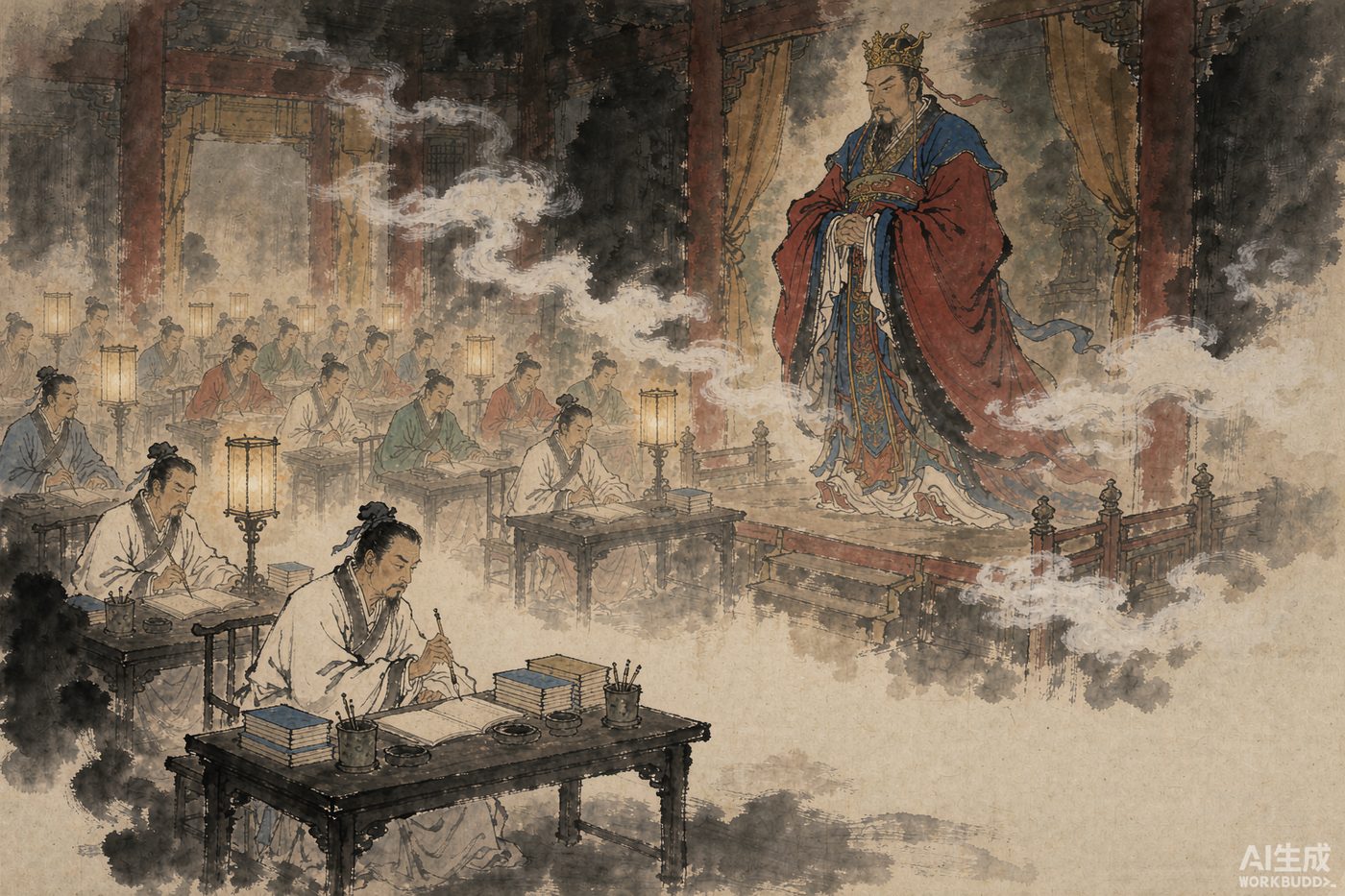
That night he dreamed the City God summoned him.
“You do not keep your son under control. You have brought this trouble on yourself. But a violent ghost who takes it on himself to hand out fortune and calamity is also breaking the statutes of the underworld.”
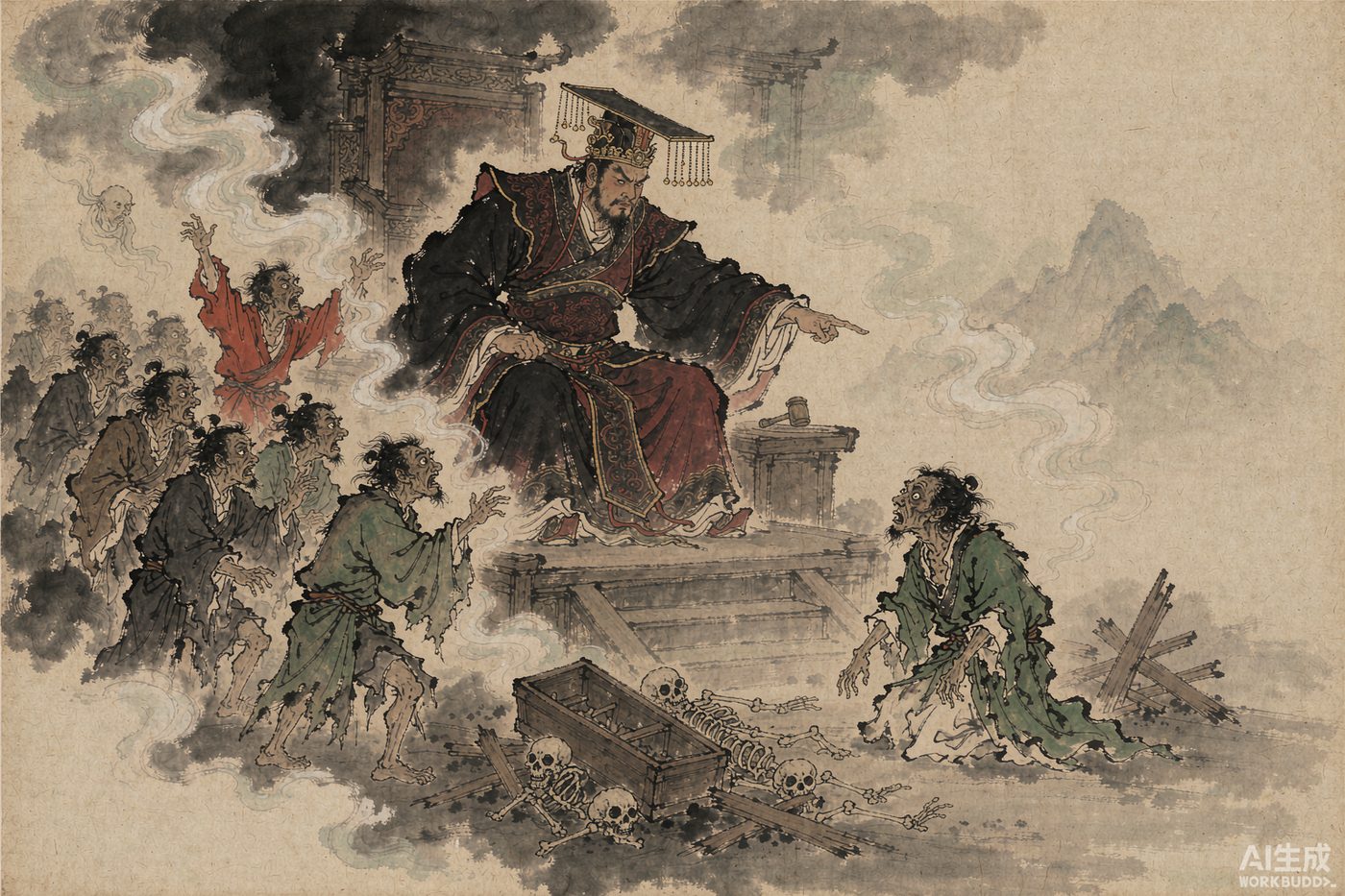
He ordered Luo brought. Presently a ghost arrived — slack mouth, scrawny neck, by no means a decent sort. The god demanded why he plagued the living. The ghost answered fluently and at length, never at a loss for a word. Then the god asked what his trade had been in life.
“A geomancer.”
The god struck the table in a fury.
“Since you were a geomancer in life, why could you not choose one good spot to shelter your own rotting bones? The likelihood is that you never understood this matter very well, and that while alive you did nothing but gang up with local bullies and sell dead ground — and those you ruined, I do not know whether by thousands or millions of households. Your broken bones today are retribution earned. It is not that boy’s crime.”
The ghost denied it with all his strength. But presently a crowd of ghosts came crowding up below the steps to lay complaints: one said he had been buried “like a hen at roost,” and his bones had been crushed; one said the black tortoise had hidden its head and the azure dragon had no feet, and his line had been cut off; one said the geomancer had talked so loftily to his sons and grandsons about dragon’s ears that the coffin had stood fifty or sixty years and had still not gone into the ground.
The god’s face changed.
“Every kind of evil. Death is too good for you.”
He ordered the ghost-officers to take him to Dog Village, to suffer torments beyond measure. The assembled ghosts cried out that it was well done, knocked their heads, and dispersed.
Then the god said to Wang: “Fortunately he had his own retribution coming to him. Otherwise your son could not have been held blameless either. The teaching of right conduct — hereafter you must not be lax in it.”
Wang bowed his thanks and went out. He stumbled on the steps and woke with a start. He got up and looked at his son: laughing and talking as before, and the illness gone.
Afterwards he heard that the rotted bones in Luo’s coffin had been dragged out and gnawed by stray dogs and scattered over the ground. Then he understood that Dog Village was simply retribution rendered in the world of the living, and that the courts of the dead have no such hell in them at all. And he sighed over it for days.
The Duo comment: To settle the soul in the melon-field, to rest the bones by the lake-lamp — the mountains and rivers cannot speak, and so the living depend on the geomancer to be their compass. But to take this up as a lucrative trade, then Liu’s jade rule and Guo’s brocade bag, and all the books of the Azure Crow and the Red Hail, are nothing but paper for making evil. I fear the dogs and swine would not eat what is left of such a man. The retribution of Dog Village is still a lenient sentence.