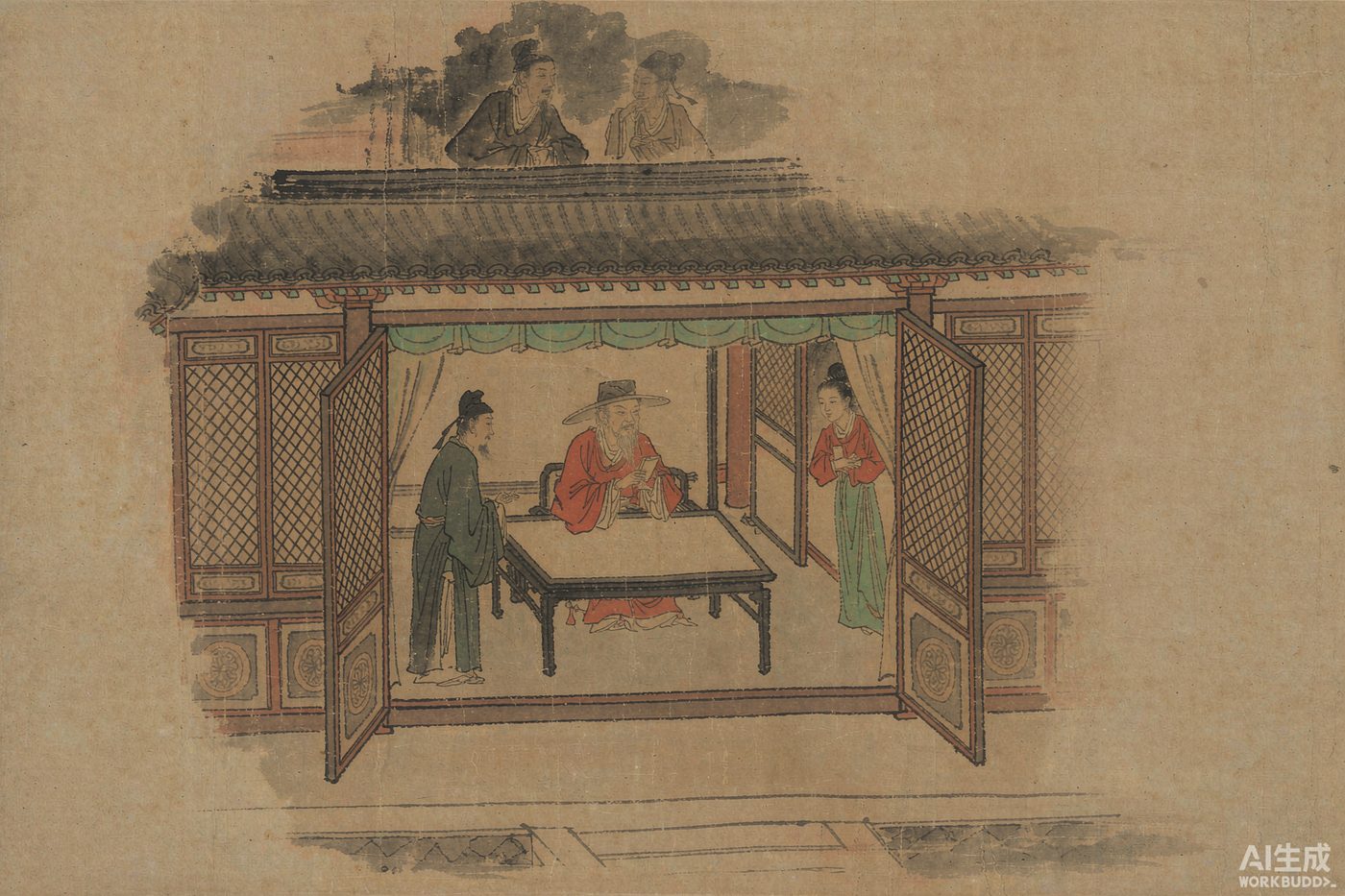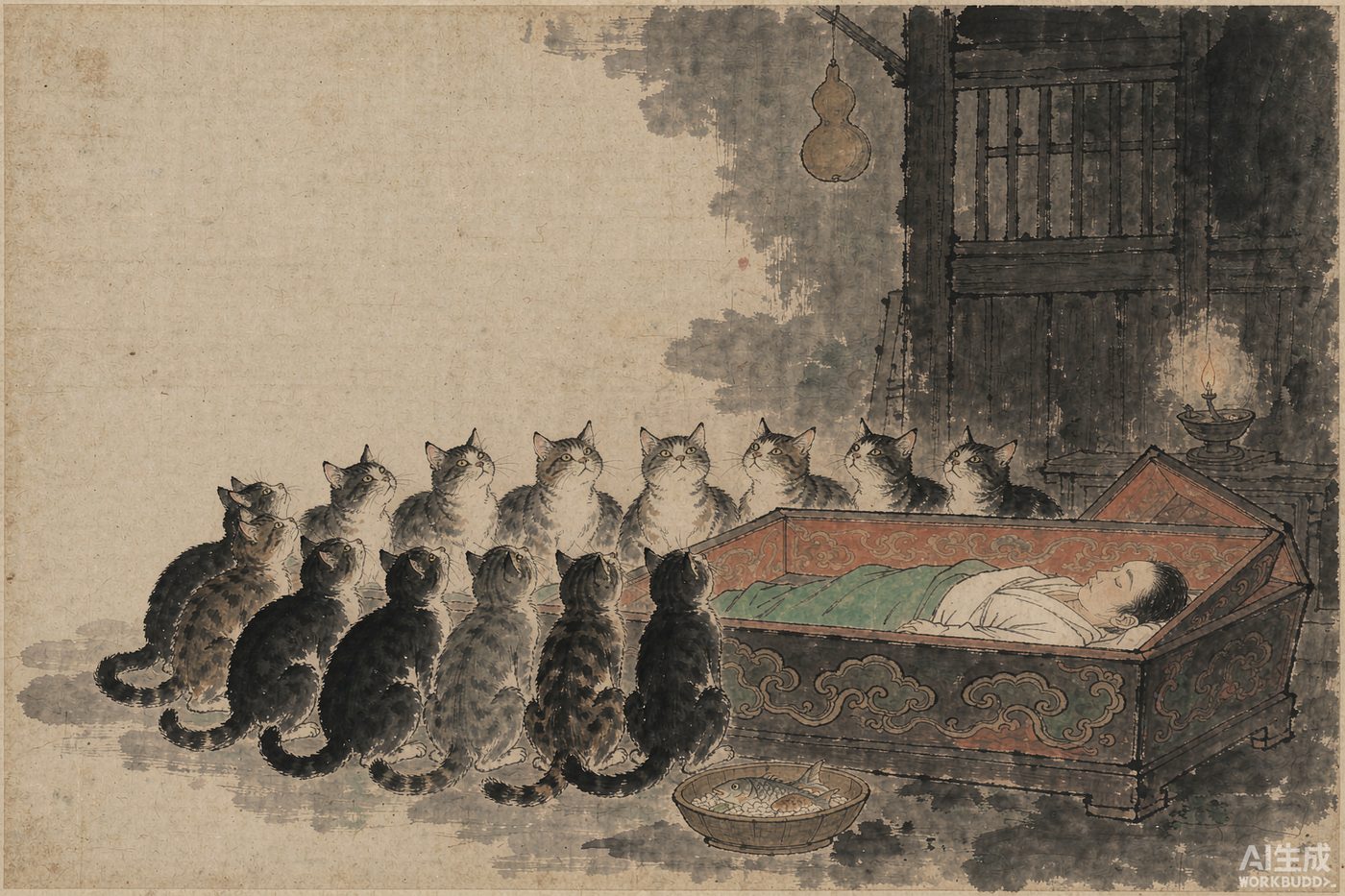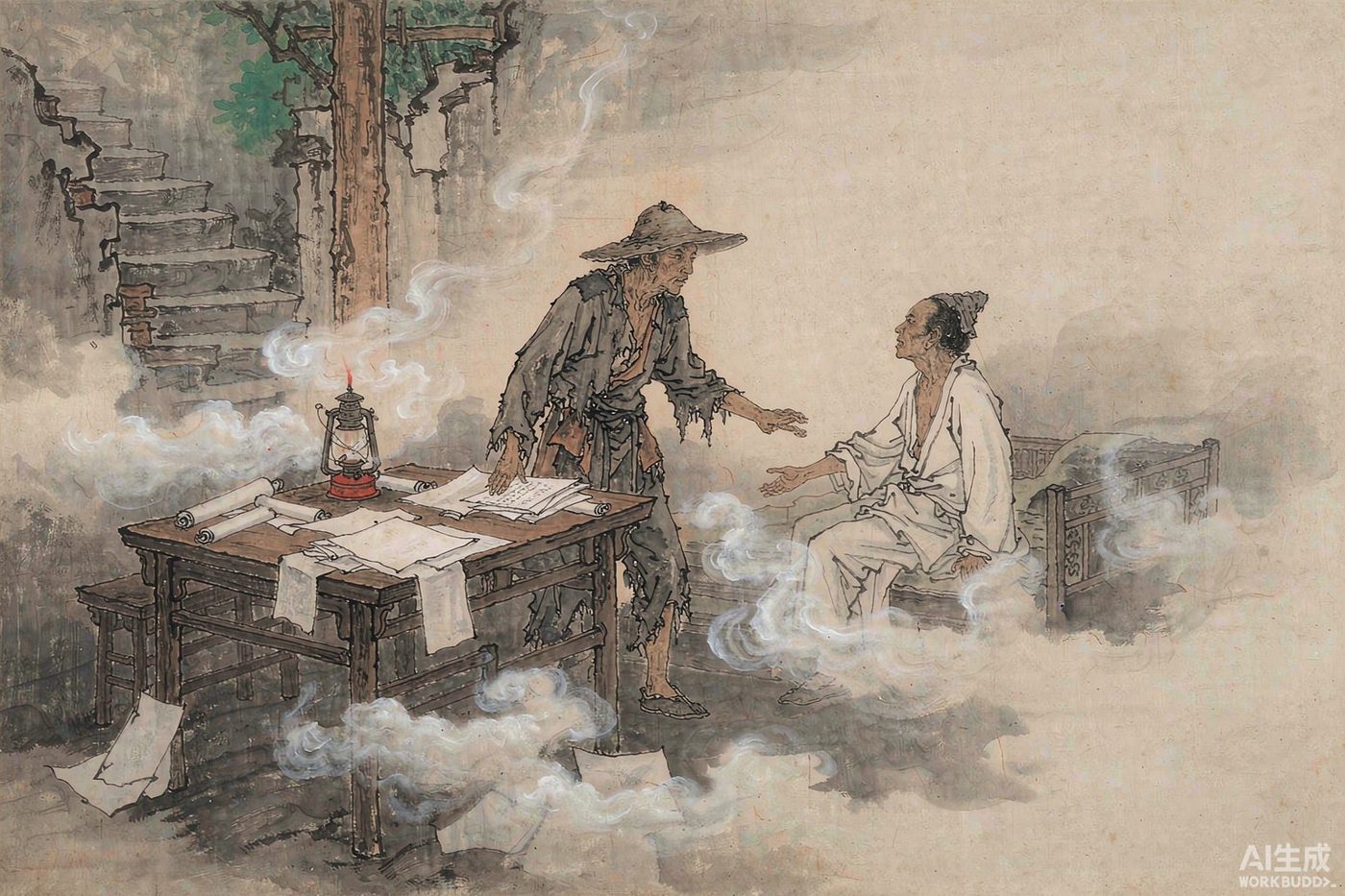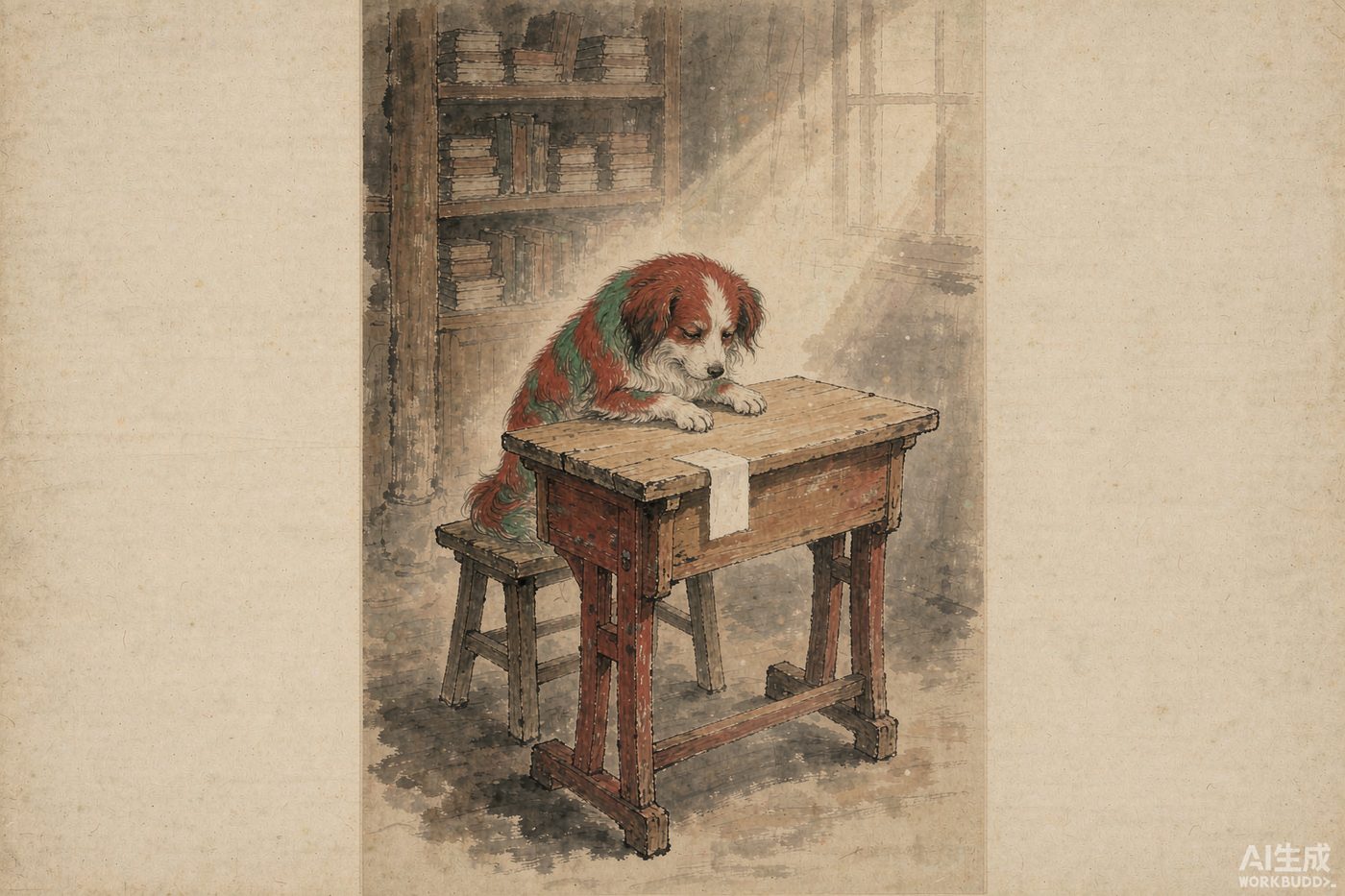
When I was a child I kept a small dog called Jinsheng. When I began going to the village school I would carry him there in my arms and keep him with me. Once, when I had put him on the desk, he watched me read with his eyes fixed and his thoughts gathered, as though something were coming to him.
I thought it strange, and for a joke I wrote six characters — Jinbao is not permitted in the school — and pasted them at the corner of my seat.
The dog studied them for a long while. Then he lowered his head, drooped, and went out, and for three or four days did not dare enter the school. I had to call him before he would come.
I thought it stranger still, and added to his name, calling him Hui’er. The dog wagged his tail and leapt about and looked gratified — like a famous scholar who loves to be called by his courtesy name.
After he had learned characters the dog grew very strict about his own quality. He had to choose his dish before he would eat, and choose his spot before he would sleep. If he was taken out into the street he was loftily unwilling to rank himself with common dogs. Scraps kicked toward him he would glare at and leave without a look.
A Zhou in our village, a successful provincial candidate, heard of him and thought him remarkable, and mated him with a bitch. For a whole year the dog would not eat nor sleep with her. He had no liking in the world but one: to lie in the schoolroom and guard the books on my shelf.
Later I followed my grandfather to his post in the Huai country and left the dog at home. Whenever I sent an old servant back, the dog would seize his coat in his teeth as though asking news. Only when the servant showed him a letter saying all was well would he leap away happy.
Nearly twenty years passed. Then I heard he had suddenly gone mad: seeing people in rags he would welcome them and fawn and jump; meeting anyone in bright silk and fine dress he would bark himself into a fury.
I sighed and said: “Oddity piled up becomes an obsession. Eccentric scholars are all like this. But to invert one’s own nature — I am afraid he has drawn disaster on himself from here.”
Within half a year a neighbour’s son killed him with a bamboo bow.
Because I had raised him, the household buried him under the mulberry tree and marked him with a flat stone: The Dog Who Could Read.
Then I heard that the bitch had howled all day and had died too, dashing herself against a wall.
I said with a long breath: “Alive they would not share a room; dead they share one grave. Was this dog then the bitter and the chaste? Or is this simply what comes back to one who can read and will not bend?”
I sent word to have them buried together, to make the dog’s desire whole.
The Duo comment: “Literacy is what the Creator is jealous of — how much more to fall into the path of the beasts and then dare to be arrogant on talent. To invert one’s nature and invite disaster is a true word for waking the age. That he first died mad and then was answered with chastity: perhaps the Creator was jealous of his life and not of his death. The crane, though the placard was hung on it; the dog, who could not read — a whole case of injustice undone by illiteracy. Set this dog in that place and I fear he would have been tried against the sword of the Prince of Ning. For a dog to be able to read is truly the stair of disaster.”