There was a wealthy man of Jiangyin, the richest in his district, who had no son past forty, and so bought a concubine named Li; within the year she bore him a boy.
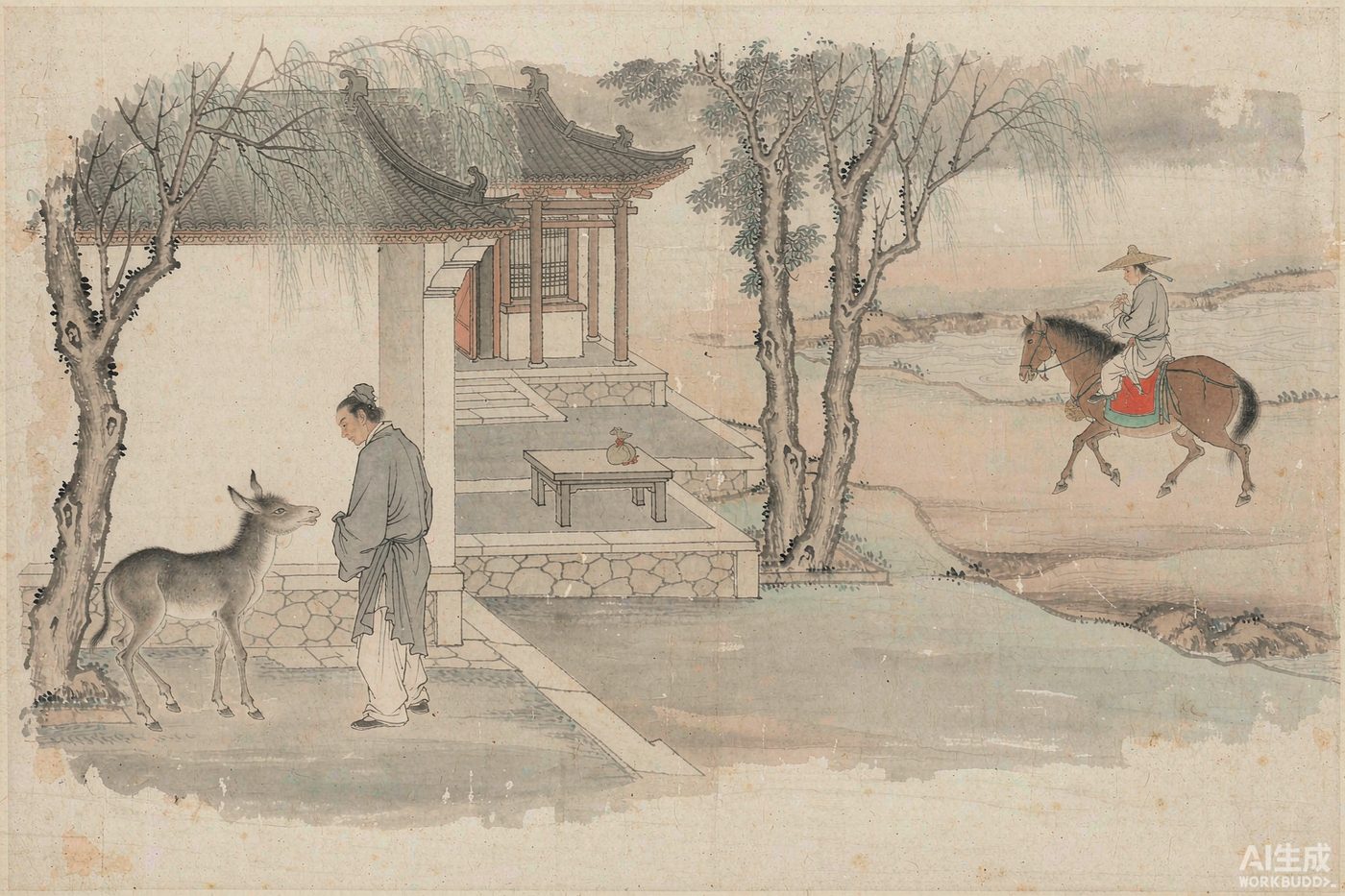
A Daoist came to the gate. The doorkeeper shouted at him to stop, and the noise reached the inner hall; the master came out to ask.
“I am a wild man of the hills,” said the Daoist. “I have known your name a long time. I came to pay my respects, and really to cadge a drink. Why is your doorkeeper so determined to refuse me?”
The master had him in, and ordered the servants to set out wine. The Daoist emptied more than thirty cups and showed no sign of it.
The master was astonished. “Have you any secret art you would teach me?”
“I have no ability at all. Except that I read the rich and the poor, the noble and the base, on a face — and I am not often wrong.”
The master took off his cap and told him to look. The Daoist studied him for a long time.
“Vulgar bone throughout; all five features carrying a muddy air; an inch of dog-hair on the cheeks. This is the true face of a rich man. Only — there is a thread of clear air at the corner of your forehead, sunk deep into the flesh, and faintly making the shape of a hungry grave. I am afraid cold and hunger will not be avoided, later on.”
The master laughed. “You go too far. With my poor estate, even if I never put money out at interest and only sat at home and ate it, my sons and grandsons could not finish it.”
“There is a fixed number in these things,” said the Daoist, smiling. “What does a Daoist know of it?” Then he asked to see the household, and said nothing about any of them.
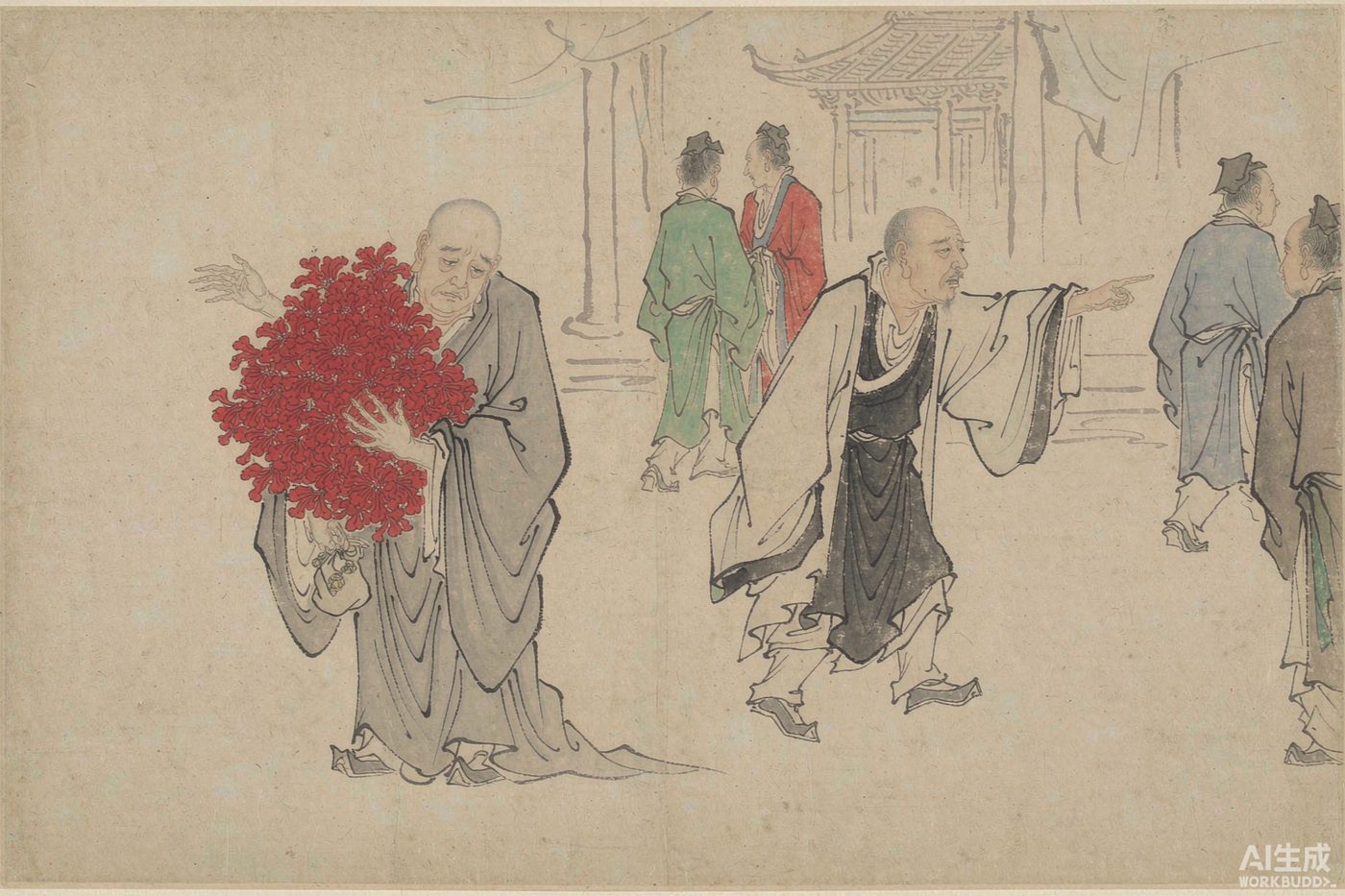
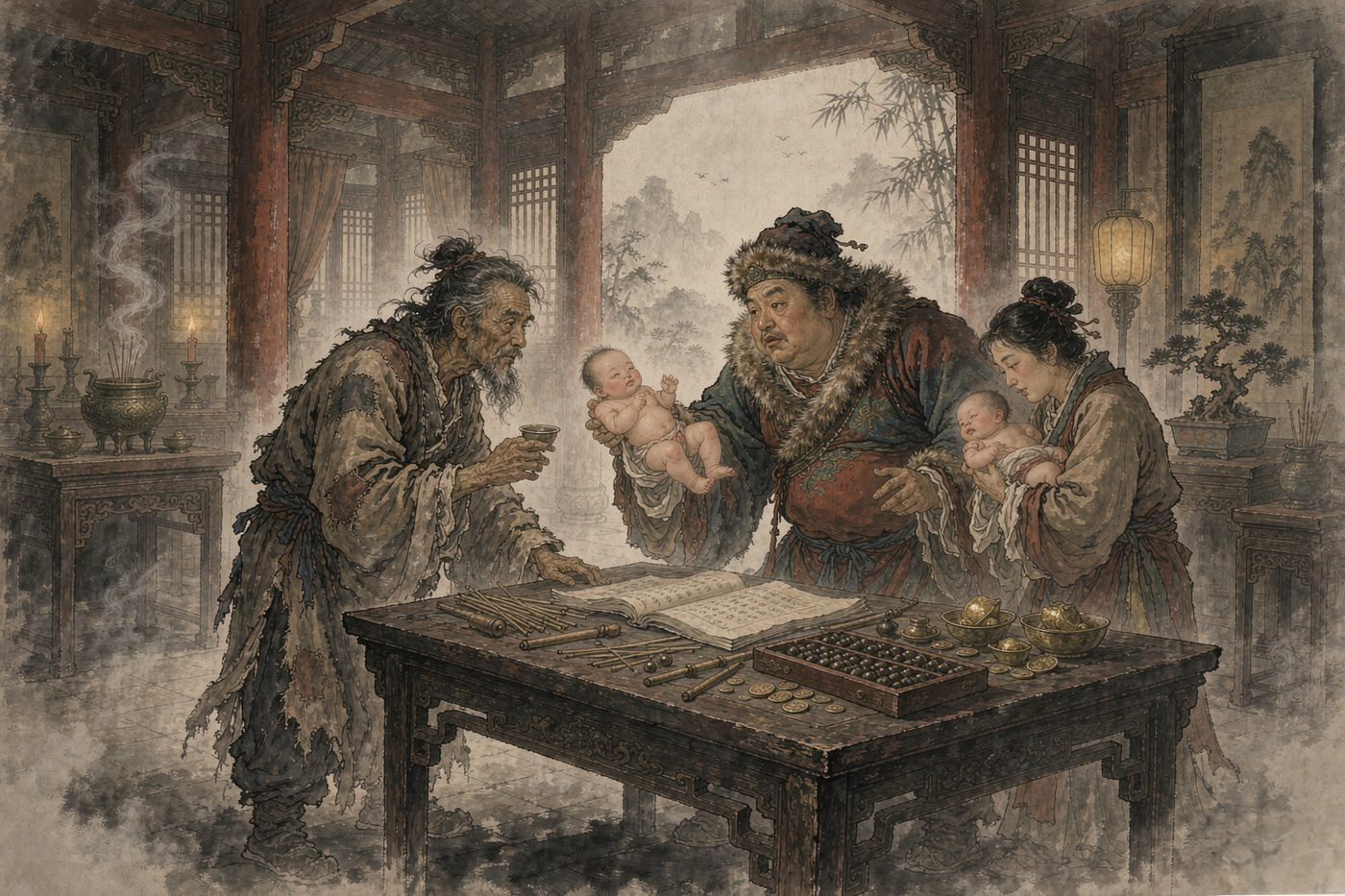
Presently the wet-nurse came in with the child. The Daoist started.
“This is the one who will ruin the house.”
“What does his face show?”
“By his divisions: at twelve he enters the county school; at fifteen he is named on the provincial roll; at sixteen he is a presented scholar and goes into the Hanlin. Rising so early, I am afraid he will not live long.”
“If that is so, he will uphold the house. Why do you call him its ruin?”
“Talent and money destroy each other. The reason you sit on a million is that for five or six generations not one man in your family could read a single character. Now you have a son who can write and who will enter the academy of the Hanlin — and I fear your hundred-fathom copper mountain will come to nothing.”
The master made a vague answer, and the Daoist took his leave.
The boy grew. Famous tutors were hired for him; he read the Five Classics, the Records of the Grand Historian, the History of the Han, and saw through them at a sitting. And the master, all the while, held the tally-sticks and reckoned — and made nothing. In four or five years the losses could not be counted.
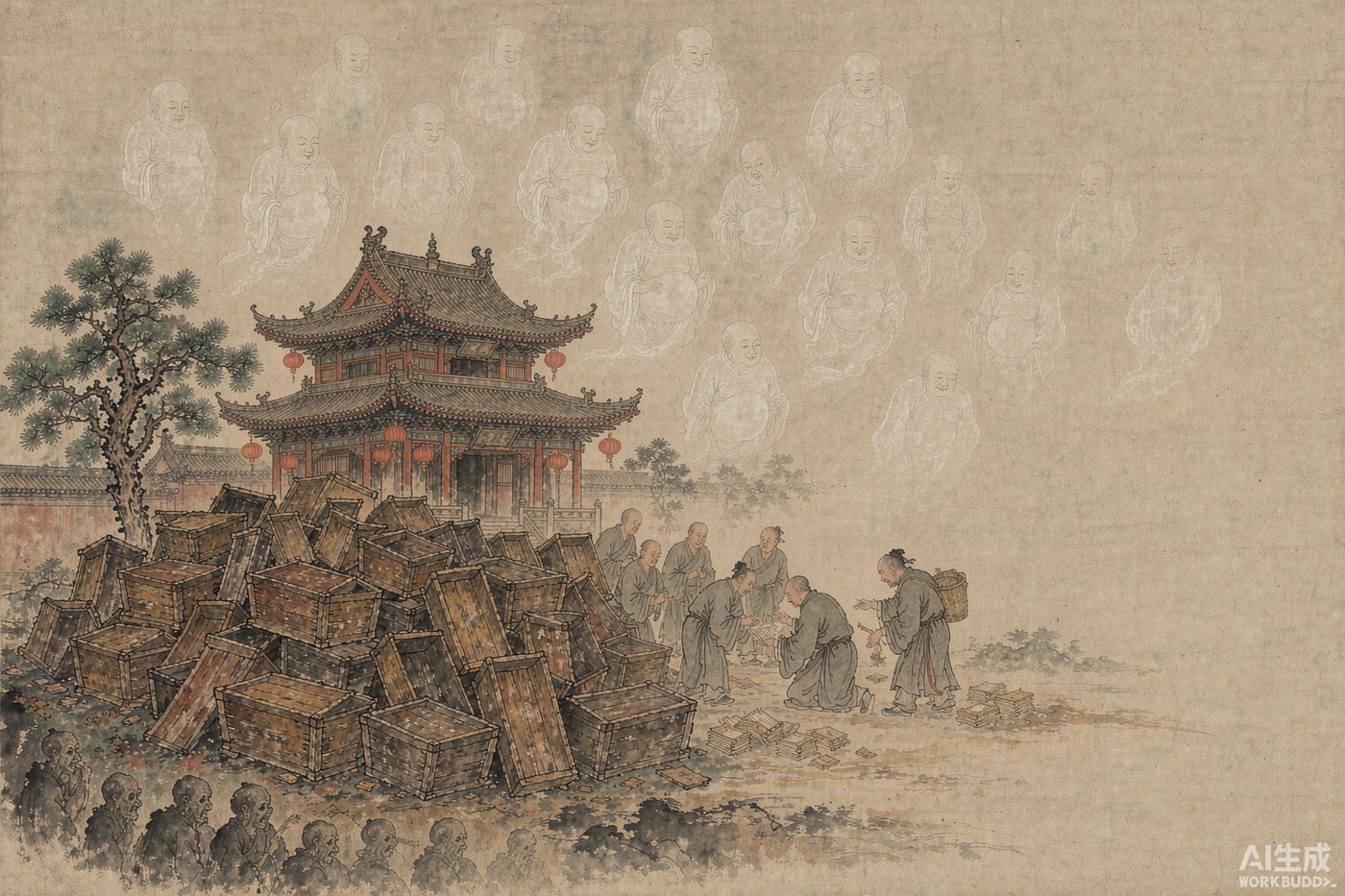
The boy was twelve, and entered the county school. The master’s pawnshops burned, and the compensation and losses came to no less than tens of thousands.
Three years on, the boy was a provincial graduate. The master had bought seven ocean-going ships, and every one was lost at sea; the families of the crews brought suit, and he sold his rich land and bribed high and low to escape it.
The following year the boy passed the metropolitan examination and was given a post in the Hanlin. When the gold-painted announcement of it arrived, the master, his wife and his concubine were renting a ruined house.
He still hoped that his son’s honour would restore the family. Within half a year the son died in office, and the household froze and starved to death.
Everything the Daoist had said came true.
The Duo comment: The name goes up on the board; the gold by the bedside is finished. Two fingers’ breadth of that elegant visiting-card — and it is the God of Wealth’s most efficacious charm. And yet: to want a son who would uphold the house, to accept ruin for it cheerfully, and to end by filling a ditch without repenting of it — this old man was a hero among men.