Jiang Chugong of Zizhou was twenty-four when his wife’s two elder brothers were sent in exile to Nan’an and to Guiyang, and he went to visit them.
He took the by-road from Shangyou county in Nan’an towards Guiyang — steep ridges and empty valleys, and for a whole day no human smoke. It was a long while before he came to a village at all, and there was no inn. Two li beyond a great stream there were three rooms of a house with a board saying Home-Coming Lodge. The owner lived across the stream; when he heard there was a guest he came and opened the door, and then went home again. There was nobody to fetch water or firewood.
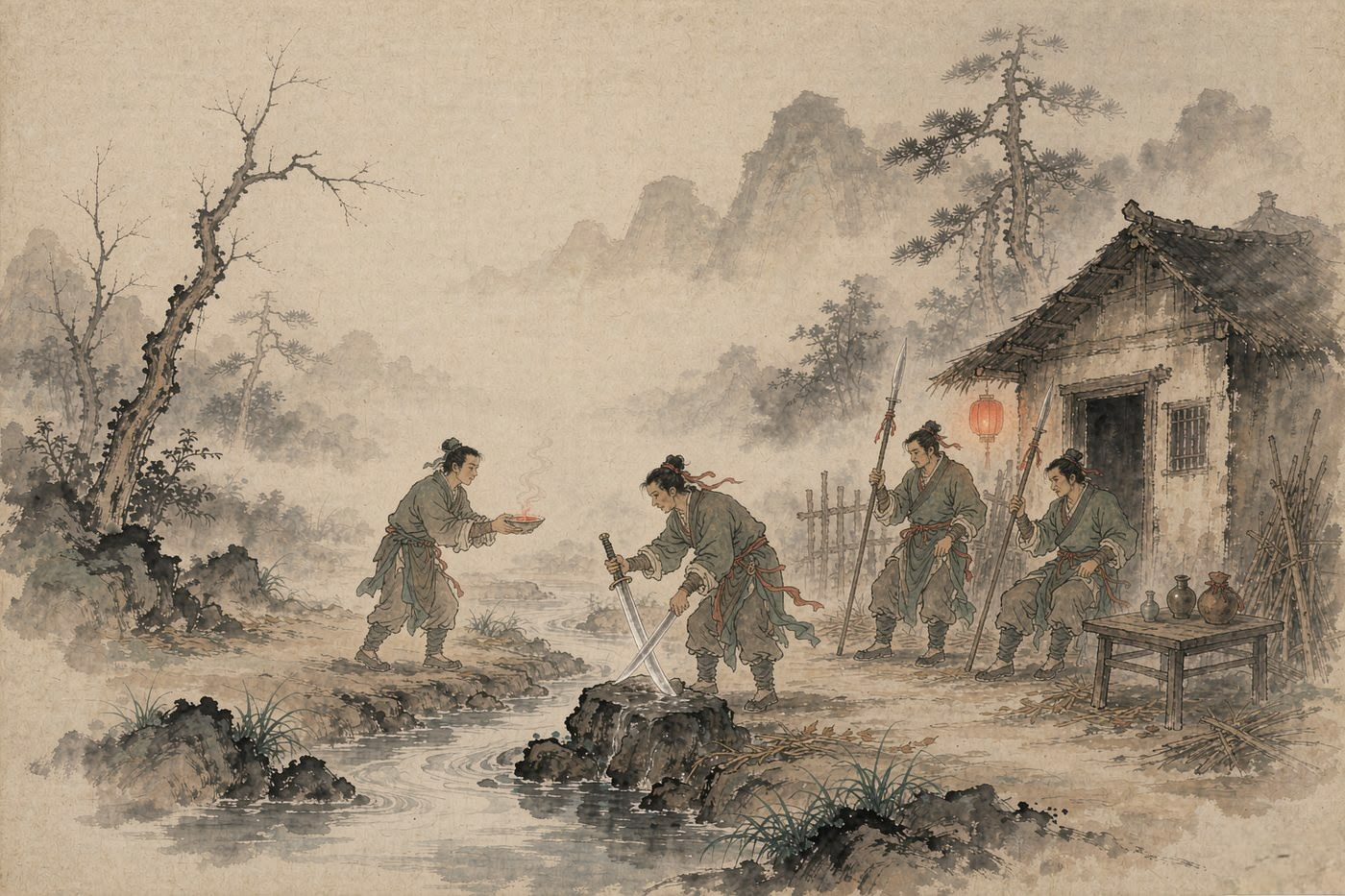
Jiang sent a servant to the village for wine and meat. Presently three fighting men arrived: two with long spears, one with a great blade white as silver. The swordsman was the sturdiest of them and his name was Xue Zhong; he said they were detached to garrison at a certain place.
It was high summer. Jiang drew water and mixed his cooling medicine and shared it with them. When the wine came they drank together. To cut the meat, Xue Zhong drew a dagger from his left boot and handed it to the servant, and unslung the sword at his right side and whetted it on a stone from the stream.
When night came they sat out together in the cool.
“We met by chance,” said Xue. “We have eaten your medicine and drunk your wine, and we have nothing to give you by way of amusement. Let us show you some sword-play.”
And they stripped to the waist and leapt about for a long while before they stopped. Then he sighed.
“Tomorrow,” he said, “there will not be a cash in the purse. What is to be done?”
Jiang by now was certain they were not good men. When they lay down he did not sleep: he sat upright on the clay platform, and did not so much as doze.
Just past midnight he heard the lodge door swing wide. His heart shook worse than ever. He called out and asked who it was.
“I couldn’t sleep,” came the answer, “so I got up. Don’t be alarmed, sir.”
Before dawn they took their leave — and on the way out he scraped his knife along the window-sill a dozen times.
Jiang took the road at first light. He was not five li along when he saw three corpses lying in the road, looking like travelling merchants. They were the warriors’ work.
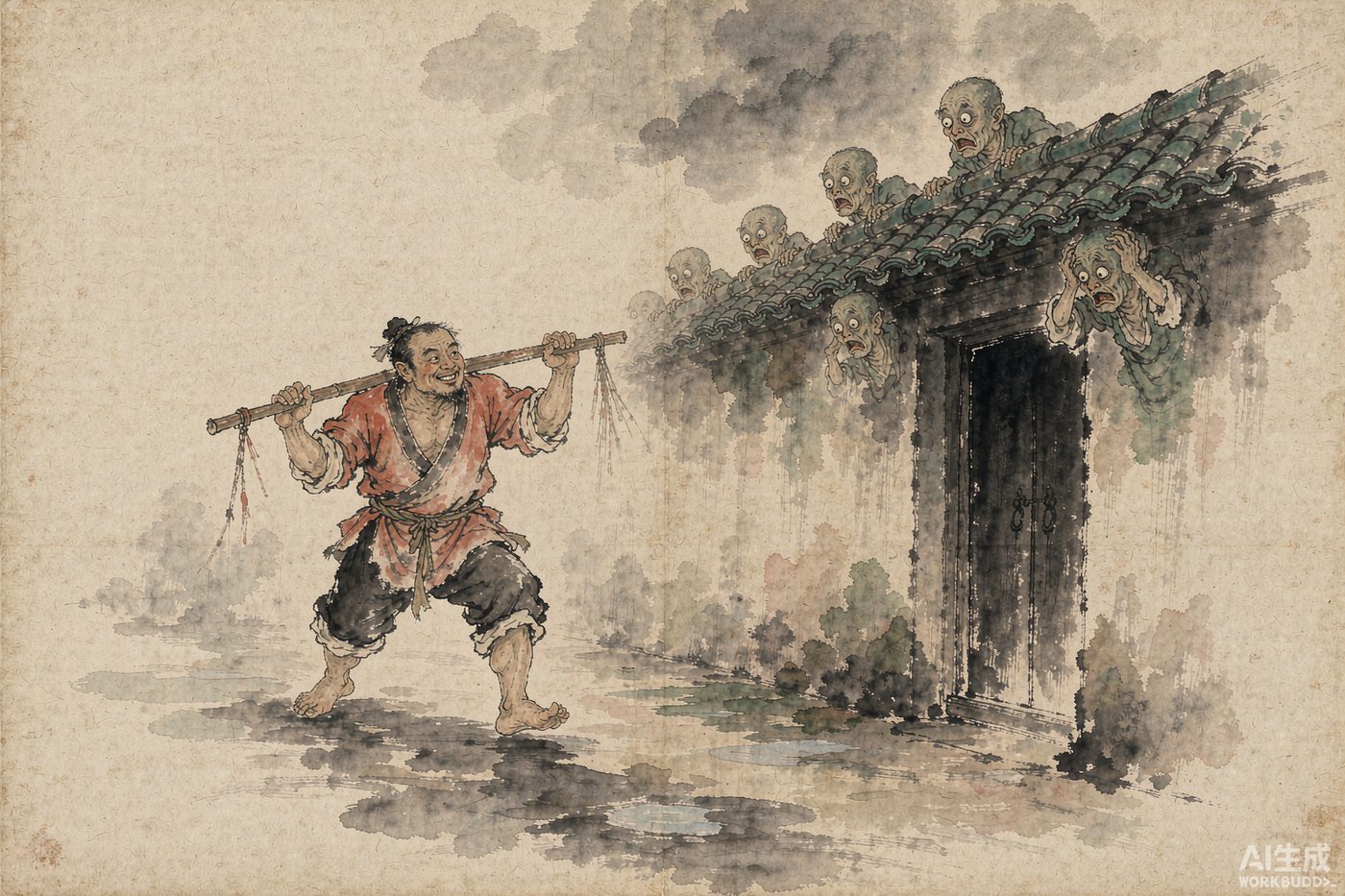
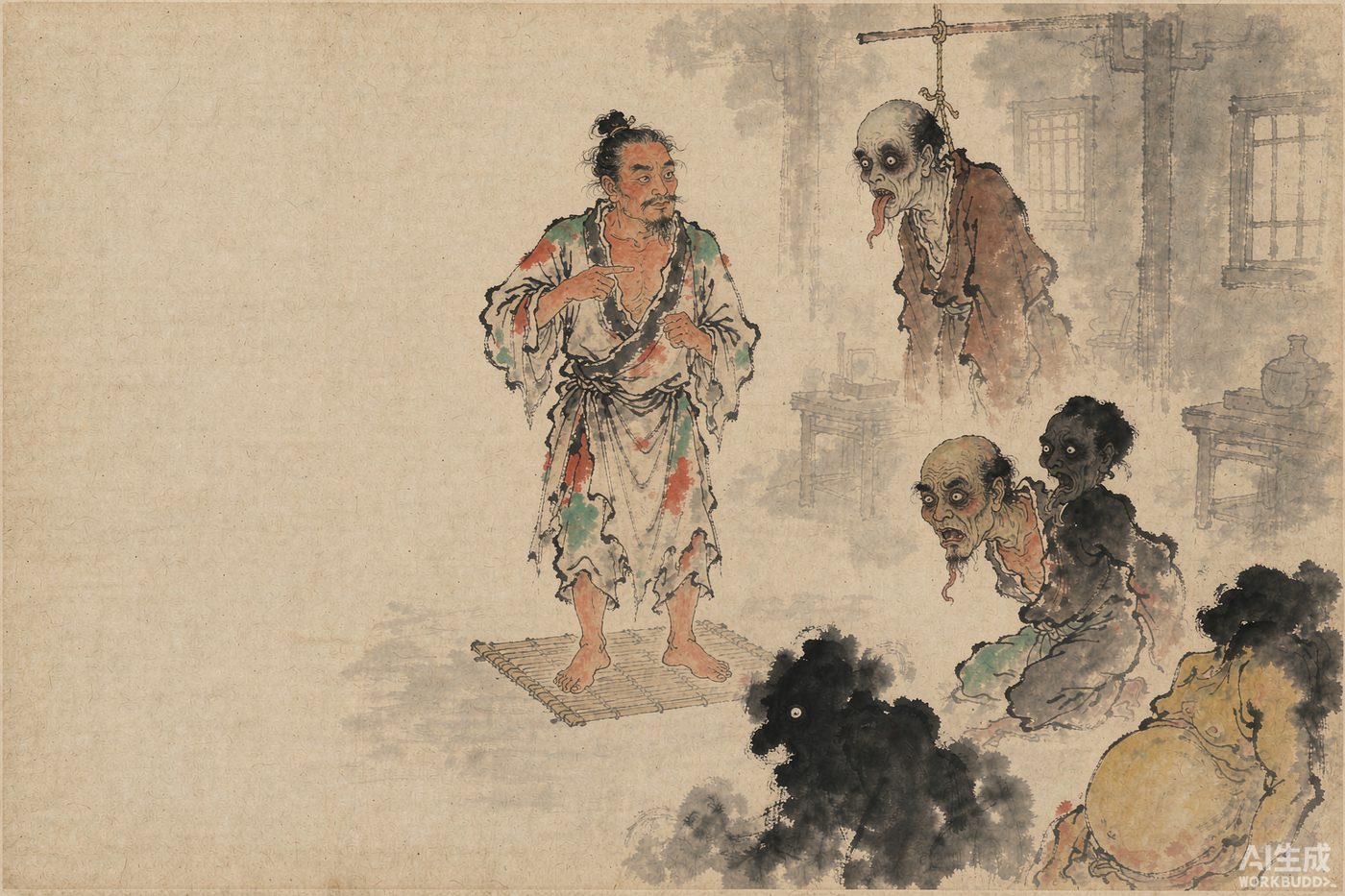
A stage further on he lost the way. The sun was setting; nobody was coming or going; and again and again he saw paper money hung on the grass and the trees. Presently the mountain mist closed over everything and he could not tell one person from another a pace away. He groped on deep into the night; the haze thinned a little, and he could just see the bright moon. There was a noise beside him like a tiger roaring. He dropped the carrying-pole at once, and he and his two servants climbed a tall tree and tied themselves to it, and did not come down for some while.
Going on again, he came to a thatched hut. An old man and woman came out and bowed, and congratulated him in astonishment.
“You must have a great store of fortune coming to you, sir. Do you remember the place you passed with the paper money hanging on the bushes? The sprites there pluck at people’s collars in broad daylight, up and down; and there are many fierce tigers. How was it possible that you walked straight through, at an ordinary pace, without a moment’s trouble? This is truly something to congratulate you on.”
In due course, when he got back to Nan’an, Xue Zhong and his band had been caught with their business in ruins and beheaded in the market.
Jiang Chugong’s courtesy name was Anli and he was a fine poet; I wrote him up in an earlier division of this work. Later a scholar of Xishan, Chen Shan, made a record of the affair, and gave it as his opinion that all his life Jiang had been dutiful and righteous and kind to his own people — and that this was why, meeting murderous bandits, walking through a country of ghosts, and setting foot in tiger ground, he came out of every one of these dangers unharmed.