Stories/ 夷坚志/ The Thunder God Answers a Memo

The Thunder God Answers a Memo

雷州雷神

SourceYijian Zhi (Record of the Listener)
AuthorHong Mai
EraSouthern Song dynasty · 1176, the bingshen year of Chunxi
Writtenc. 1160–1200
ThunderDeityOfficialdomSatireDrought
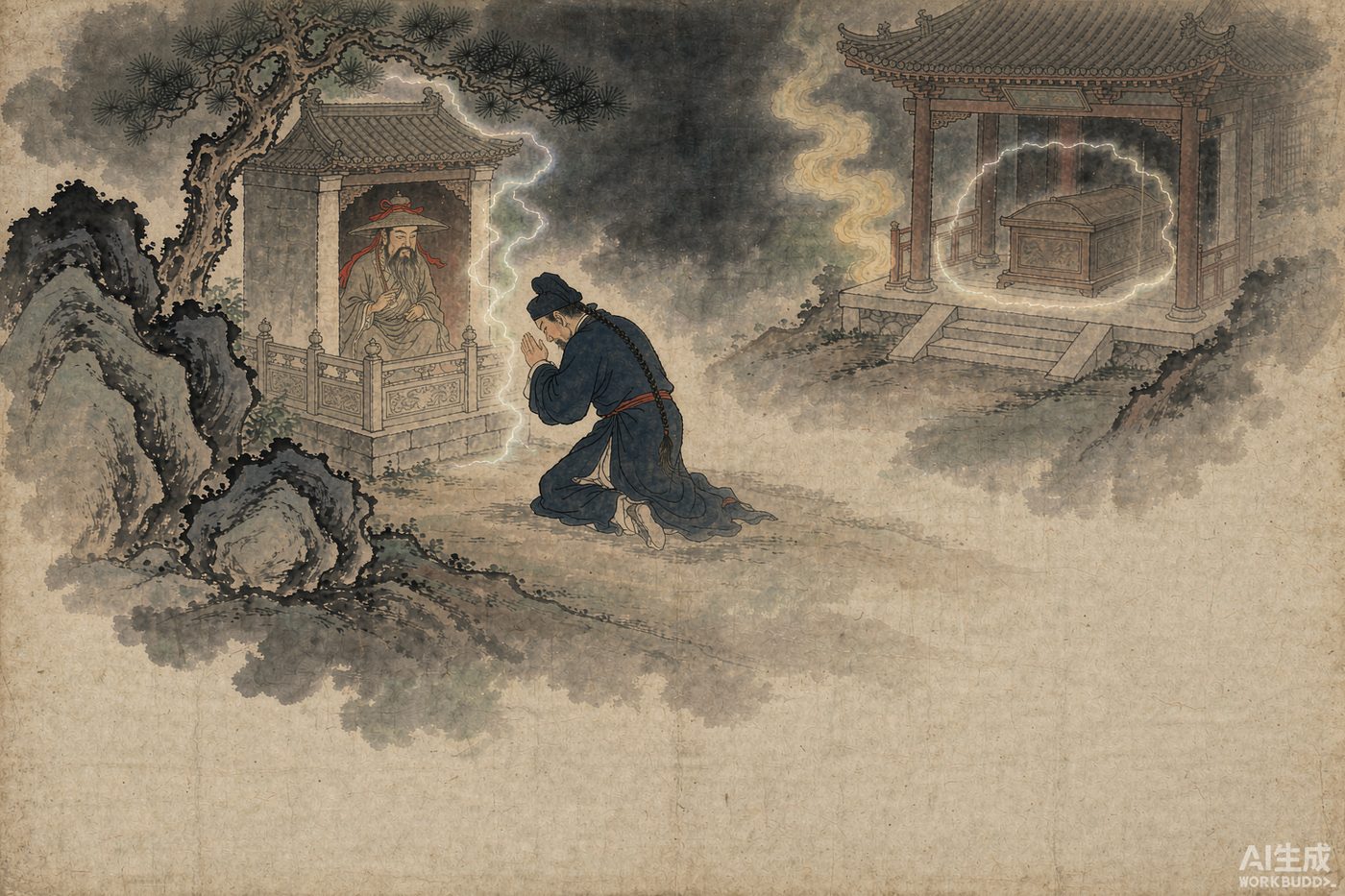
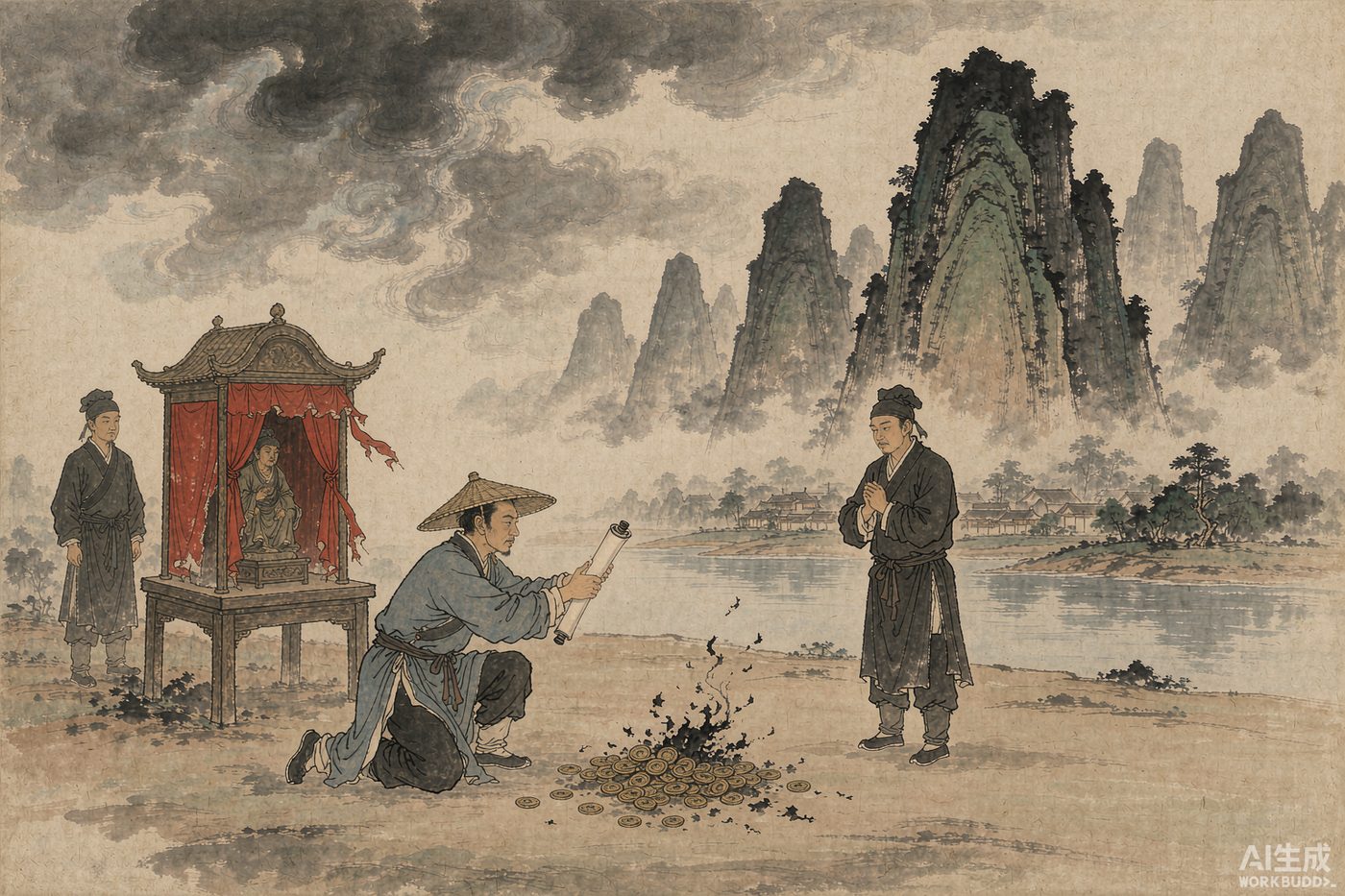
A Song-dynasty courier in a rain hat kneeling before a Thunder God shrine with an official dispatch on the altar, a temple keeper beside him, and a small heap of copper cash turning to paper ash at the courier's feet
Illustration generated by AI, based on the ancient Chinese text.

In the bingshen year of the Chunxi era, no rain fell at Guilin for months on end. As autumn turned to winter the market gardens were failing.

Zhang Shi, the prefect, sent a mounted courier with an official dispatch to the Temple of the Thunder King at Leizhou, to ask when rain would come. The courier arrived, presented the dispatch, and lodged that night in the house of the temple officiant.

That night the courier and the officiant dreamed the same dream: the god ordered that a full reply be prepared — it will not be until three days before the first full moon of next year, and then there will be only a slight rain. He also gave two thousand cash to the messenger, and commanded that this be written into the dispatch too. And he instructed the courier: the money must be seen by the vice-director.

The courier bowed his thanks. In the morning he went to take his leave, and found the dispatch and the money lying on the table.

On the road home he ran short of funds, and so spent the gratuity. When he came back to report, Zhang read the dispatch and asked where the money was. Only a hundred cash remained; the courier felt in his breast and produced them — still copper coin. Zhang passed them to the staff around him to examine — and they had turned to paper ash.

On the twelfth day of the first month, sure enough, a little rain fell. It was enough only to settle the dust, and did nothing whatever for the fields.
Original classical Chinese text · 原文

淳熙丙申桂林連月不雨秋冬之交農圃告病府守張敬夫栻遣駛卒持公牒詣雷州雷王廟問何時當雨旣至投牒畢宿於祝官之家是夜駛祝同夢神令具報云明年上元前三日方有微雨仍以錢二千與來使且命於牒中併言之又諭駛曰錢須令左司見駛拜謝旦往辭得牒及錢于案上歸途乏用遂使所犒錢至復命張視牒問錢何在時纔餘百錢探懷取呈猶銅錢也張顧左右轉接諦翫則變為紙灰矣至正月十二日果得小雨僅能洒塵於沾丐殊無補

From 《雷州雷神》, Yijian Zhi. Translated in full. 淳熙丙申 is 1176; 桂林 is Guilin in Guangxi; 府守 is the prefect; 張敬夫栻 is Zhang Shi (1133–1180), the famous Neo-Confucian scholar and prefect of Guilin, called by his courtesy name Jingfu; 公牒 is an official dispatch between government offices; 雷州 is Leizhou on the Leizhou peninsula, where the Thunder God's principal temple stood; 祝官 is the temple's officiant; 上元 is the Lantern Festival, the fifteenth of the first month — so 'three days before the fifteenth' is the twelfth; 左司 is Zhang Shi's honorific as a vice-director of the Bureau of Policy Critique.

Source. From Yijian Zhi (Record of the Listener) (夷坚志), by Hong Mai , c. 1160–1200. The original text is in the public domain; this English rendering and the accompanying notes are original work.
Where this fits in the universe: Gods and Immortals

Keep Reading

Related Stories

Qing dynasty · Kangxi era; the events 1662–1722 · 子不语

The Rain God and the Usurper

董贤为神

A Qing official sent to pray for rain finds a shrine to a beautiful young man in Han court dress. He decides the god is bogus and plans to pull the temple down for its timber. That night the god comes and defends his reputation.

DeityJustice
Southern Song dynasty · 12th century · 夷坚志

Seventy Days of Thunder

胡煌僕

A servant who has never drawn his wages in twenty-eight years takes his master by the sleeve and says: you are going to die, badly, by lightning, in the county market, in seventy days. The master guesses back wages, then adultery. He is wrong. On the day, the sky is cloudless — and the servant stacks the furniture and borrows a monk's robe.

DeityFateJustice
Qing dynasty · Kangxi era, 1662–1722 · 子不语

The Earth God Who Told

雷击土地

A dead friend has been posted as the local earth god, and he tells the magistrate that his mother is down to be struck by lightning. There is one way out, he says: make her spend out her whole allotment of food and clothing at ten times the rate, so that she dies of it first. The magistrate does it. Then the thunder comes anyway.

Small GodsDeityFate