Stories/ 谐铎/ The Vet Who Treated the Dead

The Vet Who Treated the Dead

病鬼延医

SourceXieduo (Miscellaneous Bell)
AuthorShen Qifeng
EraQing dynasty · c. 1790
Writtenc. 1790
UnderworldComedyFengdu
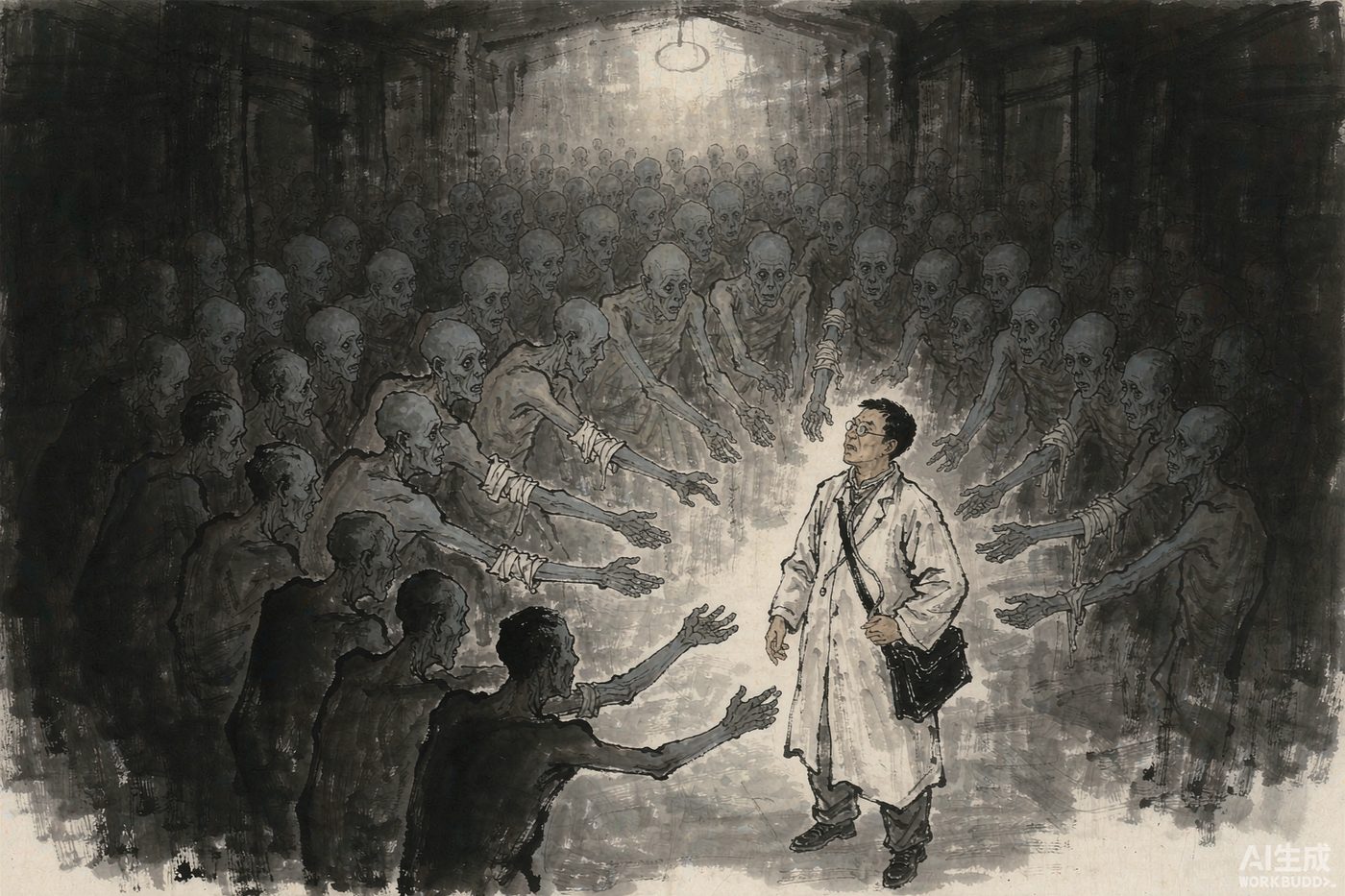
A cattle doctor in a plain coat standing alarmed in a dim hall as dozens of gaunt grey-faced patients crowd round holding out their wrists, ink wash painting
Illustration generated by AI, based on the ancient Chinese text.

Ji Fu’an of Caozhou was a cattle-doctor by trade. A rich man of his acquaintance had asthma; the physicians were called and failed, so Ji treated him by the method he used on cattle, and it worked. Thereafter he styled himself a famous physician and practised the healer’s art across Qi and Lu.

One day, napping at noon, a servant came with a card inviting him out. Without asking whose house it was, Ji told him to lead the way. He arrived in a hall where he saw several dozen figures, yellow-faced and bone-thin, crowding round to have their pulses felt. Ji looked carefully — every one of them was someone he had once failed to cure.

He started. “Is this the underworld?”

“It is,” they said.

“Then what do you want me for?”

“Doctor, you brought us here,” they said. “We are hoping you will take us out.”

With no way out, he forced himself to write a prescription. They peered at it for a long while. “One dose may not do it. We would trouble the doctor to stay two or three months.”

Ji wept and begged to go home. They grew angry: “If this place is unbearable to live in, what did you send us here for!” And they rose in a crowd and beat him.

Ji woke with a jolt, felt a dull ache in his left cheek, and on checking found the marks of fingernails.
Original classical Chinese text · 原文

曹州计伏庵,本牛医。有富翁某病喘,请医罔效,计以治牛之法治之,辄验。遂自负名医,行青囊术于齐鲁间。一日昼寝,有仆持帖来邀,计不问为谁,令仆导去。至一堂上,见面黄骨立者数十辈,环来诊脉,计熟视之,皆平昔所不治者。愕然曰:"此冥府耶?"众曰:"然。"计曰:"若是,则请我何意?"众曰:"先生医我来,还望医我去。"计不获已,勉写一方,众睨视良久曰:"一剂恐不能效,屈先生留两三月去。"计涕泣求归,众怒曰:"此地既不可居,曷为送我辈来此!"群起挝之。计亦惊醒,觉左颊微痛,验之,有指爪痕。 铎曰:"以治牛之法,而施诸有牛性者,宜奇功可立奏也。执是术以往,哀哉众生,尽丧于牛刀下矣!"

From 《病鬼延医》, Xieduo. Translated in full. 牛医 is a cattle-doctor, the lowest rung of the medical ladder; 青囊术 is the physician's art, named for the classic bag of medical texts; 面黄骨立 describes the yellow-faced, bone-thin appearance of the consumptive and, here, of the dead; 挝 is to beat. 铎曰 is Shen Qifeng's closing comment.

Source. From Xieduo (Miscellaneous Bell) (谐铎), by Shen Qifeng , c. 1790. The original text is in the public domain; this English rendering and the accompanying notes are original work.
Where this fits in the universe: Ghosts · The Courts of the Dead

Keep Reading

Related Stories

Southern Song dynasty · 1183 · 夷坚志

The Scholar Who Returned From the Court of Death

蔣良輔

A failed exam candidate dies in 1183 and comes back halfway through the funeral to report: he was hauled to the court of the dead, left standing in the courtyard because the King of Hell had not yet come to session — and given a brief furlough he will not survive.

Near-DeathUnderworldFengdu
Qing dynasty · c. 1790 · 谐铎

The Ghost Tutor of Broom Village

扫帚村钝秀才

A rich man cannot choose a teacher for his son, until a voice in a dream tells him to go to Broom Village in Wu commandery and ask for a certain licentiate. The old man who comes is strict, brilliant, and — as he explains at the farewell banquet — has been dead for three years.

GhostExaminationsKarma
Qing dynasty · c. 1790 · 谐铎

The Poets Through the Wall

隔牖谈诗

A young poet quarrels with Shen Qifeng over the lineage of verse and storms out. Alone by the lamp, Shen hears a laugh in the dark — and is harangued at length on four-character and seven-character poetry by the dead of a ruined garden.

GhostPoetryScholars