Read Chinese fantasy for long enough and you notice that nothing in it is ever merely fated. Things are on file. Someone’s profit has a fixed ceiling. A death-date is entered in a register kept by an office with a rank. A debt of seven ounces is recovered to the ounce, thirty years and one rebirth later, through the hand of a man who cheats the creditor. And when Heaven executes a sorcerer, it writes the verdict on his corpse in brimstone and closes it with a phrase lifted from Han administrative language: 如律令 — let it be done according to statute.
The traditions of karma that travelled west arrived as a law of nature: what goes around comes around. In the classical stories it is closer to an audit. Six rules hold it together.
1. Everything has a quota (数)
The clearest statement comes from a ghost with a job. In 《掠剩鬼》 a dead merchant explains his new appointment to a living monk:
The interest of every clerk and every merchant has its fixed number. Whatever you gain beyond the fixed number is surplus — and I am allowed to seize it.
And there are a great many of his kind, he adds. Windfall profit in this universe is not luck; it is an overdraw against an allocation, and there is a department that claws it back.
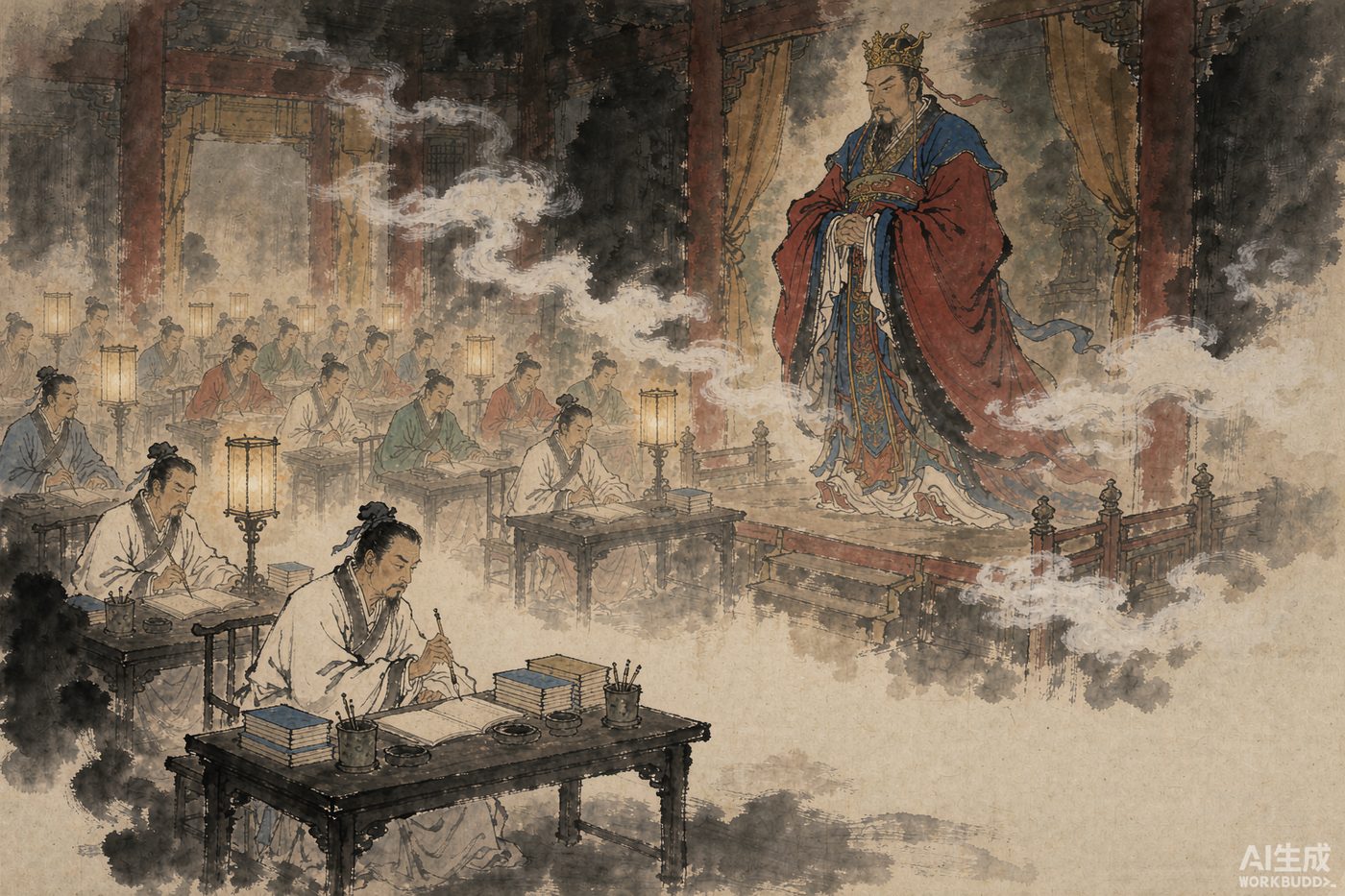
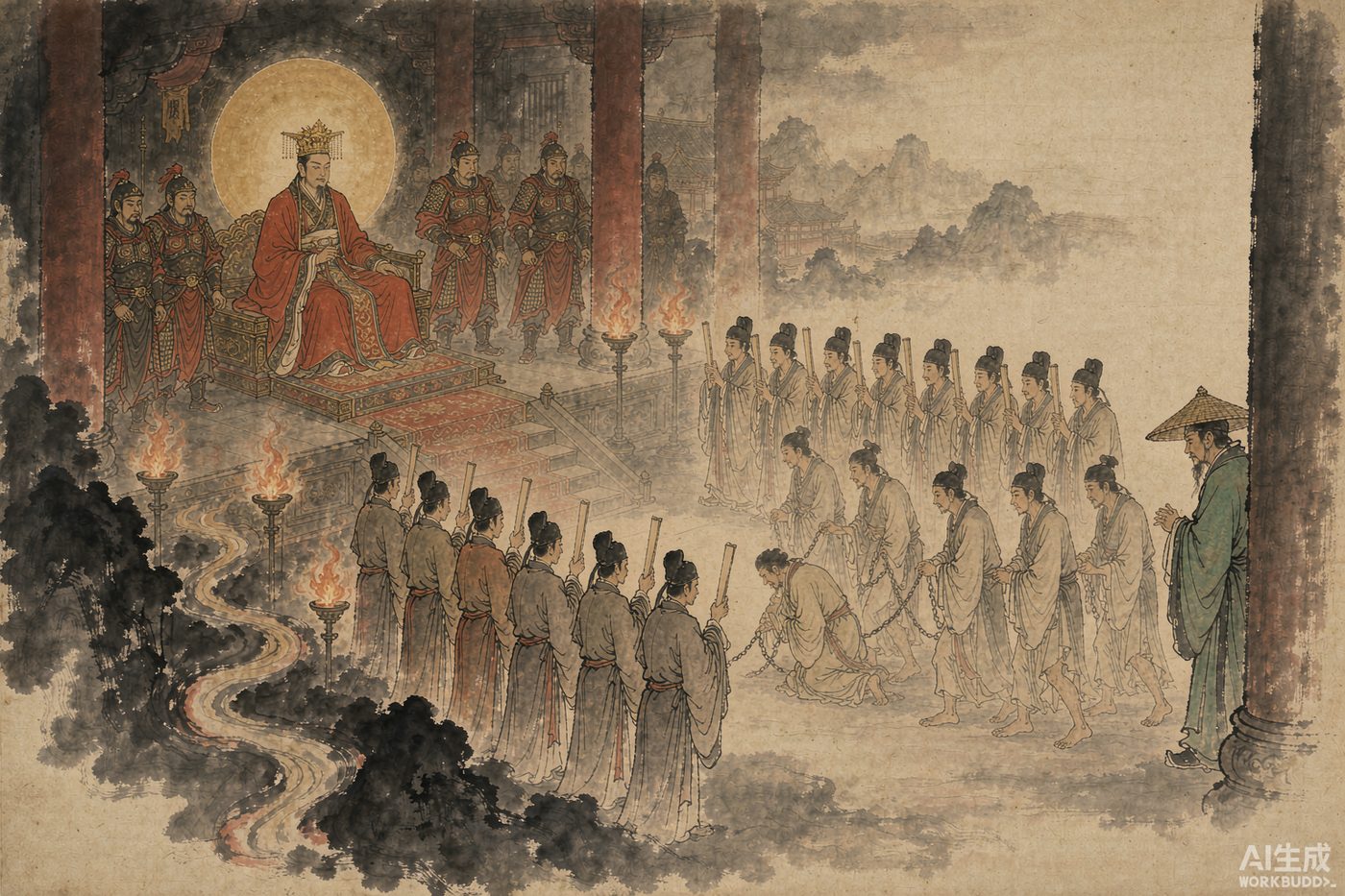
The same logic governs death. In 《森羅殿點鬼》 the registers of the dead have not been audited in thirty years, abuses have accumulated, and the order goes out to examine them in detail with no concealment — clerks punished for errors. When eighty-seven thousand death-summoning ghosts fail to answer roll-call, it turns out they have been quietly reborn as doctors and prostitutes by order of the Wheel-Turning King, because snatching souls has its fixed limit in the underworld. Even mortality runs on a quota.
2. The registers are kept, and kept by somebody
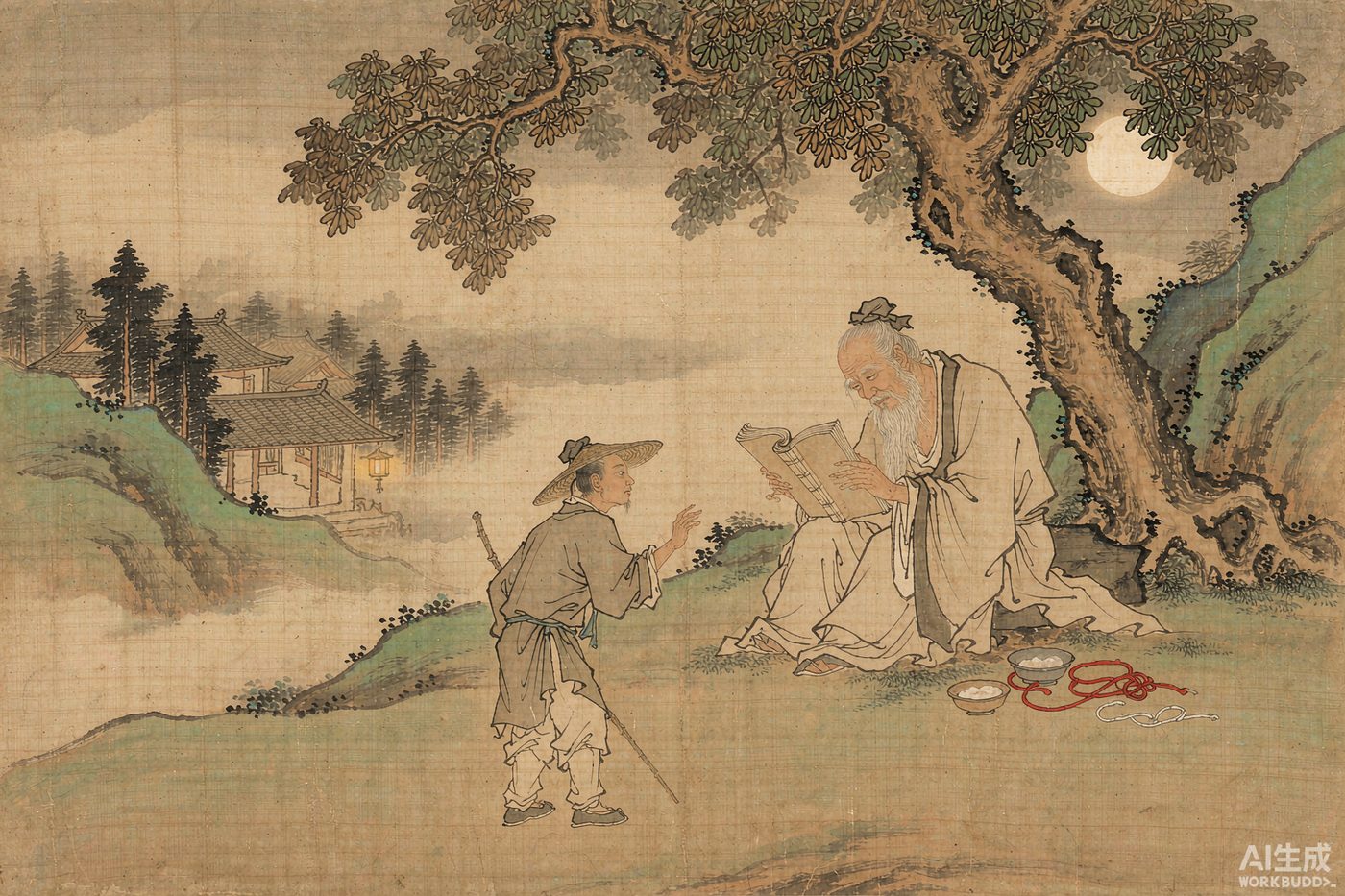
Life, death and marriage are all filed before you arrive at any of them. The Messenger of the Nine Darknesses keeps the register of human life and death and ranks one grade below a prince. The Old Man of the Moonlight, sitting up reading by an inn at midnight, is reading the register of marriages — and carries the red thread that ties destined ankles across provinces, decades and family feuds. It is one of the great cosmic jokes of the tradition: the most cheerful human institution is administered by the same bureaucracy that processes ghosts.
The consequence is that the universe is legible before it is just. You can, in principle, look things up. That is why so many of these stories turn on someone getting a look at the book.
3. It settles to the last cash
Two of the best tales in the collection are pure arithmetic, and neither contains a miracle anyone notices.
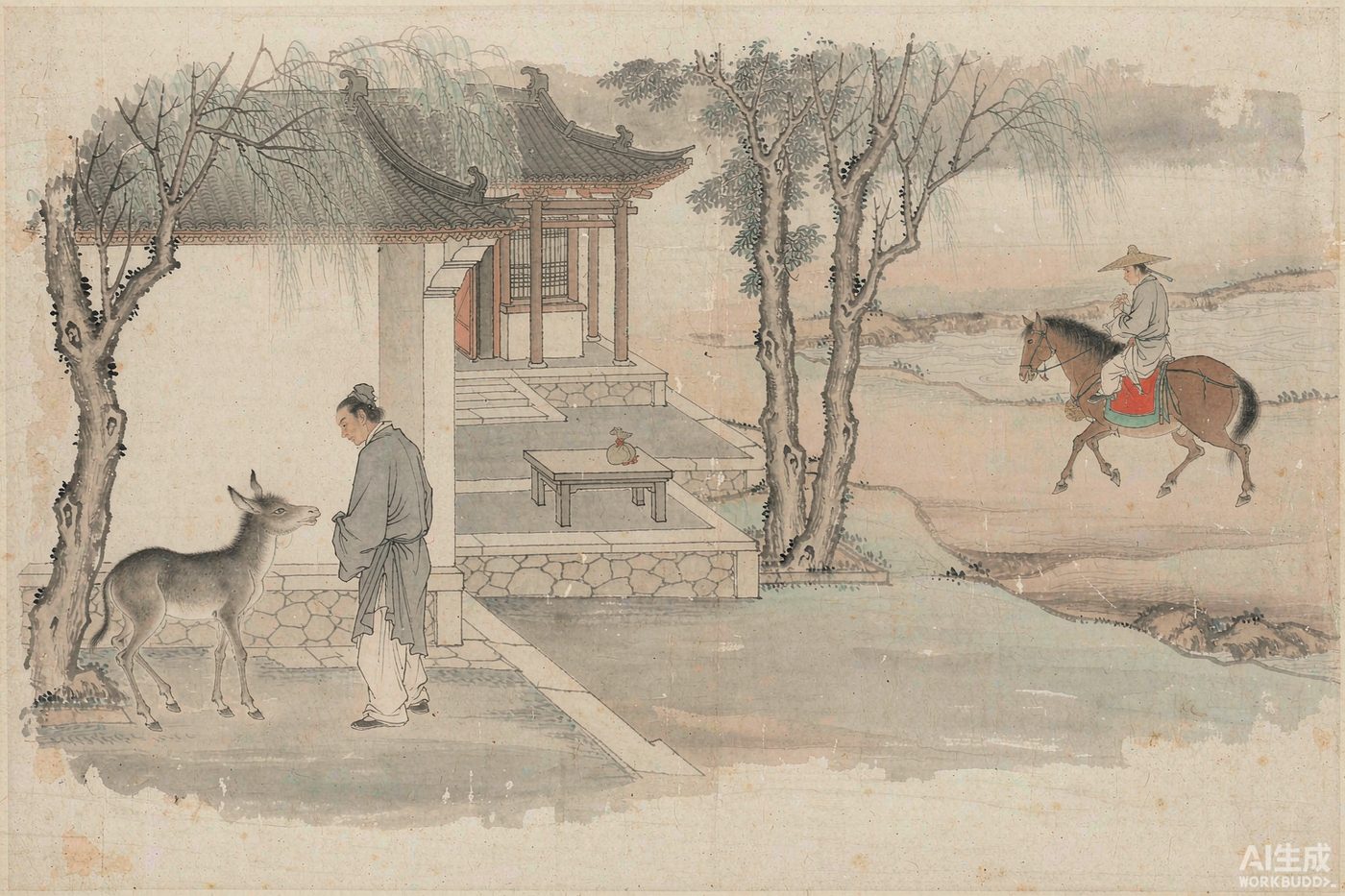
In 《大乐上人》 a poor yamen runner borrows seven ounces of silver he can never repay, and says to the monk who lent it: in the next life let me be your donkey or your horse and pay you that way. That night the donkey foals. Years later a merchant rides off on the animal leaving payment on the table — and the sum is exactly seven ounces. The monk never asked for the vow; the vow was unilateral and bound anyway. And the collection runs through a man who cheats the monk outright, which the tale pointedly declines to object to: cause and effect is indifferent to the character of the instrument. It closes the account.
In 《許元惠》 a man dreams of a guest in black who says he is returning a loan of three hundred cash. The dreamer cannot remember the lender, the loan, or the date — before he could ask who it was and when the debt was incurred, he woke. The next day one extra duck comes home, and it is black. For a month it lays an egg a day: thirty eggs. Then it stops coming. Counting their value: exactly three hundred cash.
Hong Mai never explains the exchange rate. The precision is the wonder.
4. It measures disposition, not magnitude
This is the rule that makes the system unnerving rather than merely tidy, and two tales state it from opposite directions.
In 《一錢落職》 a man is dismissed for corruption before he has taken up his post. He protests that he has committed no crime in office. The reply: when you were only a licentiate you already valued one coin as your life — you put your foot over a coin a boy dropped in a bookshop, waited for him to leave, and pocketed it. Would you not go feeling in pockets and forcing open boxes, a robber underneath the gauze cap? The offence is not the sum. It is the demonstrated disposition, and one entry is enough to establish the balance.
In 《考城隍》 the same principle is the examination question. The successful answer is that intent to do good is rewarded even if the good is not achieved — the will, not the outcome, is what Heaven measures. Read together: the ledger is sample-based. One coin convicts; one intention acquits. Neither weighs what actually happened.
5. Sentence is a conversion, not a tariff
Punishment in this universe does not come in units of suffering. It comes as reclassification, matched to the shape of the fault.
《顶上圆光》 shows a monk’s nimbus fill with his own former lives stacked like a seven-storey pagoda: the Qin general Bai Qi, who beheaded two hundred and forty thousand at Yique and buried the forty thousand who surrendered at Changping; then an ox and a dog, reborn in the Tang on the same day as the chancellor Li Linfu; then the dog who remembers its karma and prays with its forepaws together, on account of which Yama is pleased and restores it to a human official’s body; then the Song minister Jia Sidao, who took bribes and ruined the state.
Yama’s sentence for Jia Sidao is one line: an official who lusts after gold is no different from a courtesan who loves cash — be punished by being made one. He is reborn as the late-Ming courtesan and poet Bian Yujing. Seventeen years as a Daoist nun then earns him a male rebirth — but not a clean one: he must pass one more turn on the path of those who die young, born to the Gu family and dead at seven, before he reaches the Buddha’s gate.
Two things follow. Devotion is noted on the record and promotes you, exactly like a civil-service evaluation. And no sentence is a fine; every sentence is a transfer.
6. Because it is paperwork, it can be argued with
The last consequence is the one Yuan Mei exploits hardest. If the cosmos runs on statutes, then a statute can be contested by a living man with the nerve.
In 《酆都知县》 a county magistrate abolishes the annual tax his people pay to Hell, and is told by the town to go and explain himself to the gods. So he has himself lowered down a well — and wins. Bao Zheng, the presiding judge of the underworld, the one authority no ghost can bribe, agrees with him, and uses the occasion to denounce the wicked monks and vile Daoists who use gods as an excuse to ruin families. The god of death endorses the abolition of a tax paid to death.
In 《李通判》 the reverse: a Daoist is struck by lightning and the verdict is posted on his body in seventeen characters of brimstone, ending 如律令 — according to statute. The cosmos, in other words, sentences by notice-board.
Why this is the load-bearing rule
Take the ledger away and most of these stories stop working. The ghost is a soul whose account is not yet closed. The forgetting brew is the mechanism that lets an instalment plan run more than once. The substitute is a conservation law for souls, and the bribe that buys an underworld post is an exploit in a system that expects one.
And for anyone building inside this universe, the rule the texts never break is the same as the rule for otherworldly time: state the number. Seven ounces. Three hundred cash. One coin. Thirty eggs. Eighty-seven thousand ghosts. The moment a figure appears, the cosmos becomes a place that keeps books — and the story has something to audit.