Ye Peixiang of Jinping was a girl of inborn quickness. She was put to her books at seven and understood more than she was taught.
Once she said to her teacher: “The ancients made characters by combining meanings and drawing shapes. But they got some of them wrong.”
He asked what she meant.
“矮 is plainly 委 over 矢 — to lodge an arrow. It ought to be read shoot. 射 is plainly 寸 beside 身 — a body an inch long. It ought to be read short. The two have been swapped round. Is that not the ancients’ mistake?”
The teacher was astonished, and said to her father: “Tongwu at nine could foretell the dark text. This young lady’s quickness will not fall short of the son of the Thatched Mystery Pavilion.” Her father’s face fell. “Tongwu was quick too early, and died before he was capped. I am afraid this wish-granting pearl will not stay long in my palm.”
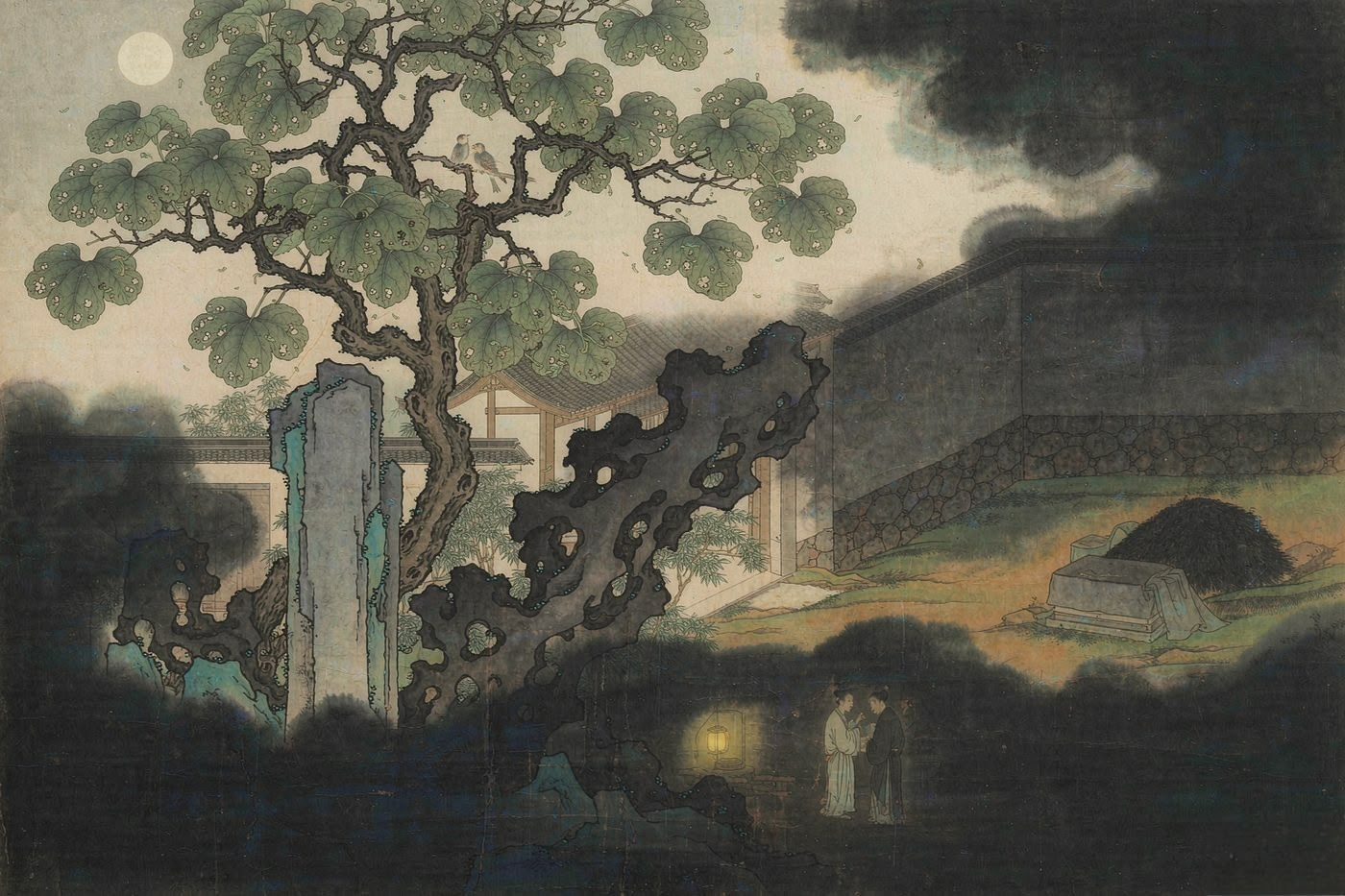
She died suddenly of an illness at sixteen, and was buried beneath the green plane tree in the back garden.
Then the caterpillars came.
Hundreds of them, small and green, gathered on the leaves of that tree and bit fine characters into them — and when the family read what was written there, it was verse. There were eight poems, and they were called The Eight Views of the Underworld.
Some of them went like this:
The silk robe burned to ash gives no warmth tonight; the tall blue moon lights a soul that has left. Wind and dew cover me and there is nothing to put on — and I grudge the pear blossom for still bearing a stain.
that was The Moon over Ghost Gate Pass. And:
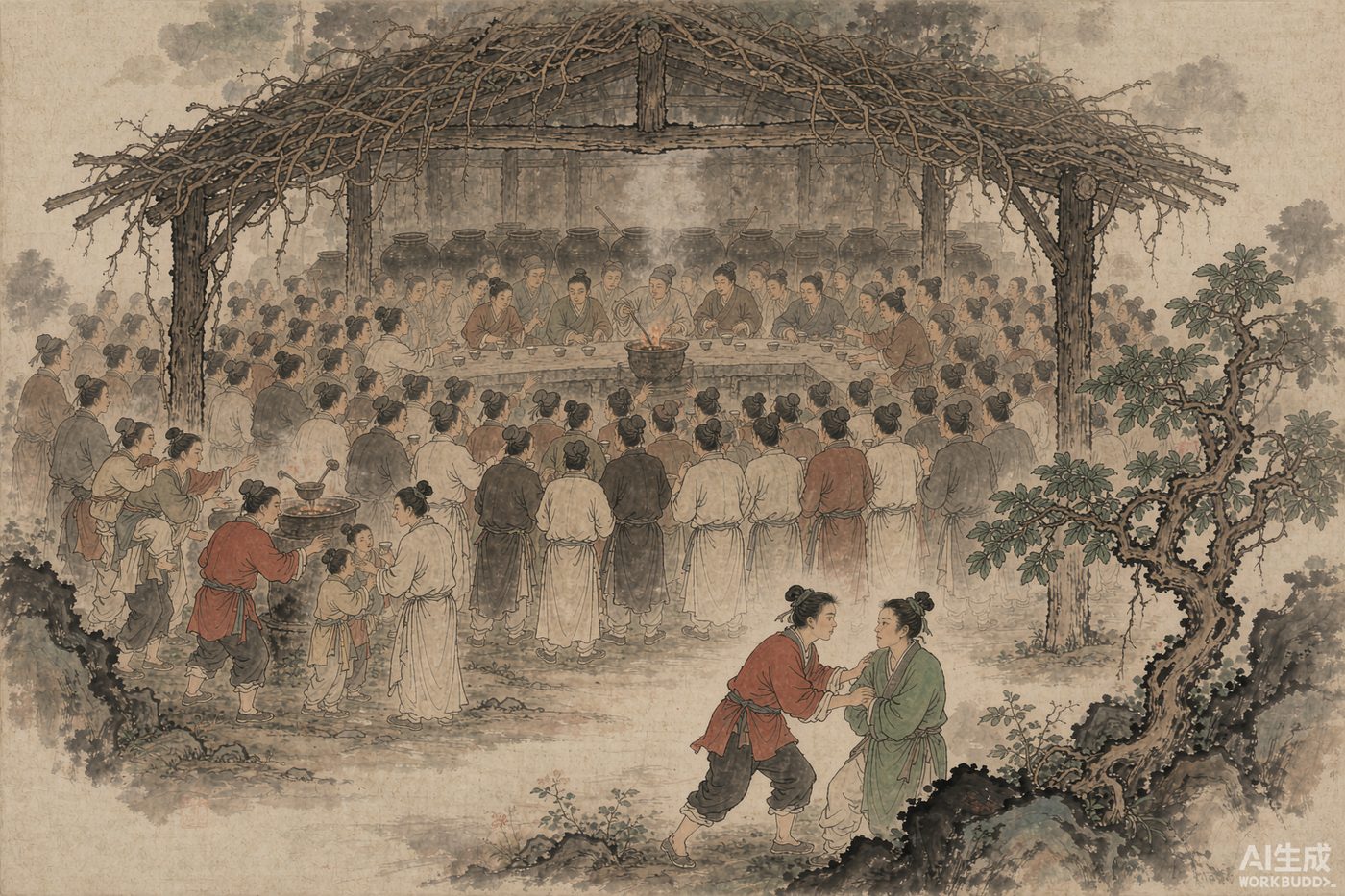
On a moonlit night the soul comes home, jade pendants swinging; I loosen my sash by the brazier and take up the fragrant brew. Pitiful — the fine rain on the day of cold food; before the bowl of wheat-meal, the tears are poured out.
that was A Small Drink at Meng Po’s Village. And:
The blue blood of ten thousand houses runs together into a channel, and dyes the carp of Qin Gao red. I hook one and throw it back again — I am afraid of finding a letter from home inside it.
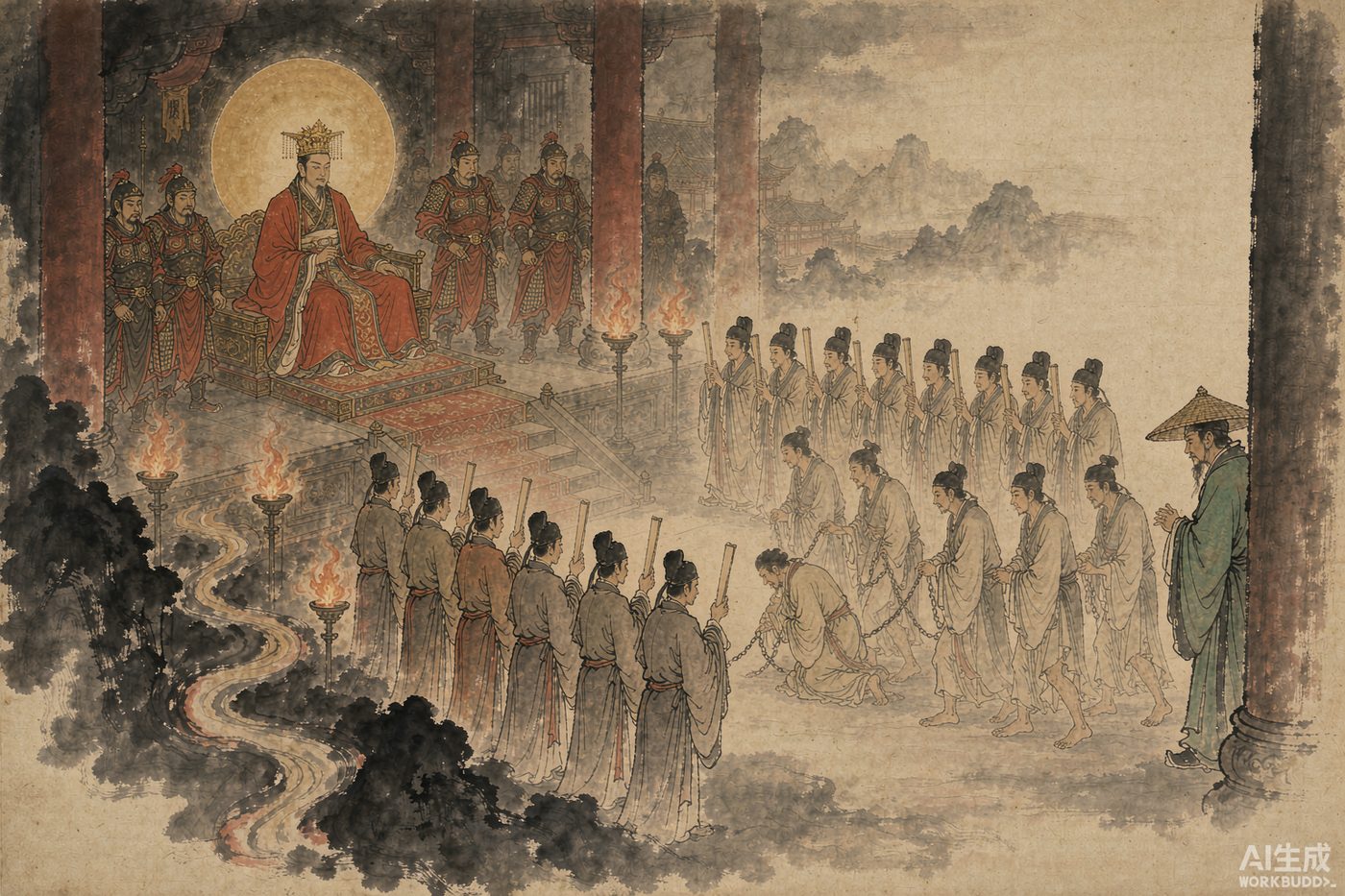
that was Angling in the Pool of Blood. There were also a spring boat on the Bridge of Helplessness, an evening look-out from the Terrace for Gazing Home, a summer evening in the Flaying Pavilion, an outing at Cur Village, and a meal for monks at the Registering-the-Dead Altar. The rest cannot all be set down here.
Then one day a letter came, addressed to her father and mother.
I was a child, and I was loved in this house. The depth of what I owe you, I could not repay with my body. I remember the rain after the study window, the flowers by the small pavilion, calling for my father to be asked a character, looking for my mother to comb my hair, tugging at a sleeve and demanding a smile, too young to know sorrow. I thought the willow’s spring would be long and the pear’s life would be long; I would give up my rings when I was old and stay a child beside you.
And then the bad dream struck, and the flower fell into the kalpa. My hill of a crime is heavy and it has reached my parents. Since I said farewell, the swallows have left the nest but the mandarin ducks still haunt the grave. The spring silkworm, dead, still knows how to draw out its thread; the candle, burnt to its end, does not forget to give flame. A soul chanting in night rain, a ghost singing by the autumn grave — feeling will not be denied, and a short song must serve for weeping.
Yesterday I came to the old pavilion and looked a long way at your face. The cedar is flourishing, the day-lily is flourishing, and I was comforted to find you well. Little Dai has grown her hair down, I am glad to see; after some years in the red chambers she will be filling the incense and holding the inkstone. Open my old box, I beg you; pick over what is left of the rouge. The two halves of the hairpin, the embroidered kerchief — make a small dowry of them, and keep them to remember me by.
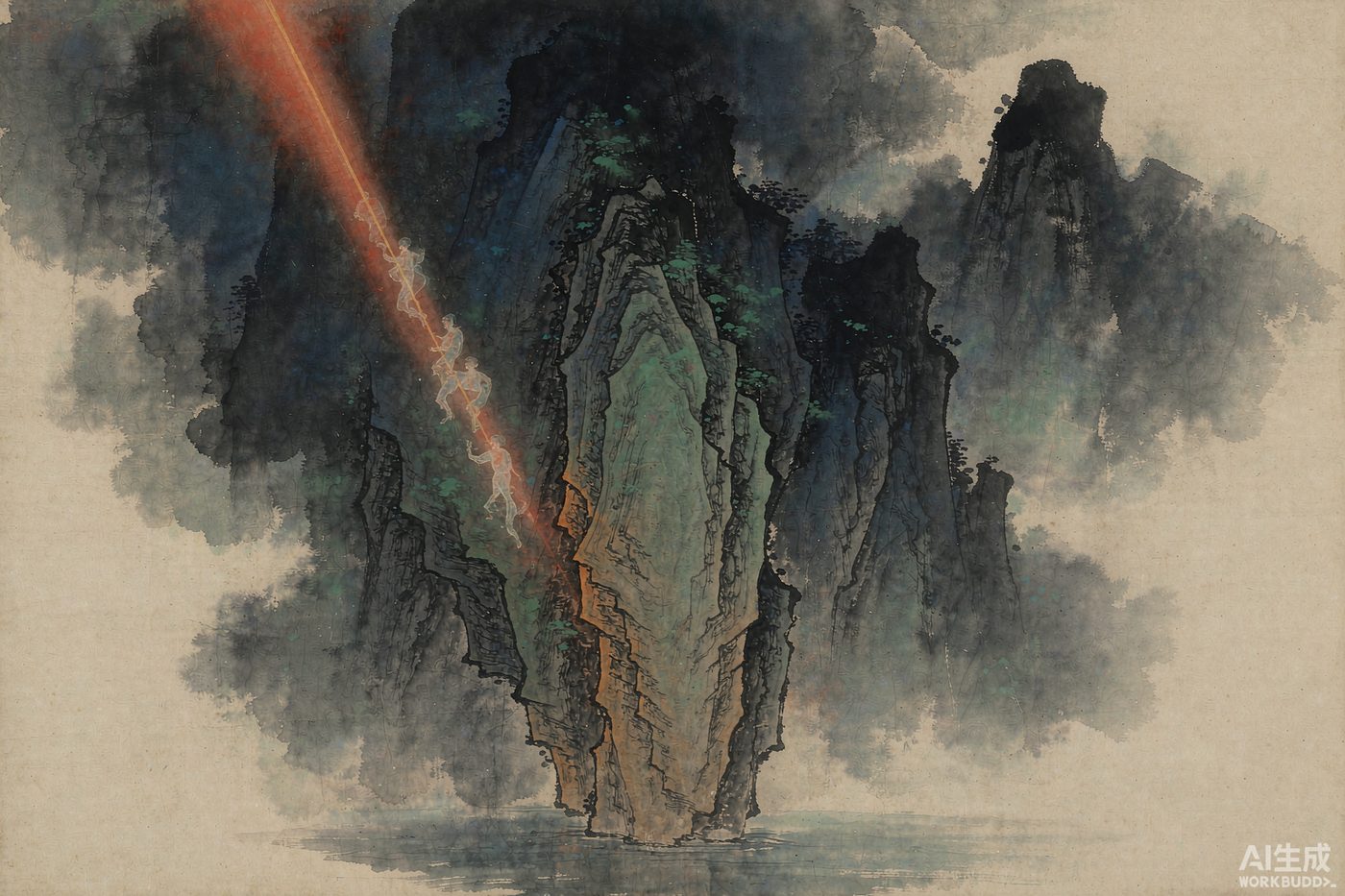
I have lately been conscripted by the Queen Mother as a keeper of books. Merit is planted without a matchmaker; there is a road up to heaven. The old precedent of the jade tower will serve, if only as a jest against myself. But now that the form is divided and the shadow sundered for a thousand autumns — this long, long regret, what is to be done with it? Only this: eat well, and gather your medicines with a sincere heart. If the fire at the furnace-head ripens and the pill beneath the stove is achieved, then by the walls of the city without night, at the assembly of the long-lived, it is not certain that we shall not meet.
The Weak Water holds no fish; Peng Mountain sends few geese. One word, and it is an eternal farewell; ten thousand kalpas will not let me forget. In haste, at parting — your Peixiang, a hundred prostrations.
Her parents read it and wept without stopping.
After that the green caterpillars vanished from the garden, and the plane tree leaves never bore writing again.
The Duo comment: I read Zhou Yueliang’s Miscellaneous Notes and doubted the business of the walking immortal Dong Lang. And yet that a person of talent should not be wholly extinguished, but should lodge in insects and grasses and trees to pour out what was knotted in them — that is possible, I think. But here is a red-and-powder girl ascended to heaven, and the green insects gone without a trace. Was it that when Liu An took up his house, even the chickens and dogs became immortals? Ah. It is strange.