A man of Nanchang, whose father was an instructor at the Imperial College, was living in the capital with his father’s posting.
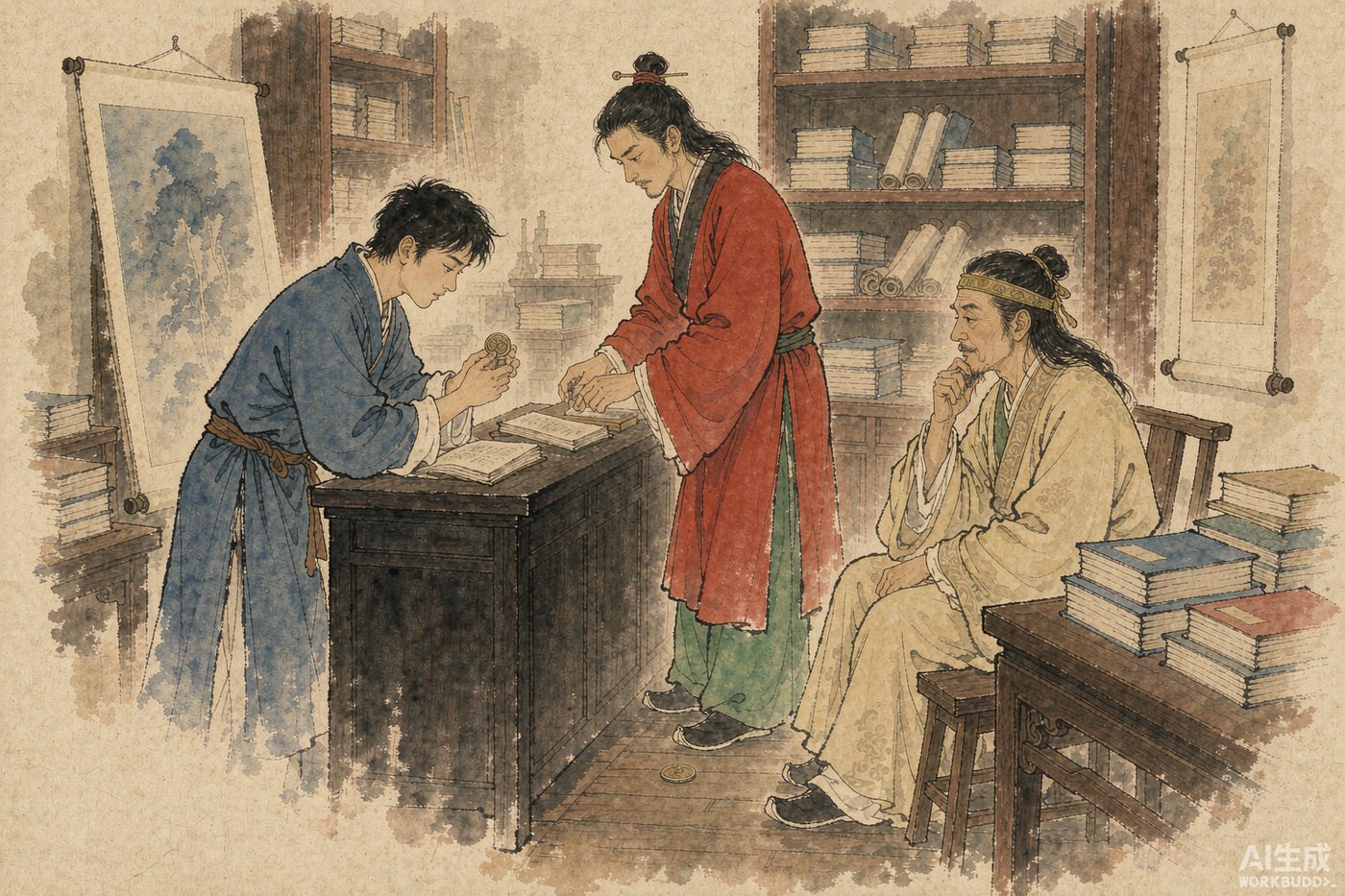
Passing along Yanshousi Street one day, he saw in a bookshop a young man counting out cash to buy the Lüshi Chunqiu, and the boy happened to drop a coin on the floor. The man quietly put his foot over it, waited for the boy to go, and then stooped and picked it up.
An old man sitting nearby watched him for a long while. Then he got up, asked the man his name, gave a cold laugh, and left.
Later the man entered the copying office as a student of the upper college, went through the selection, and was appointed Commandant of Changshu county in Jiangsu. He packed and set out for his post, and sent in his card to pay his respects to his superior.
The Governor of Jiangsu at that time was Tang Bin. Ten visits, and not one audience. Then the guard came out with the Governor’s order: he was not to proceed to his post. His name was already on an impeachment.
He asked what the charge was.
“Corruption.”
He thought to himself that he had not yet taken up office, so how could there be any bribe money? There must be a mistake. He urgently asked to make his case in person. The guard went in and reported, and came back with the Governor’s answer:
“Do you not remember that business in the bookshop years ago? When you were only a licentiate you already valued one coin as your life. Now that you have the luck to be a local official, would you not go feeling in pockets and forcing open boxes — a robber underneath the gauze cap? Hand in your seal and go. Do not make a whole circuit weep.”
Then he understood that the old man who had asked his name was Tang Bin himself. He went away ashamed, and left his office.
The Duo comment: “The God of Money takes a hundred thousand, a million, a hundred million bodies, and in all of them tempts men into a false move. Do not say one coin is a trifle. A trickle not dammed becomes a river; a spark not put out becomes a fire on the plain. My wish for those who would keep the sacrificial vessels clean is this: begin with one coin.”