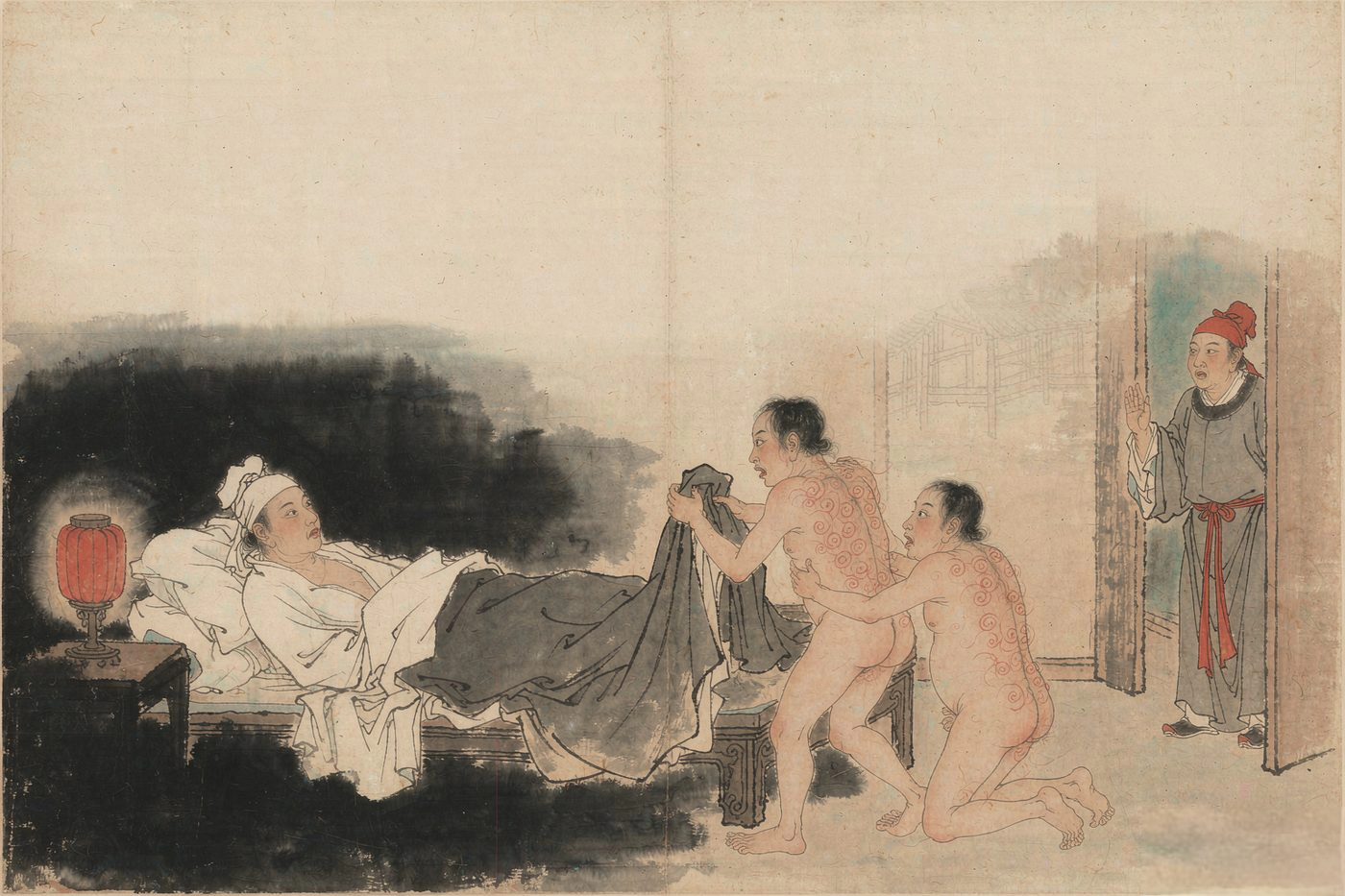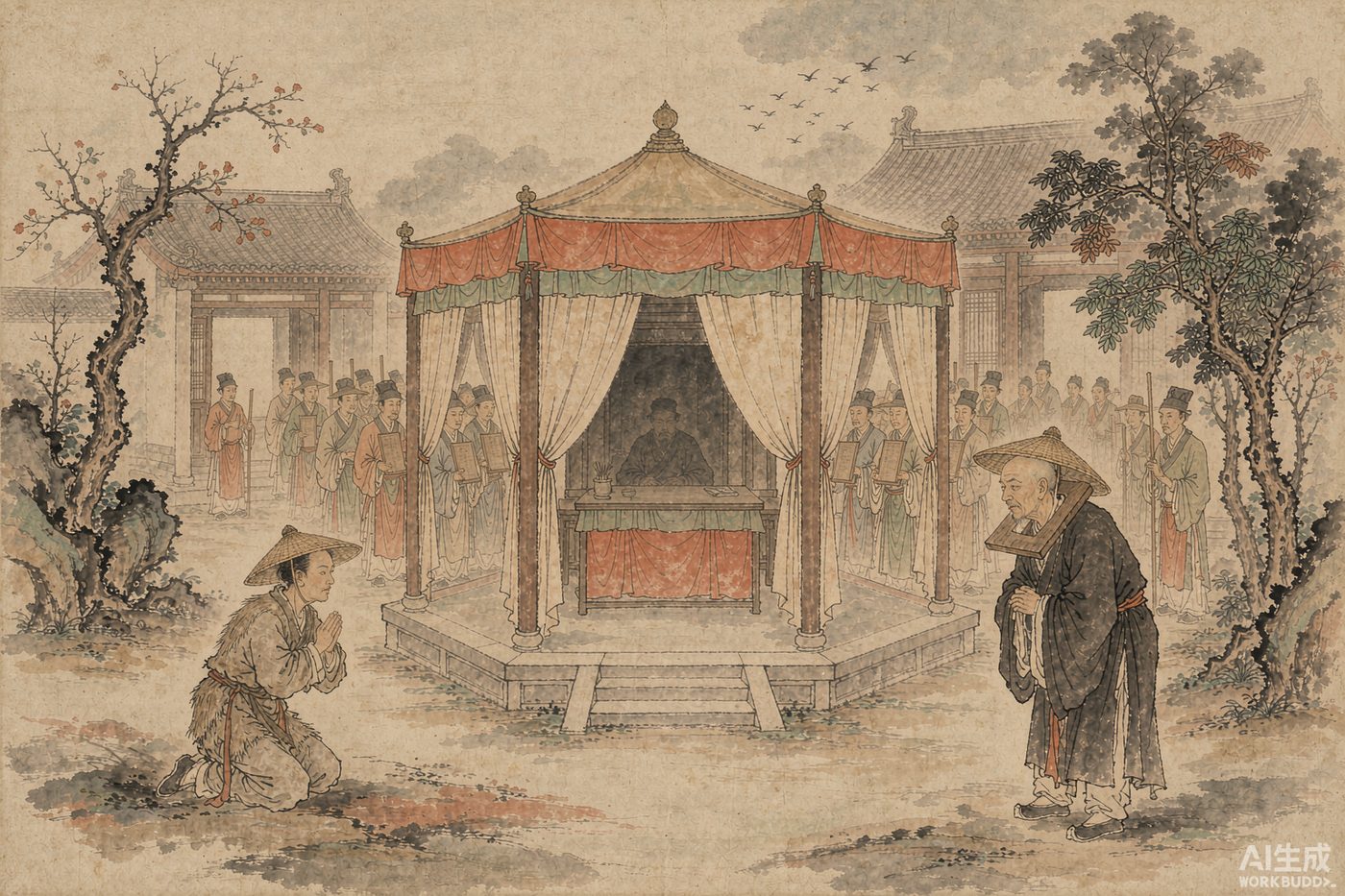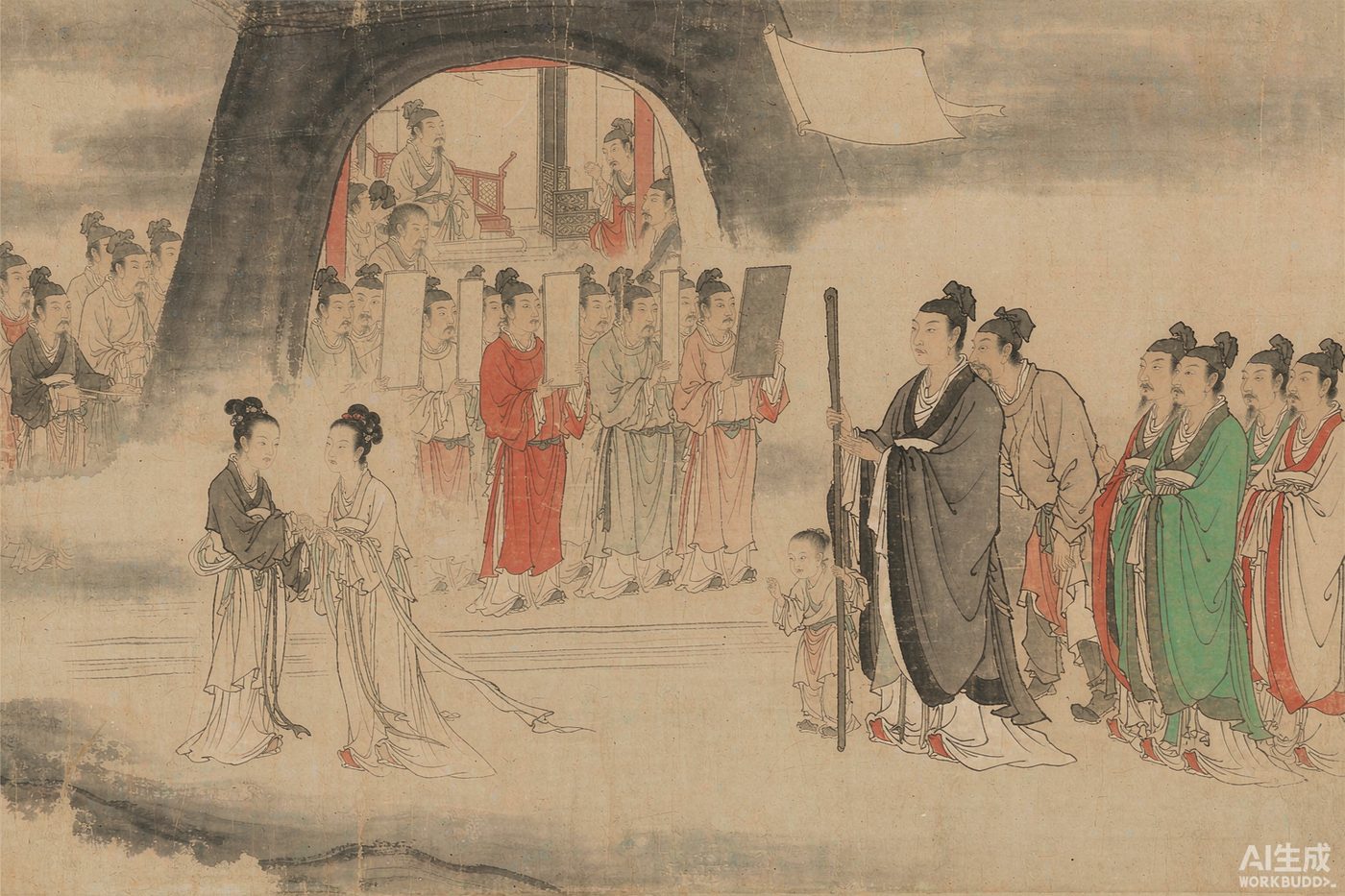
Qiu Ding of Yihuang, lying desperately ill, was arrested by two clerks holding tallies and taken to a government office. A crowd of clerks stood ranked in the court below, waiting for the presiding officer to come out and sit; then he was led forward.
Presently they called a woman, carrying a thin gown under her arm and trailing a long silk sash, as though she had something to give evidence about with Qiu.
Qiu’s mouth had not reached a word when there was a muttering at his shoulder, debating with the woman — and the woman’s plea failed. The clerk ordered her away, tearing her sash and pulling at her gown.
Qiu understood in silence. In his youth he had lived in the same house as this woman, going to and fro morning and evening, and had lain with her. Afterwards she married the son of a rich family, and gave much of her wealth in alms to Taoists and Buddhists, and within a few years she died. The underworld had audited her merit and found that she should receive a male body. But there remained the old matter of her fornication with Qiu, and it had to be settled straight before the reward could be granted — and so Qiu had been arrested to give evidence.
Qiu said nothing, and the muttering at his shoulder laid the whole case out and won it. For in that old business the private intent had come from her; and it was on that account that she would not attain the male body.
Then they waved Qiu away. As he was taking his leave he saw a clerk presenting a document, and he craned his neck to look: it was altogether like a county summons in the world above, with the names of the parties listed at the head. The rest he could not read; he made out only the two characters Guo. The clerk covered it at once.
The soldier who was guiding him out brought him to the great gate. A placard had already been posted there — so-and-so, so-and-so — and his brother was on it, and under the name was written seventeenth day. The title signed at the end was that of an officer of the village lately dead, and the style of the office was quite unlike the world’s.
Halfway along the road the soldier said, in a low voice: “Other men who come here all bring a gratuity. How is it you have none?”
“I am a poor scholar,” said Qiu, “and when I came I did not bring a single cash. What can I give you in thanks?”
“When you get home,” said the soldier, “have a Taoist recite the Scripture of Salvation a hundred times. That will be enough.”
Qiu promised. And in a daze he woke.
He had been dead a full day. His family stood about him weeping; the coffin and the shroud were ready; the monastery was striking the death-bell, and its sound was still clear in his ears. He told the story to his mother and his wife, who were glad of his return to life. But his mother and his wife were both of the Guo family, and he grew troubled and unhappy.
A few days later they both fell ill together and did not rise. And his brother died on the seventeenth day.