My late father was in the office of Provincial Judge Chi Weitai of Huguang. A colleague, Zhu Yanghu of Daxing, handled revenue. Suddenly one day he gave a wild shout.
They hurried to look. His face was the colour of ashes and he lay on the ground unconscious. They got ginger juice into him, and after a long while he said:
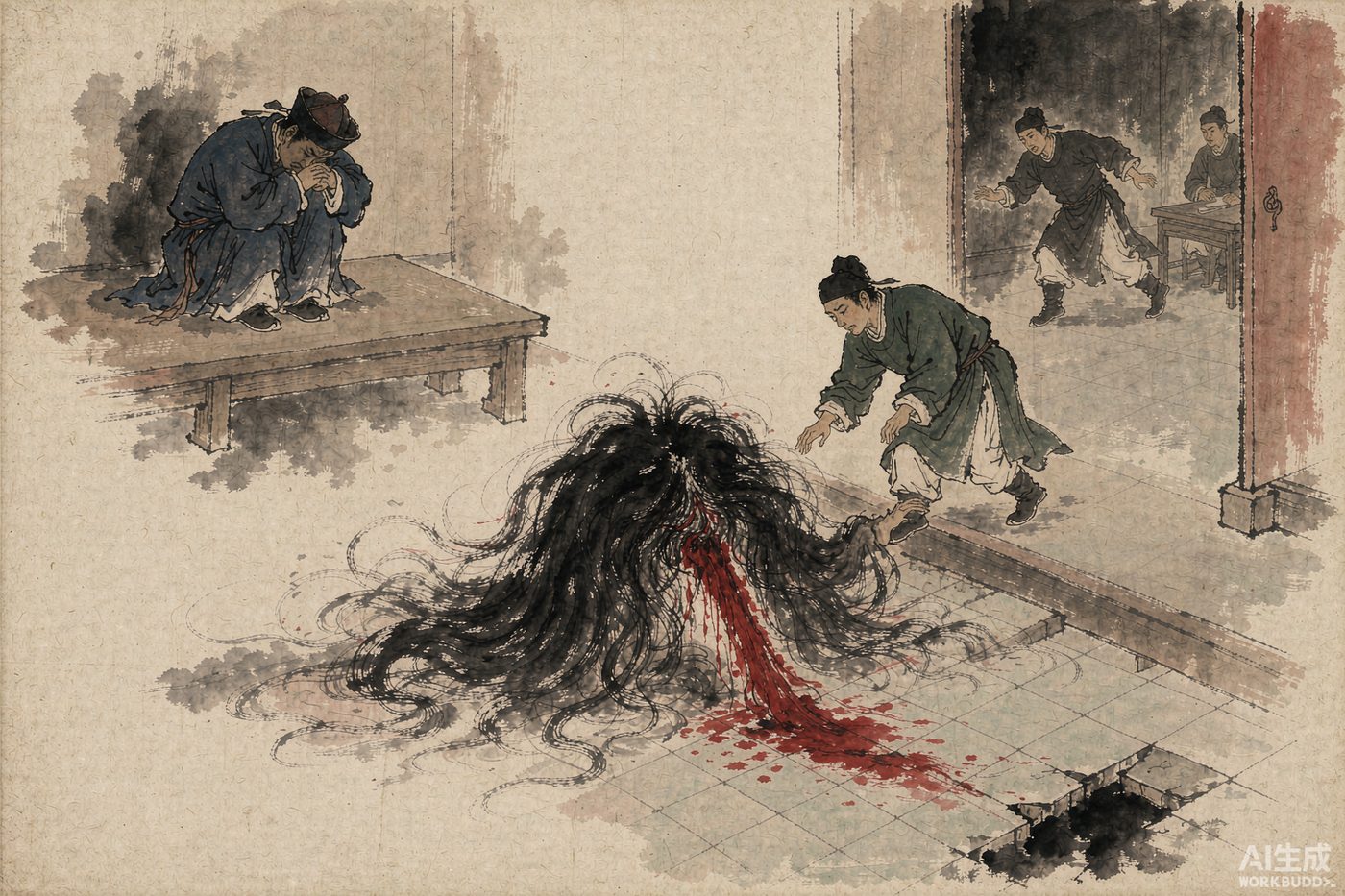
“I was sitting here checking documents, at high noon, when I heard a sound under the floor tiles, and something worming its way up, pushing a tile up. I thought it was a rat and trod on it with my foot, and the tile went flat again. After I had sat a little, the tile sounded as before. I lifted it and looked, and there was a ball of black hair, like a human head of hair, rising out of the earth. A cold wind struck at a man, and it rose higher and bigger.
“First two eyes came out, glaring and staring angrily, then a mouth, cheeks, waist and belly. It was as black as lacquer, and blood streamed from its neck, and it leapt up and took hold of my foot, saying: ‘So you are here! So you are here!’
“‘In a former life I was a robber of Shandong, and by law I should die. You were magistrate of Tancheng, and you took seven thousand ounces of my bribe-money and promised to get me off. When the case was fixed, you still proposed the death penalty, and I died with my eyes open. Now though you are in your second life, my vengeance must be had.’ With that it dragged me into the earth. I shouted. When it saw the crowd arrive it let me go and went.”
They looked at the mark on the tiles, and it was plainly still open.
After that the ghost came every day. If there were people sitting with him it did not come. It was especially afraid of Provincial Judge Chi, and when it heard that Chi was coming it fled with its head in its hands.
Chi wrote large characters on the desk: “I ask you, evil ghost. You were a robber and deserved to die. Do you dare to bear a grudge against an officer of the law? If you wish to be revenged, you should be revenged on your former life. Do you dare to be revenged on this one? Deliver your confession at once.”
That night the ghost wrote beside it in ink, the characters crooked and slanted:
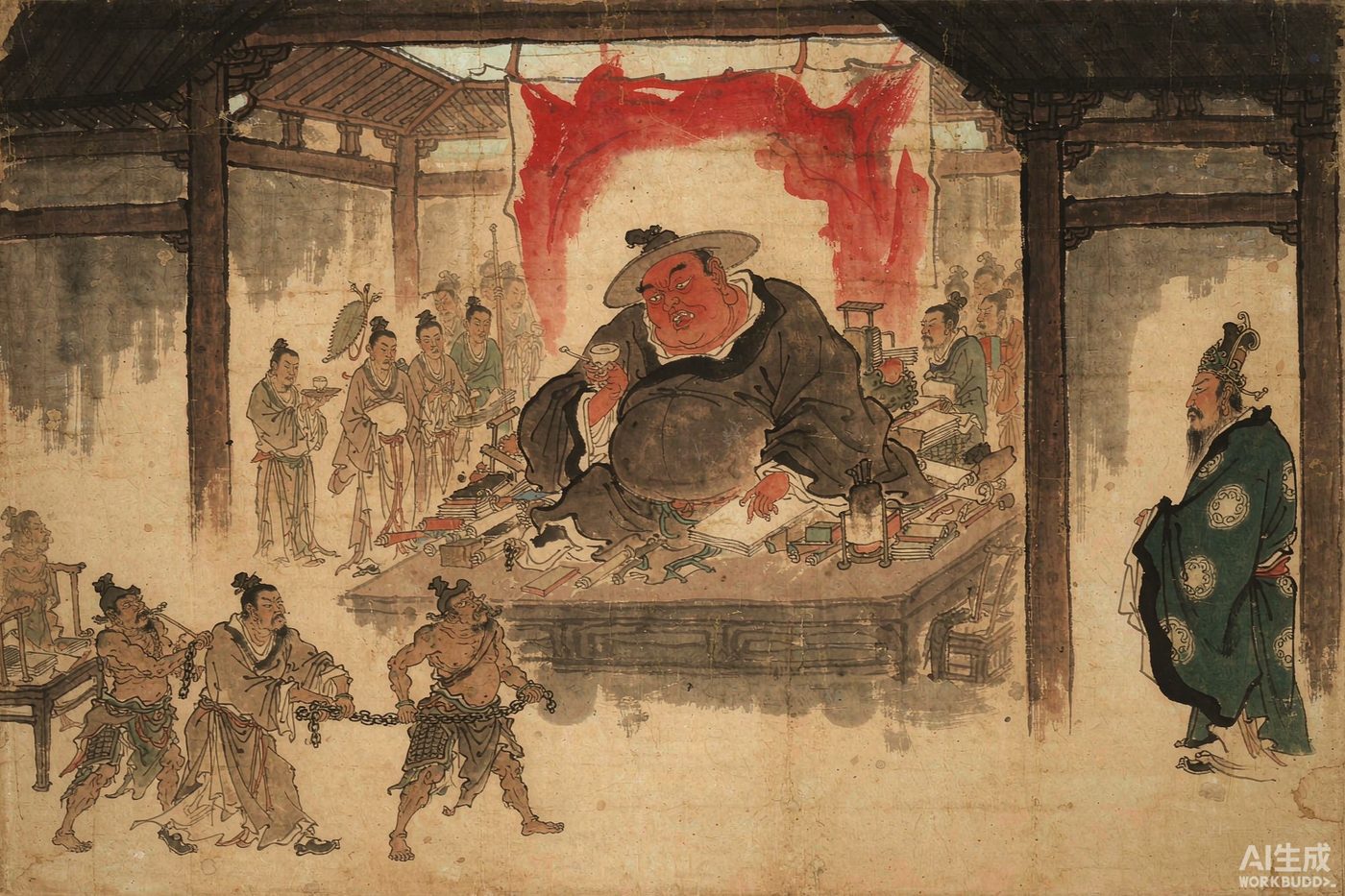
I do not dare to bear a grudge against an officer of the law. I dare to bear a grudge against a corrupt officer. I killed many men as a robber, and I have been roasted on the underworld’s branding irons for decades, and my face is already charcoal. Every time I am tortured I must cry: I deserved to die, but there was one who promised I need not die! The magistrate of Tancheng took seven thousand ounces in bribes — should he alone go unpunished? I have cried for more than sixty years, and at first it was never allowed. Now, as the sea of bitterness gradually fills, I am permitted to loose my fetters and take my revenge. The confession I have written is true.
Chi could do nothing, and could not be with Zhu morning and night, so he ordered several men to guard him.
After a month or so, on Chi’s birthday, plays were put on and the guests drank, and they pressed Zhu to come out and watch. Zhu said: “I am a man waiting to die. What mood have I to watch plays? If you gentlemen love me, order more of your household to sit with me.” They did as he asked.
When the banquet broke up they went to look, and Zhu had hanged himself on the bed. Chi and his friends all reproached the servants for not watching him, but they all said: “A ball of black air blew in under the lamp, and the maids each fell asleep.”
Others said the servants were greedy to watch the plays, and had not necessarily sat with him at all.