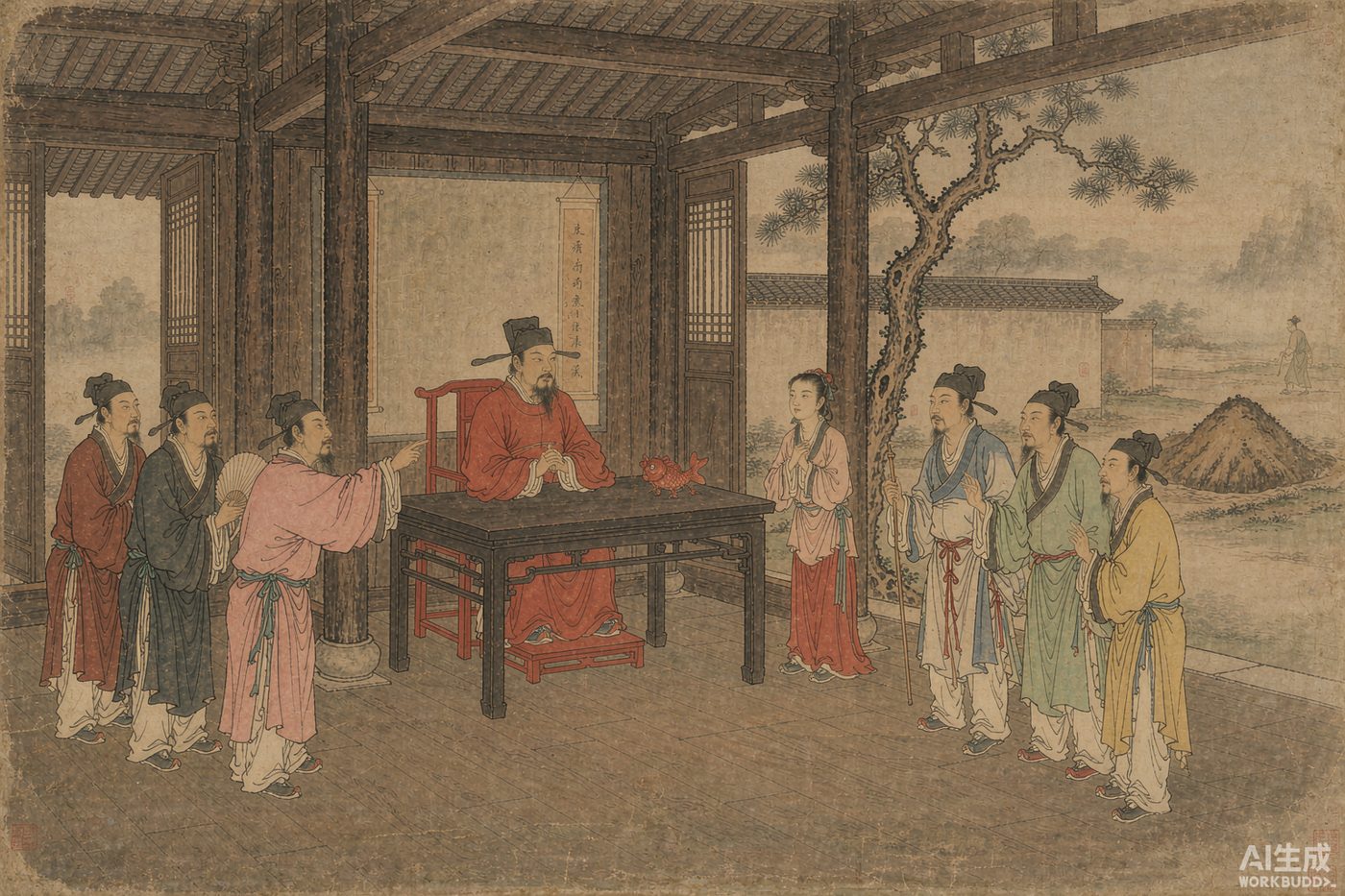
Before he had taken any degree, a certain gentleman — afterwards a Hanlin academician — heard that the old monk Fazan of Lingyin Temple had grasped the point of the Chan school, and went and threw himself at his feet to be taken as a disciple.
The old monk took his birth data and reckoned over them for a long while.
“Your bone-structure is the seed of the Buddhist gate. But your fate still holds eminence. Do not be in such a hurry.”
The gentleman pressed him. The monk laughed:
“What has that to do with an old monk? Go and draw your twelve years of wealth and honour, and then come back.”
He wept and would not go. The old monk threw his divine staff at him to drive him off. He stumbled going down the steps, picked himself up and ran.
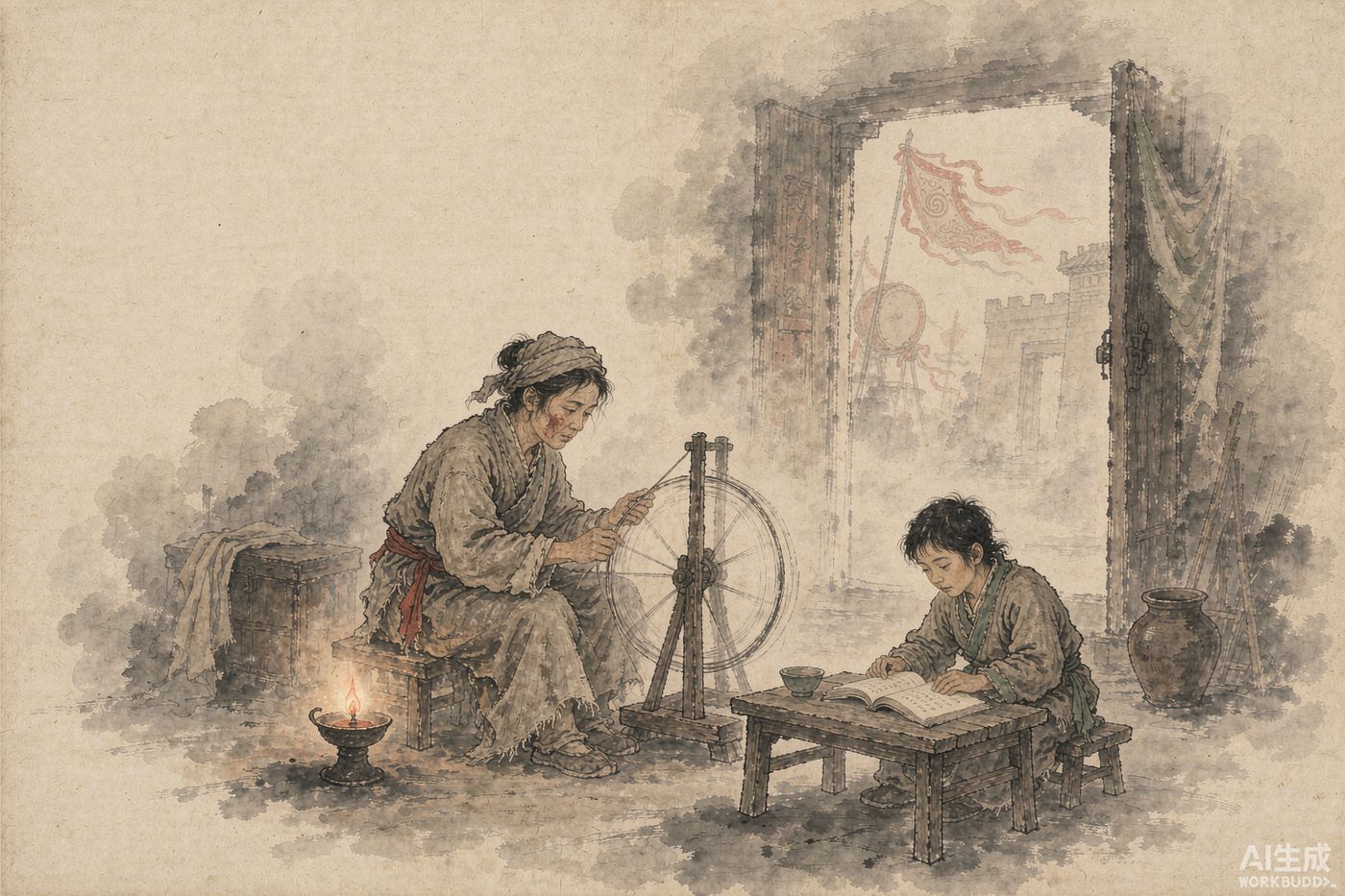
He went home like a man bewildered. By day he read. By night he seemed to sit at the old monk’s feet, chanting and listening to the teaching. So he went back — and the monk shut the door on him.
“If you want to find your face in this place, you must bring my staff back.”
He did not understand.
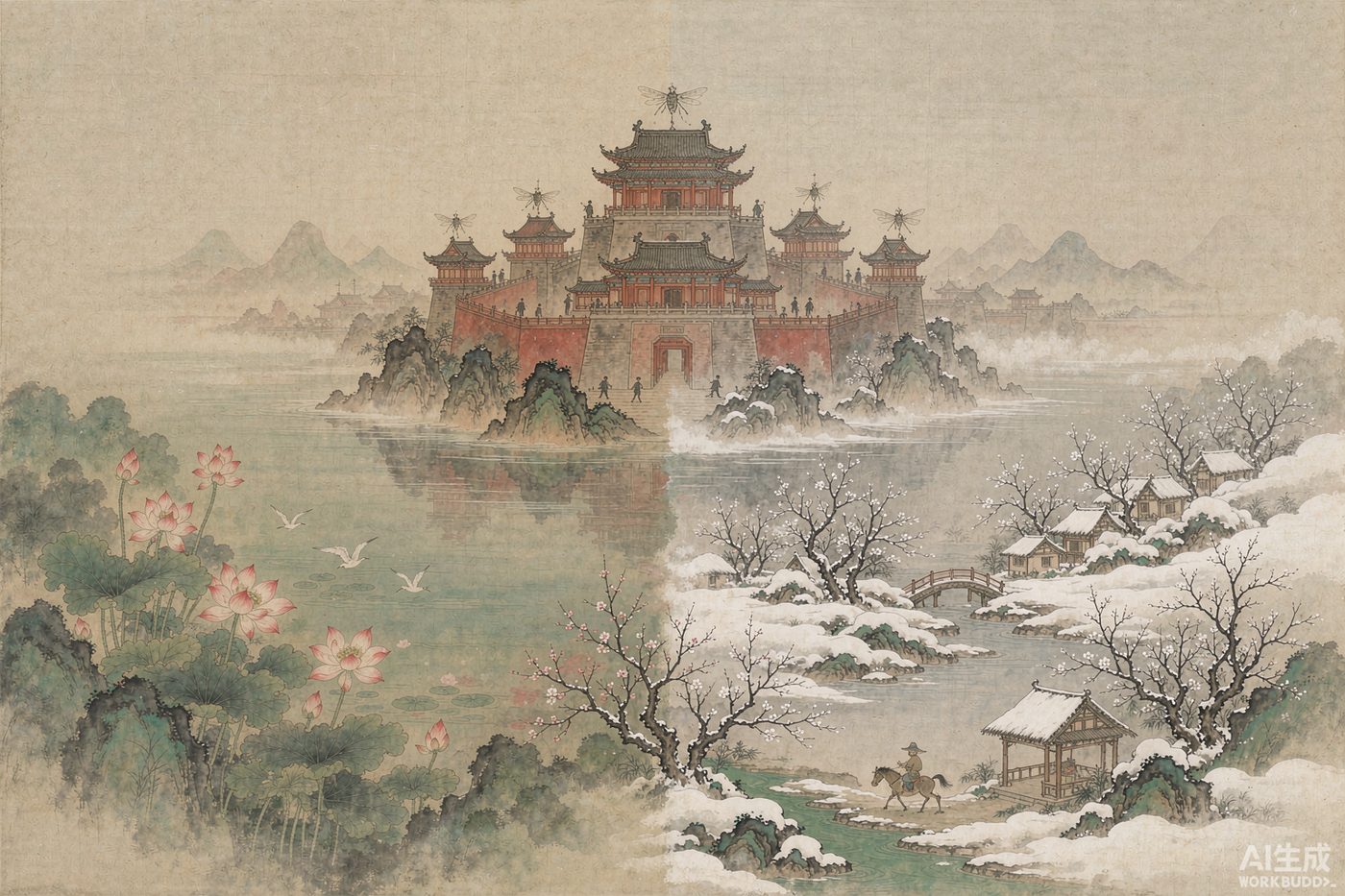
Later he passed the provincial examination and went again. The door was shut as before. In the jiwei year the palace examination results came; he was made a Hanlin academician; then he presided over the Hubei examination. Within the jade hall, without, the crimson tent — and yet the meditation cushion and the lamp before the Buddha had not been out of his dreams for a single day.
Twelve years slipped by. He counted up the old appointment, asked to retire, and went home. He travelled post by night and star, and in under a month was inside the Zhejiang border.
He put up at the Kuai family inn, reckoning he was now no more than fifteen li from Lingyin. But he tossed on the pillow, too impatient to sleep. He pulled the quilt up and fretted — and then stretched out a foot and fell.
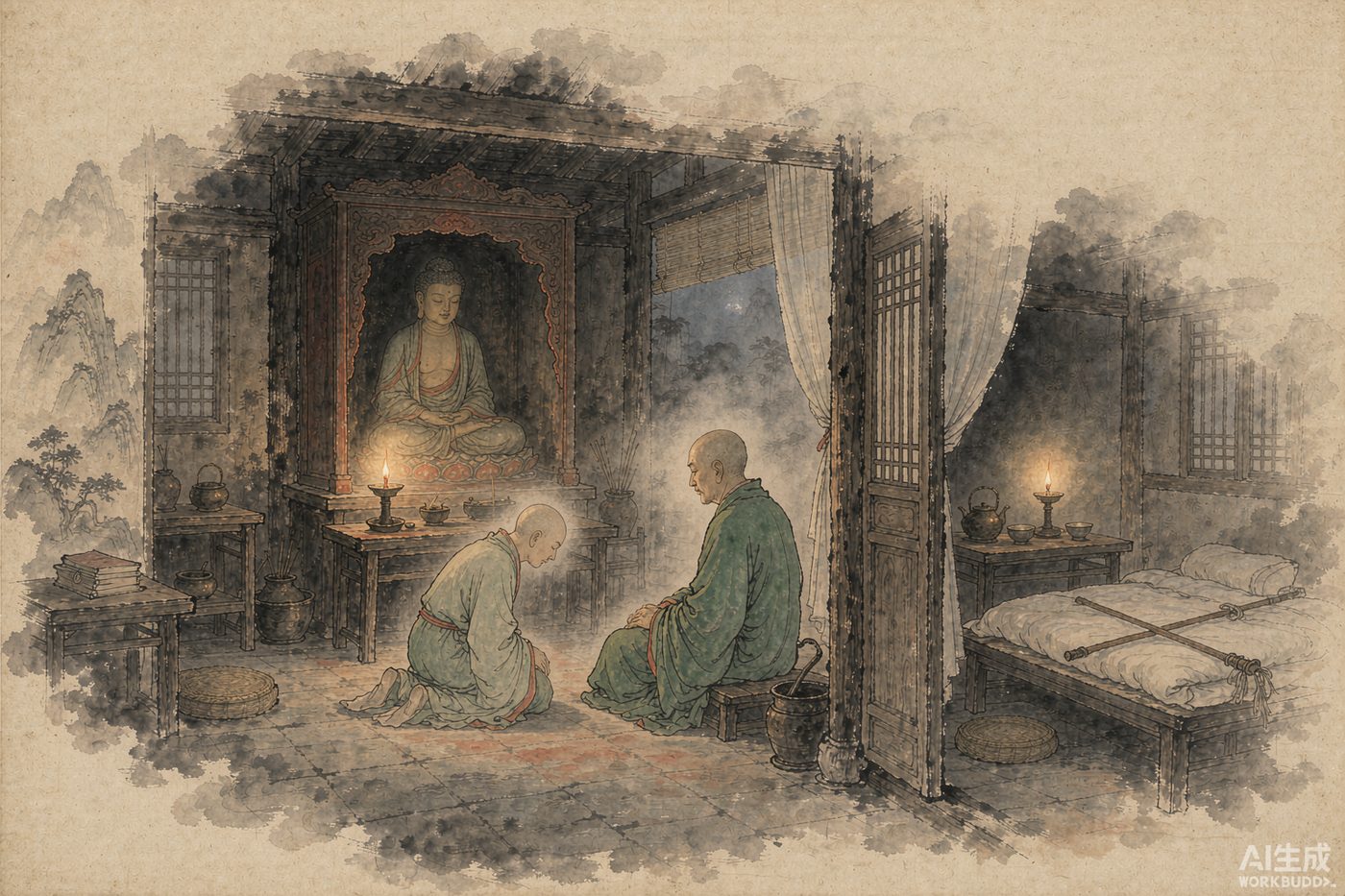
He got up and looked about him. He was standing in the abbot’s cell at Lingyin.
A niche with a lamp burning before the Buddha seat. A patched robe of a hundred rags, knotted left and right. He put his hand to the top of his head: perfectly smooth, not a single hair.
He was terrified. He hurried to the old monk’s seat. The monk’s eyes were closed, his brows lowered; he was in meditation. It was some two hours before he came out of it. The gentleman prostrated himself and begged for a word of wisdom.
The old monk smiled. “You have been tonsured here twelve years. And still you chatter.”
And he understood.
Next morning at the Kuai inn, the gentleman did not get up. They pulled back the quilt.
There was only a staff.
They were horrified, and searched everywhere without finding him. Then, hearing that he had an appointment with an old monk, they traced him to Lingyin — and there he was, in torn robe and filthy cap, plainly an old monk. They asked him about it.
He said: “Yesterday I was afraid of startling you, so I came here secretly. Give my family the message: do not think of me.”
Then they produced the staff and presented it to him. He laughed.
“Silly old crutch. The twelve years of wealth and honour were got through by you standing in for me. From now keep the gate of Chan carefully, and do not leap back into the dust again.”
The servants did not know what he was talking about. They sighed and went away.
The Duo comment: “The immortals have a method of dividing the body; the Buddhists have none, because great compassion refuses to deceive the world with illusion. The gentleman, or the staff? No, or yes? How am I to know?”