Wang Sheng, called Shengyu, of Hangzhou tutored beginners in the household of the Zhong family at Hengliang. The Zhong’s third son, whose style name was Youtiao, was already twenty but concealed his age and called himself sixteen, and asked: “May one still study at my time of life?” Wang answered: “If your will is firm, what book may not be read?” Youtiao was overjoyed and recited without cease.
His father was a vulgar merchant and would not hear of it, and pressed him into trade at Suzhou. Youtiao went unwillingly; by day he frequented the market, but by night he still shut his door and hid among the bed-curtains to study on his own. The phrase “the years do not wait for me” was pasted all over his room. After four months he fell gravely ill and came home; near the Double Ninth he reached the house and died. The coffin rested there.
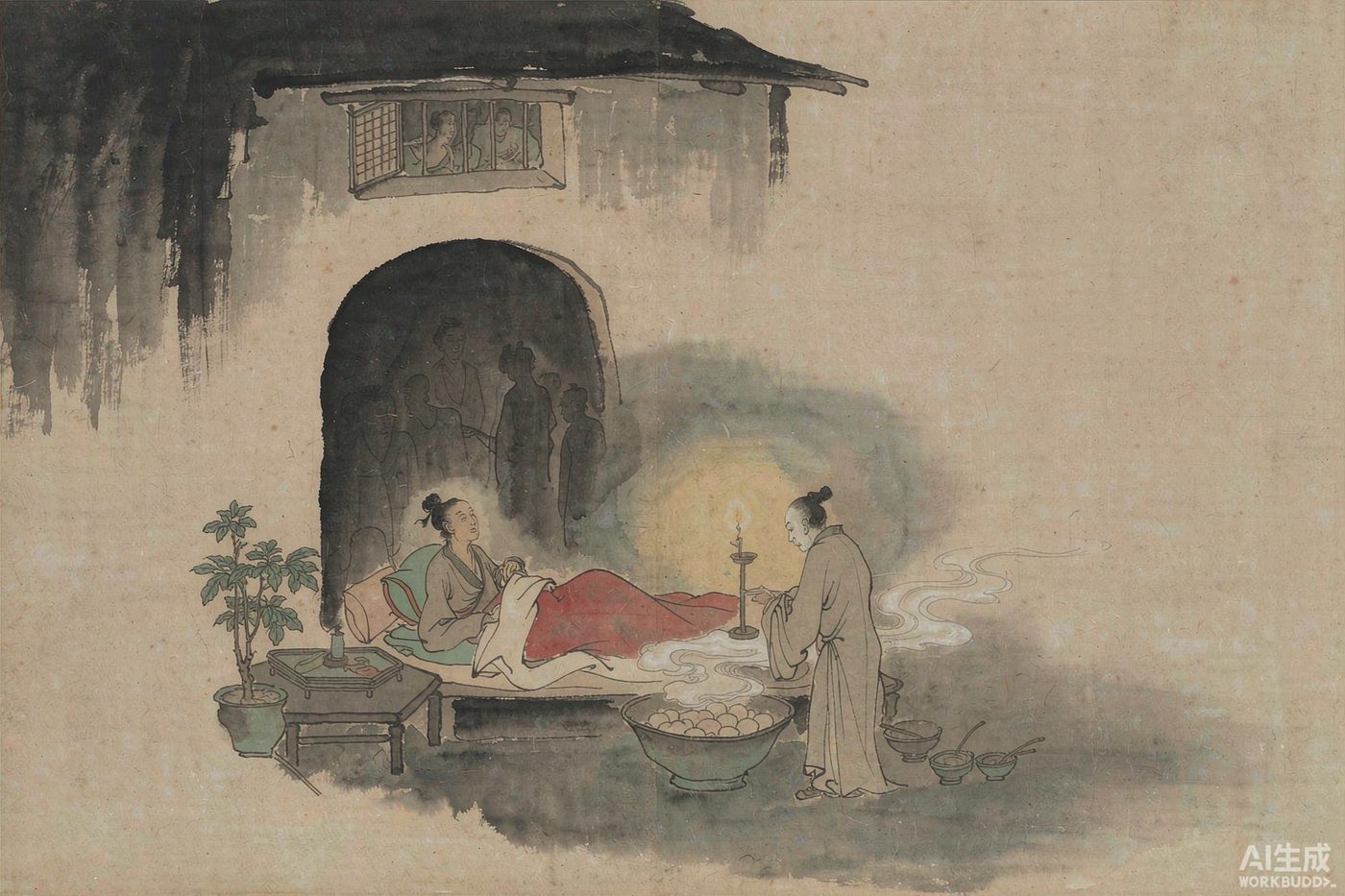
On the eve of the Qixi festival the next year, Wang was asleep when he heard an inner door open and footsteps come to the study and push the door wide. He saw Youtiao, a candle in his left hand and a bowl in his right, steam rising from it, come to Wang’s bedside, draw the curtain and smile: “Master, are you hungry? I have brought you a snack.” Wang sat up and took the bowl, and saw four round dumplings floating in it, with a little copper pot besides. He forgot the boy was a ghost and fell to eating. At the third he was full, and left the last, handing it back; Youtiao let down the curtain and closed the door and went.
Wang suddenly understood, and started: “Youtiao has been dead a full year — why has he come tonight?” Even as the thought rose, a chill and fever seized him, cycling three times from night to dawn. Utterly spent, he could not rise, and called for a sedan to carry him home.
At his home the ghosts blocking the door numbered by the hundreds — men and women, great and small, from other districts and this one, all manner of them; mostly gaunt, swan-faced, ragged paupers, and not one of frightful or monstrous shape. Wang’s sister, married into the Zhai family, came to see her brother, and a ghost in the sick man’s mouth said: “You are the lady of the Zhai house at Zhengjia Bridge — have you come too?” Wang’s brother went to ask, and sure enough it was the wife of a neighbour who did hair-dressing, newly dead by her own hand.
Wang’s father called a physician and had medicine brewed, and raised the patient to make him drink, but the ghosts jostled shoulder to shoulder, seized his hands, and would not let him. So it went several times, and Wang wearied of it and defied his father and would not drink. The next morning another physician was called, who asked: “Has he taken medicine?” The father told him why; the doctor asked for the prescription, looked at it, and cried: “Fortunate he did not drink it — or he would not be speaking today!” He wrote another prescription, and the ghosts no longer came to snatch it.
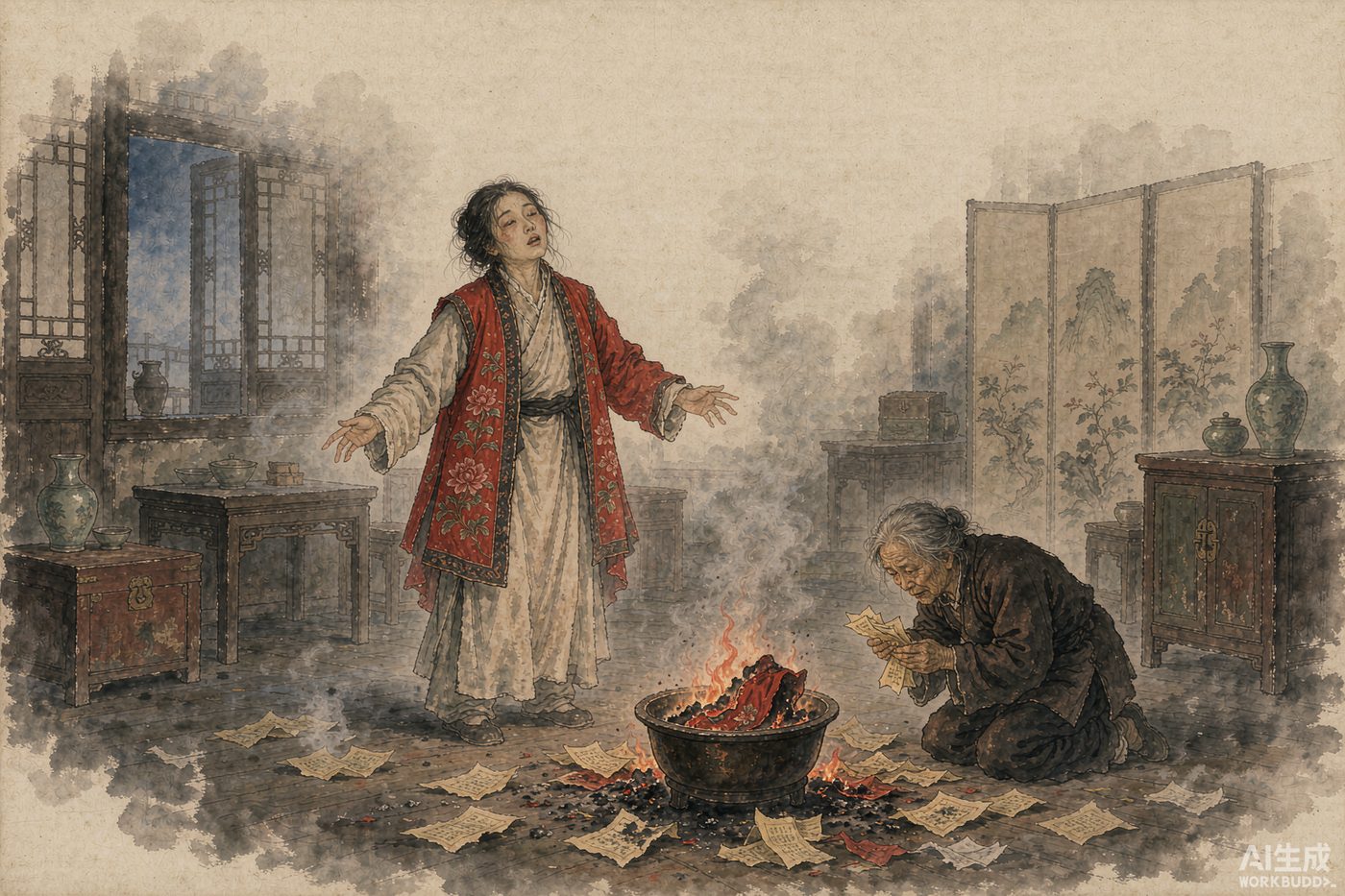
From then the crowd of ghosts filled door and rooms, blotting the daylight by day and the lamp by night; some sat, some stood, some spoke, some laughed, gathered thus for more than ten days. The family chanted sutras and performed the flaming-mouth feeding, to no effect at all. A female ghost called out: “Your house should invite the old monk Hongdao, and we will be gone.” They did so and went to fetch Hongdao; the moment he reached the gate the ghosts scattered with a roar, and the sickness slowly mended.
Yuan Mei says: the same sutra and the same flaming-mouth rite, yet sometimes they avail and sometimes not — this is what is meant by there being men who govern, but no method that governs by itself. And not knowing that a ghost’s food is not for the living to eat, he served it to his teacher — this is what is meant by foolish loyalty and foolish devotion.