Stories/ 子不语/ The Goddess of the Favourable Winds

The Goddess of the Favourable Winds

天妃神

SourceZibuyu (What the Master Would Not Discuss)
AuthorYuan Mei
EraQing dynasty · 1737, the dingsi year of Qianlong
Written1788
DeitySeaStormSalvation
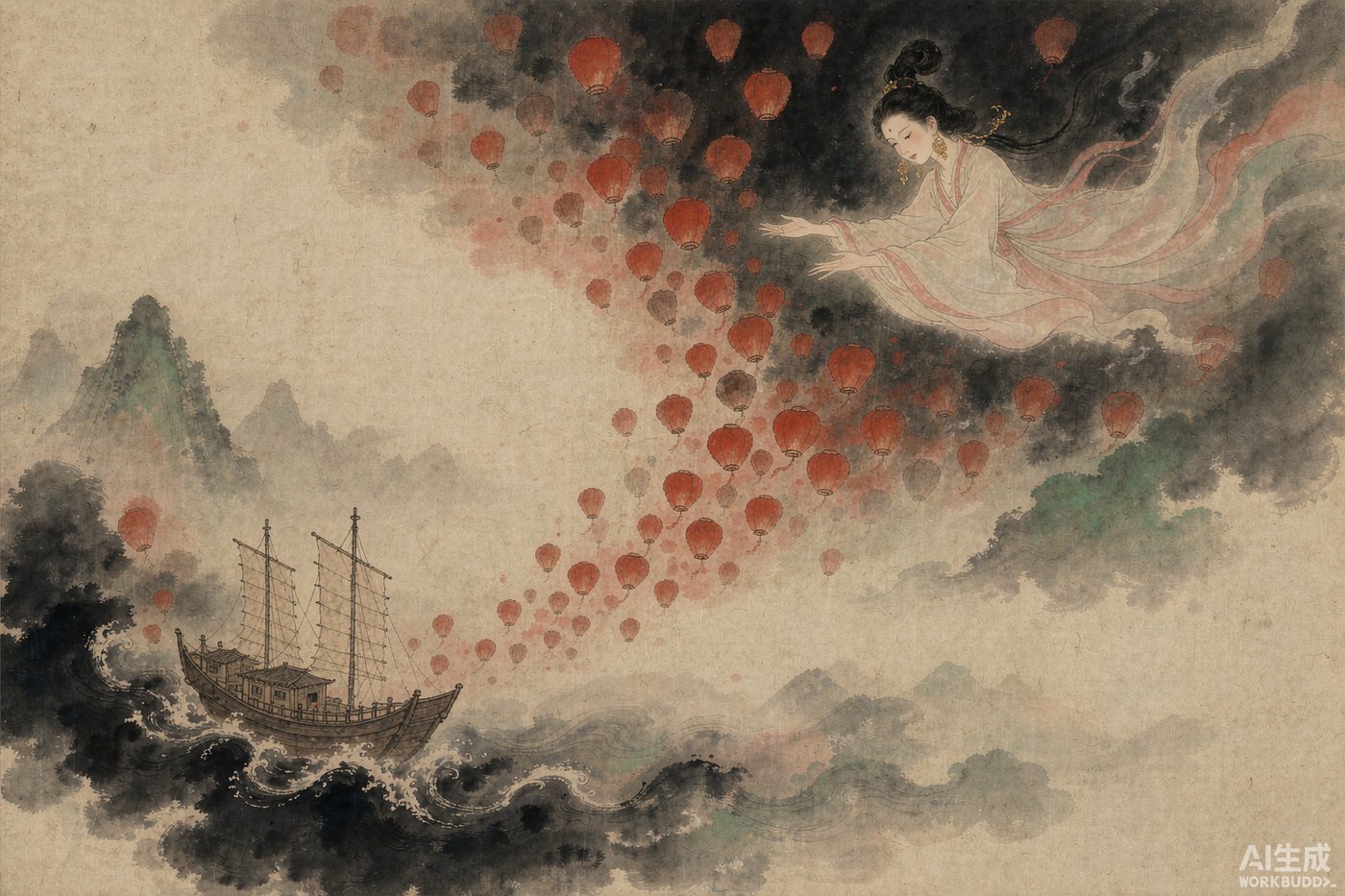
A storm-tossed sea at night where ten thousand red lanterns float on black water and a golden-earringed lady with a high coiffure gestures from the rigging as a ship is drawn forward, ink-wash painting
Illustration generated by AI, based on the ancient Chinese text.

In the dingsi year of Qianlong, the academician Zhou Huang was commissioned to install the king of the Ryukyu. As the ship went out to sea a hurricane rose and it was blown into the Black Eddy, where the water was pure black and sun and moon were dark. It is said that none who enter the Black Ocean ever return alive; the sailors and the commissioner were weeping together in grief, when suddenly they saw ten thousand red lanterns on the surface of the water. The sailors were wild with joy and prostrated themselves in the cabin crying: “We live! The Lady is come!”

And there indeed was one with a high coiffure and golden earrings, very beautiful, directing things in the air. Straightway the wind stopped, and it was as if someone were hauling the boat along, with a rumbling sound. In a moment they were out of the Black Ocean.

After Zhou returned he memorialised to build a temple to the Goddess of the Favourable Winds. The Son of Heaven, approving her responsive miracle, granted the request. The matter is recorded in the gazette of the twenty-second year of Qianlong.
Original classical Chinese text · 原文

乾隆丁巳,翰林院庶吉士周鍠奉命冊立琉球國王。行至海中,颶風起,飄至黑套中,水色正黑,日月晦冥。相傳入黑洋從無生還者,舟子主人正共悲泣,忽見水面紅燈萬點,舟人狂喜,俯伏於艙呼曰:「生矣!娘娘至矣!」果有高髻而金鐶者,甚美麗,指揮空中。隨即風住,似有人曳舟而行,聲隆隆然。俄頃,遂出黑洋。周歸後,奏請建天妃神廟。天子嘉其效順之靈,遂允所請。事見乾隆二十二年邸報。

From 《天妃神》, Zibuyu. Translated in full. 乾隆丁巳 is 1737 (the Qianlong era began in 1736, so dingsi is 1737, not 1736); 翰林院庶吉士 is a bachelor of the Hanlin Academy; 冊立琉球國王 is to install the king of the Ryukyu (modern Okinawa), a regular Qing tributary mission; 黑洋/黑套 is the Black Ocean, a real navigational hazard east of Taiwan; 娘娘, 'the Lady', is the title of Tianfei, the Empress of Heaven, better known as Mazu, patron of sailors; 邸報 is the official court gazette.

Source. From Zibuyu (What the Master Would Not Discuss) (子不语), by Yuan Mei , 1788. The original text is in the public domain; this English rendering and the accompanying notes are original work.
Where this fits in the universe: Dragons · The Small Gods

Keep Reading

Related Stories

Southern Song dynasty · 1180, the seventh year of Chunxi · 夷坚志

The Debt the Temple God Collected

資聖土地

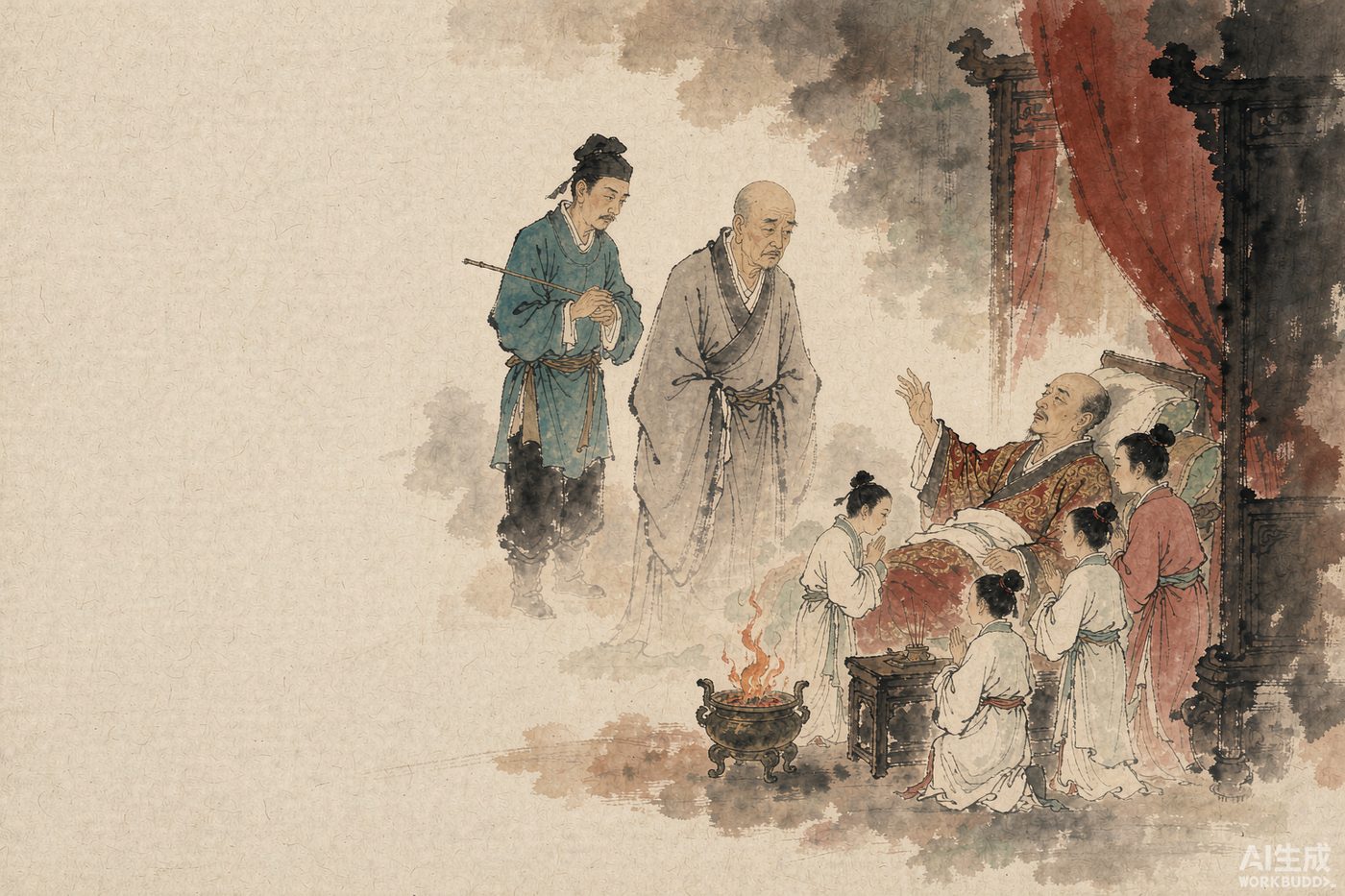
A clerk borrows ten strings of cash from a monastery to marry off his son and never pays it back. Twenty years later, dying, he can see the abbot standing in his bedroom — sent by the temple's god to collect — and the only settlement left is paper money burned at the bedside. Then the procession moves on to the next man's house.

Small GodsMoneyJustice
Southern Song dynasty · 12th century · 夷坚志

The Goddess Who Bought the Woods

林夫人廟

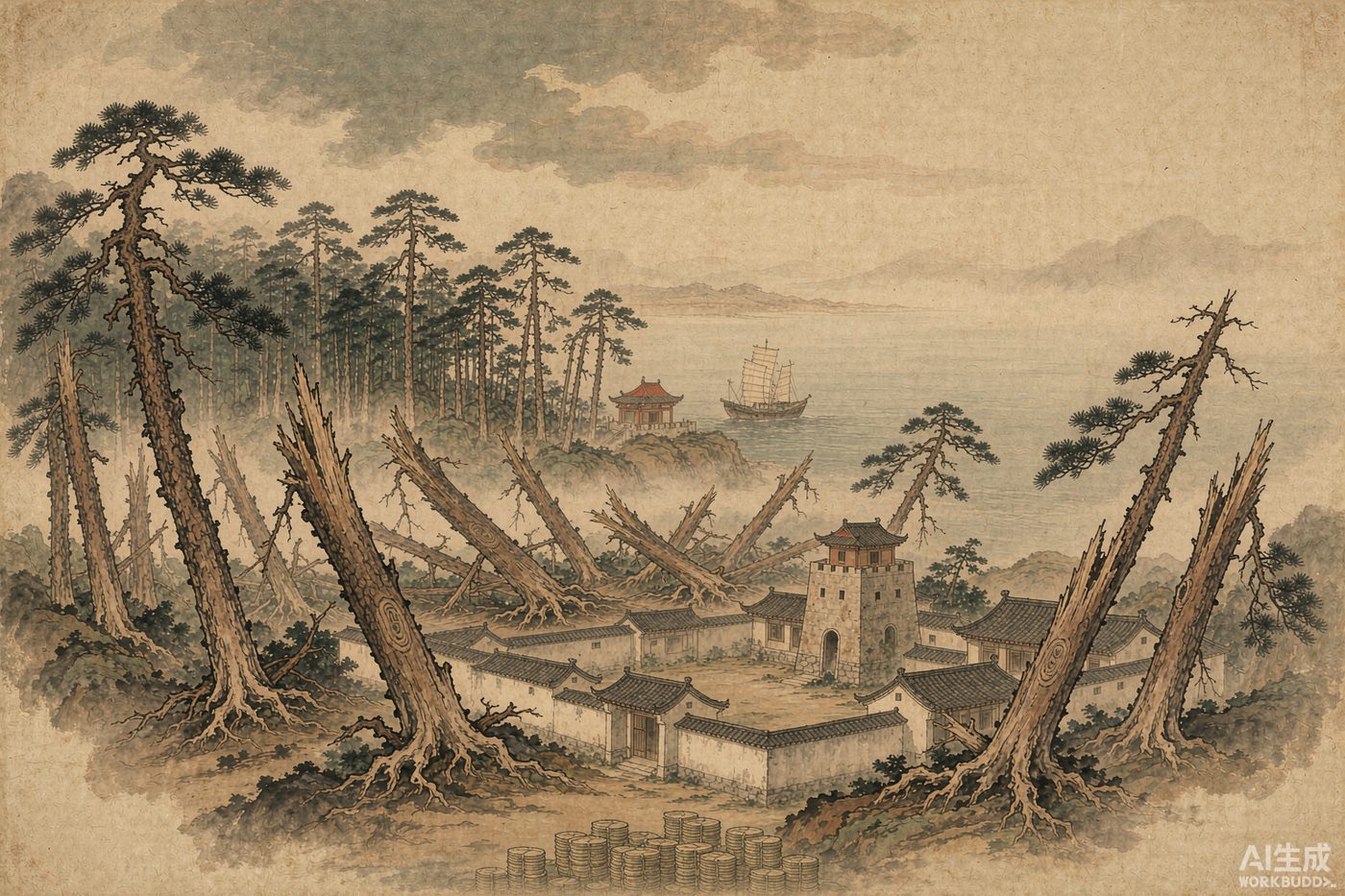
A timber merchant offers a tenth of the asking price for a stand of trees and is laughed out of the yard. That night a storm fells the whole grove, the money is found stacked in the courtyard, and every remaining trunk has three characters cut into the bark. A rich man who gives too little cannot get his cash out of his own gate.

Small GodsDeityMoney
Text of the Warring States period · c. 4th–3rd century BCE · 山海经·北山经

Jingwei Fills the Sea

精卫填海

The youngest daughter of the Flame Emperor drowns in the Eastern Sea. She returns as a small bird, and begins — twig by twig, pebble by pebble, forever — to fill the sea that killed her.

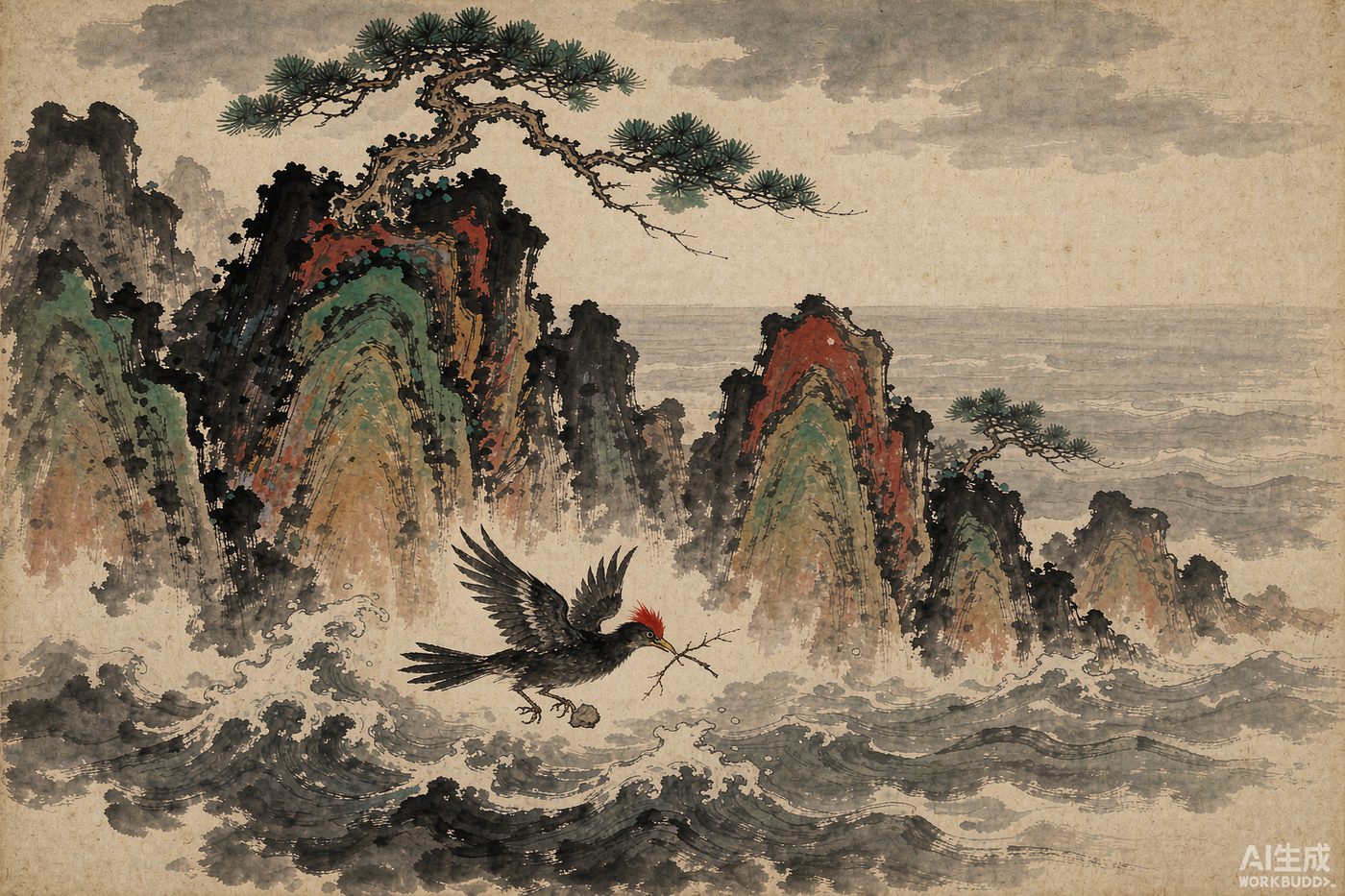
DeityMonsterTransformation