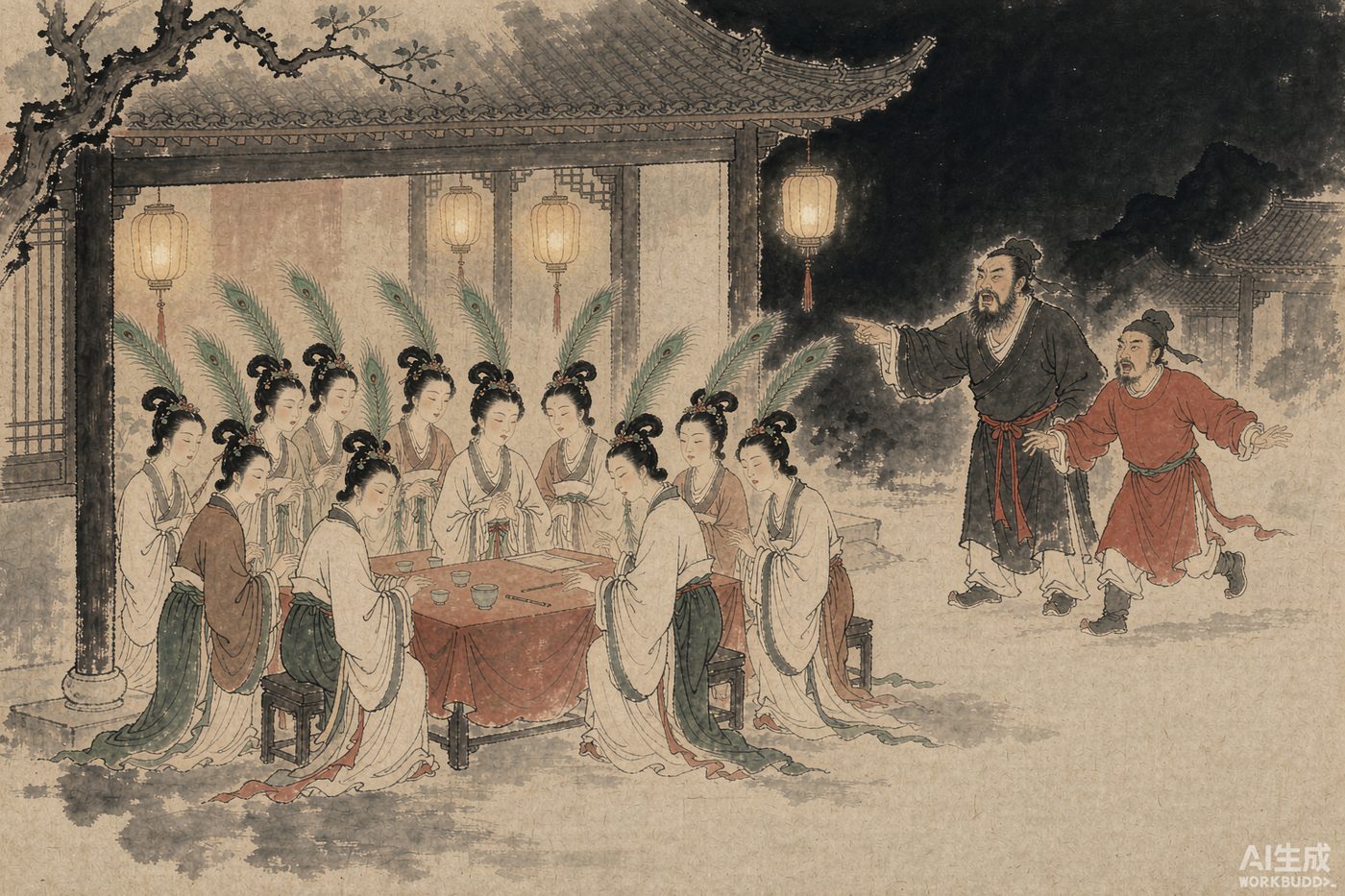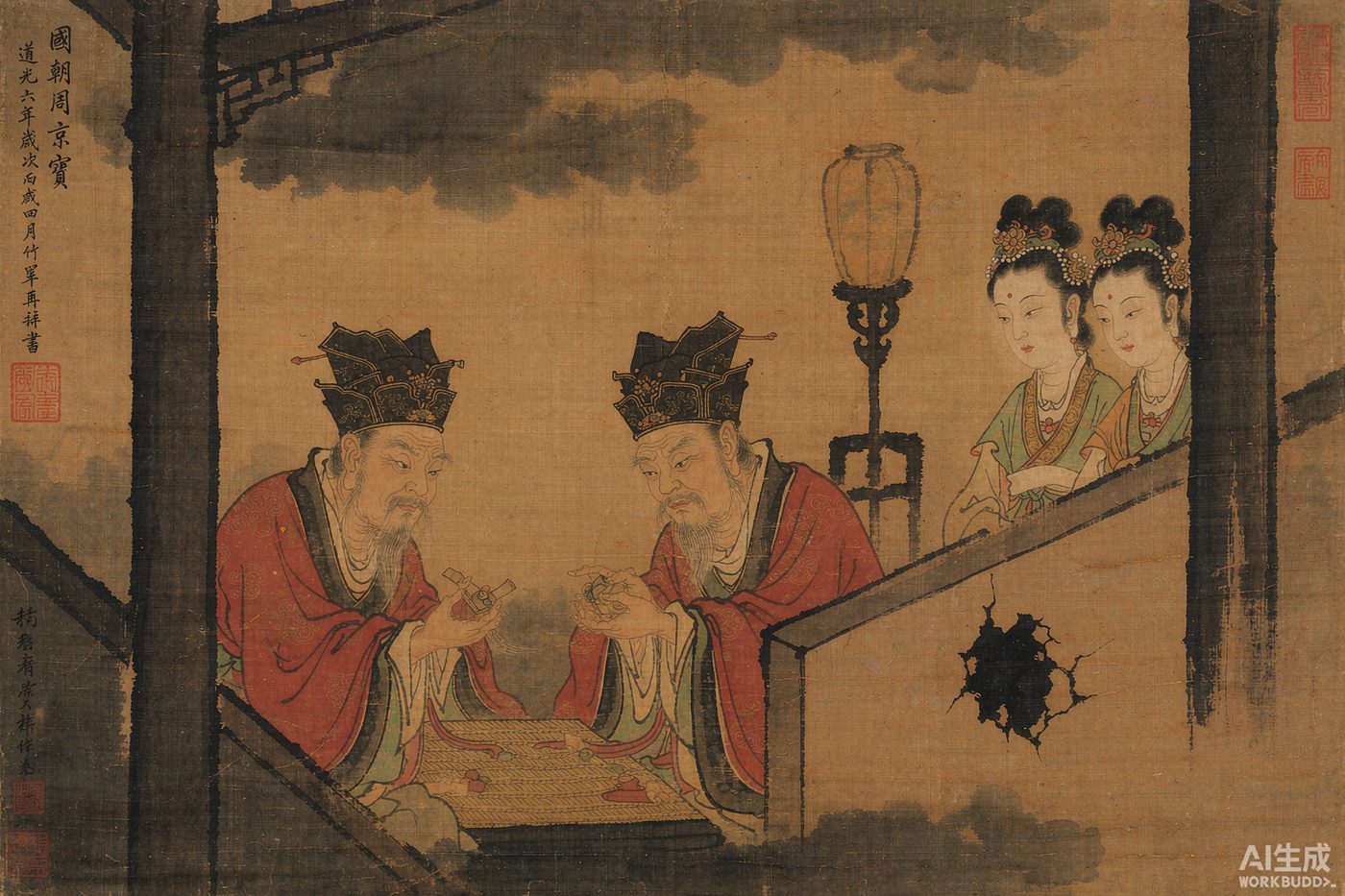
At the temple on Qionglong Mountain there are two god-images in the corridor, in crimson robes and brocade sashes, black caps and black boots. Beside each of them stands an image of his lady, in pearl crown and embroidered cape, exactly like the wife of a titled official. The two gods live in the same compound, separated only by a wall.
One night the temple keeper, sleeping in the corridor, suddenly saw the god of the left seat go straight over to the right.
“The watches are long tonight, and lying with my head on the pillow I cannot get to sleep. Shall we have a game of dice?”
The one on the right laughed: “You pig-herd! Your gambling fit is on you again? But our incense has been thin lately — what stake can we put up?”
“Let us play for tallies. The loser settles tomorrow. If he does not pay, let the new wife stand against the debt.”
The right-hand god laughed and agreed. So they snapped incense-sticks for counters, spread rushes for a mat, and the two gods sat facing each other and shouted the throws for something like two hours. Then the right-hand one rose, laughing:
“The hot one is beaten. Go home and rest. Tomorrow I will send the seven-perfumed carriage for the bride!”
And the left-hand god slunk away, crestfallen. The keeper was astonished. The next night he slept in the corridor again, and saw the right-hand god go to the left-seat’s shrine and press for payment most urgently, demanding the wife as well.
The lady heard it, and cursed her husband in a fury:
“Black-hearted thief! That day when offices were on sale at the Hall of Cultivating Literature, it was I who took off my hairpins and earrings and pulled strings to get you a post. And now, for lust and dice, you stake the woman beside your pillow as your last throw. Was there ever a faithless man alive like you?”
The left-seat god hung his head and said nothing. The right-seat god pressed harder, shouting without pause and then abusing him. It was only luck that his own wife called to him across the wall, and he was led away.
After that there was quarrelling every night.
The keeper grew sick of it and reported it to the trustees. So they got up drums and music and sent the left-seat’s lady over to the right seat as well, and the noise stopped.
But the dividing wall, however often they repaired it, kept collapsing. A man who understood said: “It is that the new lady cannot forget her old husband.” He had the builders leave a hole in it, to be a place for peeping at her husband — and from then on the wall never fell again.
To this day the people there call it the Win-and-Lose Temple, and lovers of a wager cite it as a joke.
The Duo comment: Lust costs a man his life; a passion for gaming ruins a house. The calamity of the flower-bones is no less than that of the powdered skull. If you doubt me, leave the left seat empty and wait.