Stories/ 子不语/ The Judge Answers Questions

The Judge Answers Questions

判官答问

SourceZibuyu (What the Master Would Not Discuss)
AuthorYuan Mei
EraQing dynasty · Qianlong era, c. 1736–1798
Writtenc. 1788
UnderworldOfficialdomFateSatireSmall Gods
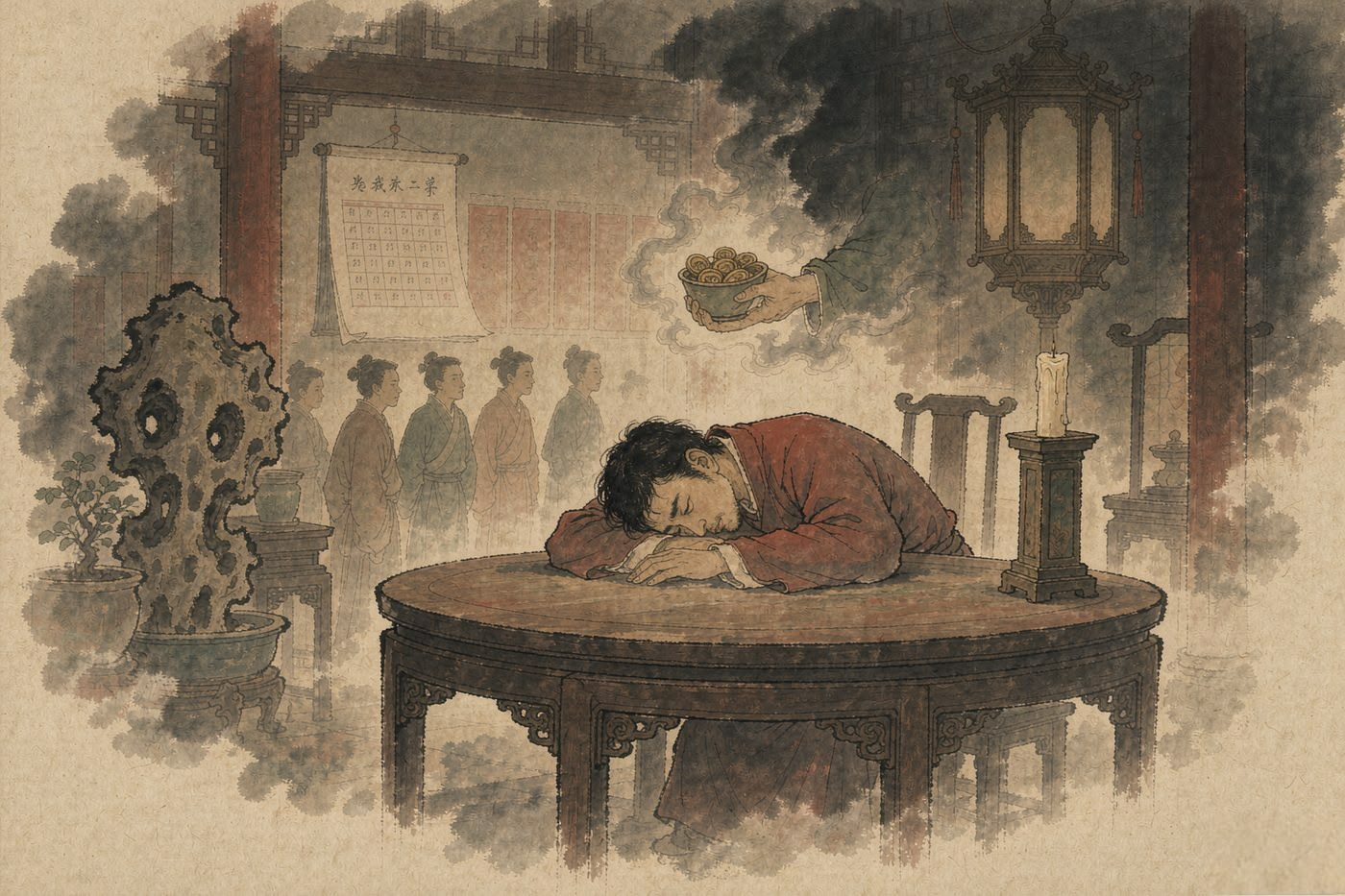
A scholar at a lamplit desk by day while a translucent underworld office appears behind him with rows of ledgers and clerks, an empty shelf where no register stands, a small god shrugging with open hands
Illustration generated by AI, based on the ancient Chinese text.

Xie Pengfei, a salaried student of Renhe, served as a judge in the courts of the dark. By day he was an ordinary man; by night he went to the offices of the dead and dealt with public business.

Many of his friends asked him to look up their spans of life. He always refused. People supposed he was afraid of revealing the secrets of heaven.

“Not at all,” he said. “In the yamens of the world of light, only those accused of a crime or caught up in a suit have a file that can be looked up. Otherwise, the common people are a vast, uncounted swarm, and who has the time to draw up a household register for them? The authorities let them come and go as they please. It is the same in the dark world. None of you are in litigation, none of you are wanted by the officers of the dead. When your allotment of breath arrives, you live; when it is spent, you die. I have genuinely no register to consult.”

“Then can those who die of plague be looked up?”

“That is one of the small calamity-cycles of yin and yang. Those who are due to die sit an examination at prefectural and county level, and there is a roll-call list, so that one can indeed be looked up. But only the entirely undistinguished go onto that list. A man with a background does not come and go on the rolls of the small calamities — any more than a boy with official patronage sits the entry examination.”

“Outside of plague, are there greater calamity-cycles?”

“Water, fire and war are the great ones. From these, the eminent and the conspicuous do not escape.”

“Which of the gods of the dark offices is the highest?”

“Since they are the offices of the dark, how can any of them be high? The high ones are the immortal officials of the upper realms. The posts of City God and Earth God are like the common functionaries of a prefecture or a county in the world of men — rushing about in the dust, and very hard labour — and no man of quality would take them. There was once the White-Stone Immortal, who boiled white stones all day long and would not go up to heaven. When he was asked why, he said: the jade halls are cold and strict, the tallies and registers bristle like hemp, and the immortals who staff the offices labour bitterly at it — and so I would rather wander free along the ridges and the riverbanks and be a loose immortal for good. It is the same thought.”
Original classical Chinese text · 原文

谢鹏飞,以仁和廪生为阴间判官,昼如平人,夜则赴冥司勾当公事。友朋多托查寿数,不肯。人疑其惧泄天机,曰:「非也。阳间有司衙门惟犯罪涉讼者才有文簿可查,否则百姓林林总总,谁有工夫为造保甲册?官府听其自来自去耳,阴间亦然。君辈不涉讼,不犯冥拘,气数来则生,气数尽则死,我实无册可查。」问:「瘟疫死者可查乎?」曰:「此阳九百六阴阳小劫,应死者府县考试,有点名簿,恰可以查。然皆庸庸小民,方入此册;若有来历之人,便不在小劫数中来去,犹之阳间有官荫者不考童生也。」问:「疫外尚有大劫数乎?」曰:「水火刀兵是大劫数,此则贵显者难逃矣。」问:「冥司神孰尊?」曰:「既曰冥司,何尊之有?尊者,上界仙官耳。若城隍、土地之职,如人间府县俗吏,风尘奔走甚劳苦,贤者不屑为。昔白石仙人终朝煮白石,不肯上天,人问故,曰:『玉宇清严,符录麻起,仙官司事者甚劳苦,故愿逍遥于山巅水涯,永为散仙。』亦此意也。」

From 《判官答問》, Zibuyu juan 9. Translated in full. 廩生 is a salaried government student; 陽九百六 is the traditional cycle of calamity; 保甲冊 the household register.

Source. From Zibuyu (What the Master Would Not Discuss) (子不语), by Yuan Mei , c. 1788. The original text is in the public domain; this English rendering and the accompanying notes are original work.
Where this fits in the universe: The Courts of the Dead · The Small Gods · How a God Gets a Post · The Underworld Examination

Keep Reading

Related Stories

Southern Song dynasty · 12th century · 夷坚志

A Lifetime's Salary

郭大夫

A man is handed a few hundred cash and a few pints of rice in a dream and told: this is your allowance for one lifetime. He looks at it, puts it down, and stops living. He divorces his wife, refuses office for fifteen years, and dies the evening before payday.

FateOfficialdomMoney
Southern Song dynasty · 12th century · 夷坚志

The Ghost-Seer of Genshan Gate

潘見鬼理冥

A maidservant has been dead twenty-two years when her old mistress falls ill with dropsy. A medium called Pan the Ghost-Seer looks into a handkerchief laid on a lamp and sees a woman and a cat standing together. Then he files a writ with the City God to have the ghost committed — and the ghost comes back for the man who delivered it.

GhostJusticeSmall Gods
Southern Song dynasty · 12th century · 夷坚志

The Clerk Who Died Twice

臨安吏高生

Two petty embezzlers are beaten in the county jail. The deputy takes pity, breaks them out, and reports them dead. The magistrate is relieved — until two naked figures appear at his bedside and demand that he come down below and give evidence. The cure is a piece of information. And then Hong Mai adds what other people said.

GhostOfficialdomJustice