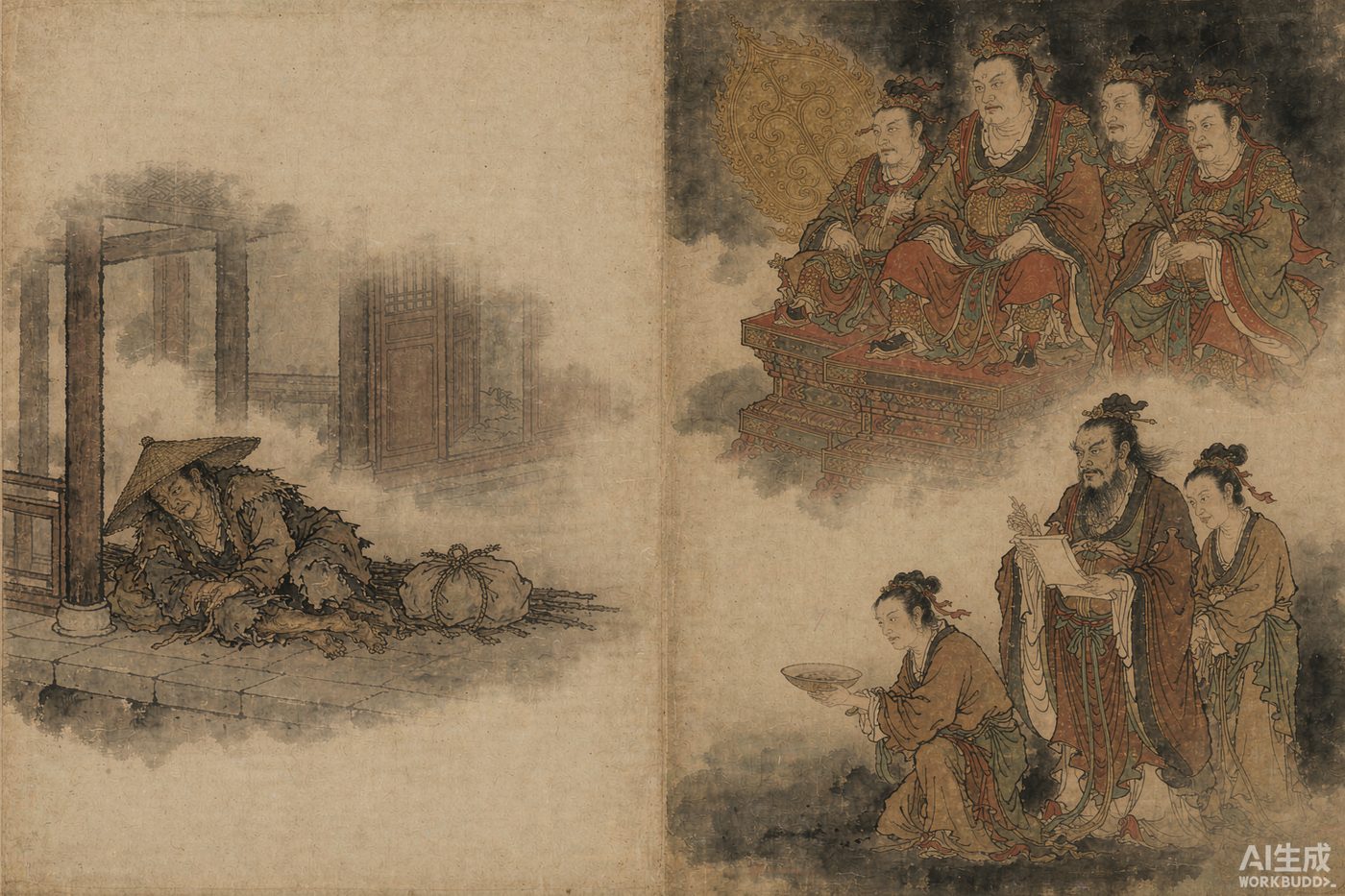
Master Zhen of Taihe was twenty years old, of very handsome appearance, and with not a patch of ground to drive an awl into; he lodged in the east annex of the Zhaoti Temple.
At that time a mad monk came to the western court, a man of strange arts. The scholar went to him privately and told him of his poverty.
The monk said: “A scholar is poor — what sickness is that? And how is being rich and turbid better than being poor and clear?”
The scholar begged him insistently for a method. The monk said: “You want wealth — why not die quickly?”
The scholar said angrily: “Your disciple wants to live, and so I look to the master’s mercy. How is it that seeking life I get death instead?”
The monk laughed: “Not sparing your own life, that is the art of getting rich. You love yourself, and so it is right that you are poor.” And he rubbed the crown of the scholar’s head with his hand and waved him away.
The scholar went home and fell ill, and was at the point of death. Then he remembered the earlier words, and went back to the western court.
The monk said: “Your wealth-heart is not yet dead. I will ferry you across to taste the bitter path once.” He took him into his left sleeve and went out.
At that time there was a certain great man, very ugly of face and with a fortune of myriads, whose rear apartments of concubines wore him to exhaustion. He had the wasting-thirst disease, and his breath came like a thread, and he was lingering on his couch.
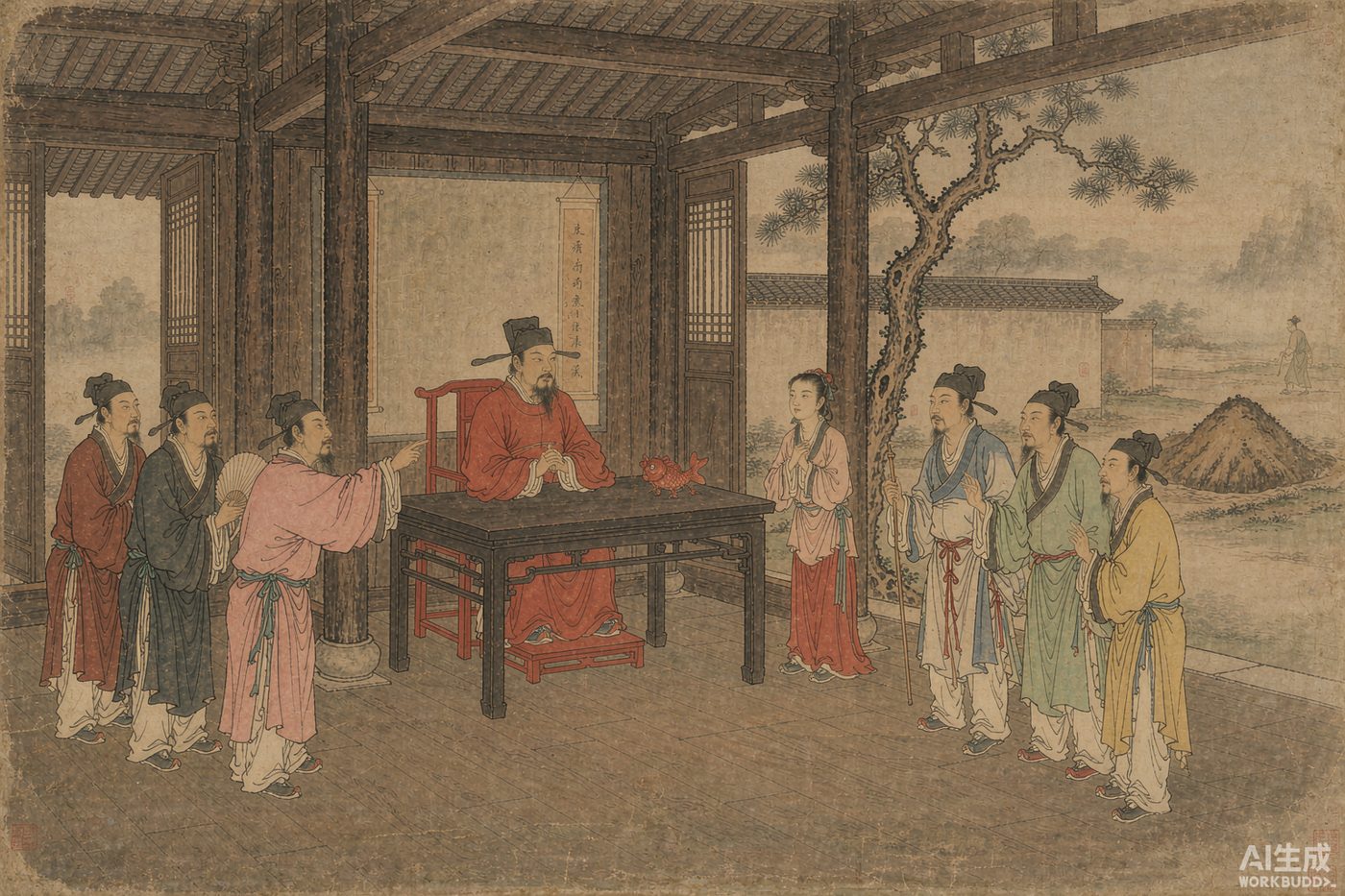
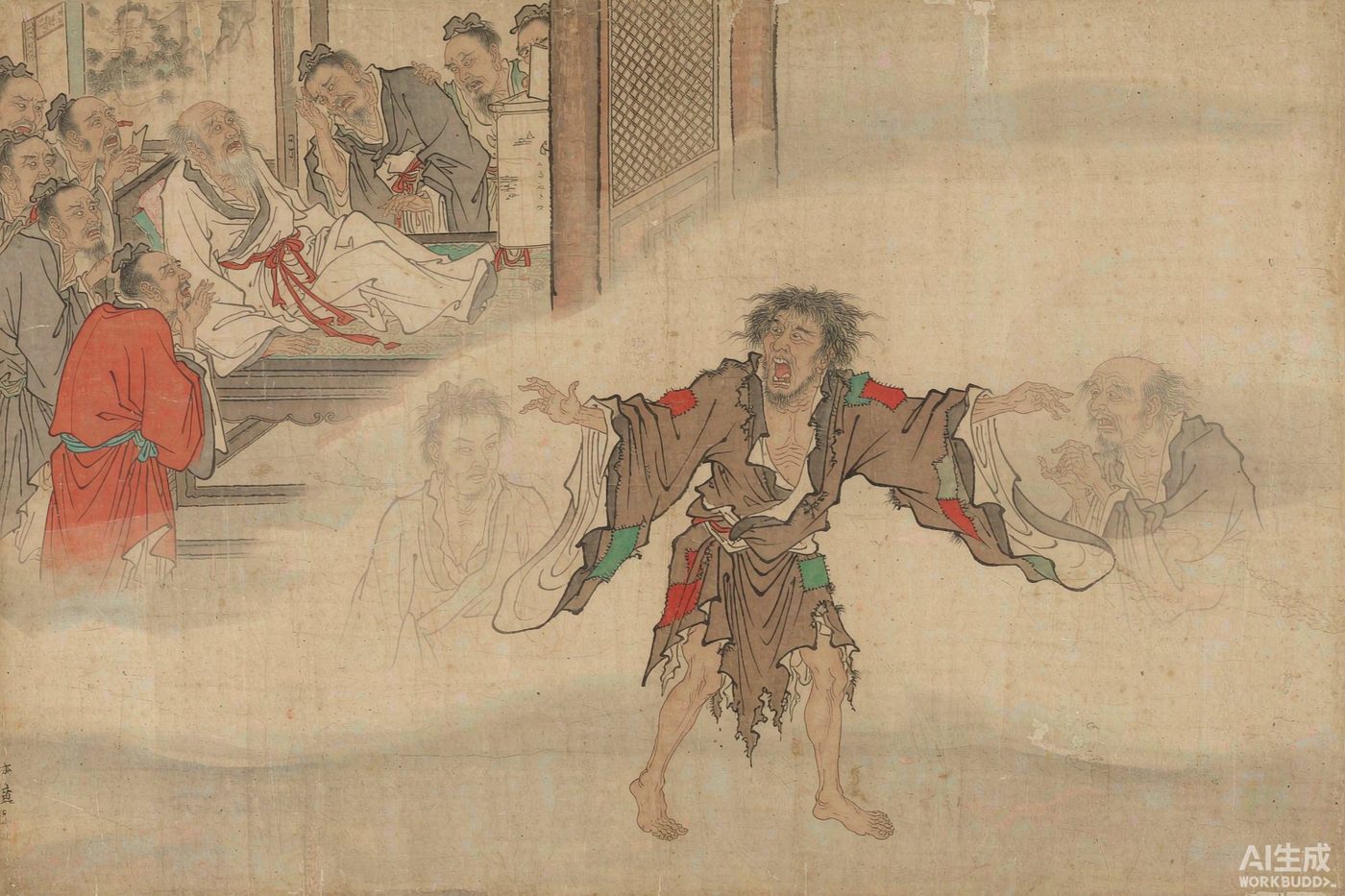
His family stood around him weeping. Suddenly the mad monk came in from outside and said: “Do not grieve. I can bring him back to life.” The crowd bowed to him where they stood.
The mad monk opened his right sleeve and beckoned to the certain one, then swept his face with his left sleeve and went off with a long laugh.
Before long, the certain one suddenly leapt up. He looked all round at the concubines as if he did not know them, questioned them one by one, and then went over the household accounts. The family thought his soul had not yet settled and so was disordered, and hurried to give him ginseng.
But in fact it was Zhen.
Zhen, delighted to be a rich man, kept the secret deep. By day he wore fresh robes and ate fine food, and sat in the inner hall reckoning his lands, and fondled the gold and silver laid out on his table. Or he rode a mettlesome horse with handsome servants at his heel, and went out along the flower streets and the willow lanes. By night he embraced his concubines; and when the mood came upon him he would cut a great quilt of Western River brocade and spread it over a seven-foot coral bed — hairpins on the left, powder on the right — and make a reunion of it.
He told himself that here he enjoyed all the blessings his former life had never known.
One day he took up a mirror to look at himself, and saw that his looks were very strange and ugly, not like the graceful elegance of before, and he was much displeased.
He slipped secretly to the temple, and first bowed and thanked the monk, then told him how he felt.
The monk said: “You sought wealth and got wealth; your wish is fulfilled. And still you would have your original face back again in the midst of voice and colour and goods and profit?”
And from behind the screen he called out a disciple.
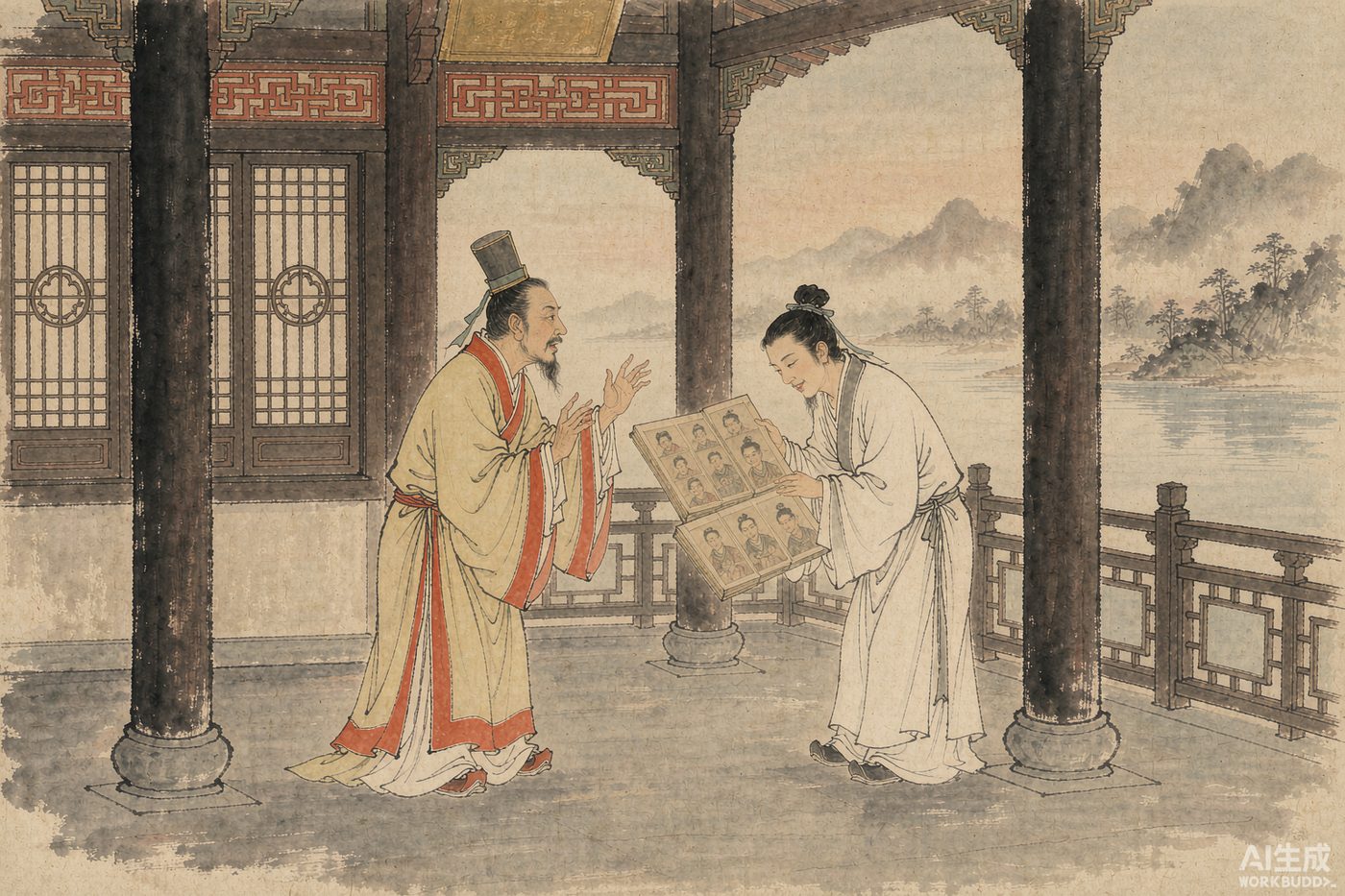
Looking at him, it was the true Zhen.
He asked the disciple his surname, and the disciple laughed and would not answer, but only said: “One wet cloth shirt — I trouble you to wear it in my place.”
The monk clapped his hands and laughed. Zhen too was suddenly enlightened, and that same day shaved his head and became a disciple under him. Afterwards he followed the mad monk to the mountain of the Fifth Patriarch, and in the end nobody knew where he went.
— The author’s comment (condensed): if you do not enter the sea of bitterness, how do you know the far shore? The eighty-four thousand sons of the Buddha are all men who have come through the field of affliction. As for the yellow-faced bald donkey whose heels have never touched solid ground, and who talks of emptiness wherever he goes — is he not dreaming?