Stories/ 夷坚志/ The Ox That Bore His Name

The Ox That Bore His Name

常珤牛

SourceYijian Zhi (Record of the Listener)
AuthorHong Mai
EraSong dynasty · 12th century
Writtenc. 1160–1200
RebirthKarmaFilial Piety
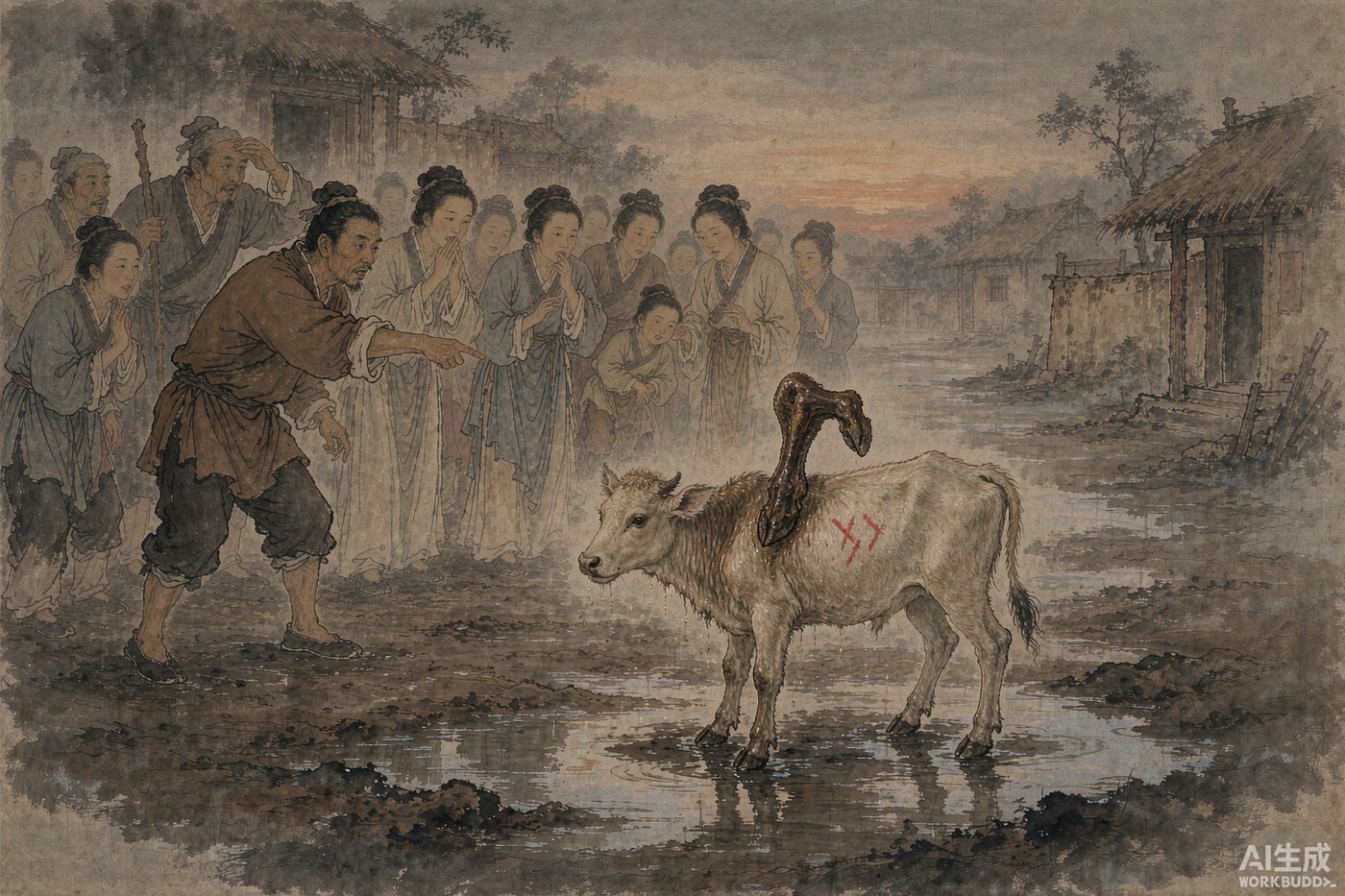
Ink-wash: a newborn calf with a hoof grown from its back and vermilion characters on its flank, village onlookers pointing in a muddy courtyard at dusk
Illustration generated by AI, based on the ancient Chinese text.

Chang Bao was a man of Pingyang in Jinzhou. His father, a village headman, died early, and his mother took him and remarried a wealthy man named Kang Dexiu. Bao grew up dissolute and good-for-nothing. Dexiu gave him three thousand strings of cash to set up a shop, and so he made a living of his own. But Bao showed his stepfather barely a thought of gratitude.

After several years Dexiu died, and Bao treated him as a stranger, stealing away all his wealth. Bao was just thirty, strong and hale, with no illness, when suddenly he gave a lowing cry like an ox and died.

That very evening, the Kang family’s ox gave birth to a calf — one of its hooves grew out from its back, and on its flank were two characters in vermilion, plainly his name. Dexiu’s two sons, being educated and knowing righteousness, could not bear to expose the disgrace, and hid the calf behind the house.

But the ox bellowed, plunged and butted the fence, broke free, and ran into the town market; spectators thus all learned of it. The Kang family sent several strong servants to corral it, but they could not; the calf made straight for a deep valley and did not return.
Original classical Chinese text · 原文

常珤晉州平陽人父為里胥蚤死母攜之再嫁富民康德休為人落魄亡賴德休與錢三千緡使為區肆由是生理自給而珤事繼父略不知恩經數年德休死視如路人盡竊其貲甫三十歲強壯無疾忽作牛鳴一聲而斃是夕康氏牛產犢一蹄出背上朱書其姓名二字於脅間德休二子讀書識義不忍露其醜蹟匿之舍後牛鳴吼勃跳觸藩而出奔迸邑市觀者以故盡知之康氏遣數健僕闌逐不可得徑趨深谷中不復至

From 《常珤牛》, Yijian Zhi. Translated in full. 里胥 is a village headman; 緡 is a string of cash, a thousand of which was a 貫, the everyday unit of substantial wealth; 朱書 is writing in vermilion, the color of official seals and of heavenly verdicts. The tale is a compact machine for karmic retribution: the soul does not go to a court, it is simply reborn as the beast it behaved like.

Source. From Yijian Zhi (Record of the Listener) (夷坚志), by Hong Mai , c. 1160–1200. The original text is in the public domain; this English rendering and the accompanying notes are original work.
Where this fits in the universe: Hun and Po: The Two Souls

Keep Reading

Related Stories

Qing dynasty · Qianlong–Jiaqing era · 续子不语

The Ghost Who Seized Surplus

掠剩鬼

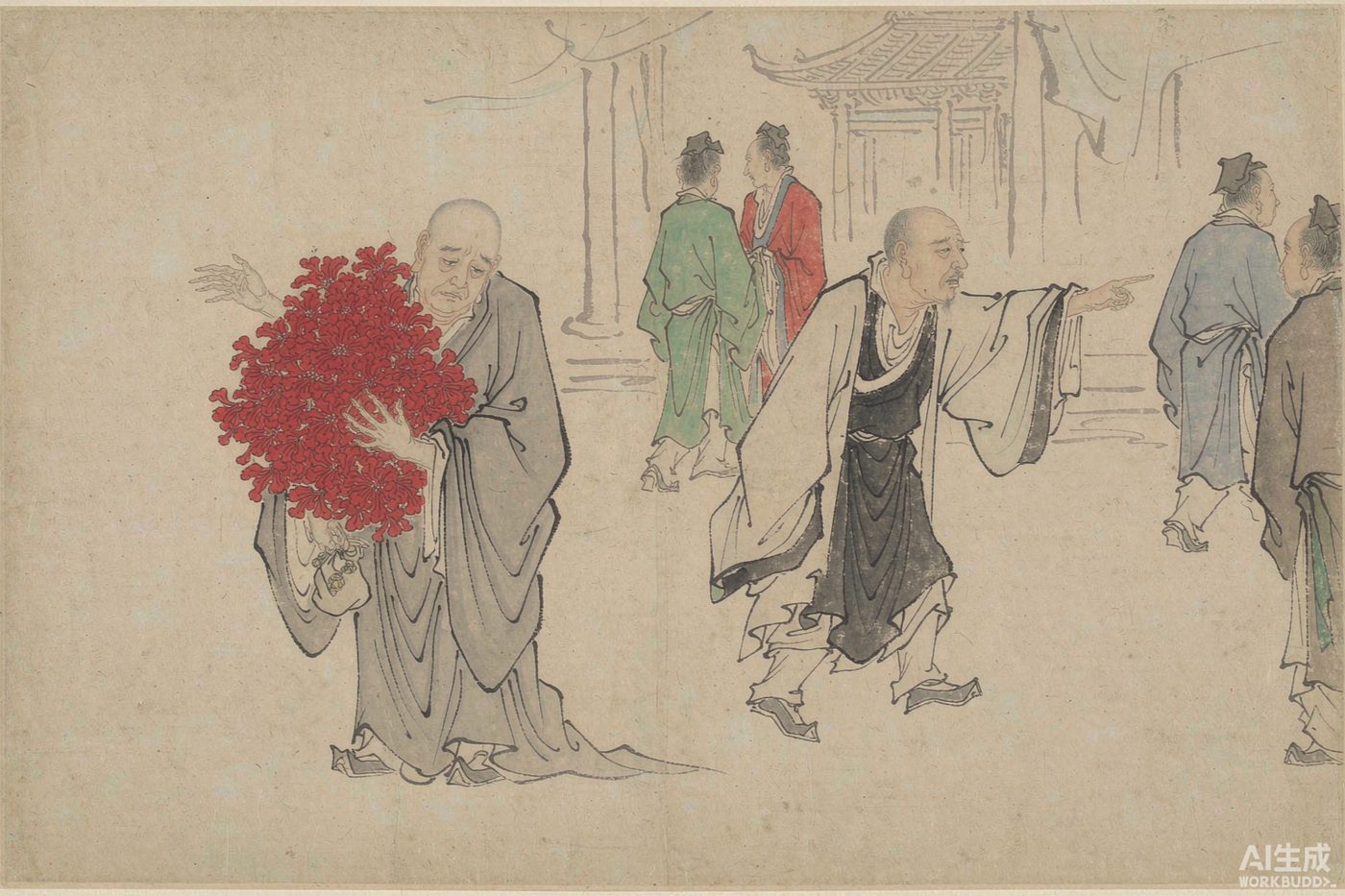
A dead merchant buys his old friend lunch and explains his new appointment: he has been assigned to seize the surplus. Then he gives him a bouquet that is very heavy.

GhostTricksterUnderworld
Southern Song dynasty · late 12th century · 夷坚志

The General Who Punched a Ghost

孫儔擊鬼

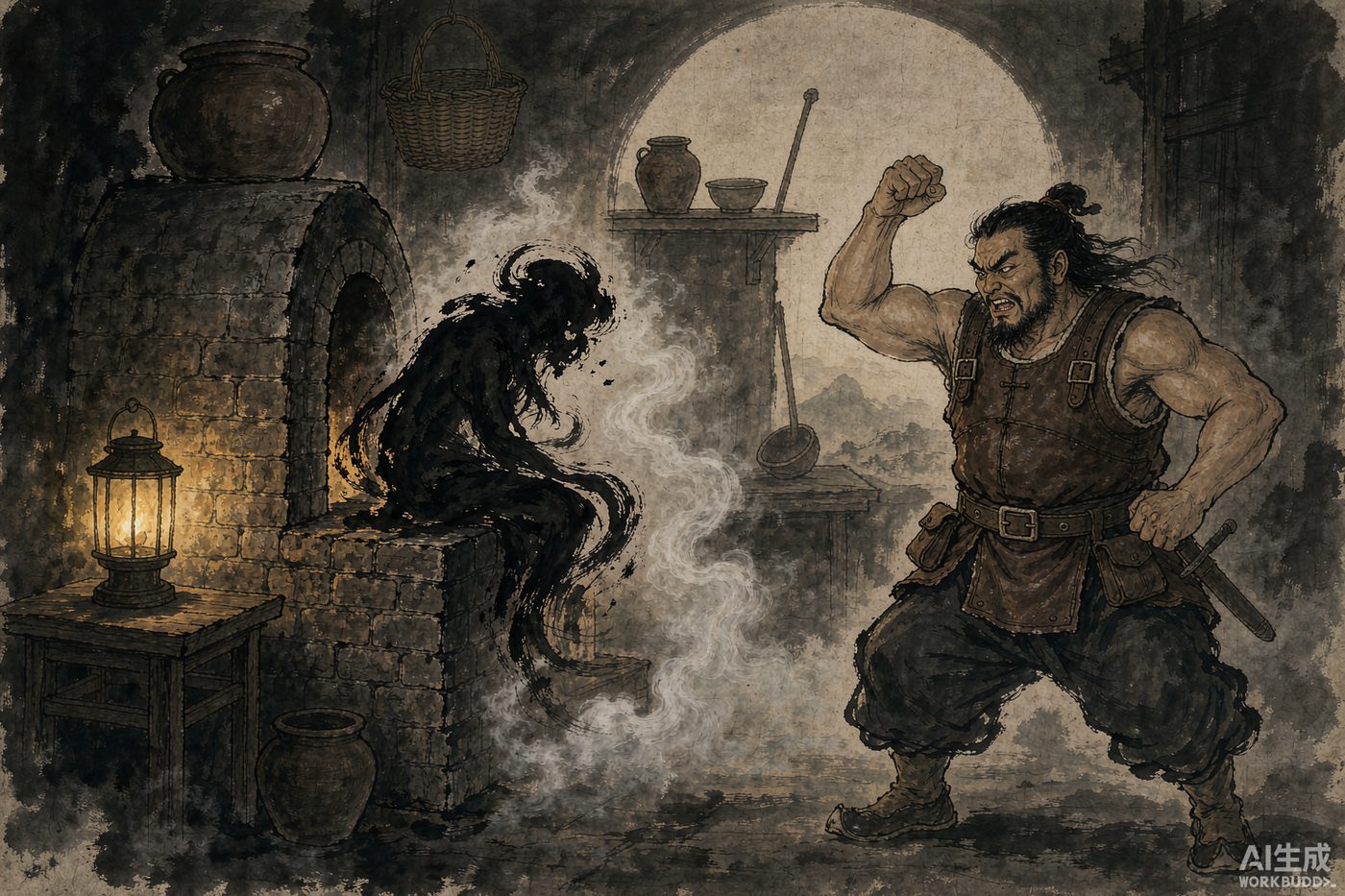
A bold retired general is told a thing crouches by his kitchen stove each night, hair wild, face unreadable. He goes to look — and recognizes a dead man's discarded soul. One punch, and it is gone.

GhostCourageHun and Po
Southern Song dynasty · 12th century · 夷坚志

The Physician Who Burned With Aconite

張文寶

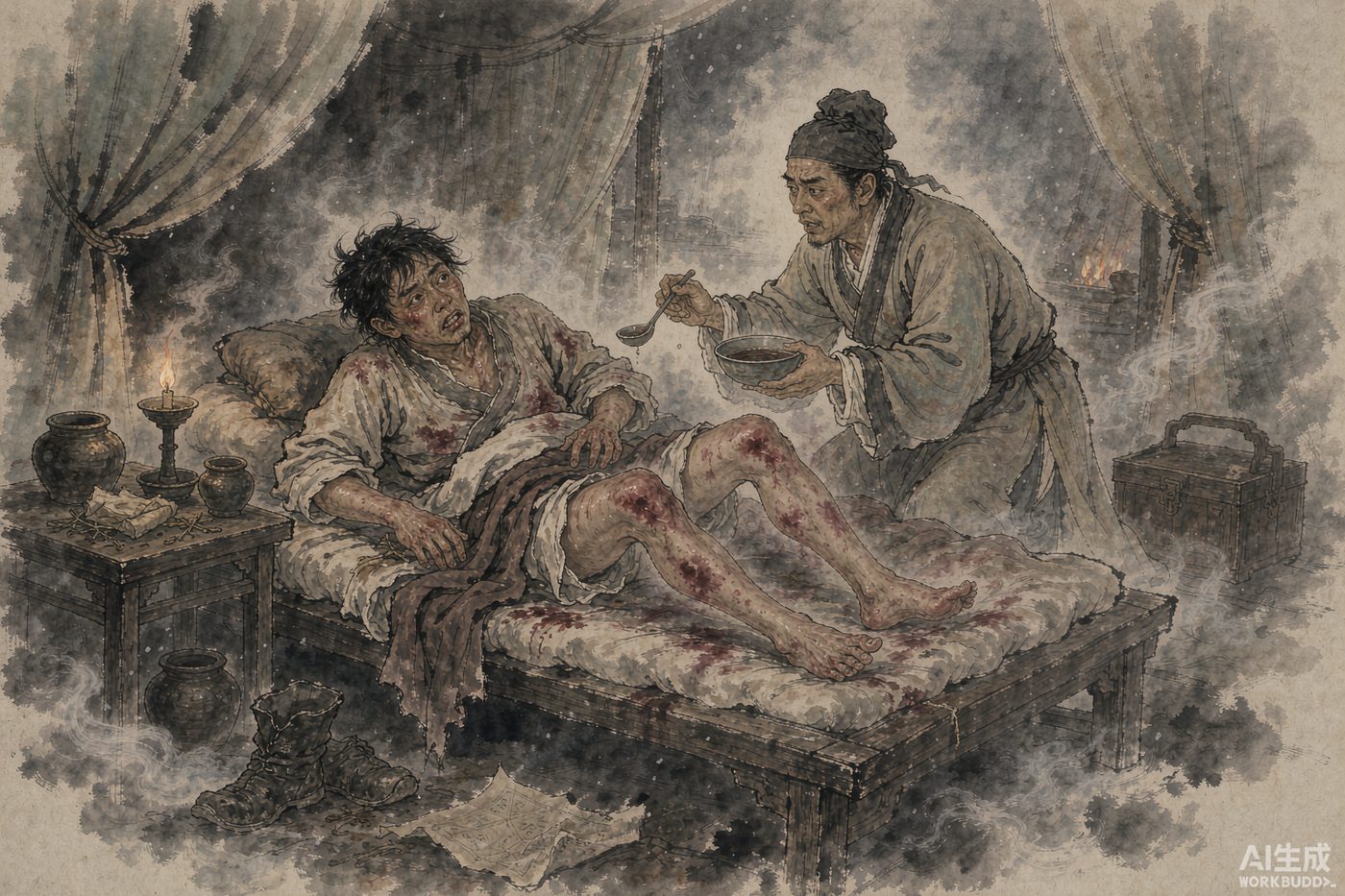
A military healer who did not know his craft pours a massive dose of aconite into a feverish young soldier. The soldier dies cursing him — and three days later, from the reopened grave, names his killer.

Wrongful DeathSoul's ReturnMedicine