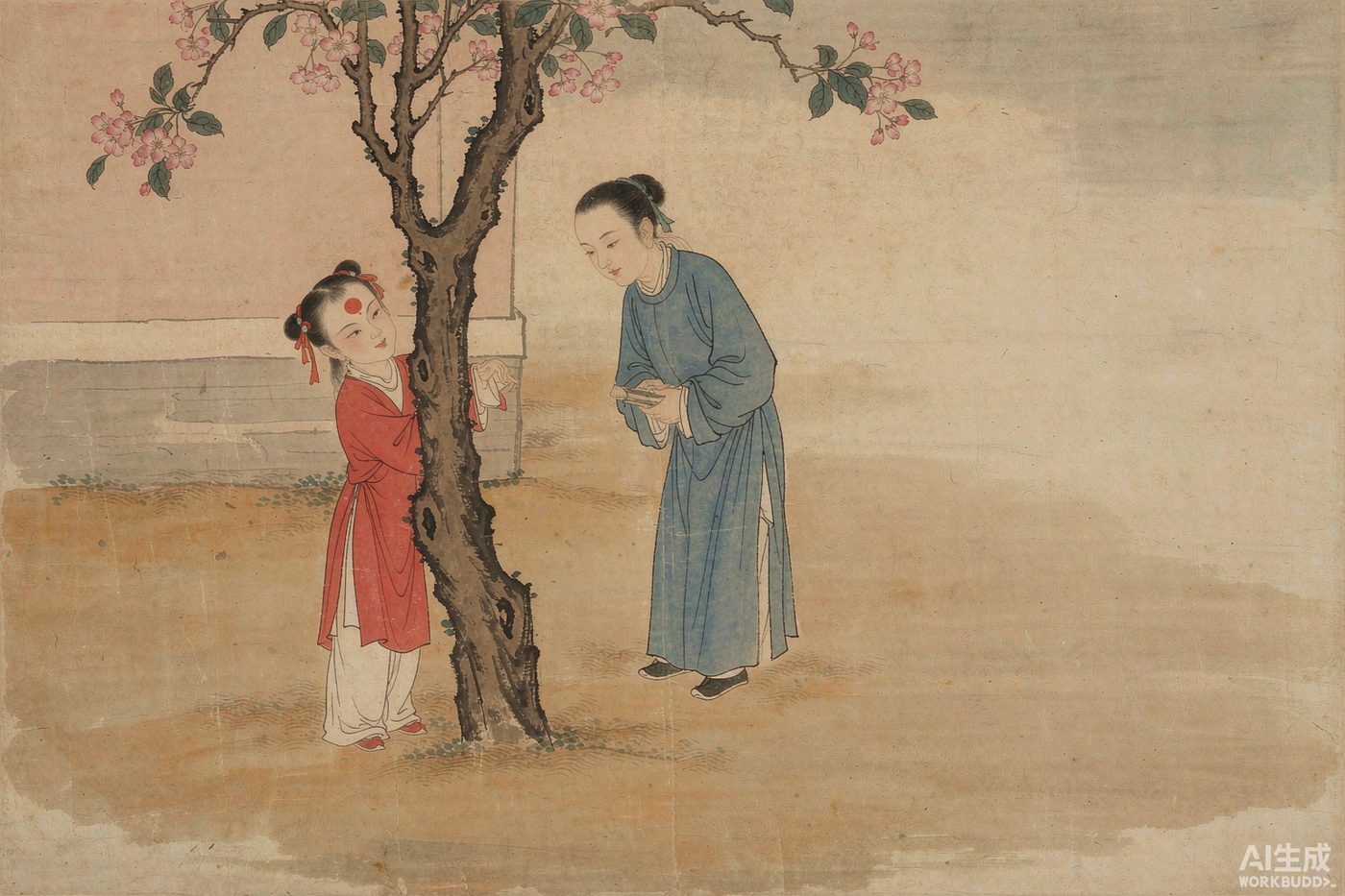
In the household of the Hanlin academician Zhuo of Haining there was a maid named Chongnu, who had ringworm of the scalp, a face black and pitted, and a lotus boat under her skirt of about a foot two. A garrison soldier named Lu betrothed her as his wife. His family was poor and he had not yet married her.
It happened that a rich man plotted to seize a poor man’s wife, and Lu out of righteousness came to her aid. The rich man was angry, bribed the city commandant, and struck Lu’s name off the roll. From that time Lu was the more destitute.
When Wu Liuqi was not yet noble he begged food at the house of the provincial graduate Zha Yihuang, and Lu had known him then. Hearing that he had been appointed a deputy general, Lu went to serve under his banner. Lord Wu loved guests, and his table held many strange men. There was a guest known as Hai Ouzi, skilled in spirit arts, and Lu was assigned to attend him.
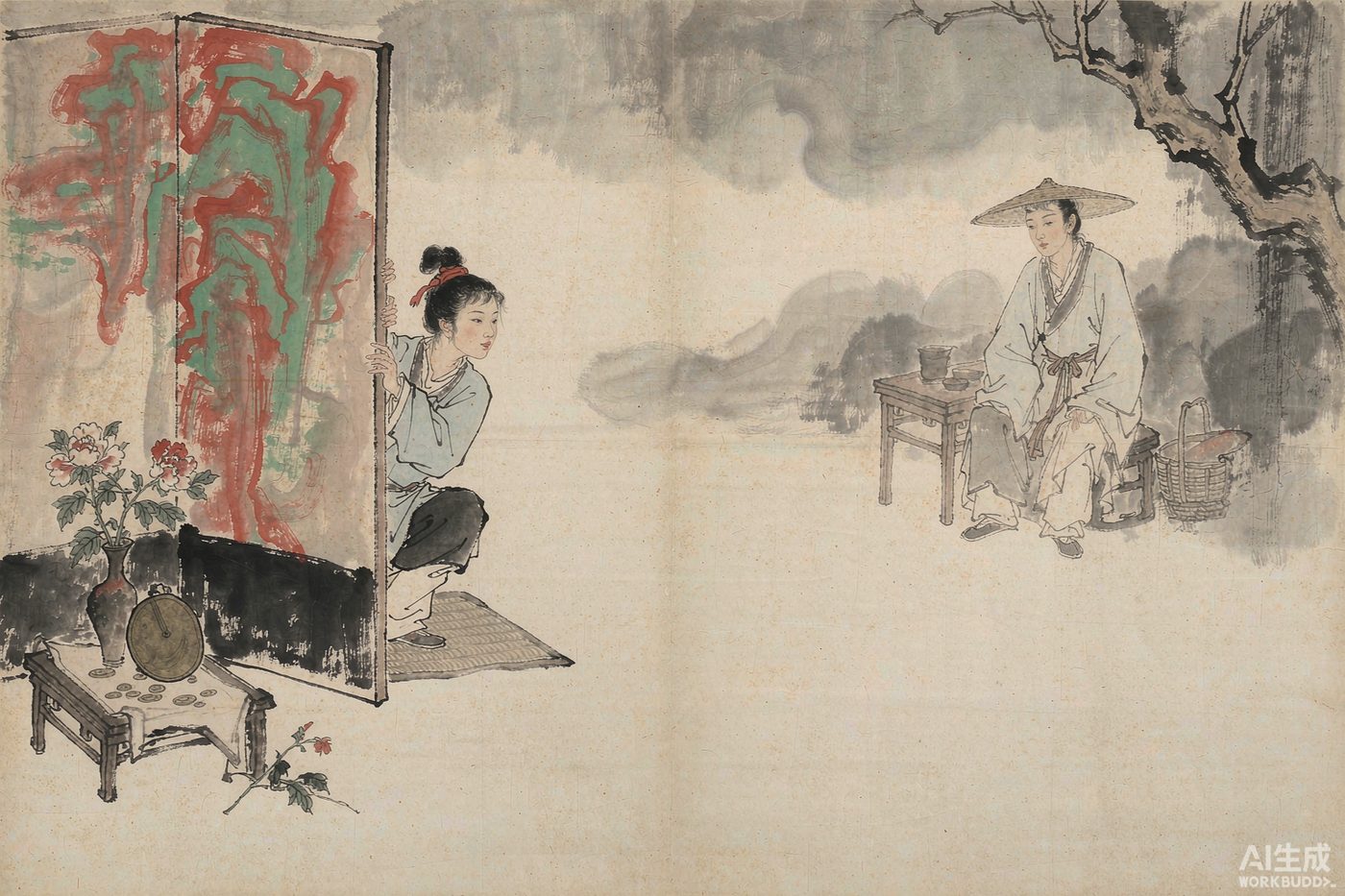
One day Hai Ouzi looked at Lu and laughed: “You are not the fire-faced, kite-shouldered sort that Ma Zhou was, but you can still be like Zhao Wuxu, who though low was certainly noble. Your wife-palace, however, is very strange. I fear you cannot beget children. Luckily the dark line of your brow runs into your temples in red, so divine power can still pull it back.”
He took out a black pill and gave it to him. Lu did not put much faith in it, but bowed and accepted it for the time being.
Afterwards he followed Lord Wu in pacifying bandits and won battle-merit, and was made a subordinate general. Then he suppressed sea pirates, took their chief alive, and presented the captives at the palace gate. When the report came in, Lord Wu hung up the seal of a commander-in-chief, and Lu, a subordinate general, was appointed to a command of his own.
He asked leave on family grounds, travelled night and day to his village, and first paid his respects to the Hanlin Zhuo, and asked after Chongnu.
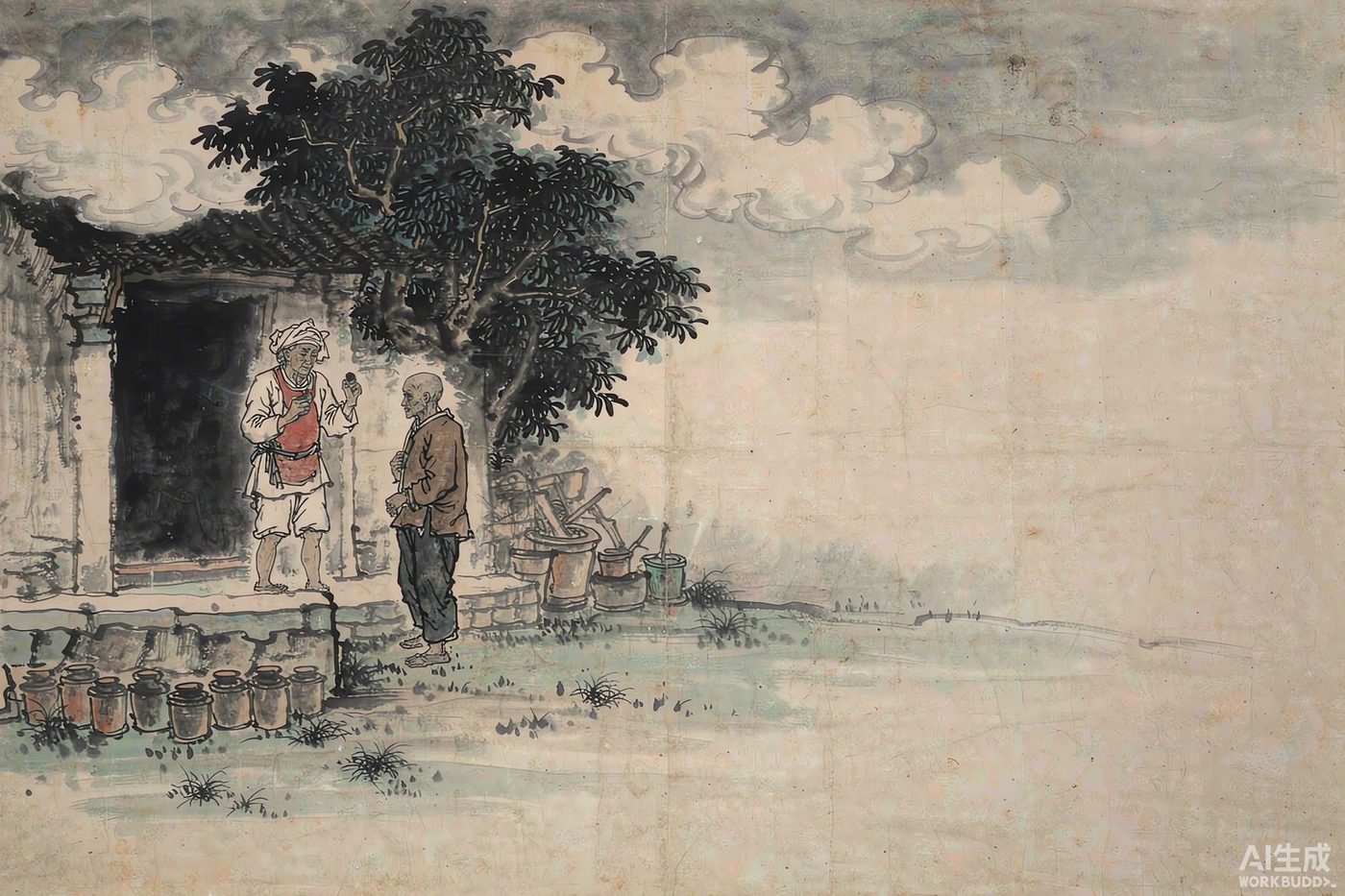
Zhuo laughed: “Does a noble man still remember the old days? Setting aside that noble and base do not match, and that she is ugly beyond liking — by age alone, she is a sixty-year-old auntie now. Can she still hold a quilt and be called a new bride?”
Lu said: “Not so. Formerly base and now noble, my fate is her fate. As for a face past liking, I knew all of it when I first betrothed her. And as for late years and old age — the blame for the wasted years falls on me. How is it her fault?”
Zhuo straightened his face and said: “You are indeed a righteous man. I respect and admire you.”
And because Lu had not yet prepared a house of his own, he was married into the Hanlin Zhuo’s household that same day.
On the wedding night, in brown headcloth and looking level at her, she wore the phoenix robe and the pearl crown and was quite like a titled lady. When she took off her ornaments and went to bed, a few white hairs fell over her crown, and from brow to heel she was only roughly like a human shape. Lu honoured her without slackening.
Chongnu urged him to take a concubine. Lu said: “Even if I grow old with you for a hundred years, it is only some thirty years more of marriage bed. Would I bear to let another share my foolish love?”
But Chongnu still grieved over having no heir, and so brought out the black pill that Hai Ouzi had given him and made him swallow it. Within ten days her courses returned. The next year she bore a son, and they named him Gongshou, Reverent Longevity. People said it was the reward for keeping faith.
— The author’s comment (condensed): Wu Yan entered the palace, and Meng Guang raised the tray; those who value a woman’s virtue never valued it for her face. And yet, with no man like Yang Tingxun in the world, who is the man who would not put away such a wife? That a soldier should behave like this means the son-in-law of the house of Yuan ought to die of shame.