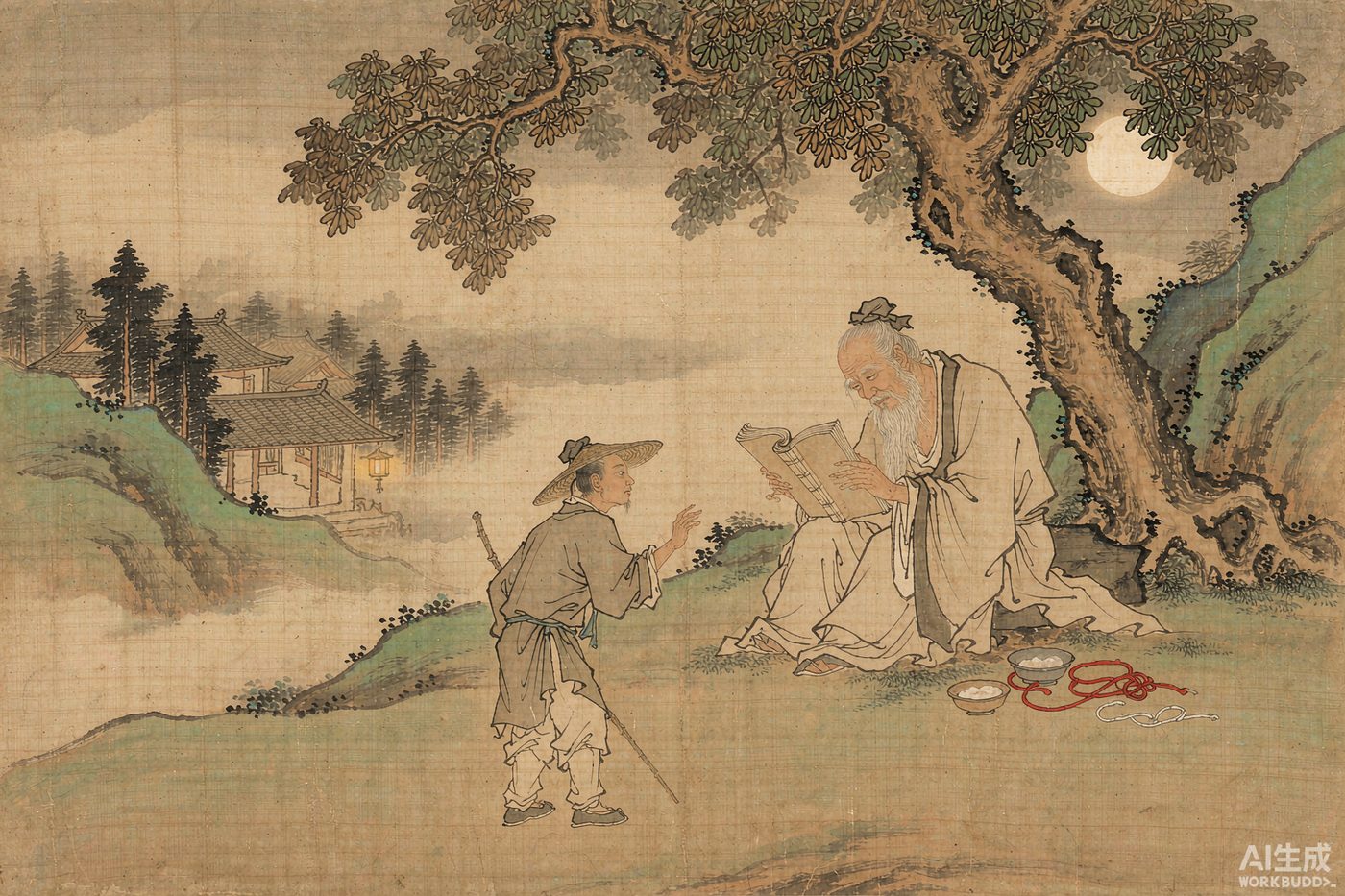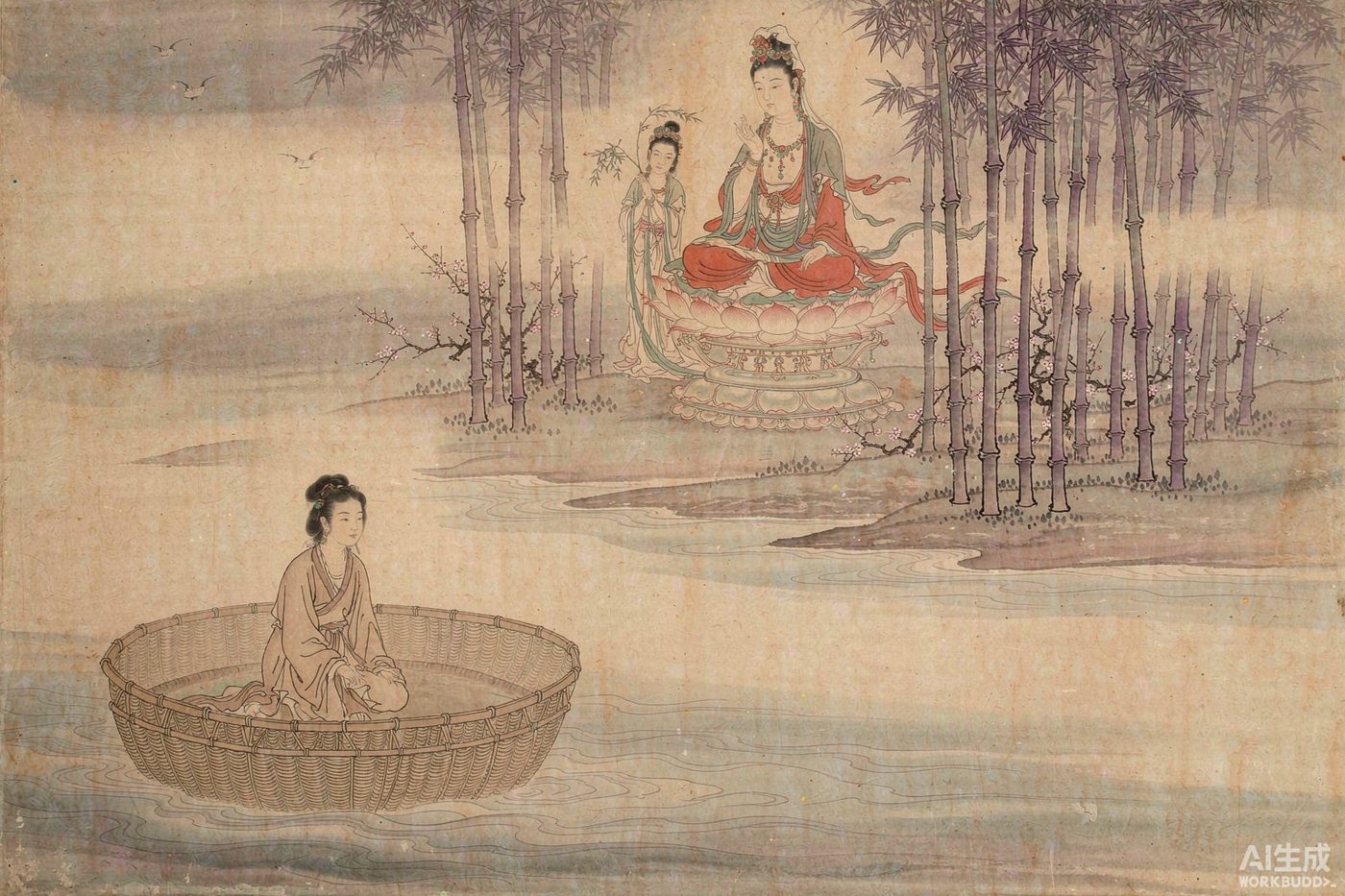
Xiangguan was the daughter of a poor family in Jiangyin. She was skilled at letters, and fond besides of reading the physiognomy manuals, and her judgements of other people’s fortune and misfortune mostly hit the mark.
When she reached the age of putting up her hair, her mother was going to betroth her. Xiangguan said: “My face is thin, and I am not fit to be mistress of a household. If you truly love me, let me be given as a lesser star, and that is enough.”
Her mother, because her words so often hit, agreed. But suitors contended at the door every day. Her mother had her look at them through the crack of the curtain, and none of them pleased her. Her mother said: “Silly girl, your eyes are too high. Among all these, is there no lucky young man?”
Xiangguan said: “That is not what I mean.” Her mother pressed her, and her eyes filled, and she was about to weep; so her mother let it drop.
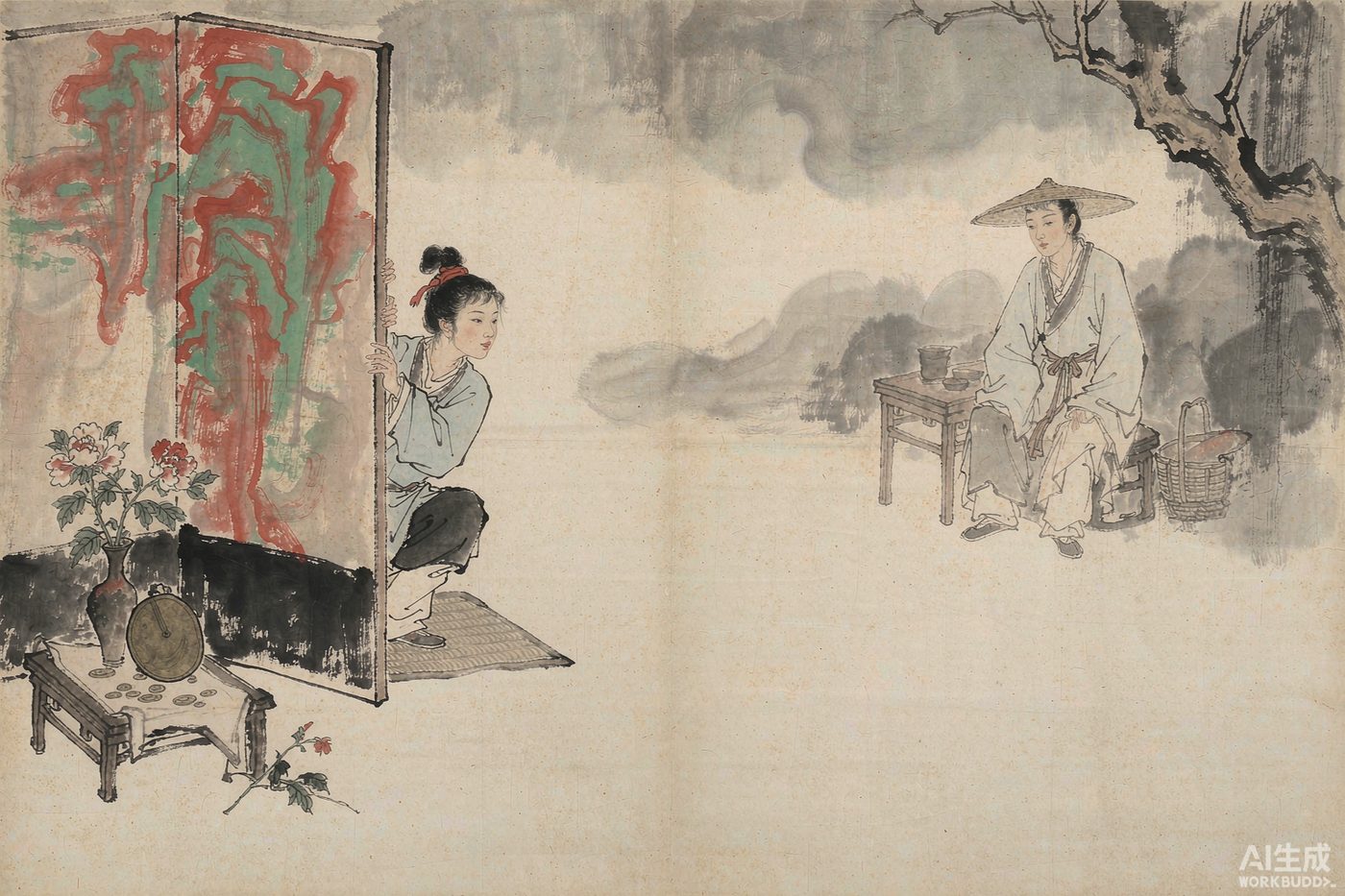
Master Hong of Huxi was a man of talent. He loved the beauty of Mount Jun, and was lodging in Jiangyin. Hearing of Xiangguan’s name, he came to the house to ask for her. Xiangguan happened to be tossing coins at the corner of a screen, and saw him. She went in and said to her mother: “The guest in the hall is truly the match for me.”
Her mother went out to look at him, agreed, and he departed. Then she asked: “And what of that young man’s face?”
Xiangguan said: “Clear in breath, fine in bone — not a man of the silk-trousered sort. But too clear is thin, too fine is pared. I fear he will not live long.”
Her mother was startled. “If he is not long-lived, why do you take him and no other?”
Xiangguan said, weeping, “Yesterday I took up my mirror and looked at myself: willow brows invading the moon, pear dimples deepening. In thirty years I must certainly be a widow. The gentleman’s face is not favourable to the yin year. It is truly a case of two short allotments that match, and to go against it would be unlucky. Mother, do not trouble yourself about it.”
Afterwards Hong set up a separate fine house and chose a day to bring her in with ceremony. After the wedding they were very happy together. Hong was good at painting, and of long sheets and short he could not keep up with the demands made on him. As soon as one left his hand, Xiangguan would inscribe a poem on it. I still remember the quatrain she wrote on a painting of twin lotus:
In the land of water and cloud I saw gentleness; how many silly girls row their painted boats. The lone duck on the river takes the trouble to send word: fly away with your back to the flowers, and do not look back.
The omen of grief shows in the words.
One day they sat under the flowers and folded slips of paper for a drinking game, with names like twin-stemmed flower, twin-headed flower, joined-branch, and flower beneath the leaf. Whoever drew one had to quote two lines from the Flower Classic; if they pleased, the player was rewarded with fragrant tea, and if not, two fingers were held out and the wrist struck as a forfeit.
Xiangguan drew the twin-stemmed flower and said: “So it be early and late, husband and wife in harmony.”
Hong leaned in and laughed: “Night-joined — a fine natural phrase. A truly witty heart.”
Then he drew the twin-headed flower. Hong said: “Good for your house and family — a man’s omen.”
Xiangguan said: “An omen of sons, and shared by both of us. By your words, so with office too.”
Then he drew the joined-branch. Xiangguan said: “The way is hard and long; the spring sun is warm.”
Hong said: “Long and spring, two words joined into a joined branch — a neat coincidence as well.”
Then the flower beneath the leaf. Hong said: “The axe rings out; its fragrance rises.”
Xiangguan laughed: “Wood-fragrance is indeed in the flower register; why do you join it on the second character?”
Hong laughed: “That is what is meant by a flower beneath the leaf.”
And then he asked: “You spoke earlier of the twin-stemmed flower. I wonder how many more of them there are in the three hundred poems.”
Xiangguan said: “Drive those four stallions; a face like moistened cinnabar; the rivers flow to the sea; the spreading sweet pear. I think that is all.”
Hong said: “I have one more couplet.”
She asked what it was. He said: “How greatly it will prosper; those millets hang heavy.”
Xiangguan’s face fell. “Leaning together before the flowers, our happy meetings should be long. Why come to about-to-part?”
She stood a long while leaning on the railing, staring, ready to weep. Hong was just beginning to soothe her with gentle words when the summons calling him home arrived. Pressed by his father’s command, he had no choice but to pack hastily and go.
After Hong left, Xiangguan kept her chamber shut and put away her powder box, and all day sat before the mirror brooding, watching her own complexion. One day she threw down the mirror and wept aloud, and called her mother in haste to make mourning garments.
Her mother said: “The girl is mad. After Master Hong went there has not been one letter of illness. How do you conclude he must die, and make this inauspicious thing?”
Xiangguan said: “By my complexion I read it. It cannot fail.”
Her mother would not allow it; she changed to a plain white skirt instead, and from morning to night bathed her face in tears.
Before the month was out, the news of his death arrived. She destroyed her looks and cut off food, and would hardly go on living. A guest came with Hong’s father’s word, and pitying her young widowhood, offered several hundred ounces of silver and urged her to marry again. Her mother put it to her.
Xiangguan said angrily: “What talk is this? The days on which I can repay him in life are short; the days on which I can repay him in death are long. And my being a widow, my face said it; my being a chaste wife, my face says it too. Is there any woman in the world with a face cold as frost and a heart colder than snow who turns to the east wind and marries again?”
The guest marvelled and went away. He reported it to Master Hong’s father, and people thought her right; so a boat was bought and a carriage prepared, and she was brought into the family.
Among the sisters-in-law there were those who begged her to read their faces; she shut her mouth and would not say a word. The young men of the clan, learning that she could write verse, vied with one another to bring plain silk and ask for lines; she declined on the ground of illness, saying: “A woman with talent ends in misfortune. The old habit is repented and done with.”
Only a little maid stole her poem “Inscribed on Master Hong’s Leftover Painting” and showed it to her nephew Zhao’en — twenty-eight characters:
Pale red and fragrant white fill the railing; a stretch of spring light, seen in a painting. Opened at the autumn window it is not like it at all: the plane-tree courtyard is ten parts cold.
Though this is but a scrap of a feather of auspicious light, the reader may pity her intent in it.
— The author’s comment (condensed): the Tang History records that Yuan Tiangang, reading the face of Cen Wenben, said his literary talent would shake the empire but that the bone at the crown of his head meant a shortened life. Here the same art is carried into the women’s quarters and made the groundwork of choosing a husband; and her one phrase about two short allotments that match is a judgement no court physiognomist could better. If the method were widely practised, Pan Yue’s Rhapsody on the Widow would have no cause to complain of a death that came without warning.