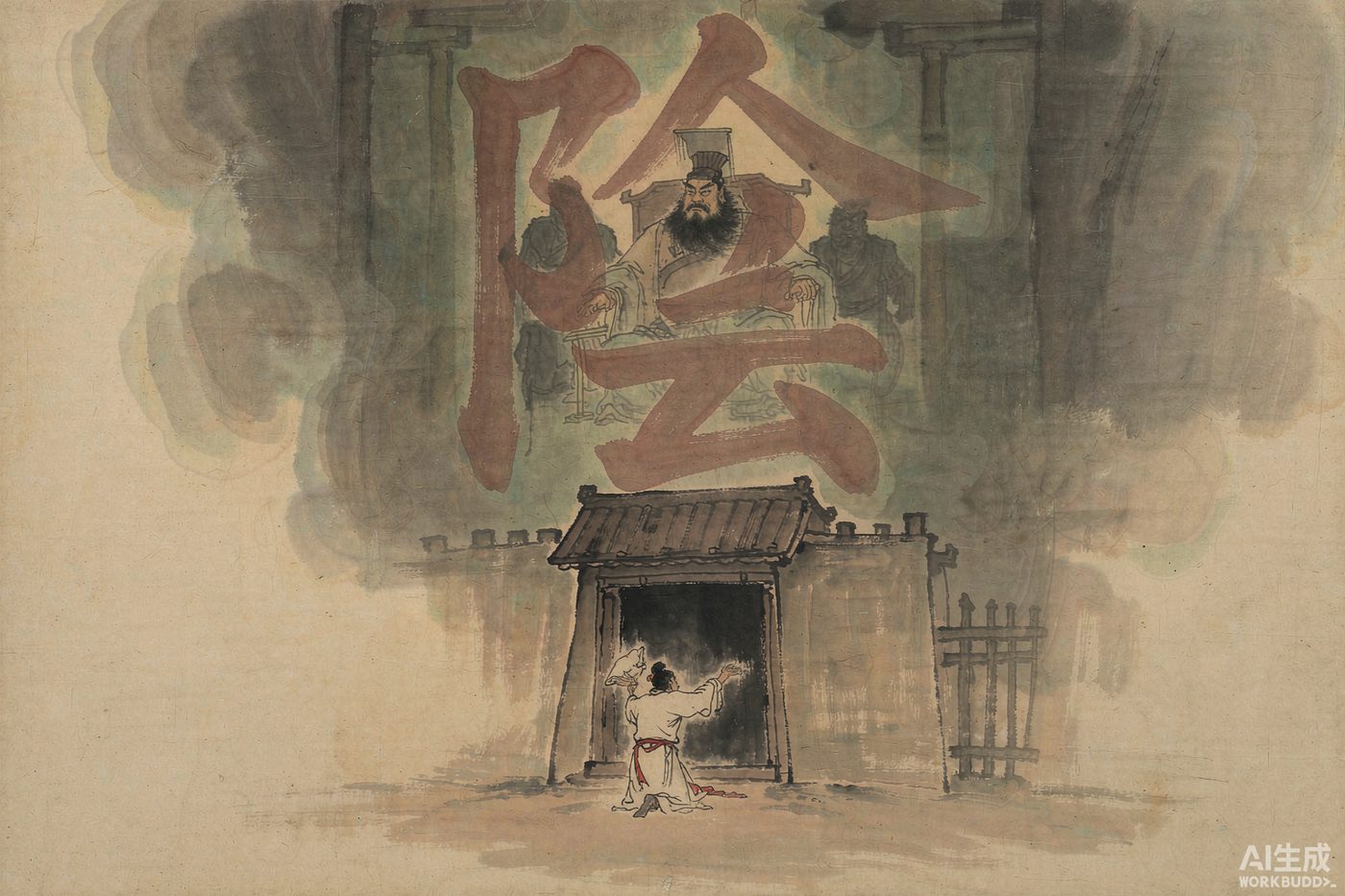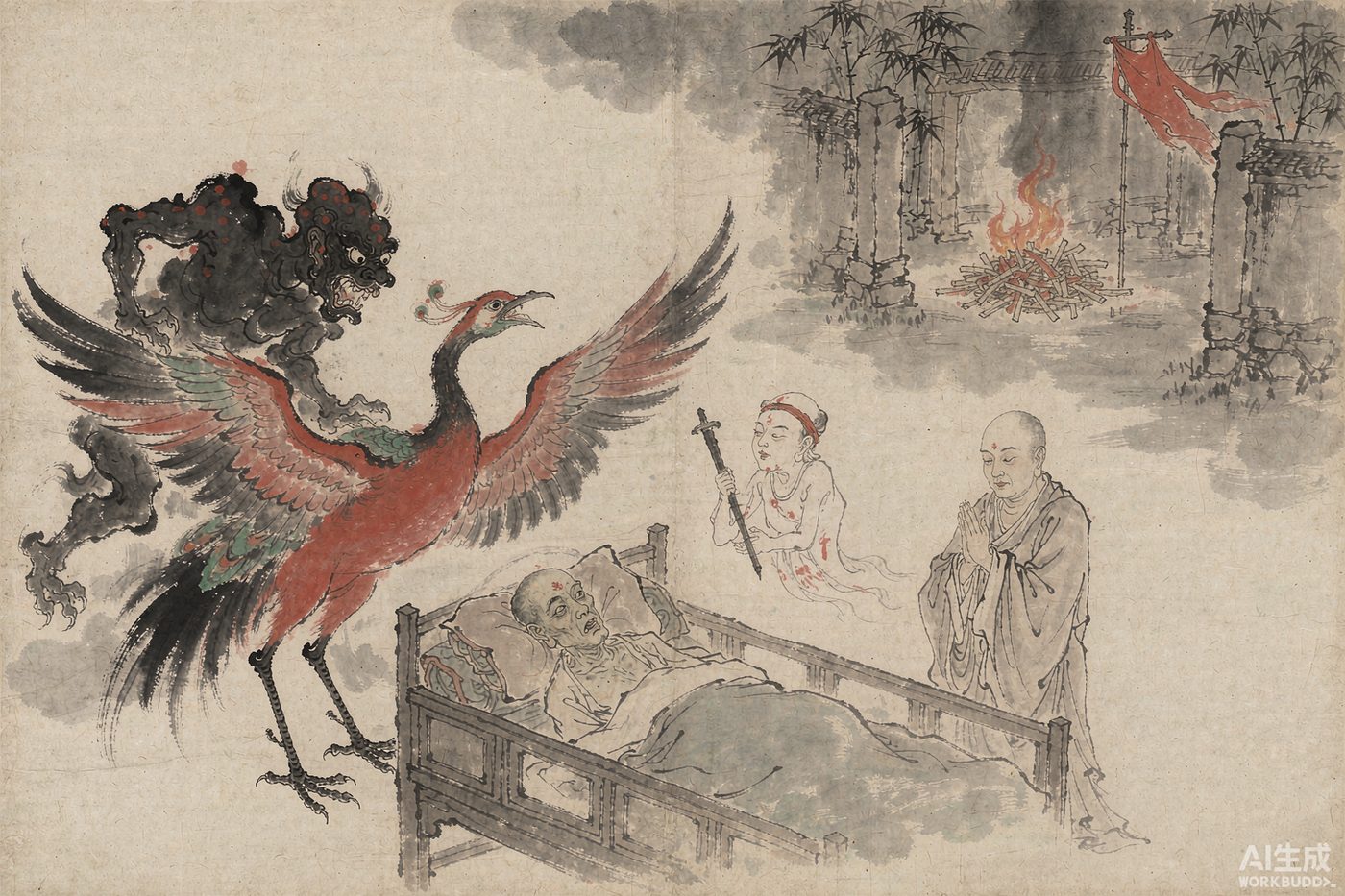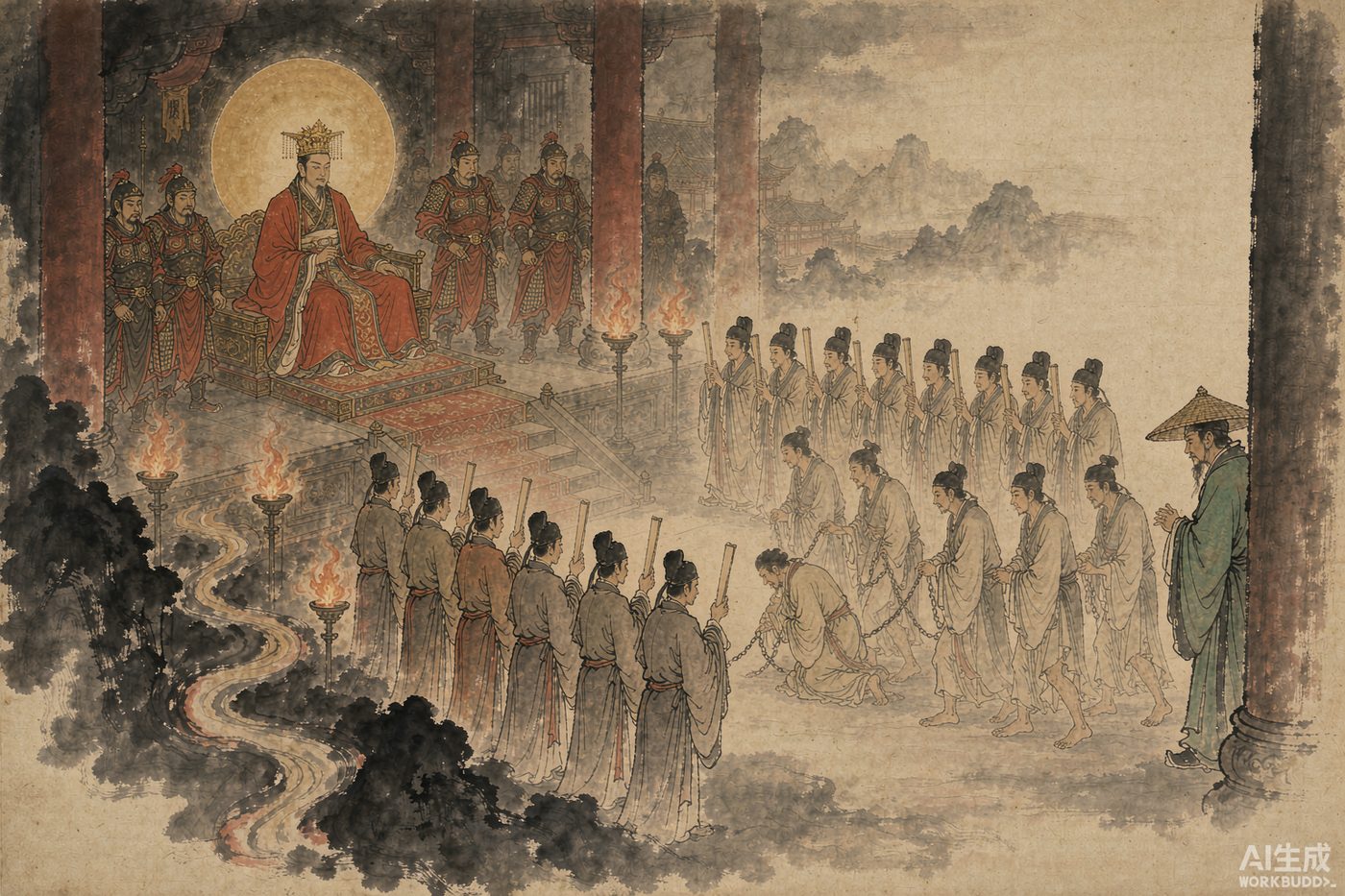
Zhang Tao of Luoyang, styled Cishan, was registrar of Suzhou in the jiachen year of the Xuanhe era, and in that year he lost his wife. That winter he went up to the capital to sit the selection for office, and on a public holiday at the winter solstice he visited the Xiangguo Temple — and there, in the thick of the crowd, he met Ying’er, his dead concubine.
He was astonished. “You have been dead a long time,” he said. “How is it that you are here?”
“I am in attendance on the mistress,” she said. “She lives in an empty house five li outside the west gate. If you come after the midday meal tomorrow, sir, I will be waiting for you on the road.”
Zhang did as she said, and there indeed was his wife.
She wept and told him: “I am here being punished for the jealousy of my whole life, and for drinking, and for following my temper. Stay a while, husband. You will see.”
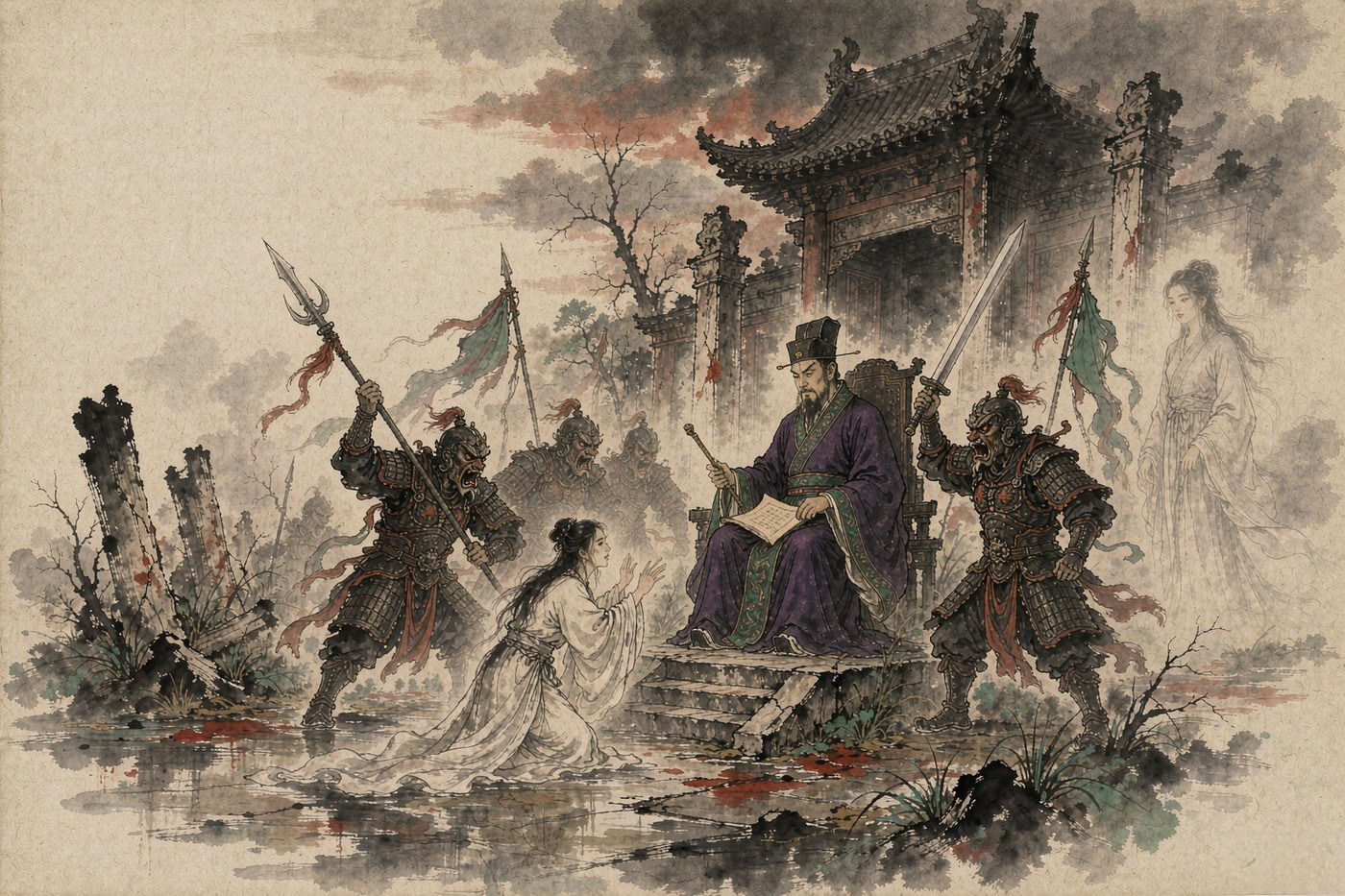
In the late afternoon there was shouting and the cry of outriders, and a very great procession came — banners and swords and halberds, a full guard of honour — and a nobleman in purple dismounted and went into the main hall. Then every one of the attendants behind him turned into a fanged and bristling demon. They ran her through with a long fork and dragged her forward; they cut off her head and broke her four limbs into some dozens of pieces. And then she was alive again, and they questioned her under the whip, and it hurt.
After a while the purple-robed one left, and everything was as it had been when he came.
“I suffer like this every day,” his wife said. “You must ask the monk Cheng of the Great Sage Temple at Sizhou to read the Diamond Sutra for me. That is the only way out of this.”
“Come again tomorrow,” she said. “You will see.”
The next day he watched, and what he saw was as it had been — except that this time she was only bound, and no longer cut to pieces. The purple-robed one asked her: “You must have made a vow. Your bad karma is already thinning. Tell me the truth of it.”
And she told him. He put his palms together. “Good. Good. Keep at it,” he said, and left.
Then his wife said farewell to him.
Zhang went east to take up his post, and at Sizhou he held the vegetarian feast and paid for the scriptures, and when the turning-over of the merit was finished he went back to the west of the capital. There was nothing there at all — nowhere, nothing to be seen.
But Ying’er said: “My lady asks me to tell you, sir, that she thanks you for the scriptures. She has been born as a son in a scholar’s family.”