Wei Yuan, whose style name was Shihui, was a man of Dong’e in Yun prefecture. He drank until it was an illness. He was more quick-witted than other men and too lazy to open a book; he was past forty and had never held office.
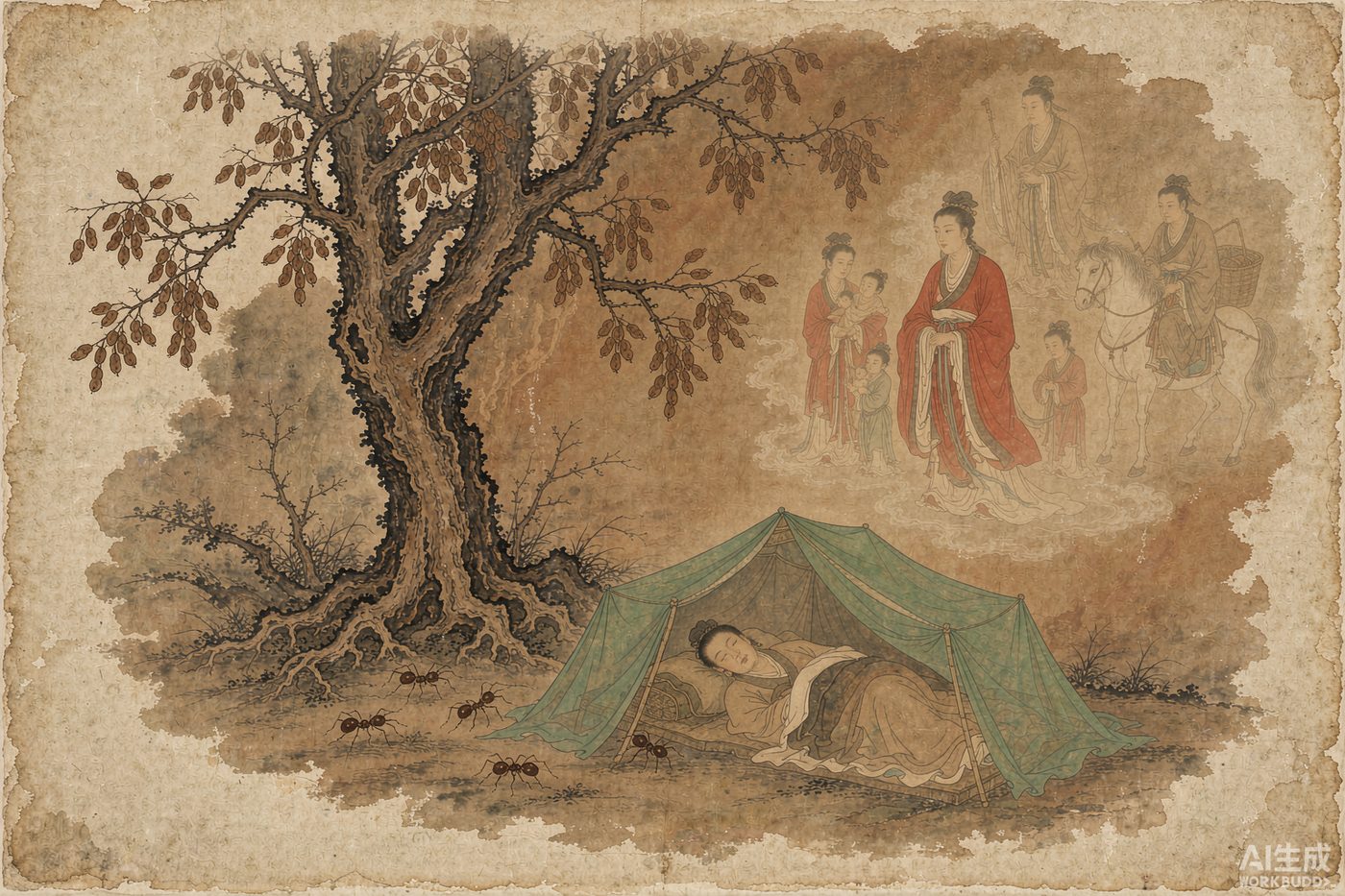
One high summer he was drinking with a party of companions over a game of pitch-arrow. Drunk, he lay down under the window, and dreamt that he was wandering in another country.
Word came that the Kingdom of Deep Drunkenness had invaded. The people took up their old folk and their children and scattered. Yuan hid himself in a panic. By the time he got home his entire household had been taken captive and plundered.
He walked the hills alone, drifting for years, with nowhere to set his foot. Then he met three old friends of his — Yan Zhongfu, Li Hengjia and Wang Mianfu. They asked after each other, who was alive and who was gone, and told him that his wife and children were safe.
Yuan was overjoyed. He said to them:
“Three years of hardship I have had — cold, hungry, adrift, never knowing one morning what the next would bring. And I keep thinking of the good company I used to keep, and how I could put away several pecks of it at a draught. Now I would give anything for a single cup to quench this thirst, and there is no way to come by one. Would you gentlemen consider it?”
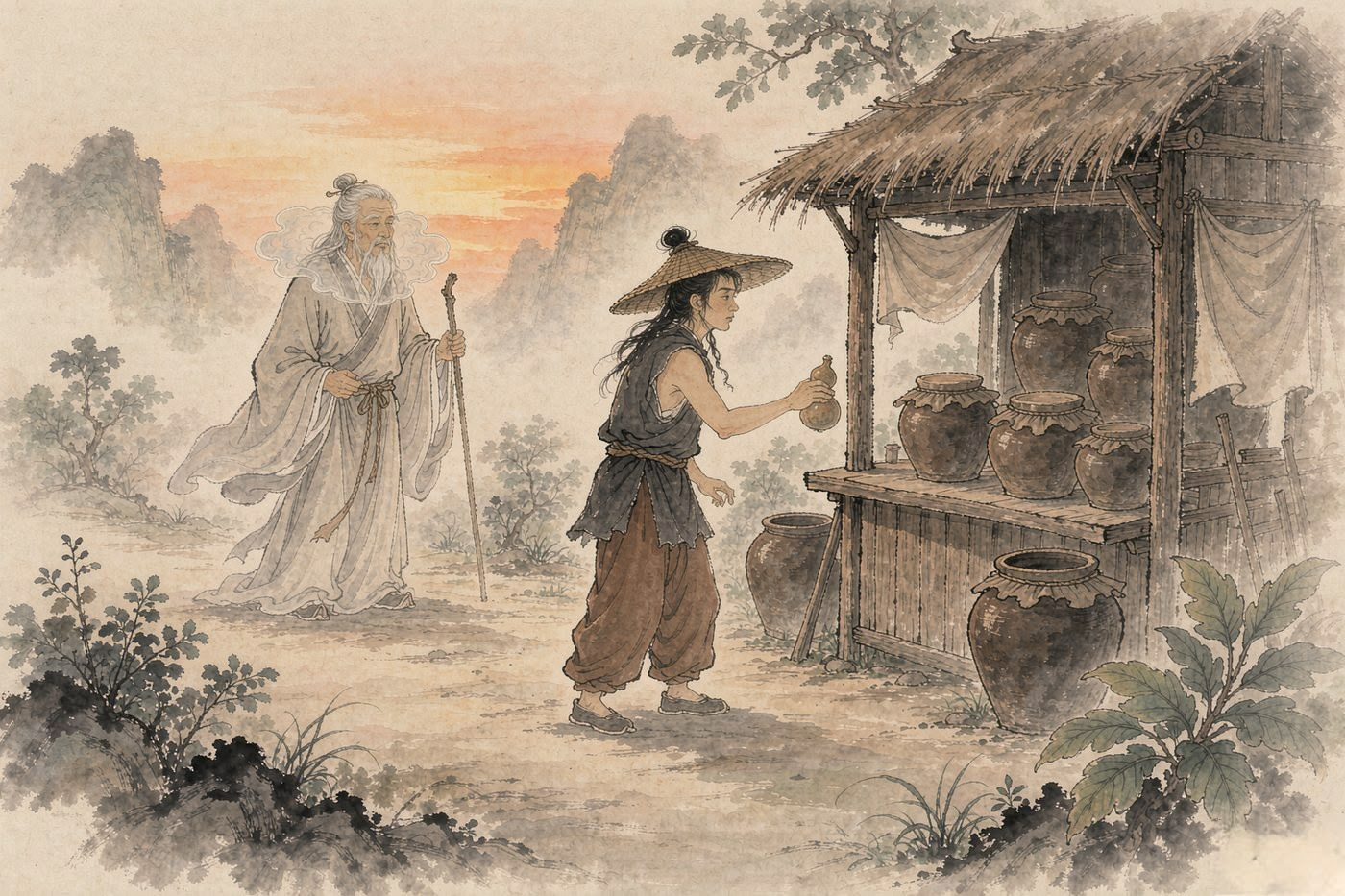
“A few li on from here,” said Zhongfu, “there is a wine-shop with a blue banner. Two girls serve at the counter there, and they are surpassingly lovely. Why don’t we go?”
Yuan was more pleased than ever. They came to the market, and it was as he had said. Yuan drained a cup first, and then asked for it to be filled again. Another of the girls, the one holding the vessels, looked wretched.
Yuan chided her. “In a wine house you should be genial and smiling when guests arrive. Why are you like this?”
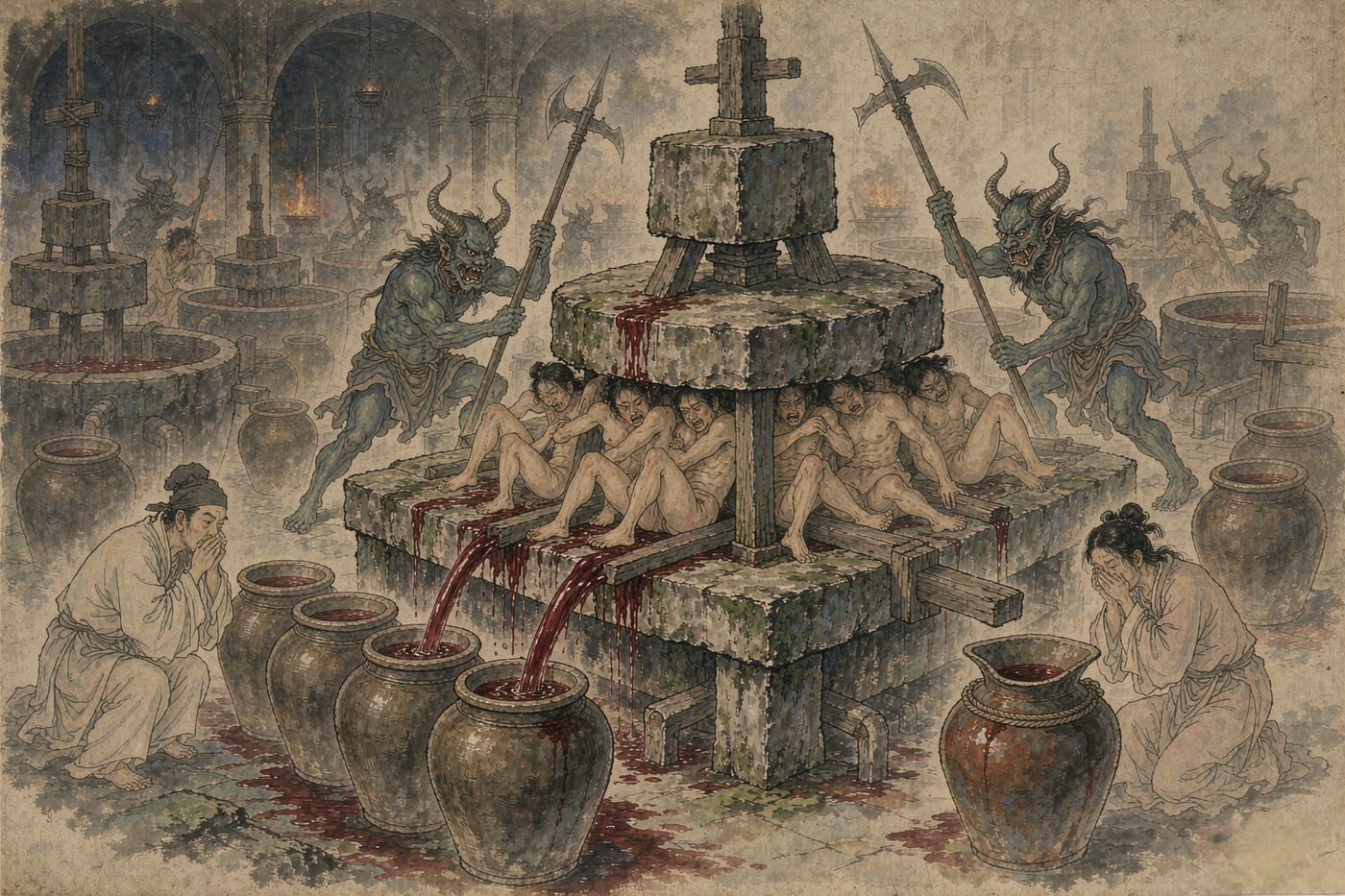
The girl wept and said: “Sir, you do not know. What you have just drunk was not brewed from malt and yeast. It is people’s essential blood. While men live in the world of light they pour away the dregs and trample them, and pile up guilt; when they die, their marrow is steeped to make it.”
Yuan was dull about it and did not believe her. So the girl took him into the back rooms to look round. In a great hall the presses stood in rows with the lees beside them, and along the walls sat more than a hundred naked people, men and women mixed together. Two great demons with halberds were forking them into the troughs one after another, and a huge stone pressed them down. The blood ran out of their mouths and overflowed, and in a moment it was wine.
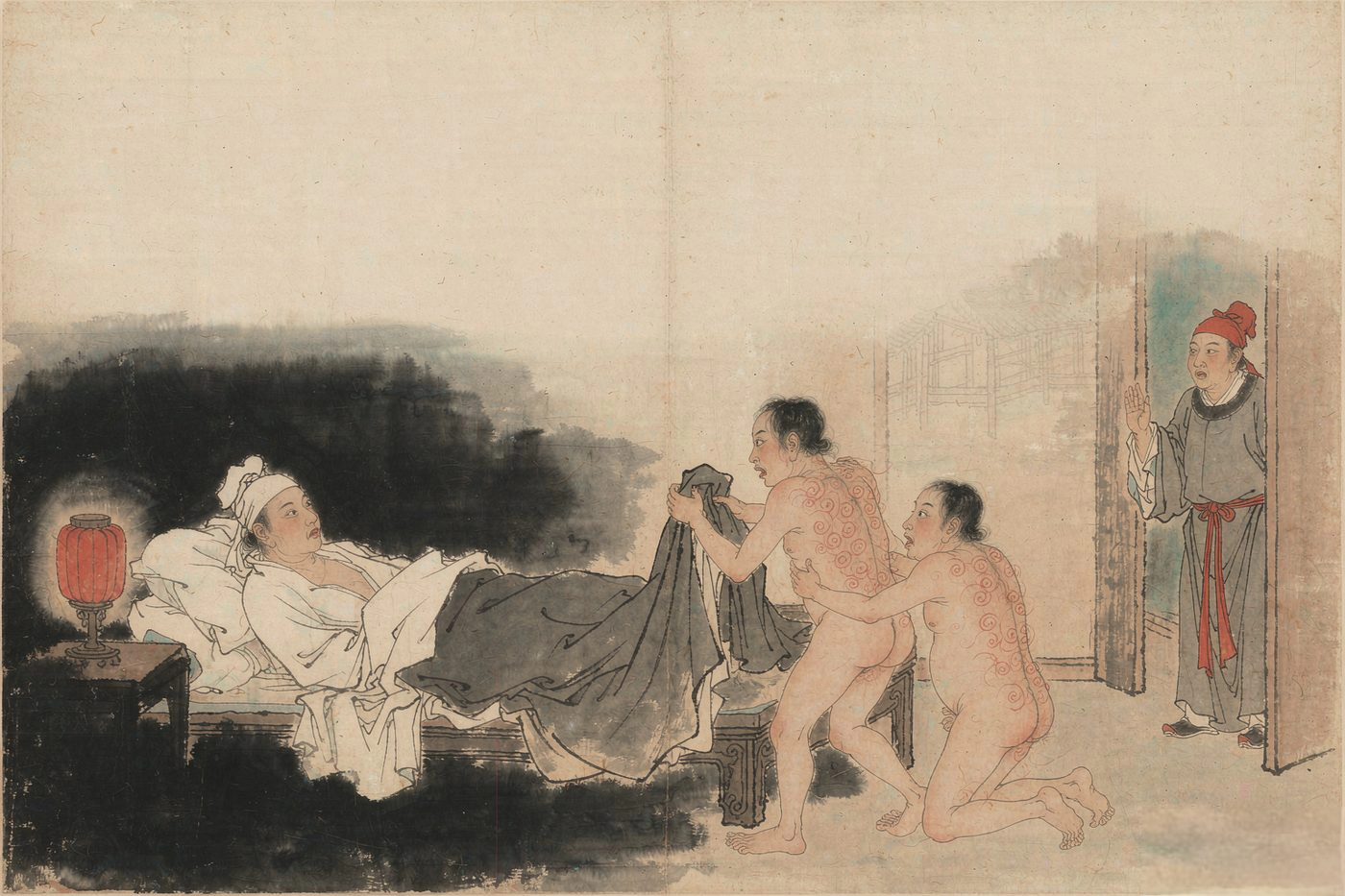
Yuan woke in terror and shuddering.
The serving boy was at his elbow. The guests were still sitting at their ease. The clatter of the arrows in the pitcher was still ringing. He told them the dream at once. Not one full double-hour had passed. And what he remembered going through had been several years.
The Tang writers’ accounts of the Prefect of the Southern Bough, of Cherry-Robe, and of the Yellow Millet at Handan are all of a kind with this. And the entry in the Record of Things Heard and Done about the scholar Zhang descending into the dark is very like it.