Master Xia of Lintong, whose name was Qitong, was a man of dull nature who studied for the examinations. Every piece he turned out, the crowd would hoot at.
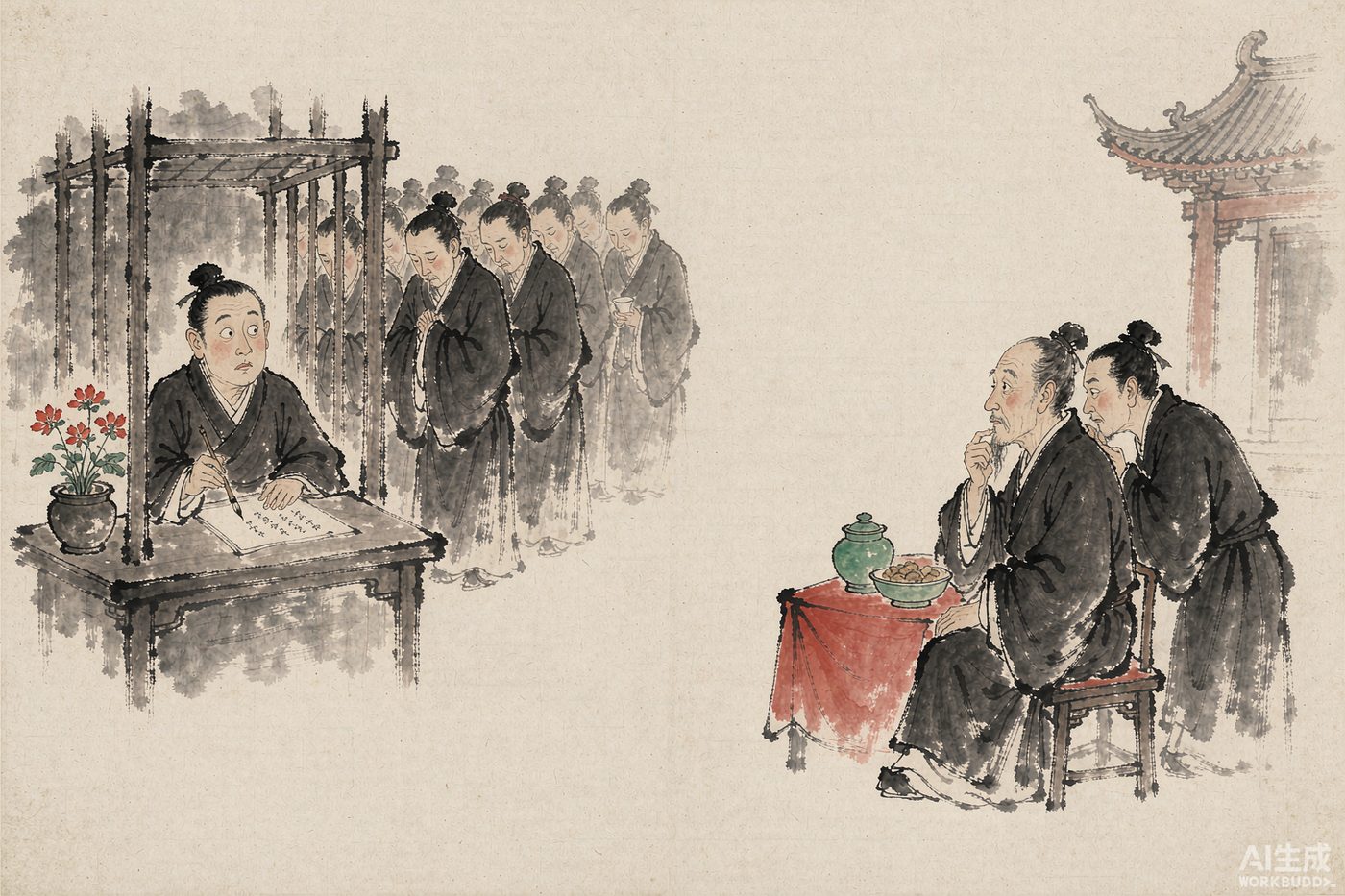
Once he sat the boys’ examination, plagiarised an old essay, and got into the county school. Afterwards he went to the annual examination, and privately judged himself certain of the bottom grade. In the market he met a diviner and had him cast for him, and got a prognostication:
Listen to it and there is no sound; look at it and there is no form. The gentleman casts for it, and surely gets its name.
The diviner raised his hands and congratulated him: “Your writing will certainly come first.”
Xia was delighted, and proclaimed it to everybody. The crowd said: “Even if the examination commissioner were blind in both eyes, he would know stink from fragrance by touch alone. Below the third grade, you might have hopes of coming first.”
Xia was deeply ashamed.
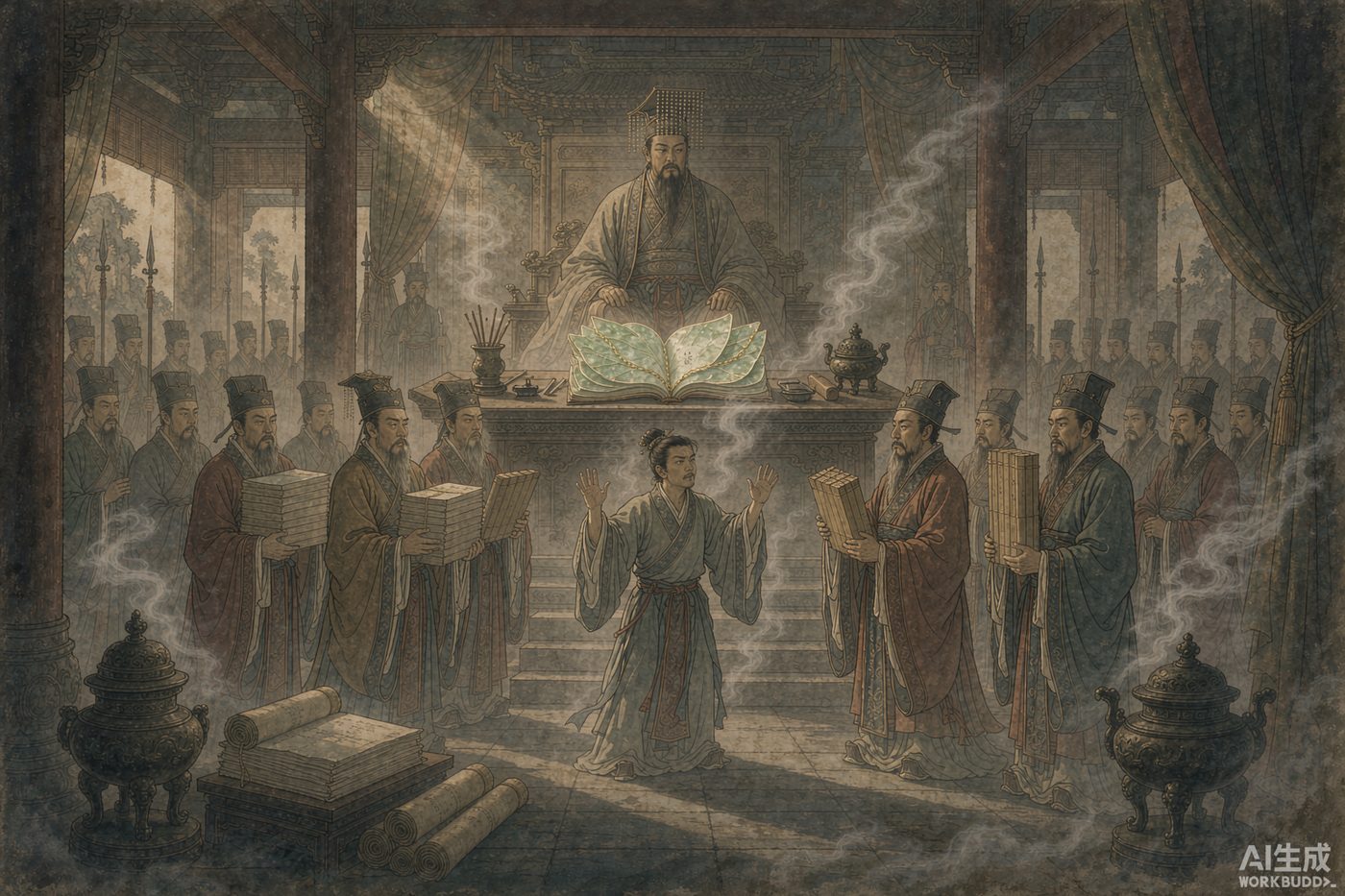
At that time a certain lord was commissioner, appointed to supervise learning in Xi’an. On the point of setting out, he took leave of his patron, a certain minister. The minister was a man of Xi’an, and he thought the commissioner meant to ask a favour for his own people, and pressed him hard for instructions.
The minister, whose temper was somewhat low, happened to let off wind, and rose a little from his seat. The commissioner, suspecting there was some charge he meant to give, pressed him urgently.
The minister said: “Nothing — it is only that my wind has passed.”
The commissioner assented, thinking that “Xia Qitong” must be a man in the minister’s confidence, and noted it carefully.
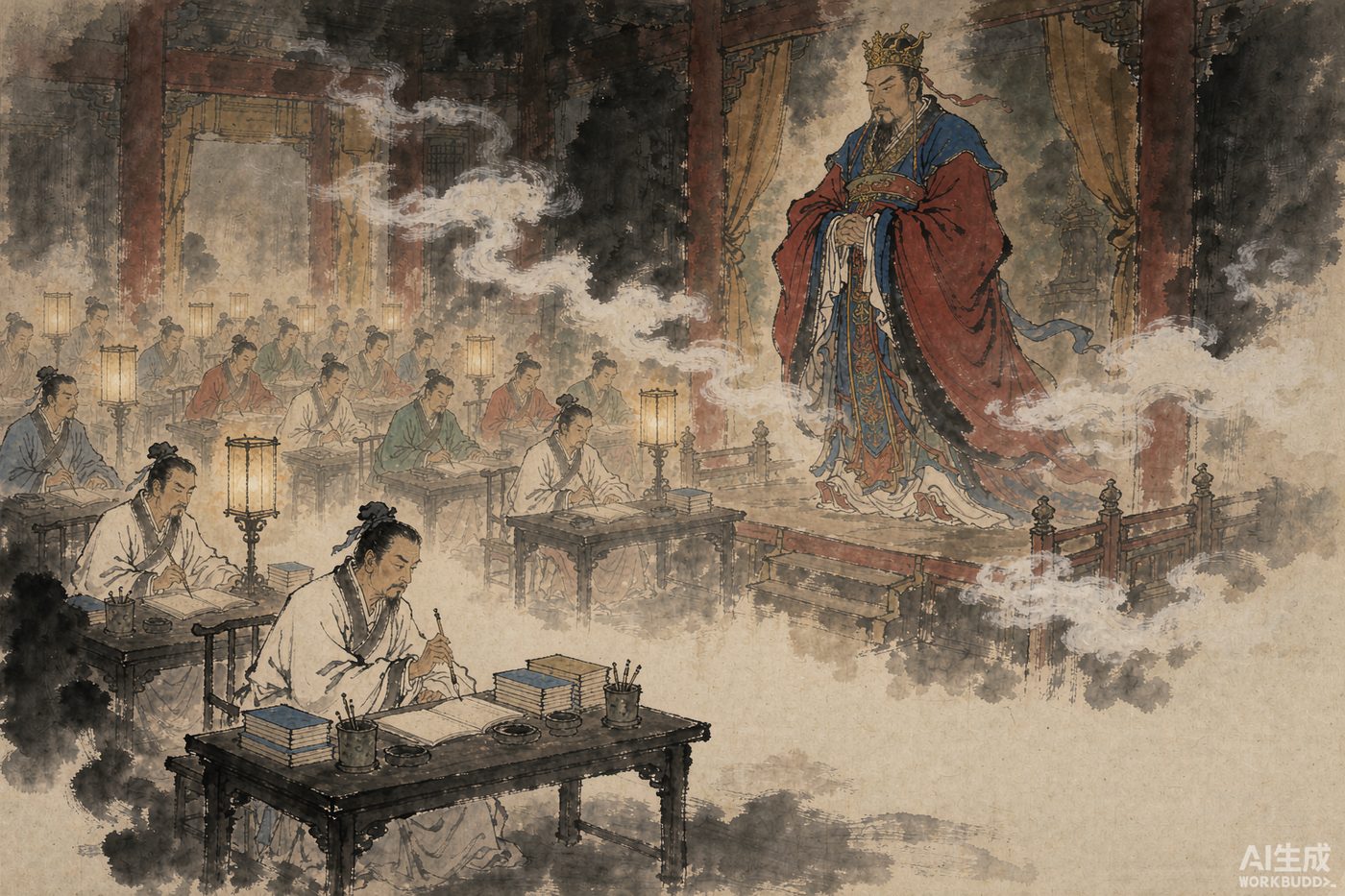
Afterwards, when the lord arrived in Xi’an to conduct the examination, there was indeed a scholar named Xia Qitong.
After the compound was locked and the papers read, he went through his closely: the wording and the sense were absurd, truly enough to make a man hold his belly. But because of his patron’s earnest charge, there was nothing for it but to force favourable comments on it and put it first.
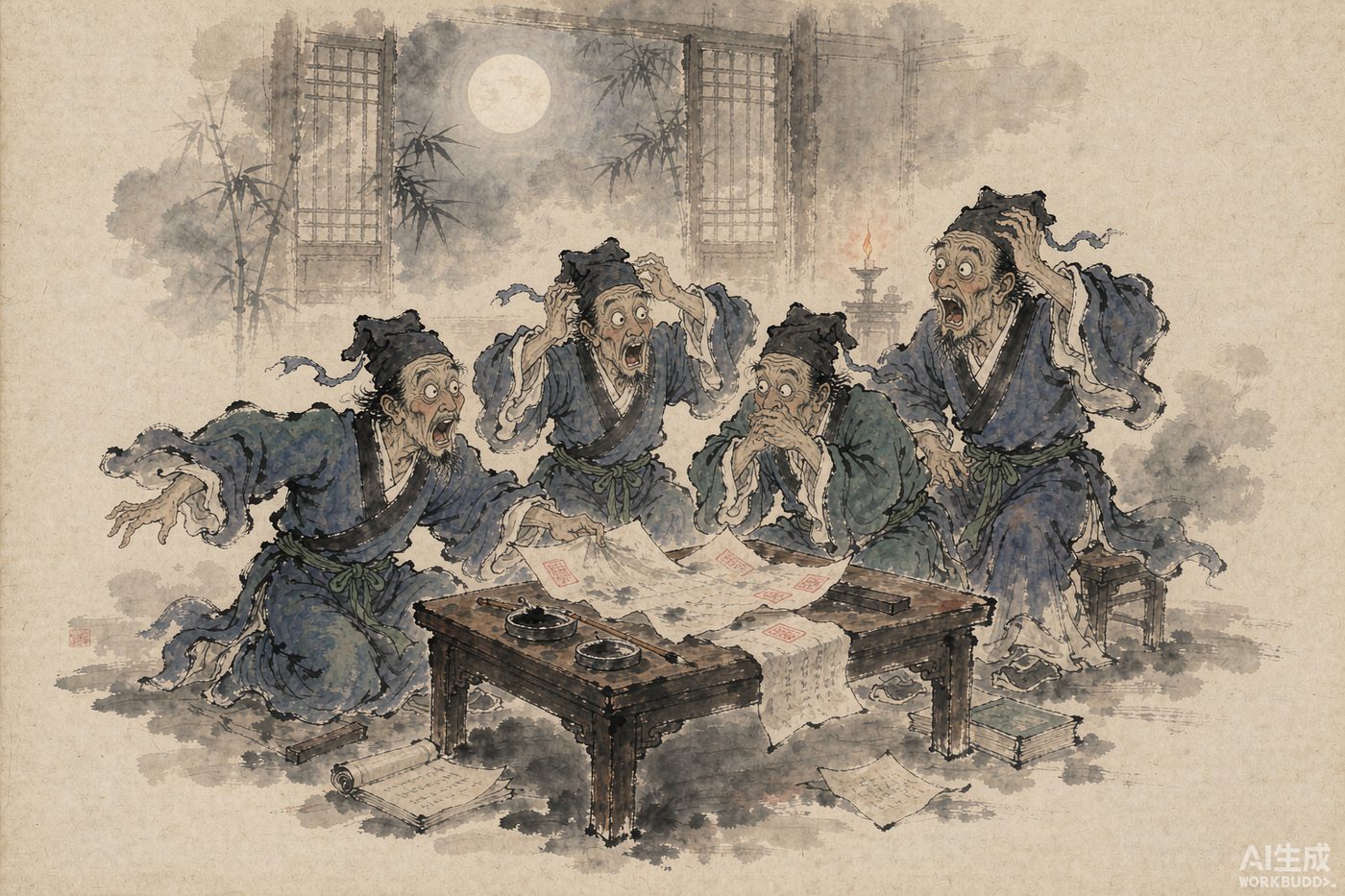
When the list went up, the scholars raised an uproar. Then, reflecting that the lord was himself a famous Hanlin and could not but have true discernment in judging essays, and that Xia was a poor man with no avenue for chicanery at all — and yet had come top with inferior work — they could not account for it in the least.
Afterwards, when the lord had completed his term and entered the capital, he called on the minister to pay his respects. The minister was blank, and brooded over it a long while, and then suddenly laughed aloud: “You were mistaken. That day my wind happened to pass, and so I said those words. When did I ever give you any charge?”
The lord understood, and laughed too. The matter got out afterwards in Xi’an, and the scholars’ doubts were dissolved.
Ah — to hunt a degree by a passing of wind; though the learned world laughs at it, is it not still better than a page full of the stink of copper?
— The author’s comment (condensed): when the ancients named a child the meaning was always chosen with care. When the planet Venus entered his mother’s breast, Li was named Taibai; when Cui Wei prayed for a son, the boy was called Zilang; Gao Lin answered to the omen of a treasure, and Huan Wen to the cry he gave at his first test. I do not know why Master Xia, of all men, should have been given this objectionable name to serve as a later omen of luck. The Classic of Physiognomy says: the valley is rich, and the fortune of letters runs clear — so for a man destined for rank, this is the finest of all names.