Stories/ 子不语/ The Register of the Unranked

The Register of the Unranked

秀民册

SourceZibuyu (What the Master Would Not Discuss)
AuthorYuan Mei
EraQing dynasty · Qianlong era, c. 1736–1798
Writtenc. 1788
FateDreamsSatireOfficialdomPoetry
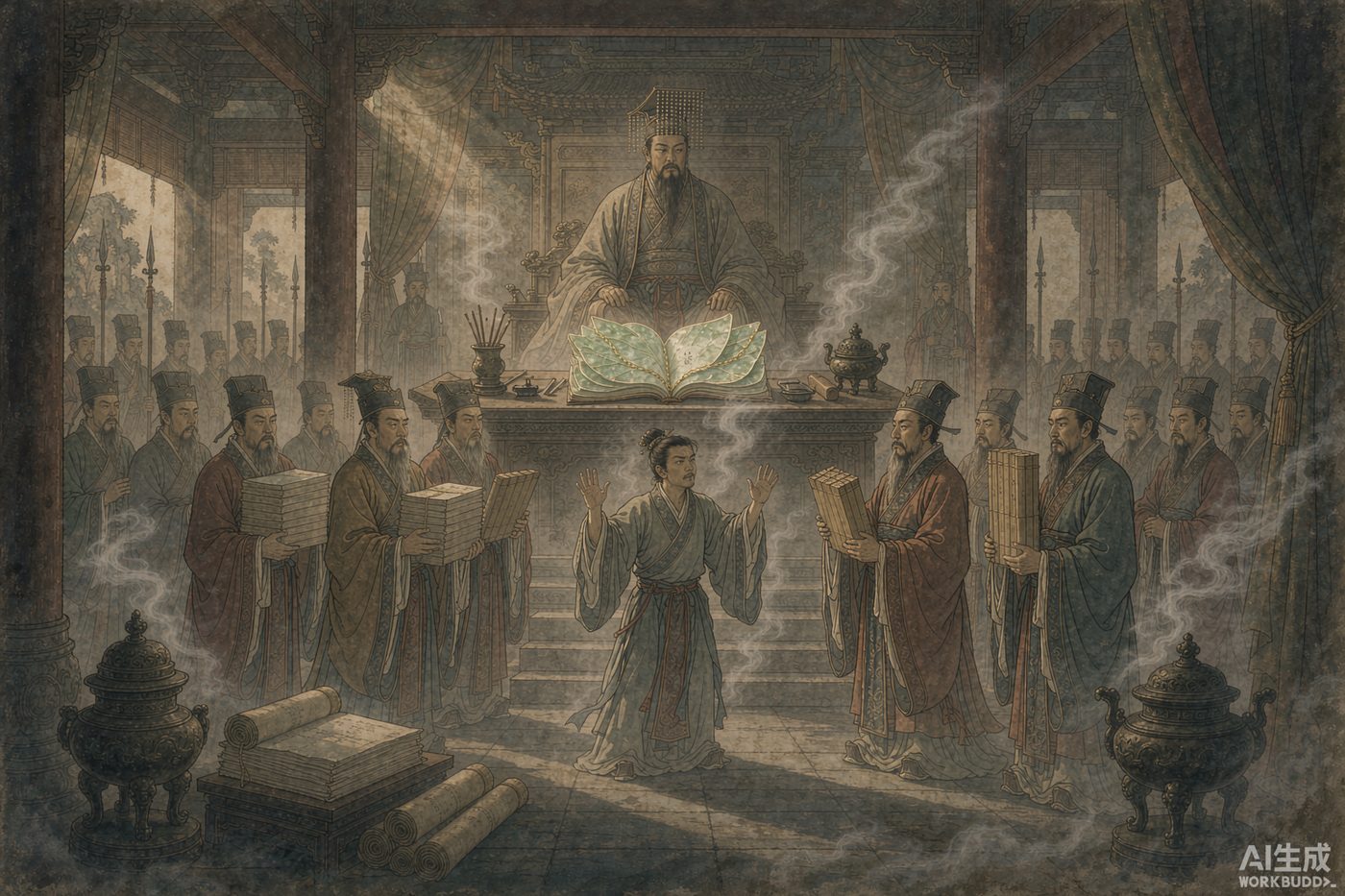
A young examination candidate standing before a towering king on a throne in a great hall, clerks holding ledgers of different sizes, one ledger of pale jade leaves threaded with gold cord open on the desk
Illustration generated by AI, based on the ancient Chinese text.

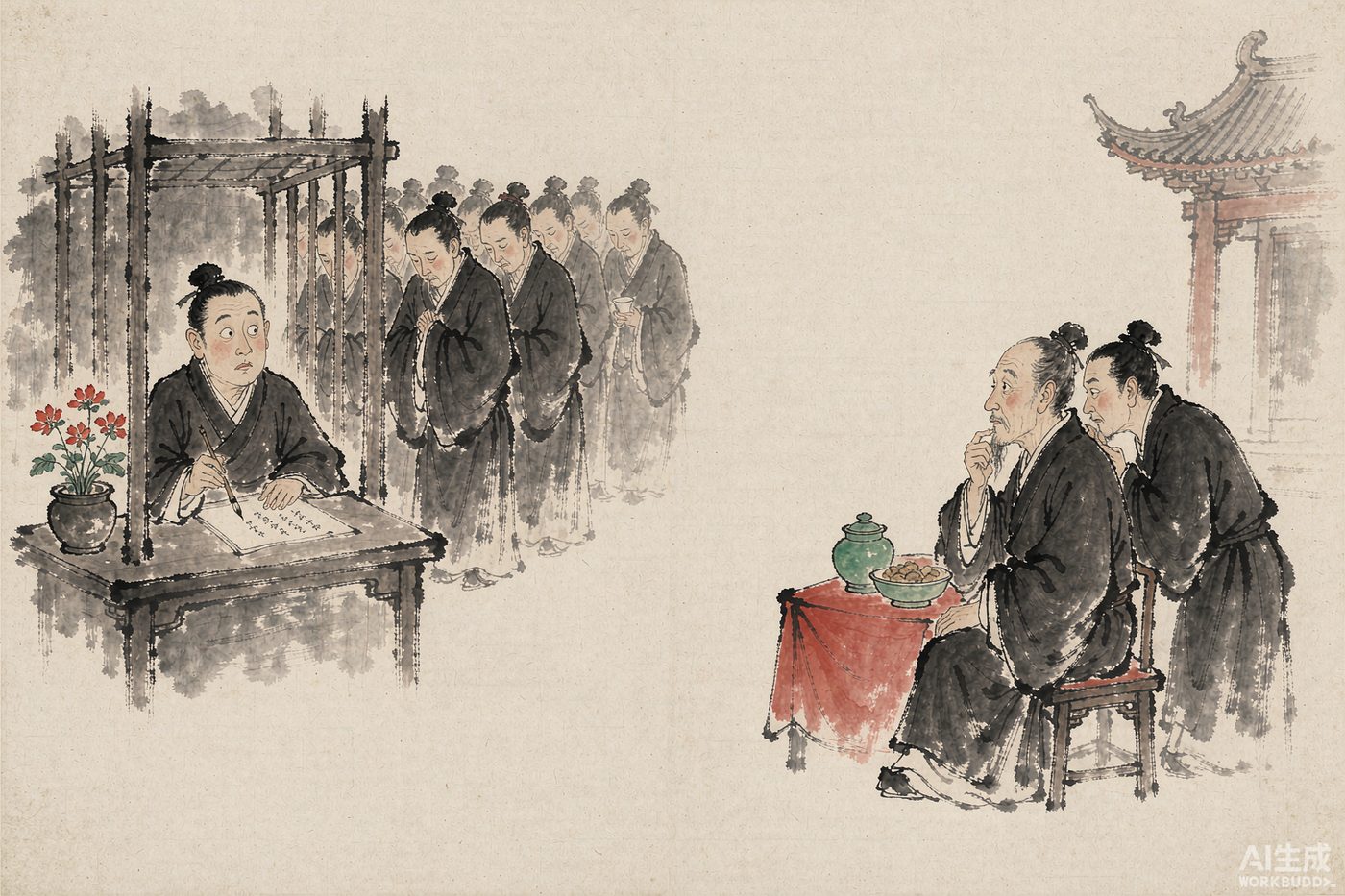
A man named Jing of Danyang was sitting the entry examination. He dreamt he came to a temple where a king was seated above, and before the steps a number of clerks stood holding registers, very imposing in their bearing.

Jing pointed at the registers and asked a clerk what they were.

“The examination registers,” said the clerk.

“Then look one up for me,” said Jing, delighted.

“Very well.”

Jing had gone through life confident that he would take the top of the list, so he asked first for the Register of the Top Three. He went through it: no name. He had the Register of Presented Scholars and Recommendees checked: no name there either. He could not keep the colour out of his face.

“Perhaps he is in the Register of Classicists and Talents,” said one of the clerks. They searched it all through. Nothing.

Jing laughed out loud. “This is nonsense. With my writing I could head the empire. What difficulty could there be about getting a licentiate’s degree?”

And he moved to smash the registers.

“Do not be angry,” said the clerk. “There is still the Register of the Unranked to look through. The unranked are those who have the writing but not the salary. Among men the top of the palace list counts first; in heaven the unranked count first. That register is kept by the King of Manifest Light. You could ask him for it.”

He did so, and the king took a book from the table — pale jade leaves strung on golden thread — and opened it at the first page, and the first name on it was Jing of Danyang.

Jing burst into tears.

“You are a fool,” said the king, laughing. “Try counting how many famous optimates and famous chief examiners there have ever been. Han Yu’s grandson Gun took the top of the list — and everyone knows Han Yu, and nobody knows Gun. Luo Yin never passed as long as he lived, and to this day everyone knows Luo Yin. Go home and look for real learning.”

“Is there no real learning among the degree-holders, then?”

“Those who have both the talent and the fortune to use it are no more than a few in a generation — men like Han Yu, Bai Juyi, Ouyang Xiu and Su Shi. Their names are on a separate list, in the Purple Jade Palace. You have no part in that one either.”

Jing had no answer ready. The king shook out his robes and rose, and declaimed at the top of his voice:

A degree is a trifling thing, why envy it? Of the great and eminent, few in all history are remembered.

Jing woke in low spirits, and never passed to the end of his days.
Original classical Chinese text · 原文

丹阳荆某,应童子试。梦至一庙,上坐王者,阶前诸吏捧册立,仪状甚伟。荆指册询吏:「何物?」答曰:「科甲册。」荆欣然曰:「为我一查。」吏曰:「可。」荆生平以鼎元自负,首请《鼎甲册》,遍阅无名;复查《进士孝廉册》,皆无名。不觉变色。一吏曰:「或在《明经秀才册》乎!」遍查亦无。荆大笑曰:「此妄耳。以某文学,可魁天下,何患不得一秀才!」欲碎其册,吏曰:「勿怒,尚有《秀民册》可查。秀民者,皆有文而无禄者也。人间以鼎甲为第一,天上以秀民为第一。此册为宣明王所掌,君可向王请之。」 如其言,王于案上出一册,黄金丝穿白玉牒,启第一页,第一名即「丹阳荆某」。荆大哭,王笑曰:「汝何痴也!汝试数从古有几个名状元、名主试乎?韩文公孙衮中状元,人但知韩文公,不知有衮;罗隐终身不第,至今人知有罗隐。汝当归而求之实学可耳。」荆问:「科第中皆无实学乎?」王曰:「即有文才,又有文福,一代不过数人,如韩、白、欧、苏是也。此其姓名,别在紫琼宫上,与汝尤无分也。」荆未对,王拂衣起,高吟曰:「一第区区何足羡,贵人传者古无多。」荆惊醒怏怏,卒不第以终。

From 《秀民冊》, Zibuyu juan 9. Translated in full. 鼎甲 is the top three of the palace examination; 孝廉 the provincial recommendees; 明經 the classicists. Han Yu's grandson Han Gun did take first place in 902; Luo Yin is the great Tang poet who never passed.

Source. From Zibuyu (What the Master Would Not Discuss) (子不语), by Yuan Mei , c. 1788. The original text is in the public domain; this English rendering and the accompanying notes are original work.
Where this fits in the universe: The Underworld Examination · The Ledger: How Cause and Effect Keeps Accounts

Keep Reading

Related Stories

Southern Song dynasty · 12th century · 夷坚志

A Lifetime's Salary

郭大夫

A man is handed a few hundred cash and a few pints of rice in a dream and told: this is your allowance for one lifetime. He looks at it, puts it down, and stops living. He divorces his wife, refuses office for fifteen years, and dies the evening before payday.

FateOfficialdomMoney
Qing dynasty · Qianlong era, c. 1760–1800 · 谐铎

Top of the List by Accident

泄气生员

A dull-witted candidate named Xia Qitong is told by a diviner that he will come first. He does — because a minister happened to break wind while the new examiner was asking him for instructions, and the examiner, hearing 下气通, wrote the name down as 夏器通.

OfficialdomSatireFate
Tang dynasty · 8th–9th century · 唐·李公佐《南柯太守传》

The Governor of South Bough

南柯太守传

Chunyu Fen drinks himself to sleep under the old ash tree and wakes as a royal son-in-law, governor of a province, with twenty years of triumph and ruin ahead of him. When he wakes, an afternoon has passed.

DreamsTransformation