Stories/ 夷坚志/ Monstrous Births

Monstrous Births

楊有成

SourceYijian Zhi (Record of the Listener)
AuthorHong Mai
EraSouthern Song dynasty · Shaoxing 3 (1133)
Writtenc. 1160–1200
MonsterGhostJustice
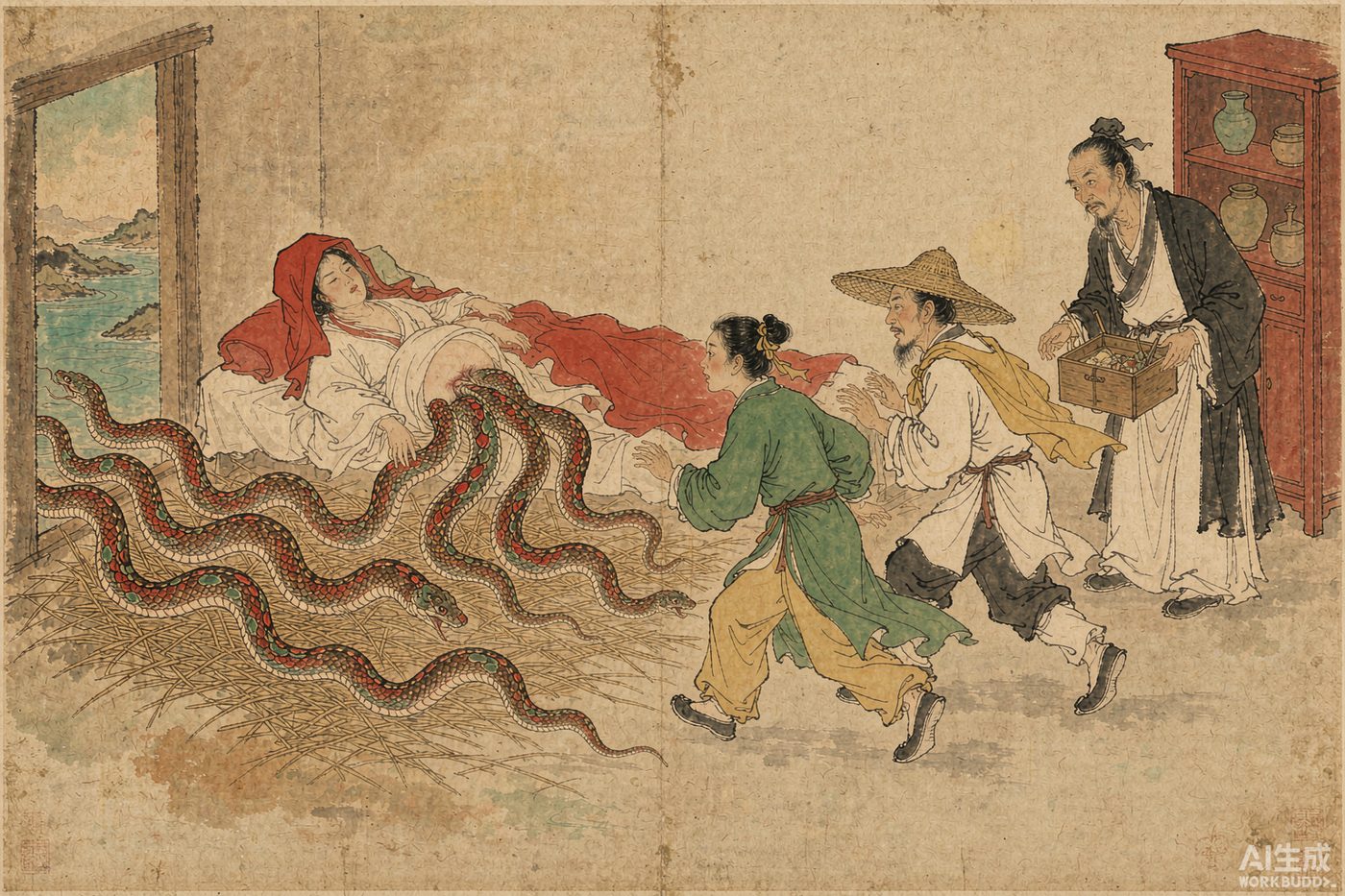
A woman on a birthing bed has just produced five or six great snakes sliding towards a river while the midwife flees
Illustration generated by AI, based on the ancient Chinese text.

Yang Youcheng, a doctor of Jiankang, said he had witnessed three things with his own eyes, all monstrous births by women.

The wife of Wang, the master of a travellers’ lodge at Tonglin Bay, was twenty-nine. In the eighth month of the third year of the Shaoxing reign she was pregnant, and at the birth produced five or six great snakes on the grass. The midwife and her husband fled in terror, and the snakes went straight out to the water of the Qinhuai. At night they came back into the house to see their mother and drink milk, and at dawn left. Everyone living in the lodge moved away to other houses, and after seven days they were gone for good.

The wife of the salt merchant Liu Yi, when about to give birth, could not deliver, and her strength was failing and she was dying. Yang was called to feel her pulse and said: “There is certainly something strange in the belly. It is best to save the mother.” He gave her medicine and poured it down, and at midnight she gave birth to a child with a very large head, with thick hair five inches long, two lumps of flesh rising like horns on its crown, and more than ten teeth in its mouth, white and saw-toothed. The family killed it and threw it in the river.

Also, the wife of Big Brother Zhang of the river bend at Doumen Bridge gave birth to a cock. Her husband took a knife and was still cutting it up when the woman again said her belly hurt, and gave birth to a monkey, which was also killed, wrapped in cloth, sewn into a great stone, lifted and thrown into a deep pool.

The three mothers were fortunately unharmed, and the cause of the monstrosity could not be guessed.
Original classical Chinese text · 原文

紹熙三年八月懷姙,臨產生大蛇五六於草上。乳醫及夫皆驚走,蛇徑出赴秦淮水中。遇夜復入其家訪母飲乳,天明始去。在店居人悉徙避他舍,凡七日乃絶跡。……到中夜生子,頭甚大,茁髮長五寸許,兩肉角隆起,滿口十餘牙,白而鋸利,其家殺而投之江。又斗門橋河沿張大哥之婦產一雞,夫持刀臠剉未竟,婦仍稱腹痛,復誕一猴,亦殺之。三母幸無恙,不能測致怪之由。

From 《楊有成》, Yijian Zhi yi 6. The whole piece is a physician's eyewitness account, and he is named.

Source. From Yijian Zhi (Record of the Listener) (夷坚志), by Hong Mai , c. 1160–1200. The original text is in the public domain; this English rendering and the accompanying notes are original work.

Keep Reading

Related Stories

Southern Song dynasty · 12th century · 夷坚志

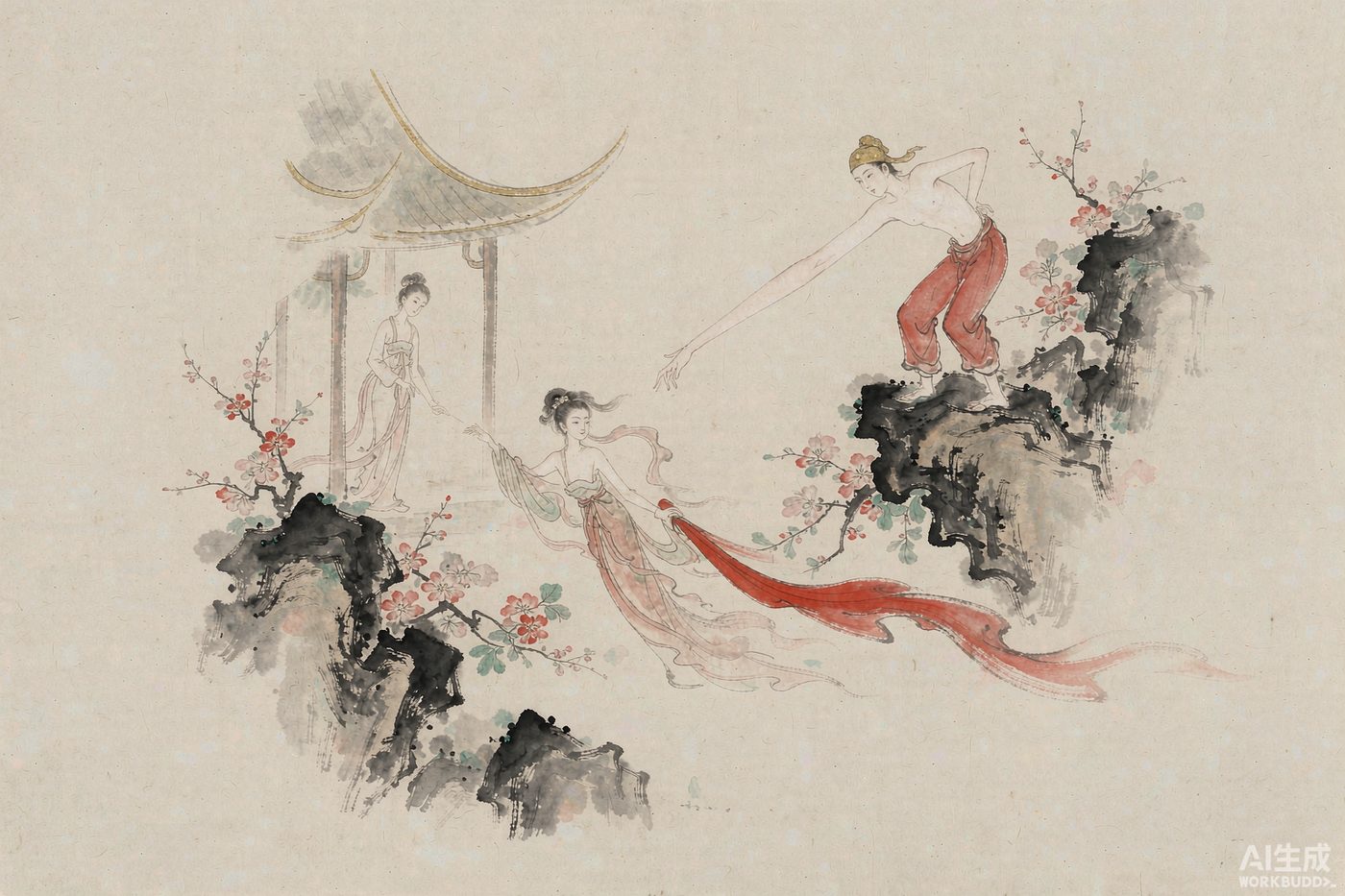
The Long-Armed Demon

王彦太家

A merchant sails to the southern seas and does not come back. His wife meets a young man in the garden with a slingshot, curses him successfully — and that is when the trouble starts.

MonsterFox SpiritLove
Southern Song dynasty · Jin era, 12th century · 夷坚志

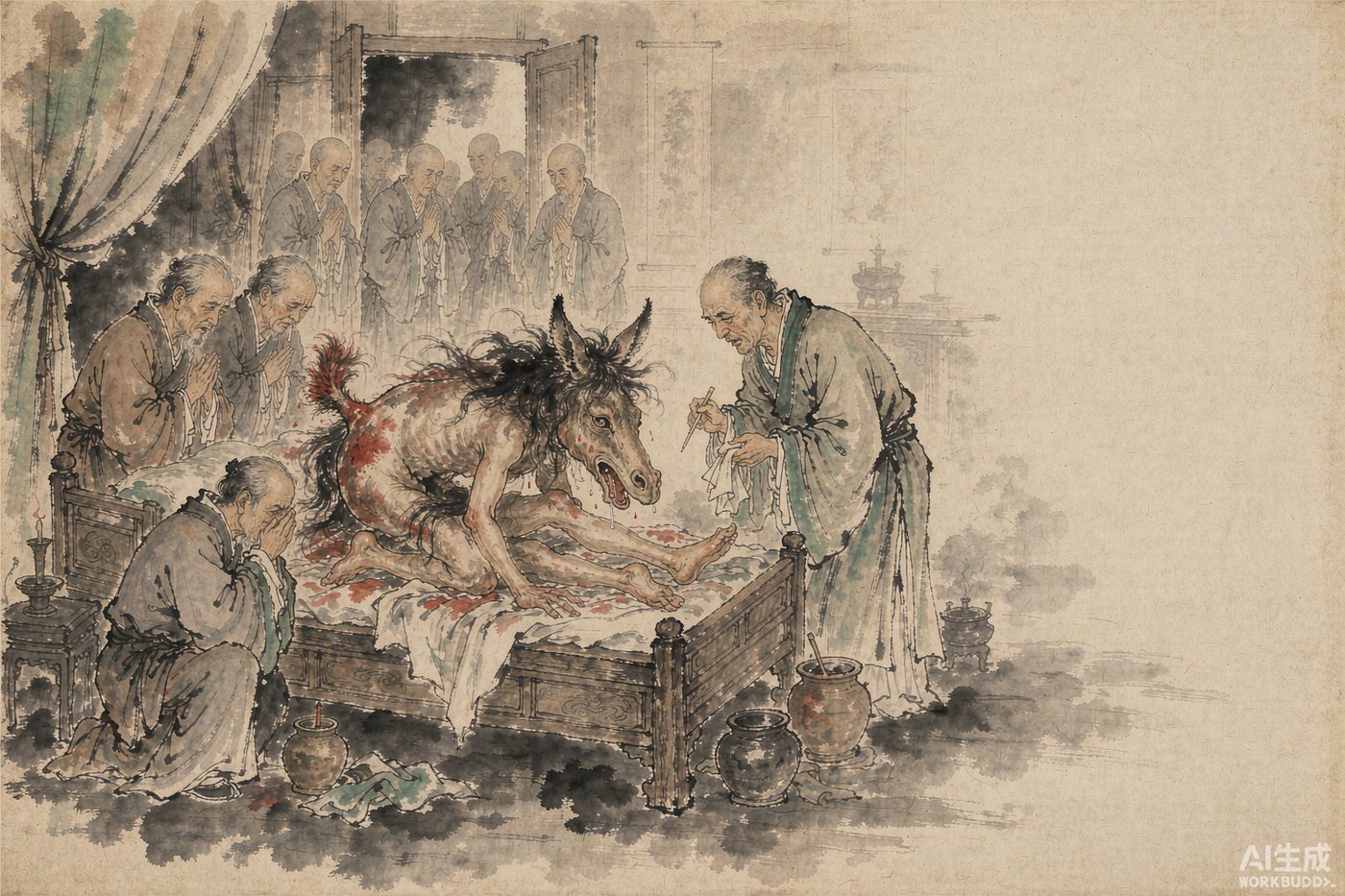
The Temple Boy Who Became a Donkey

普光寺行童

A drinking, whoring temple boy falls ill, and a short donkey's tail pushes out through his skin. His family want to kill him. The monks say no — this is a public warning, and it must be kept working.

MonsterTransformationJustice
Southern Song dynasty · Shaoxing jiaxu (1134) · 夷坚志

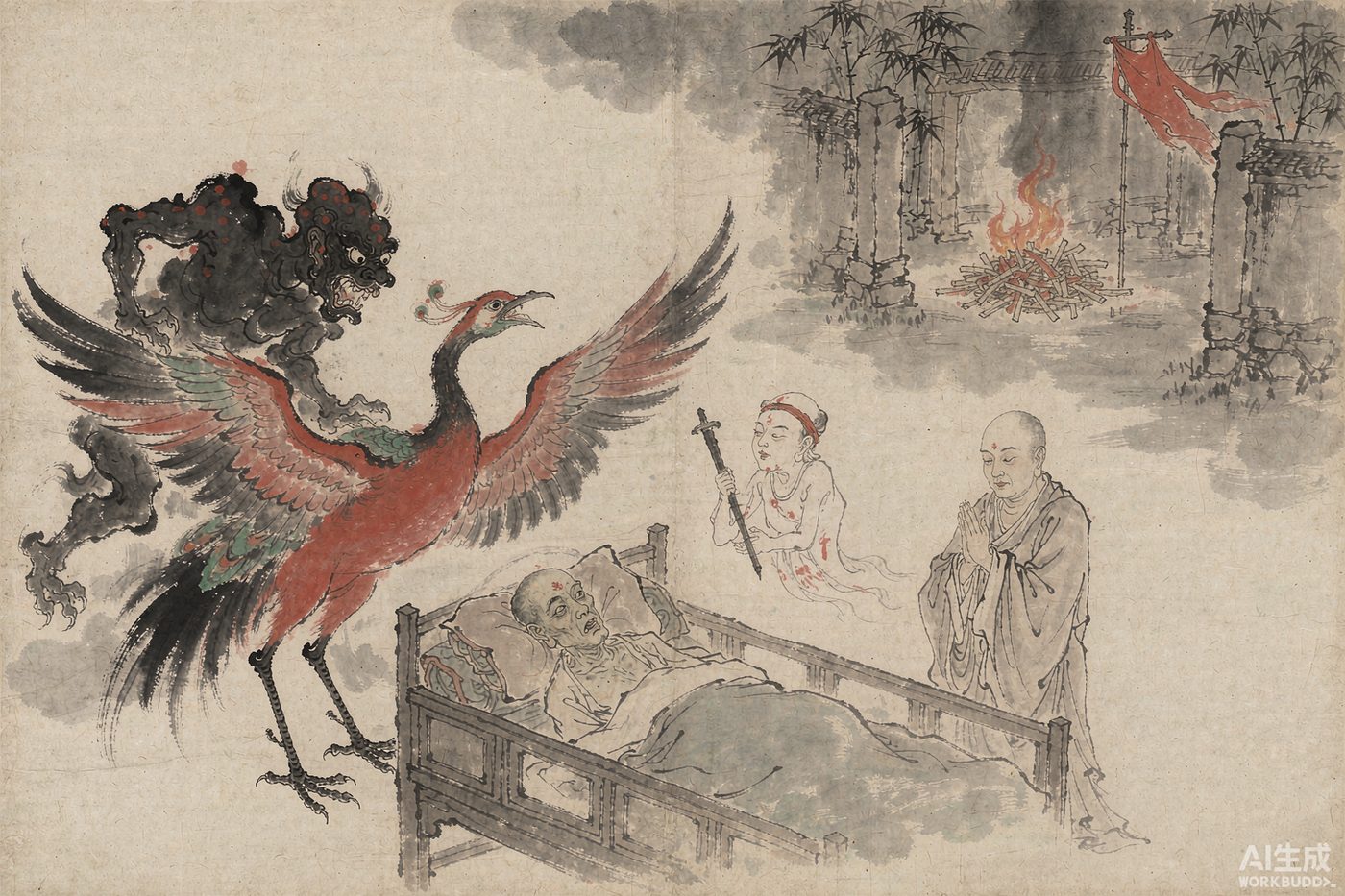
The Peacock Sutra

鄒智明

A plague demon is driven off by a peacock's tail, and reports that there is still a nail in the sick man's head. The cure is a pile of burned paper money — and the illness turns out to have an address.

DeityGhostJustice