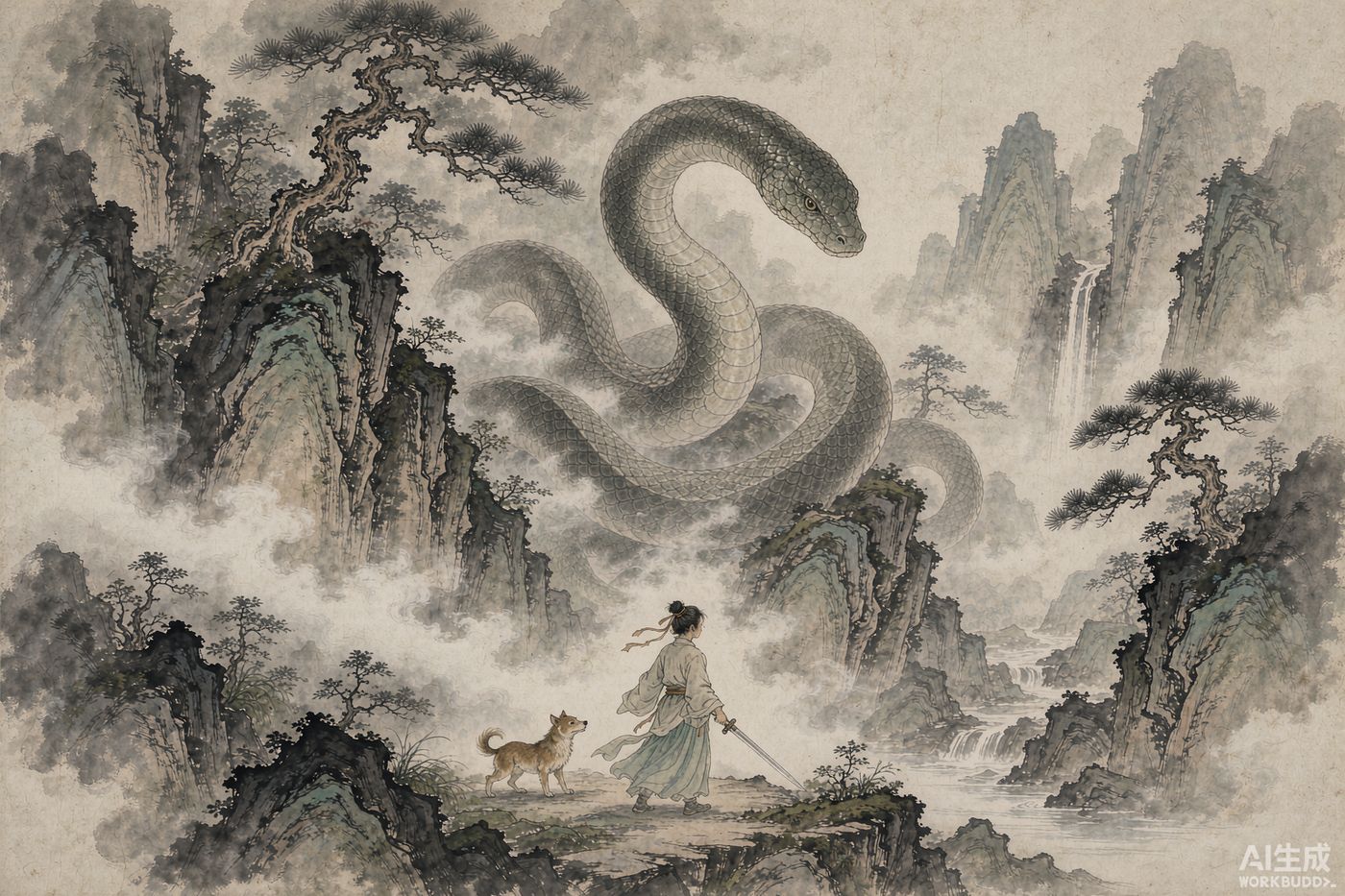
In Nanchang county in Jiangnan there were two scholars reading together at Beilan Temple, one older, one younger, and fast friends. The older one went home and died suddenly. The younger, who knew nothing of it, went on reading at the temple as before.
That evening, as he lay down to sleep, he saw the older man push the door open, climb onto his bed, and lay a hand on his back.
“I parted from you not ten days ago, and now I am dead of a sudden illness,” he said. “I am a ghost. But the affection of a friend cannot be cut so short, and I have come to say goodbye.”
The younger man was terrified and could not speak. The dead man comforted him.
“If I meant to harm you, would I have told you plainly? Do not be afraid. I have come to entrust to you what comes after.”
His heart steadied a little. “What is it?”
“My mother is over seventy. My wife is not yet thirty. A few bushels of rice would keep them alive — I ask you to look after them. That is the first thing.
“I have writings that were never printed. I ask you to have them cut into blocks, so that a small name does not vanish. That is the second.
“I owe a brush-seller several thousand cash, unpaid. I ask you to pay him. That is the third.”
The younger man said yes to all of it. The dead man rose.
“Then I have your word, and I will go.”
He turned to leave. And did not leave.
He stood there. His eyes went blank and staring. His face began to spoil.
The younger man was afraid now, and urged him: “You have said all you came to say. Go.”
The corpse did not go. He beat on the bed and shouted. It did not go. It stood like a post.
He got up and ran. The corpse ran with him. He ran faster; the corpse ran faster. For several li the thing chased him, until he scrambled over a wall and fell on the far side. The corpse could not climb. It hung its head over the top of the wall, and its spittle dripped down onto the young man’s face.
At dawn passers-by found them there and brought him round with ginger juice. The dead man’s family, who had been searching for a missing body, heard of it and came and carried it home and buried it.
A man who understood these things said:
A person’s hun is good and their po is bad; the hun is intelligent and the po is stupid. When it first came, one spark of spirit was still unextinguished, and the po came along attached to the hun. Once its business was finished, the hun scattered and the po stuck fast. While the hun is present, it is the person. Once the hun is gone, it is not the person. All the walking corpses in the world are the work of the po — and only a man of the Way can master the po.