Stories/ 谐铎/ The Crow That Knew a Man Before His Rise

The Crow That Knew a Man Before His Rise

祥鸦

SourceXieduo (Miscellaneous Bell)
AuthorShen Qifeng
EraQing dynasty · c. 1790
Writtenc. 1790
Reading the FateOmensAnimals
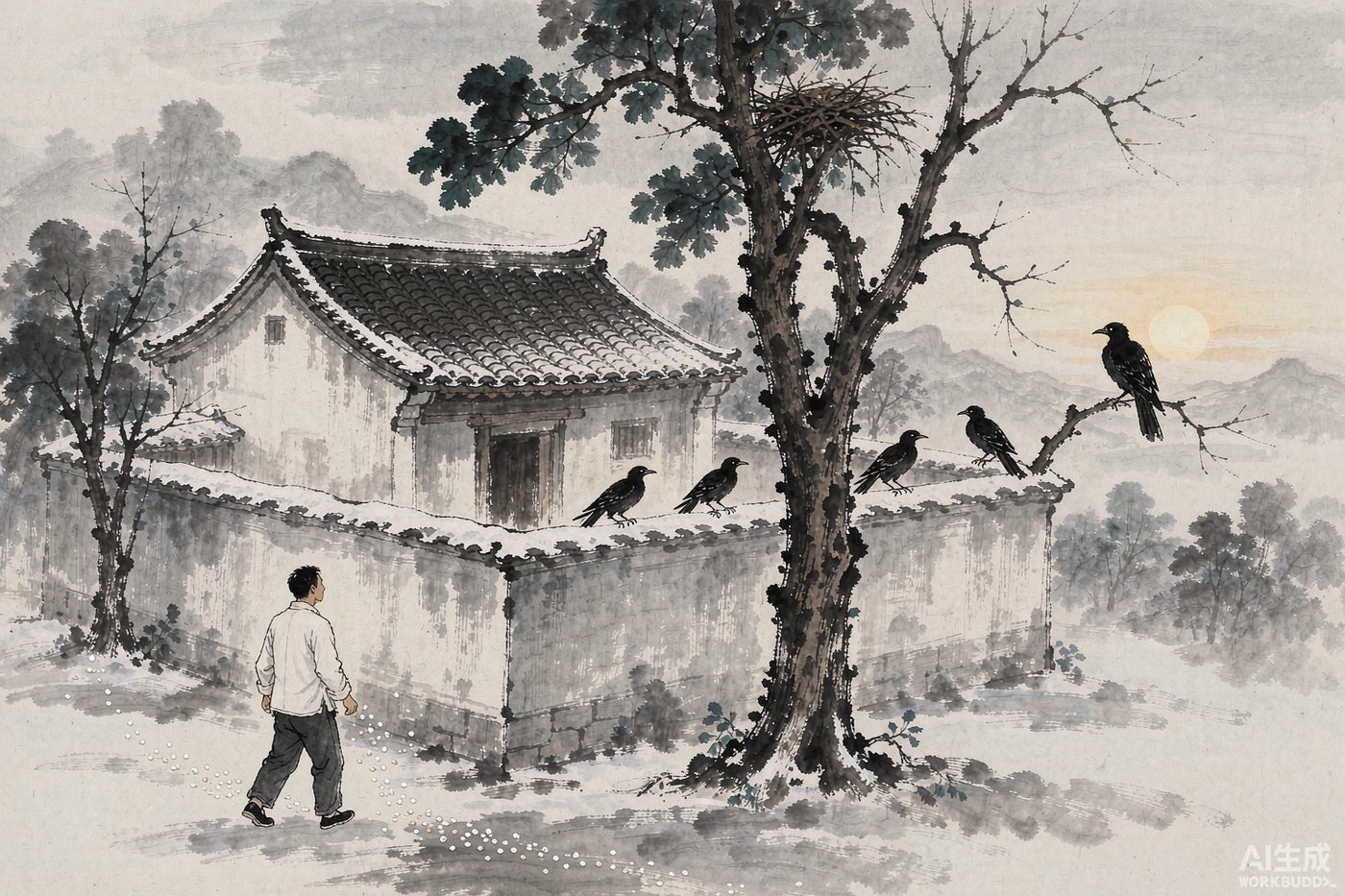
A man scattering rice in a snowy courtyard beneath a locust tree with a crow's nest, crows facing the rising sun with tails raised, ink wash painting
Illustration generated by AI, based on the ancient Chinese text.

Popular belief holds that magpies report good news and crows bad, so men hearing a magpie show pleasure and hearing a crow drive it away in disgust. I alone prefer crows and dislike magpies. In my courtyard stood an old locust tree with a crow’s nest in its top. On rainy mornings and snowy evenings, when the crows could find nothing to eat, I always set out rice in the yard and fed them. Every morning at first light they stood facing the sun, preening their necks and smoothing their feathers, tails raised, eyes sidel, exhausting every attitude — but they were simply no good at singing. I would clap and shout to draw them out, and the crows stayed remarkably silent.

On New Year’s Day of the wuzi year they flew into the room and would not leave for three days and nights; that autumn I was reported successful.

When I sat the metropolitan examination, my family waited for the vermilion-gold notice, rising at dawn to stand in attendance under the tree, hoping for one good note — and the crow turned its head away and ignored them. I too failed and came home.

In the spring of the guimao year the crows called loudly, and that year my younger brother Zhisheng took first place on the list of provincial candidates. So I set out food in the yard, called the crows and told them: “I have been recommended five times without passing, and no longer dream of the capital. From now on you need take no further trouble. When my brother succeeds at the southern palace, save your strength and do your best to sing like a phoenix.” The crow nodded twice. That winter a great gale destroyed the nest, broke its left wing, and it died.

By the dingwei year my brother had returned a presented scholar, and hundreds upon thousands of magpies and crows filled the gate with noise. Remembering that crow, I sighed for days on end. Magpies only know how to complete what a man has already achieved; crows genuinely recognise a man before his rise. I record this for those who hate crows and love magpies.
Original classical Chinese text · 原文

俗传鹊报吉,鸦报凶。故闻鹊噪者,咸有喜色;一闻鸦声,群必厌逐之。而予独好鸦而恶鹊。庭中旧植槐树一株,鸦巢其颠。遇雨晨雪夕,鸦无所得食,必设米于庭而饲之。每当朝曦初上,鸦即迎日而立,刷项梳翎,翘尾侧目,备极其态,而独不善于鸣。予时拍手喧呼,以引逗之,而鸦殊缄默之甚。 戊子元旦,飞鸣入室,三昼夜不去,予于是秋报捷。寄托应礼部试,家中人伫望泥金,晓起拱候树下,冀其一吐好音,而鸦竟掉头不顾,予亦下第归矣! 癸卯春,鸦声大噪,是年予弟芷生登贤书第一。遂设食庭中,招鸦而告之曰:"予五荐不售,已不作春明梦想。自今以后,无复相烦。俟吾弟得意南宫,当养精蓄锐,努力作凤凰鸣也。"鸦首肯者再。是冬,大风覆巢,折其左翼而毙。 迨丁未岁,吾弟成进士归,百千乌鹊,噪集盈门。予追念是鸦,欷歔累日。盖鹊但知因人成事,而鸦实能识人于未遇时也。爰志之,以告世之恶鸦而好鹊者。 铎曰:"凤鸣喈喈,鸦鸣呀呀。鸦岂其苗裔耶,何声之和也?若献媚如鹊,庸恶陋劣,殊不耐听。"

From 《祥鸦》, Xieduo. Translated in full. 报捷 is to report examination success; 泥金 is the vermilion-gold notice of a pass; 贤书 is the list of successful provincial candidates; 五荐 means recommended five times without passing. 寄托 is Shen Qifeng's own given name, so the whole piece is autobiographical. 铎曰 is his closing comment.

Source. From Xieduo (Miscellaneous Bell) (谐铎), by Shen Qifeng , c. 1790. The original text is in the public domain; this English rendering and the accompanying notes are original work.
Where this fits in the universe: How a Shrine Gets Built · Reading the Fate: The Doom Is Fixed, the Address Is Not

Keep Reading

Related Stories

Qing dynasty · Qianlong era, c. 1760–1800 · 谐铎

The Girl Who Read Faces

屏角相郎

A poor girl of Jiangyin reads faces for a living, and reads her own: her fortune is to be a widow for thirty years. So when a talented painter comes to ask for her, she takes him — because his face says he will die young, and the two short fates fit together. They are happy for less than a month.

FateWomenPoetry
Qing dynasty · c. 1790 · 谐铎

The Oracle Slips of General Bu's Temple

卜将军庙灵签

At nine years old Shen Qifeng prays at General Bu's temple and draws a slip that promises his 'old universe' back at mid-autumn. Thirty years later he works out that the prophecy was a word-game on the examiners' names — and that it was right.

Reading the FateOmensSmall Gods
Qing dynasty · c. 1790 (tale set under the Ming) · 谐铎

The Temple of the Traitor's Lackey

黑衣太仆

At a county festival a god is carried past on a sedan chair, and the golden placards name him 'Grand Steward of the Chancellor's House'. A young scholar asks who he is — and discovers the whole town is worshipping a tyrant's doorkeeper, and asking him for heavier bribes.

Small GodsSatireOfficialdom