Wang Taichang of Qingping, on leave, returned home. His wife wished to buy a maidservant. A poor woman brought her daughter — sallow, thin, with eyes bright as a dog’s. Asked the price, she asked a hundred taels of gold. The lady laughed: “Your daughter is so ugly and clumsy; what worth do you see, to treat her as a rare commodity?” The woman said: “This child, though plain-featured, has a heaven-born wise eye — she can see in the dark as in daylight.” The lady said: “Keep her to test.” The woman left.
At night the other maids embroidered the Taichang’s court robe by lamplight. The girl was told to thread a needle in a dark place — easy as dropping mustard. The lady was pleased. Next day she paid the full sum. She named the maid Xier.
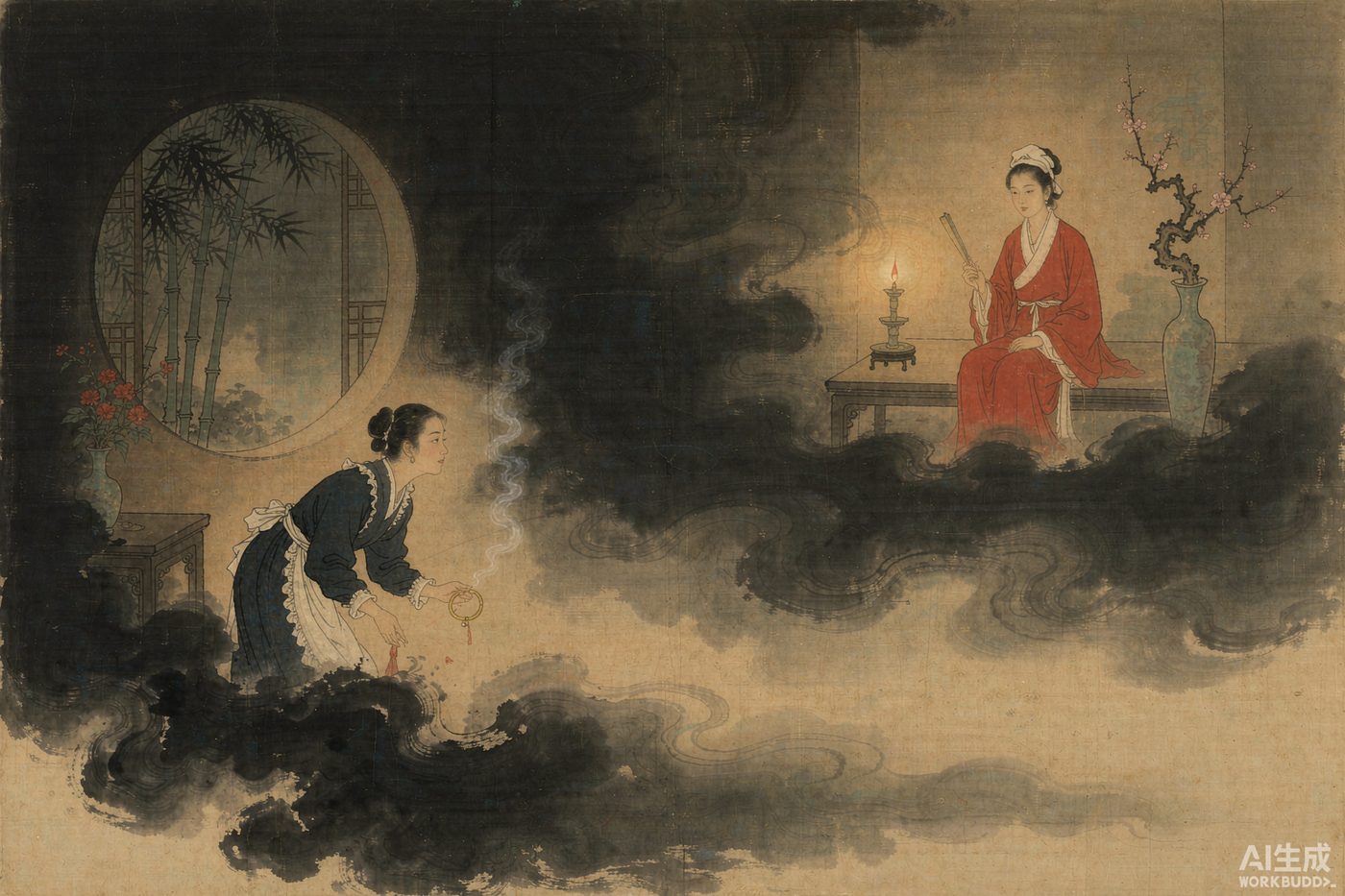
Xier was plainly dressed but inwardly clever, good at reading the lady’s wishes. The lady doted on her, nearly ranking her with the children. At night she would play with her, bringing out gold arm-bands and silver rings and tossing them in the dark, and Xier could tell their colour and grade. Or she would scatter a thousand cash in a dark room and send Xier to gather them — not one missed. The lady once said to the Taichang: “Hongxian manages letters, Fangzi recites fans — even Liu’s clever maid who could recite the Lu Lingguang Palace rhapsody — none compares to my Ruyuan, who beats the green-eyed foreign merchant at the market.”
One night the Taichang, candle in hand in the inner room, was writing an epitaph for a Minister and urgently needed to cite events from the Han histories. He sent Xier to fetch the numbered book from the shelf. Xier went with a cry, returned several times empty-handed. Questioned, she stood dumb. The Taichang said: “Groping in the dark is not easy.” He rose with the candle, went out, picked it from the shelf — the book was right there. He smiled at the lady: “Your green-eyed merchant is now bewildered by the five colours?” The lady did not understand, only blamed her laziness.
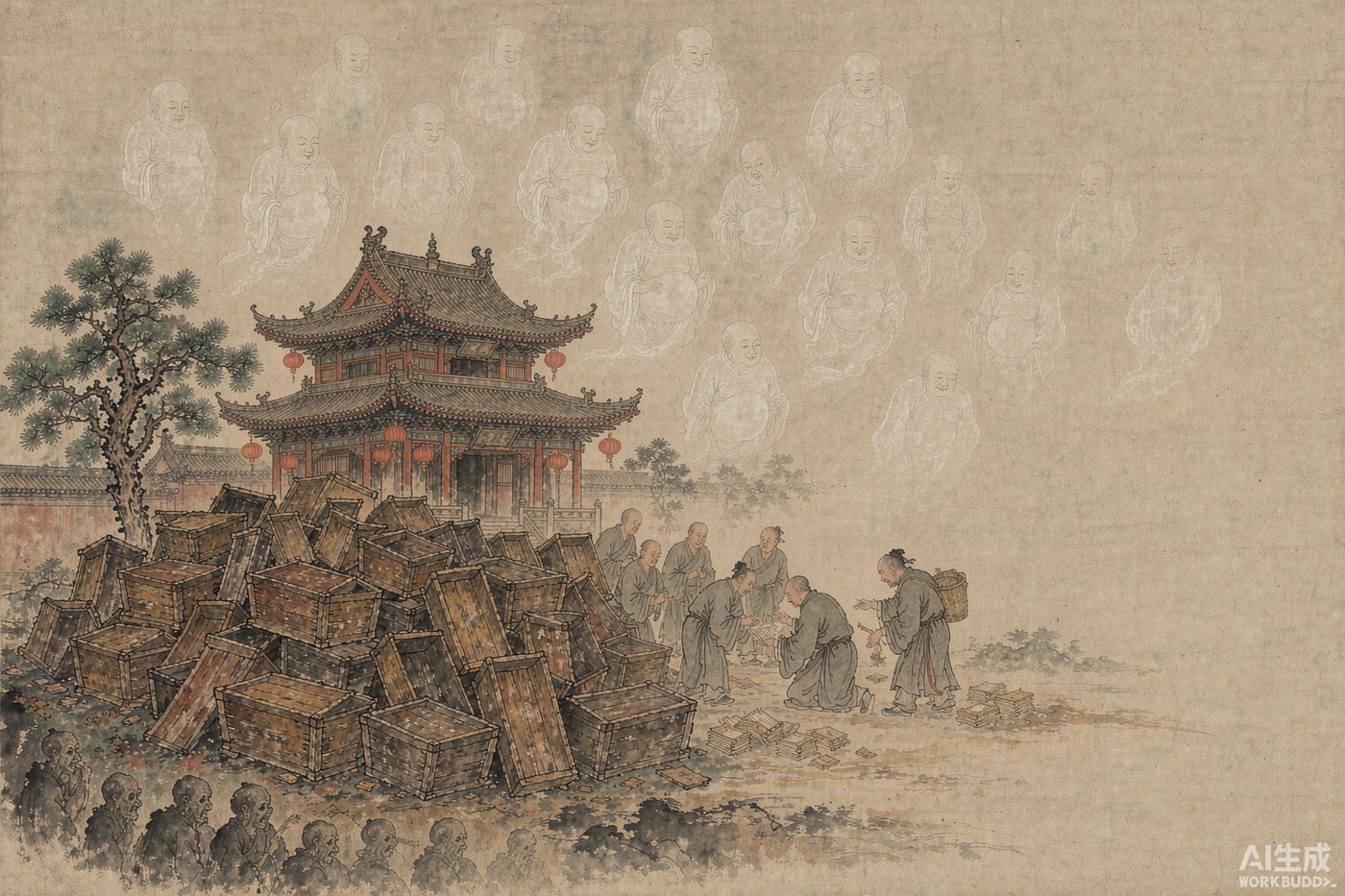
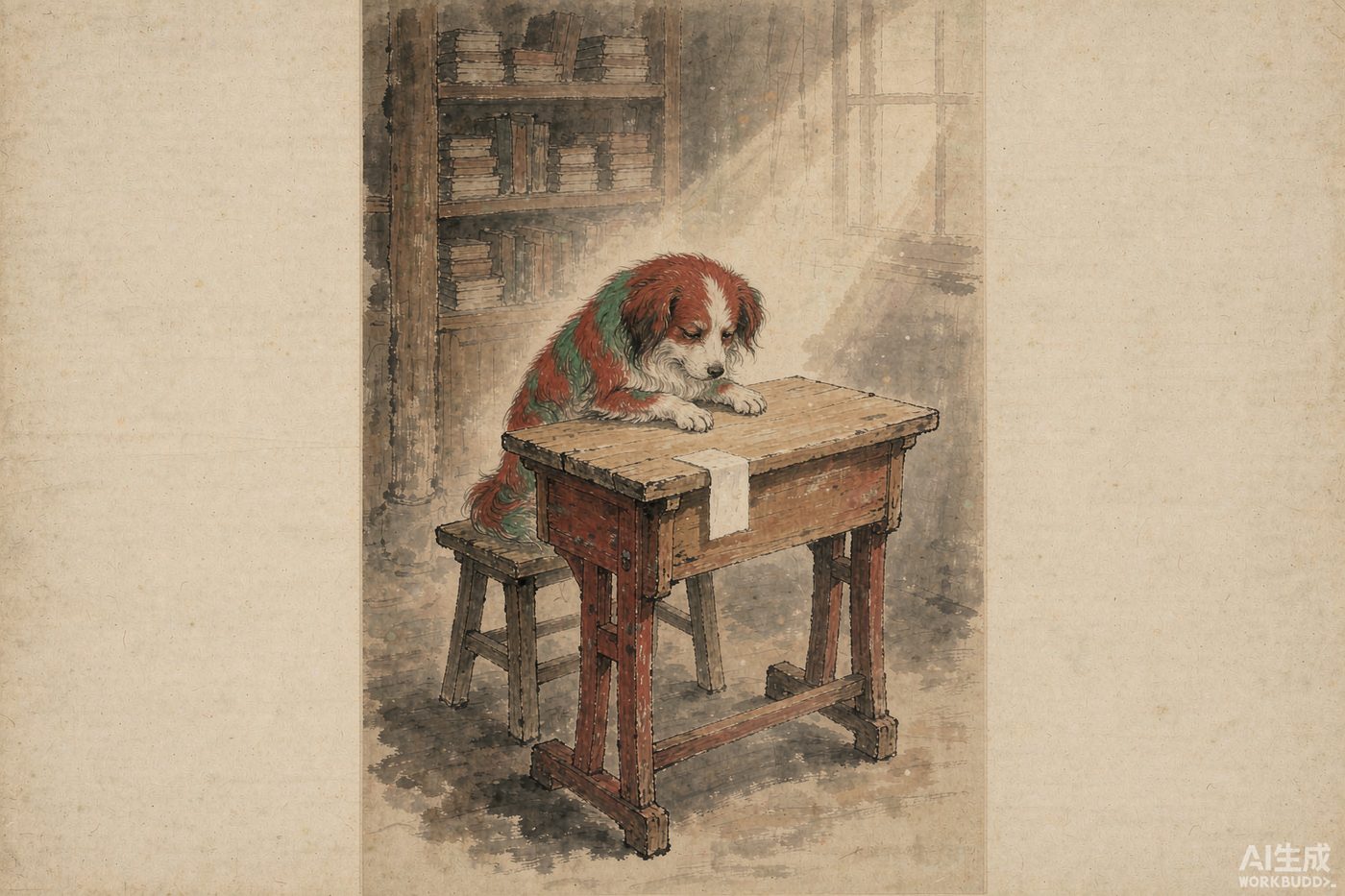
Xier said: “My lady is mistaken! Long ago my mother, middle-aged and childless, prayed for offspring at the Temple of Marshal Yang, and was told to let the dog beneath the seat be reborn as her daughter. Thus your maidservant has a base body throughout, only two bright eyes. But the dog, as a creature, sees gold, silver and goods clearly even in the dark; if it is letters and writing, even in broad daylight it stares uncomprehending — how much more in the dusk to seek them?”
The lady, startled, said after a pause: “To abandon a human and use a dog — no wonder she is clear in small things and blind in great ones. From now I know my error.”
The Taichang said: “Not so! Of the busy mediocrities before our eyes, are there not more than these? All who meet wealth with both eyes clear and meet letters with not a character known — they are all of the dog’s kind. ‘A slave’s price doubles a maidservant’s’ is not yet the true saying.” The lady laughed, and Xier’s favour did not wane.
The Duo comment: Zhu’s golden bell and plum-blossom tunes, Lu’s yellow ear and Luoyang letters — who says letters and writing are not what beasts may approach? But to play the tune without knowing its meaning, to carry the letter without reading the script — to abandon a human and use a dog is never the long strategy.