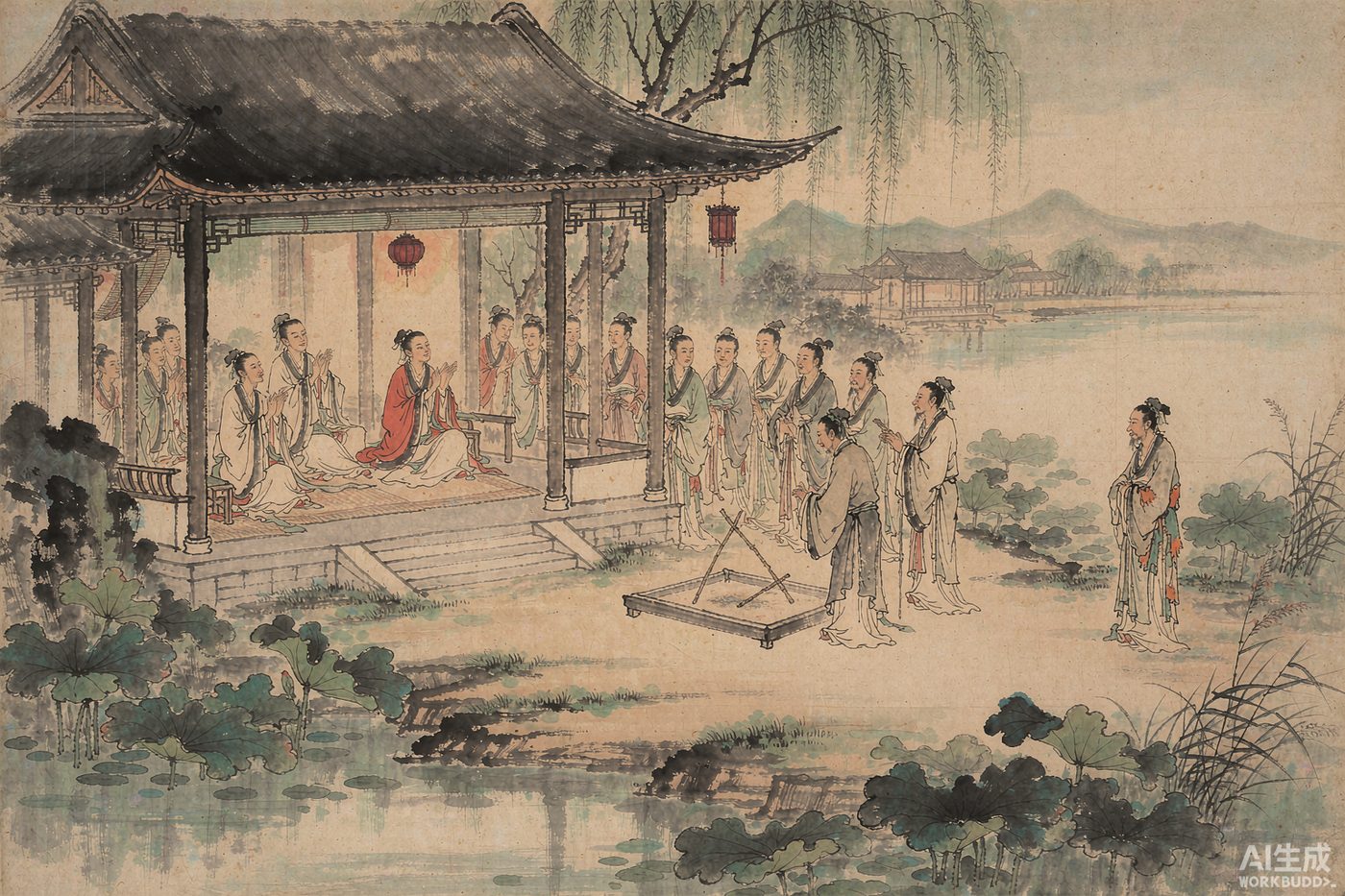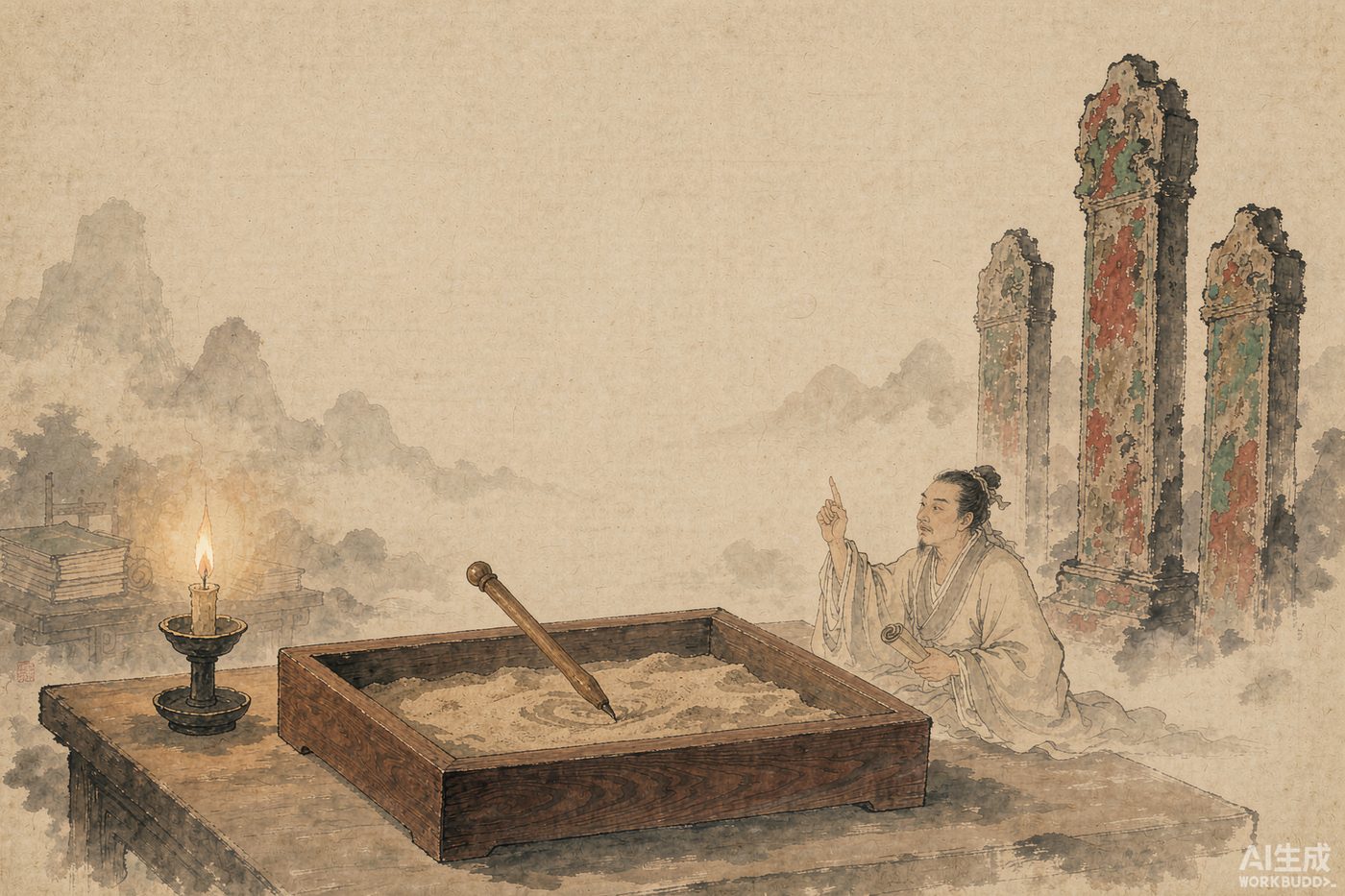
In the bingwu year of Qianlong’s reign, Yan Daofu was sojourning in the Central Plain. A spirit was descending by the planchette at the house of a certain Liu in Gong county. It called itself Tian Ying of Yanmen, and its verse, prose, calligraphy and painting were all respectable; it could even, on request, summon the famous men of old — Han Yu, Liu Zongyuan, Ouyang Xiu, Su Shi — to descend in person. The Liu family said the altar had been set up in their house for several years, and the office-holders of the Central Plain all revered and believed in it.
Now Ying had lived in the Kaiyuan and Tianbao eras of the Tang, and had once composed the tomb epitaph of Zhang Xigu. The stone stands in the Stele Forest at Xi’an, and Governor Bi had lately had it moved to his studio on Lingyan mountain in Wu.
One day the spirit descended at the governor’s own office, and no sooner had it arrived than it thanked the company for his merit in protecting the stone. Nobody present had known of the matter, and all praised the spirit’s miraculous knowledge.
Yan Daofu was seated among them.
“I recall,” he said, “that the epitaph reads: the lord Zhang, commander of Shangde garrison of the Left Guard in the commandery of Mayi. Now in the Tang system the garrison militia all belonged to the guards, and the Left and Right Guards commanded sixty garrisons. That the epitaph assigns Shangde garrison to the Left Guard is proper enough. But in the geography treatise of the Book of Tang, the commandery of Mayi has no Shangde garrison under it. I wonder on what authority the epitaph rests?”
The spirit halted the planchette for a long moment.
“When I took up the brush that day,” it wrote at last, “I set down only what the funerary memoir recorded. As for the geography treatise of the Tang — that was Ouyang the Ninth’s work. Wait until I meet him and ask him plainly, and I shall respectfully report back.”
But from that day, though the governor’s office invited it, the planchette descended no more. And when other households invited it — if Yan Daofu was present, it did not descend either.