Ruan of Huainan, whose pet name was Shenlang, lost his father and mother early and lived with the family of his wet-nurse.
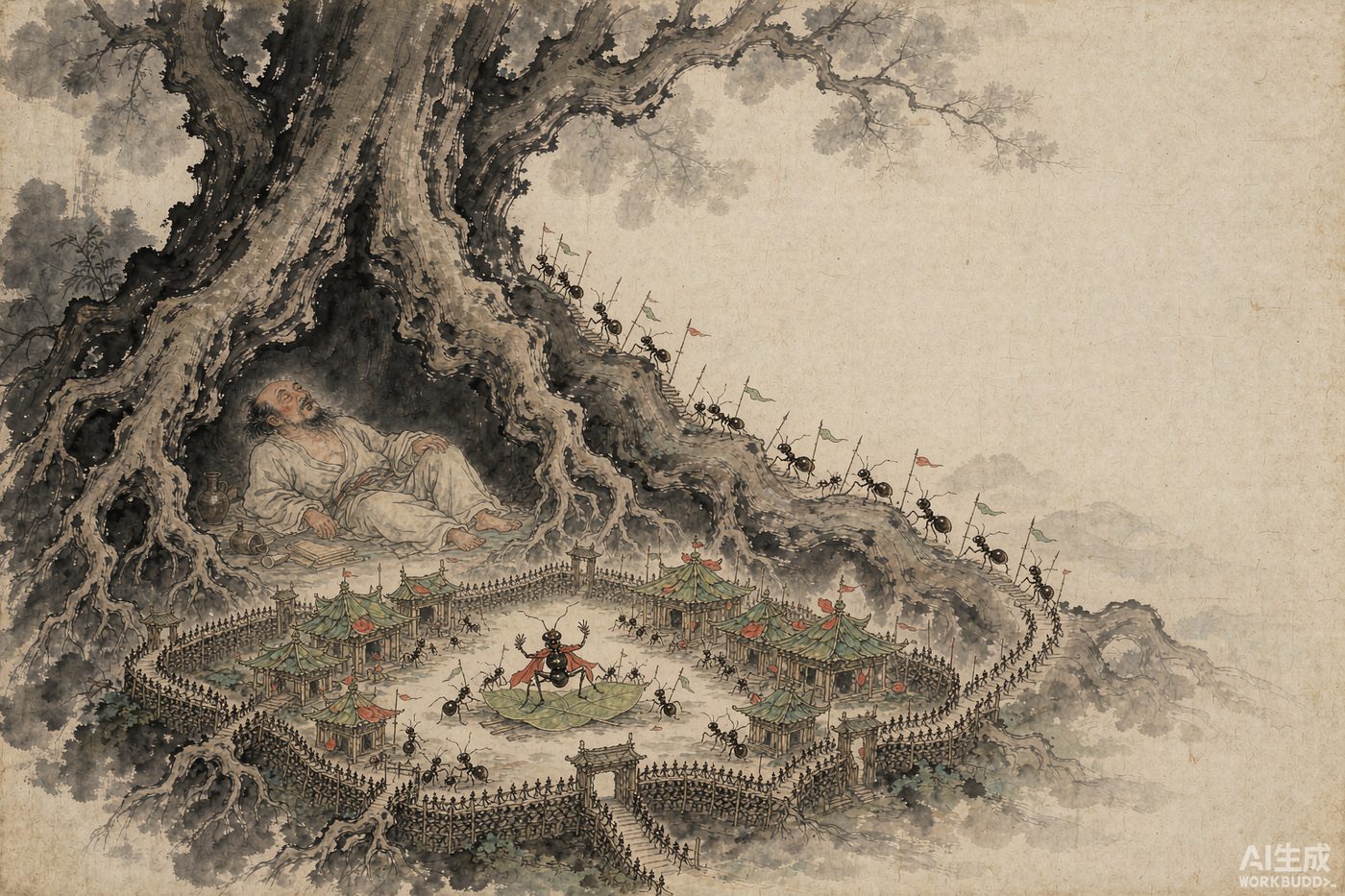
One day he dreamed that a friend of his father’s came for him and said: “Your father has lately been appointed Proclamation Officer of Mount Tai. He has a house left outside the east gate, and orders you to take charge of it and not let it go to ruin.”
So they went together, some three li, and the man said: “This is my house. Pray rest a little.”
Hand in hand they went in. A girl with her hair still hanging was at the window at her embroidery; she spat floss at the wall in play, and with a fingernail teased it into a double linked ring, and laughed at the wall. The man scolded her: “A guest has come! Playing the spoiled child — what behaviour is this?”
The girl gathered up her embroidery and ran; her gold scissors fell; she turned back laughing to pick them up and whispered: “Where does this stranger come from, bawling at people so?”
Ruan asked who she was.
“My foolish girl. Fifteen. She once embroidered the Boshan interlocking-dragon brocade for the consort of the King of Chu River, and all who saw it praised her clever hand. But a motherless child — she has had no one to bring her up.”
Ruan praised her warmly.
Presently they went out together and came to another place.
“This is the lodge your father built to retire into.”
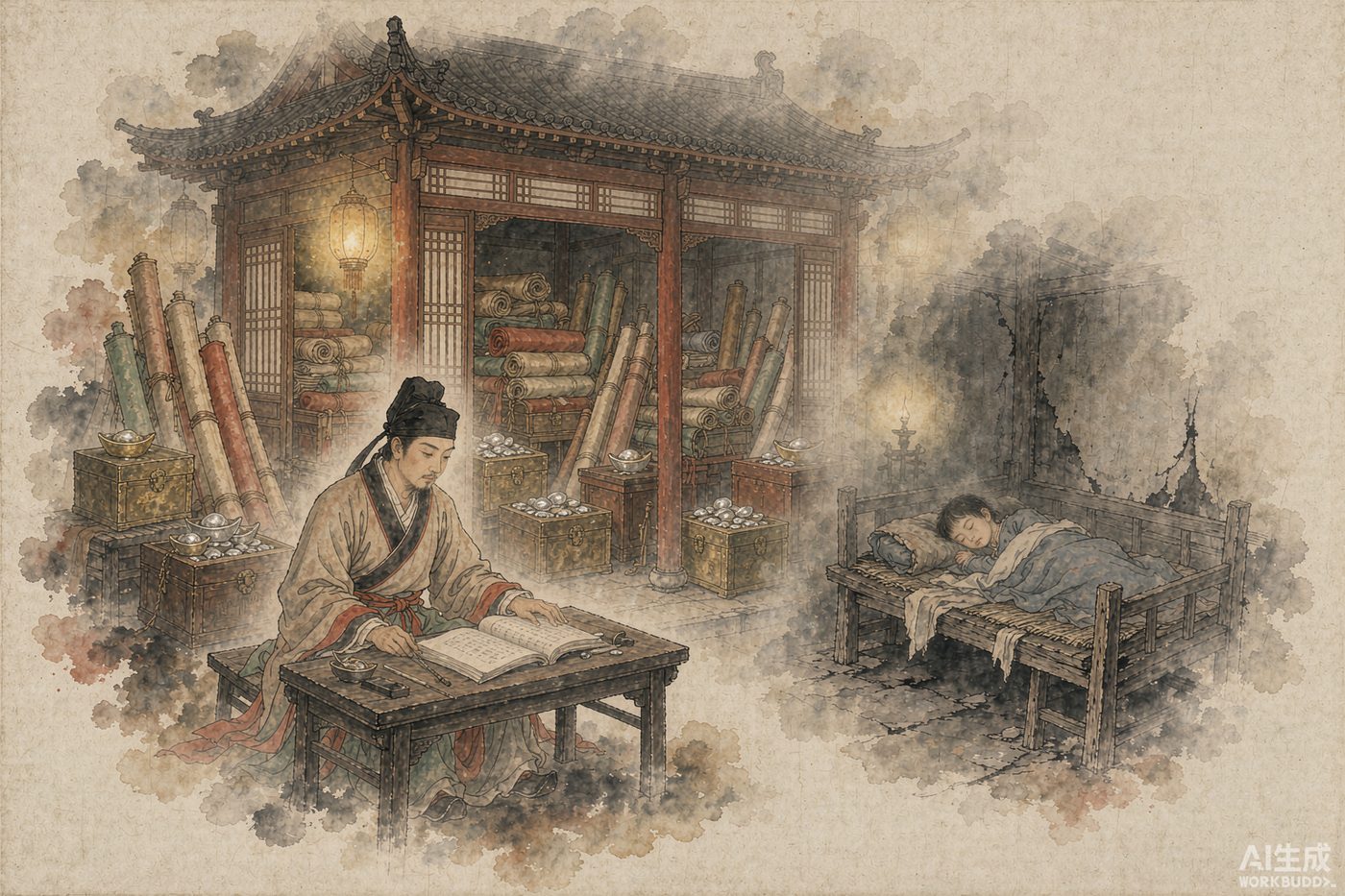
He produced keys, drew bolts, opened lock after lock. Halls and inner rooms, walls and kitchen, all complete. Behind stood a tower of three bays: books and curios in the middle, chests full of brocade on the left, gold and silver filling the right, until the eye was dazzled with five colours.
“This is twenty years of your father’s labour. Keep it; do not fling it away.”
Ruan bent his head and said in a small voice: “But I have no household. Who am I to keep it with?”
“You are not betrothed, then? If you do not despise her, I would offer my foolish girl the dustpan and the broom.”
Ruan knocked his head in thanks and asked the day.
“Tomorrow night, when the three stars shine on the corner of the Mandarin Duck Tower, I will send the bride in an oil-screened carriage.”
With that he left. At once several maids and servants came and sold themselves into the household. Ruan ordered the courtyards swept, tables and mats set out. Cooks, musicians, and every last small matter were all arranged beforehand. Exhausted, he lay down — and turned over, and there he was again on the broken leather couch in the wet-nurse’s house.
At first he thought it a wild dream with nothing in it, and laughed it off. The next night he was there again, and servants were waiting at the gate.
“The fish-carriage has set out. We beg the new master to change his clothes and wait.”
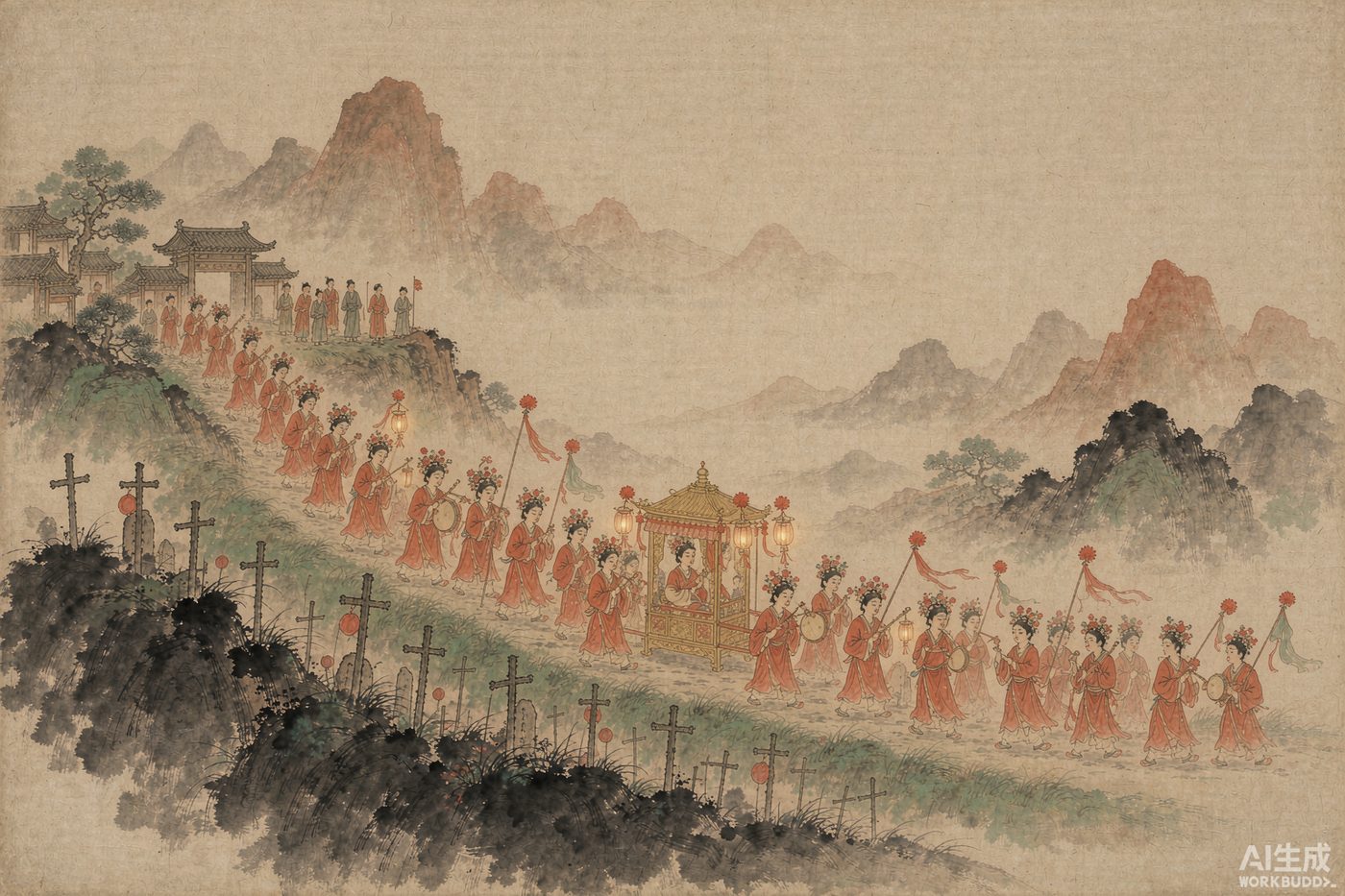
The hall blazed with red candles; pipes and songs rose one after another; along the double corridors and linked pavilions brocade awnings were hung everywhere. Presently the bridal carriage drew up, with scores of lanterns and a flowered carpet, and he and the bride bowed to each other and were led into the inner chamber. In the shadow of the candle-flame, peeping past her fan, she was statelier even than when he first saw her.
At the third cock-crow he dressed and got out of bed — and it was the wet-nurse, pulling out clothes and folding wadding, groping at the bed-head. He sat dazed from dawn to evening. Growing tired, he dropped his head on the desk, and a blue-clad maid came.
“My mistress bids the master come.”
He went. Inside the gate a ring of men stood waiting to offer congratulations. He did not understand, and went in to ask his wife.
“I heard that the Hall of Cultivating Literature is short one desk-officer. I sent a thousand gold to my father, and by pulling strings obtained the post. Let me change your cap and sash.”
He laughed: “I wanted one scholar’s gown all my life and never got it. Now I know there is an art to getting office.”
So in fine clothes and a carriage he went up to the Hall of Cultivating Literature, and afterwards called on his father-in-law to thank him. Coming home he said to his wife: “A sinecure will never make us rich. We must manage production as well.”
He took gold out of the bag and set a capable servant to trade — buying silk, hoarding grain, very nearly cornering the market. Day after day he was in the dream: out to public business, in to the accounts; and his wife was thrifty and ran the house well. In under ten years he had enlarged his father’s estate and become the richest house in the Land of Black Sweetness.
He used to boast of it to the wet-nurse.
“A pity it is only a dream,” she said. “If it were not, with such honours and wealth you would not be eating your rice in a place like this.”
He laughed aloud: “I take waking for the dream and the dream for waking. Half my life’s food and clothing is provided and more! And why should those who enjoy wealth and honour in this world not be people in a dream?”
He wrote an Account of Dreams to record it.
The Duo comment: I have always said that the rich and honoured have simply managed one good dream. In that case, whoever dreams a good dream should be counted among the rich and honoured. The pity is that good dreams do not last, and wealth lasts so short a while. But this young Ruan — he may be rich a long time!