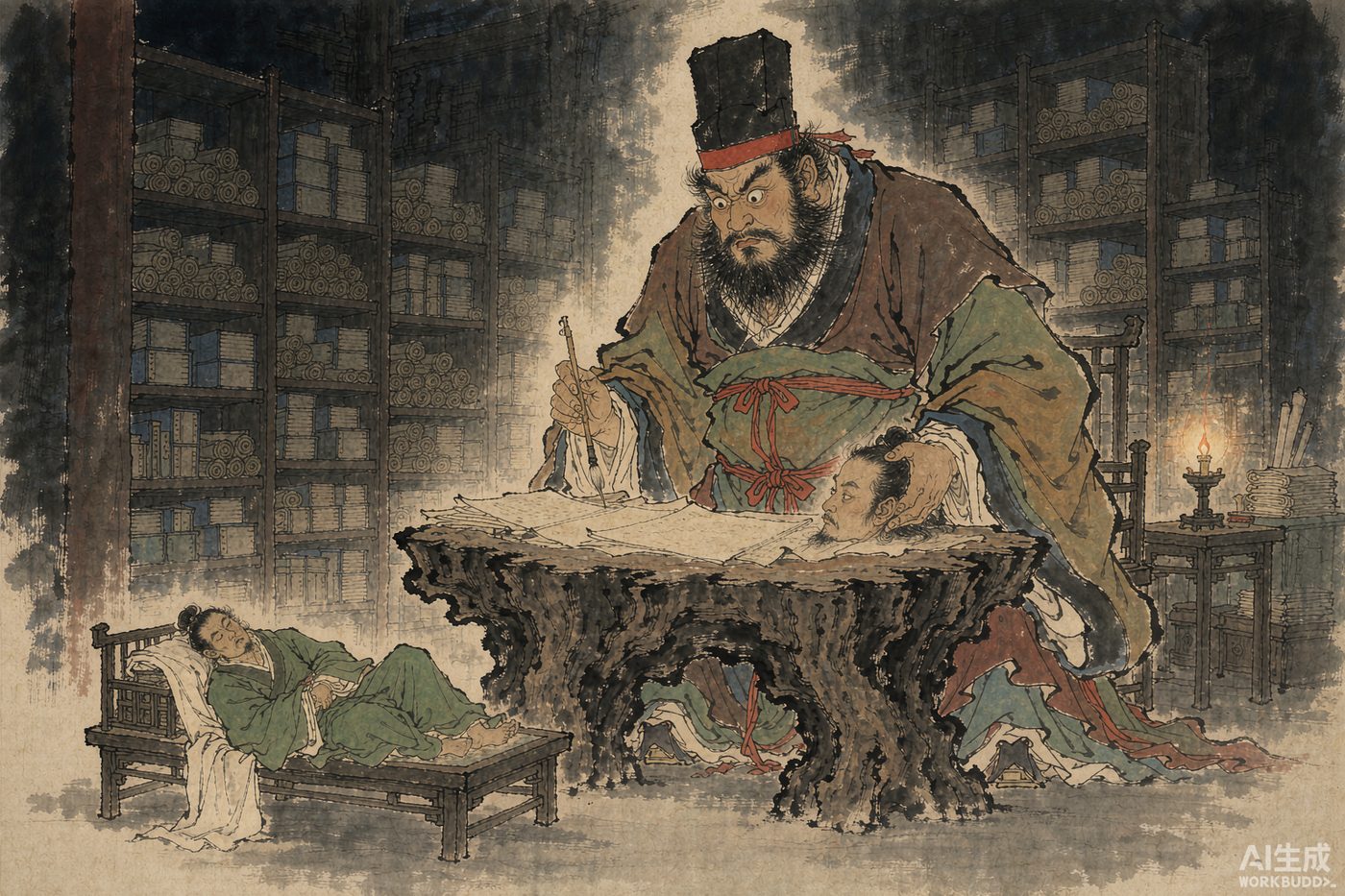
Mr. Min Yucang of Hangzhou was upright and clean-handed all his life. While he was a department director in the Board of Punishments he served every night as King of Hell in the underworld. At the second watch an escort of attendants, sedan and horses would come for him. His hall was the fifth of five, and it was the fifth hall that he presided over.
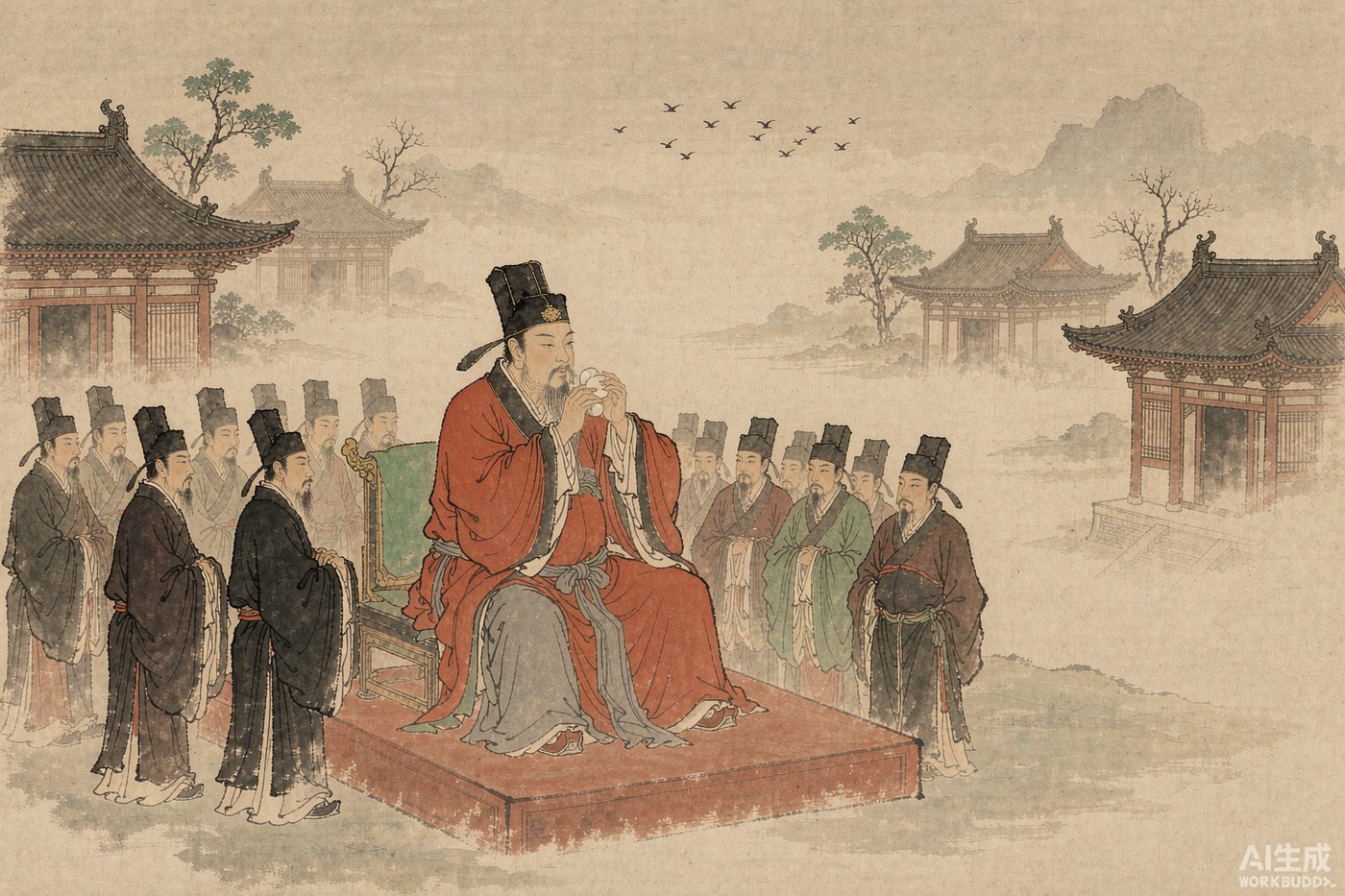
Each time he ascended the hall the judge would first bring in an iron pellet, shaped like a sparrow’s egg and weighing about two ounces, and make him swallow it, and only then would he take up any business. “This was cast by God,” the judge said. “He feared that a King of Hell serving in a living official’s body might show partiality in the cases, and so ordered the iron pellet swallowed to steady his heart. It is an old rule of several thousand years.”
Mr. Min swallowed the pellet as the rule required. When the hearing of a case was finished he spat it out. It was washed three times and examined three times, and handed to the judge to keep. What he had done he forgot as soon as he rose in the morning; and even what he did remember he would not tell anyone. He only urged people not to eat beef, and to recite the Great Compassion Mantra often.
Three months into the post he rose one morning and called his relatives and friends together.
“Now I know,” he told them, “that small good deeds are not enough. Last night my cousin Li died, and his living soul was brought in. The judge set out the record of the wicked things he had done in office and asked that he be sent down for judgement of his crime, and then transferred to Mount Tai. My heart was moved. I set the tally-board down on the table and looked at Li again and again.
“Li pleaded for himself that he had never in his life eaten beef, and that while in office he had been especially strict in forbidding private slaughter, and that this merit might perhaps offset his other crimes. I said nothing, and the judge rebutted him: This is what is called, kindness reaches the birds and the beasts, but merit does not reach the common people. You did not eat beef — how is it that you ate human flesh?
“Li said: I have never eaten human flesh.
“The judge said: The fat of the people and the marrow of the people, that is human flesh. You were a corrupt official. You ate the fat and the blood of a thousand thousand, and you would not eat the flesh of one cow. Think whether a small good can offset a great crime. Li could not answer him.
“I knew that Li had always recited the Great Compassion Mantra, and that in the underworld it is valued above all things; so I wrote the three characters of the mantra on my palm and showed them to him. Li was perfectly blank. He could not recite a single character. I recited several lines for him myself, and every judge and clerk in the hall knelt to listen, and in the west it seemed that red clouds came flying up. But the iron pellet had already surged up in my chest, knocking left and right, and my intestines hurt as though they would split. There was nothing for it but to take the tally-board and mark it in vermilion and put Li into hell — and only then did the pellet settle — and I finished the other cases and came back.”
His relatives and friends asked him: “After all, may beef be eaten?”
“It lies between may and may not,” said Mr. Min.
They asked why.
“This matter is the same as reverencing written paper,” he said. “The sages did not forbid it; they only extended their regard for farming and for letters to its furthest point, so that to abstain is an act of kindness. But heaven and earth are not kind; they treat all things as straw dogs, and Laozi saw through that long ago. Think of the spring silkworm. It makes the silk that clothes the Son of Heaven down to the common man. Its service is greater than the ox’s, and its lives are beyond counting; and yet men boil it and cook it and draw out its guts and roast and eat it, and not one person cries injustice on its behalf or asks that it be forbidden. Why? Because in the nature of heaven and earth, man is noble, and to prize man and cheapen the beast is the way things ought to be. So the man who eats beef is a man of understanding.”