Stories/ 谐铎/ The Old Face Ghost

The Old Face Ghost

老面鬼

SourceXieduo (Harmonious Warnings)
AuthorShen Qifeng
EraQing dynasty · Qianlong–Jiaqing era
Writtenc. 1790
GhostSatireMoney
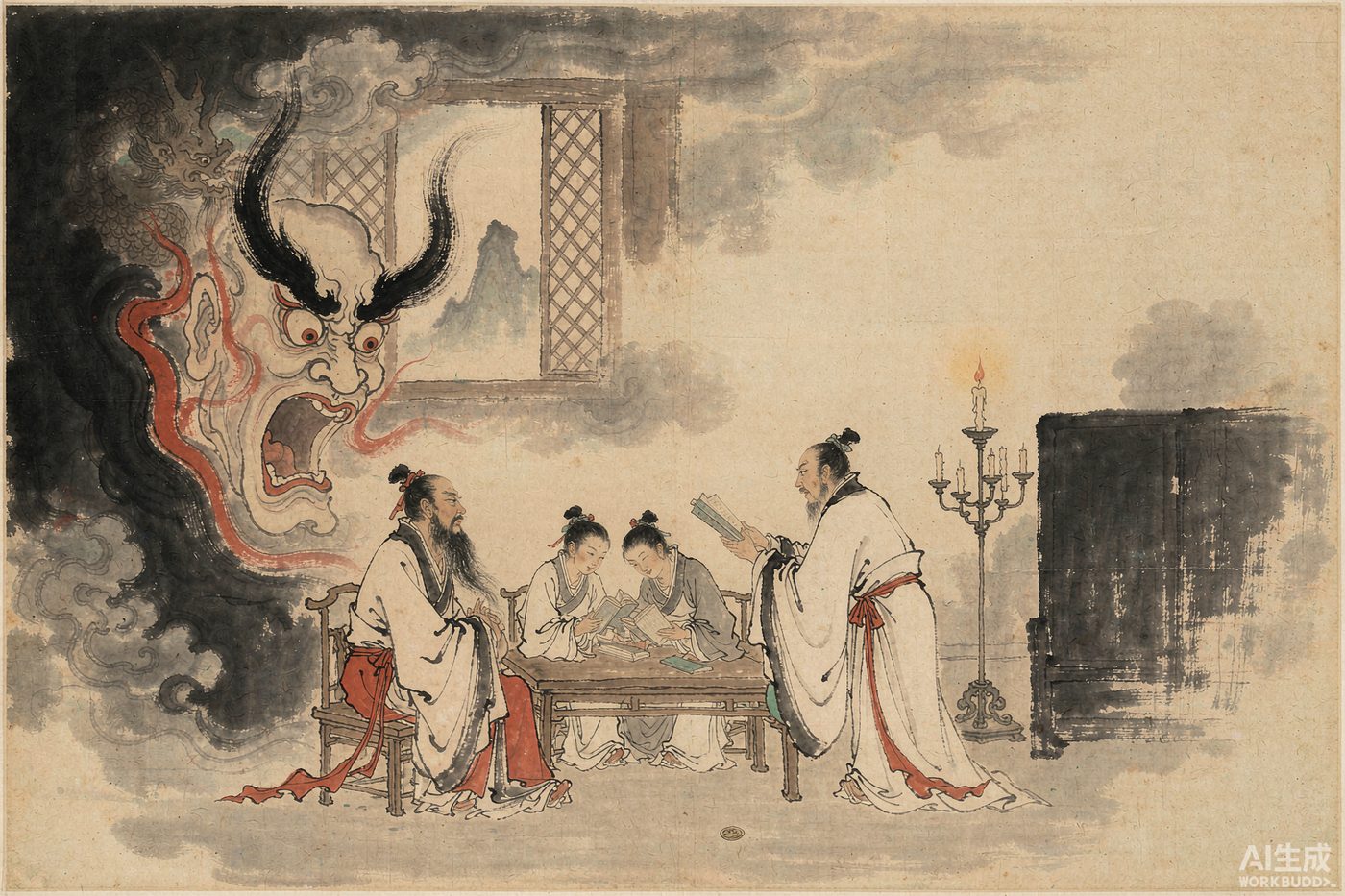
Ink-wash illustration: a huge ghost face pushing through a window lattice at a night schoolroom, a teacher holding up a book to it.
Illustration generated by AI, based on the ancient Chinese text.

When my teacher, Mr Zhang Chumen, was keeping his school at Dongting on the eastern hill, Yan Aiting and Qian Xiangling had not yet entered the Hanlin — both were studying in the same hall.

One evening, as they were talking about prose by lamplight, a ghost pushed its head in through the open lattice.

At first its face was the size of a winnowing basket. Then it was like an overturned cauldron. Then it grew as big as a carriage wheel. Its brows were brooms, its eyes were bells, its cheekbones stood high and thick with five bushels of vulgar dust heaped on them.

My teacher glanced at it and smiled. He took up a book he had written and showed it to the thing.

“Do you know this character?”

The ghost said nothing.

My teacher said: “If you cannot read, why put on this great face in front of people?”

Then he put out two fingers and tapped it on the face. It sounded like rotten leather.

He laughed aloud. “With a face-skin this thick, no wonder you understand nothing.”

The ghost was deeply ashamed, and shrank at once to the size of a bean.

My teacher turned to his students. “Here I thought it was always putting on this great manner — and it turns out to be a person with no face at all, come here to make mischief.”

He took his belt knife and struck at it. Something rang on the floor.

They picked it up. It was one small coin.

The Duo comment: “The God of Money changes shape; the man of letters expounds the law. Just so, just so. When Cangjie made characters the ghosts wept; when King Jing cast money the ghosts laughed. That a ghost cannot read and yet loves money — is that its inborn nature? But there are those who can read and still love money. I cannot fathom what kind of ferocious ghost that is.”
Original classical Chinese text · 原文

初犹面如箕,继则如覆釜,后更大如车柚。眉如帚,眼如铃,两颧高厚,堆积俗尘五斗。师睨微笑,取所著《橘膜编》示之,曰:「汝识得此字否?」鬼不语。师曰:「既不识字,何必装此大面孔对人?」继又出两指弹其面,响如败革。因大笑曰:「脸皮如许厚,无怪汝不省事也!」鬼大惭,顿小如豆。……取佩刀砍之,铮然堕地。拾视之,一枚小钱也。

From 《老面鬼》, Xieduo juan 3. Told by Shen Qifeng about his own teacher, Zhang Chumen; the two fellow students named here both became Hanlin academicians.

Source. From Xieduo (Harmonious Warnings) (谐铎), by Shen Qifeng , c. 1790. The original text is in the public domain; this English rendering and the accompanying notes are original work.

Keep Reading

Related Stories

Qing dynasty · Qianlong–Jiaqing era · 谐铎

The Thief Who Judged Verse

能詩賊

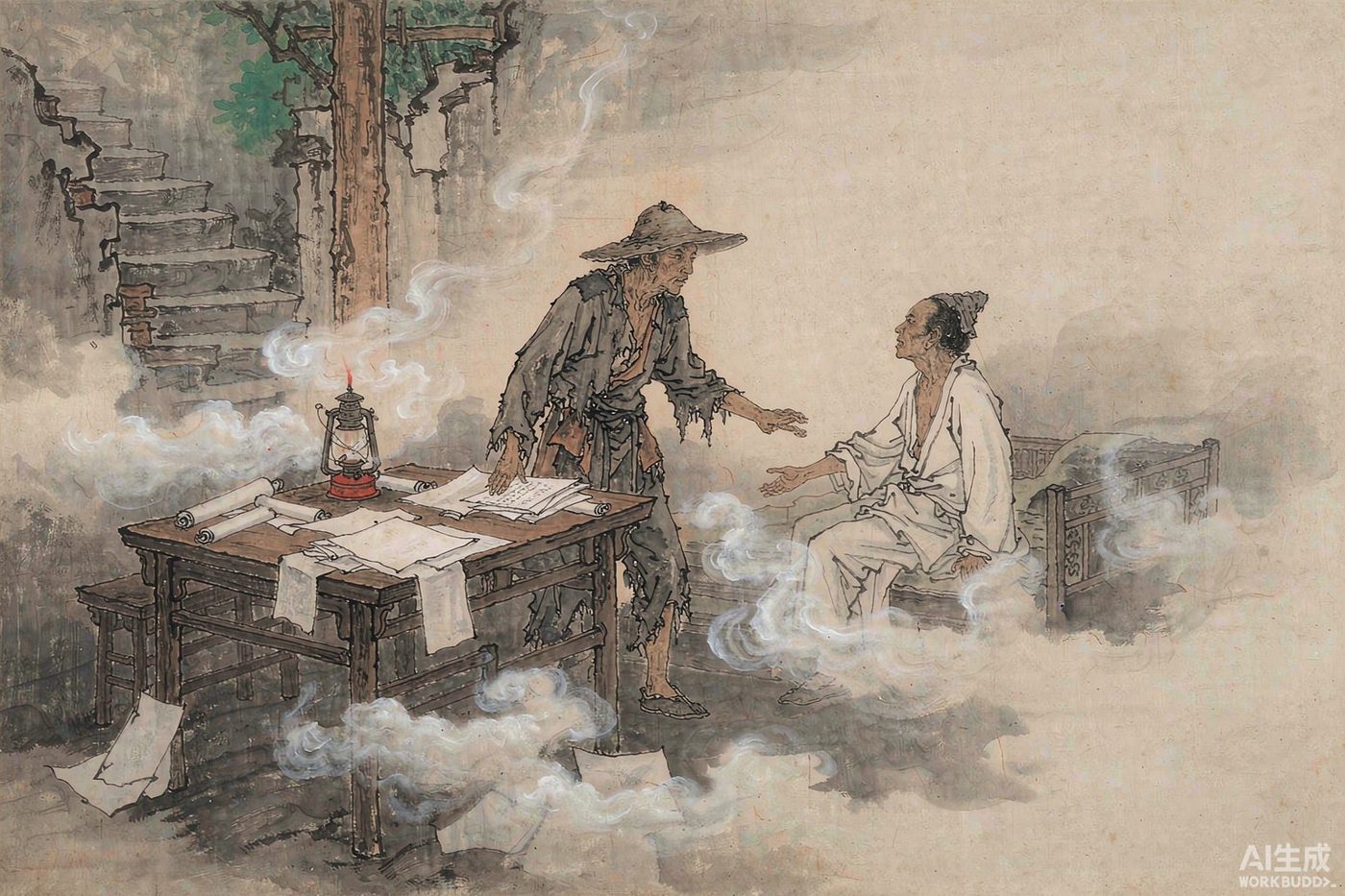
A burglar breaks in, reads the householder's poems, slaps the table and calls him the heir of Li Bai and Du Fu. Then he starts editing.

PoetryOutlawSatire
Qing dynasty · Qianlong–Jiaqing era · 谐铎

One Cash

一錢落職

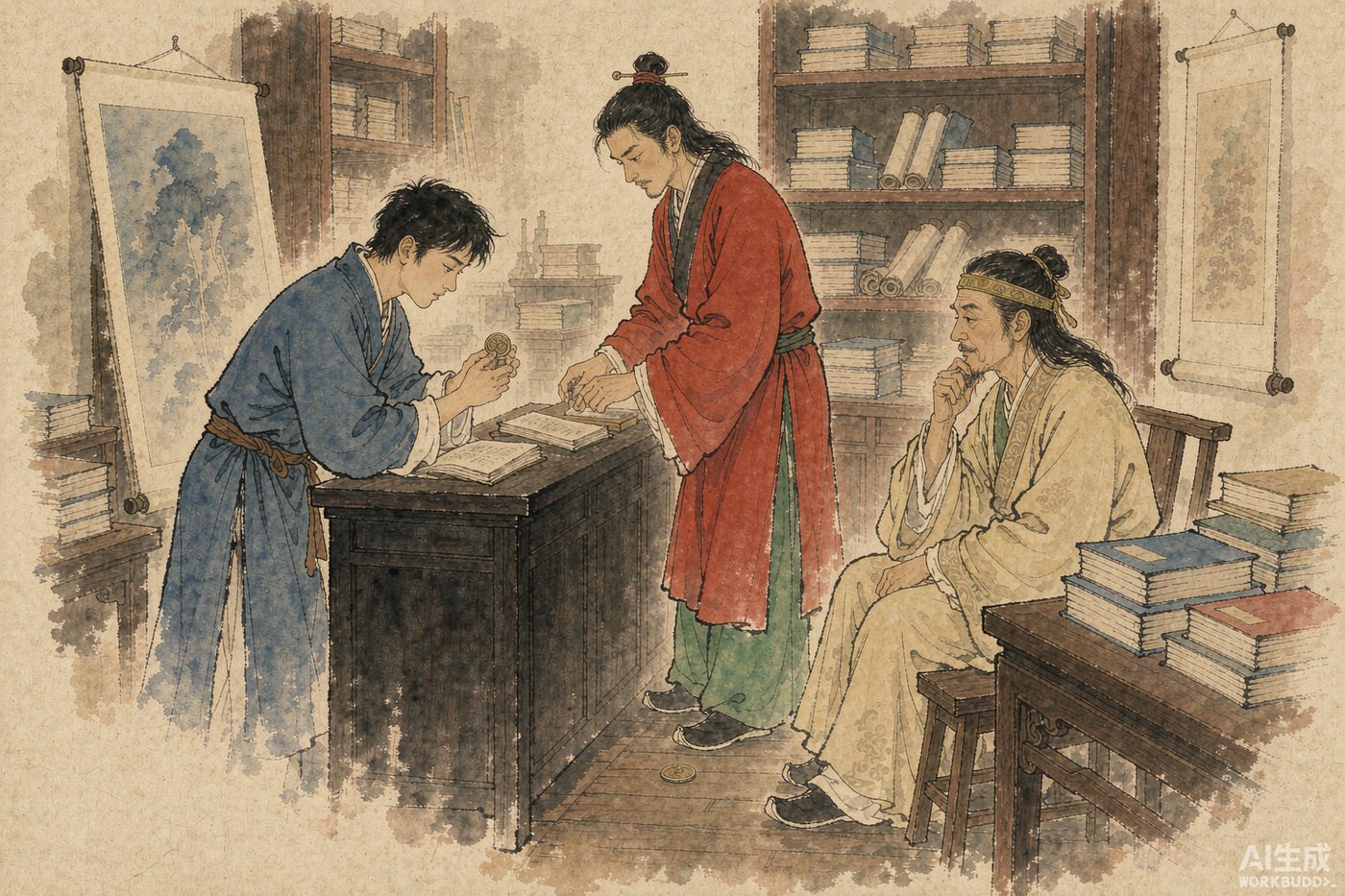
He is dismissed for corruption before he has taken up his post, having committed no crime in office. The charge is one coin — trodden on in a bookshop gutter years earlier, by a man who was watching.

SatireOfficialdomJustice
Qing dynasty · Qianlong–Jiaqing era · 谐铎

The Girl Who Parodied the Classics

筆頭減壽

A girl of genius rewrites the Book of Changes as a hexagram on Money, and the Book of Documents as a satire on her maid. Then she dreams into the hall where the classics are judged, and hears her own sentence.

WomenSatireDreams