Stories/ 子不语/ The Planchette Showed the Questions

The Planchette Showed the Questions

乩仙示题

SourceZibuyu (What the Master Would Not Discuss)
AuthorYuan Mei
EraQing dynasty · Kangxi era, 1688 and 1714
Writtenc. 1788
PlanchetteExaminationTricksterSatireScholar
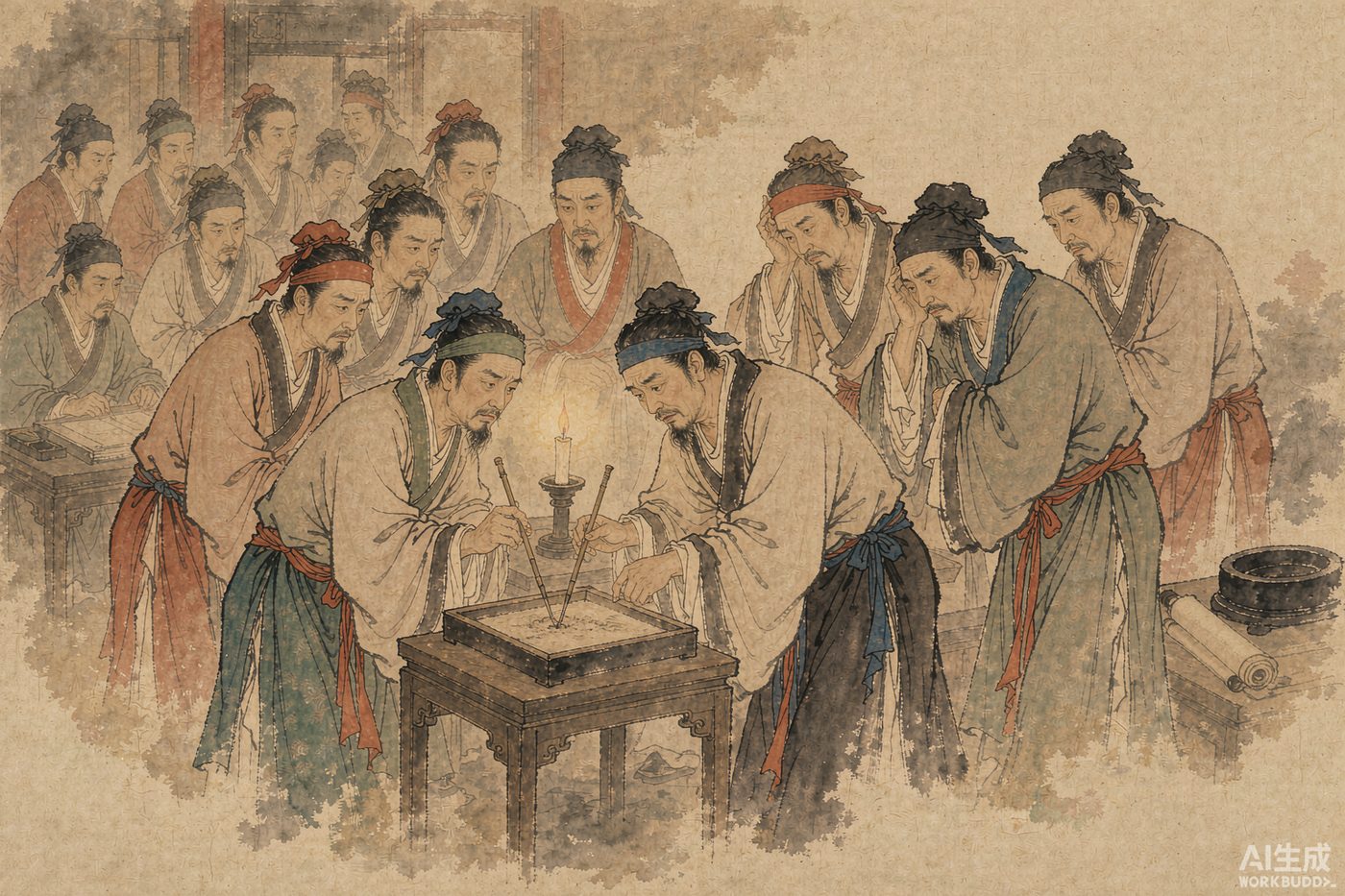
A group of Qing examination candidates crowded around a planchette table, the stick tracing two large characters in the sand tray, one candidate laughing and another suddenly falling silent with a hand over his mouth
Illustration generated by AI, based on the ancient Chinese text.

In the wuchen year of Kangxi’s reign, the candidates gathered for the metropolitan examination begged the planchette spirit to show them the question.

The spirit wrote two characters: Don’t know.

The candidates bowed twice and begged again: “How can there be such a thing as a god who does not know?”

The spirit then wrote in large characters: Don’t know, don’t know, and again don’t know.

The crowd roared with laughter, and took the spirit for an ignoramus.

That session’s examination question was on the three clauses of the Analects that end: Without knowing the Mandate, one has no way to become a gentleman.

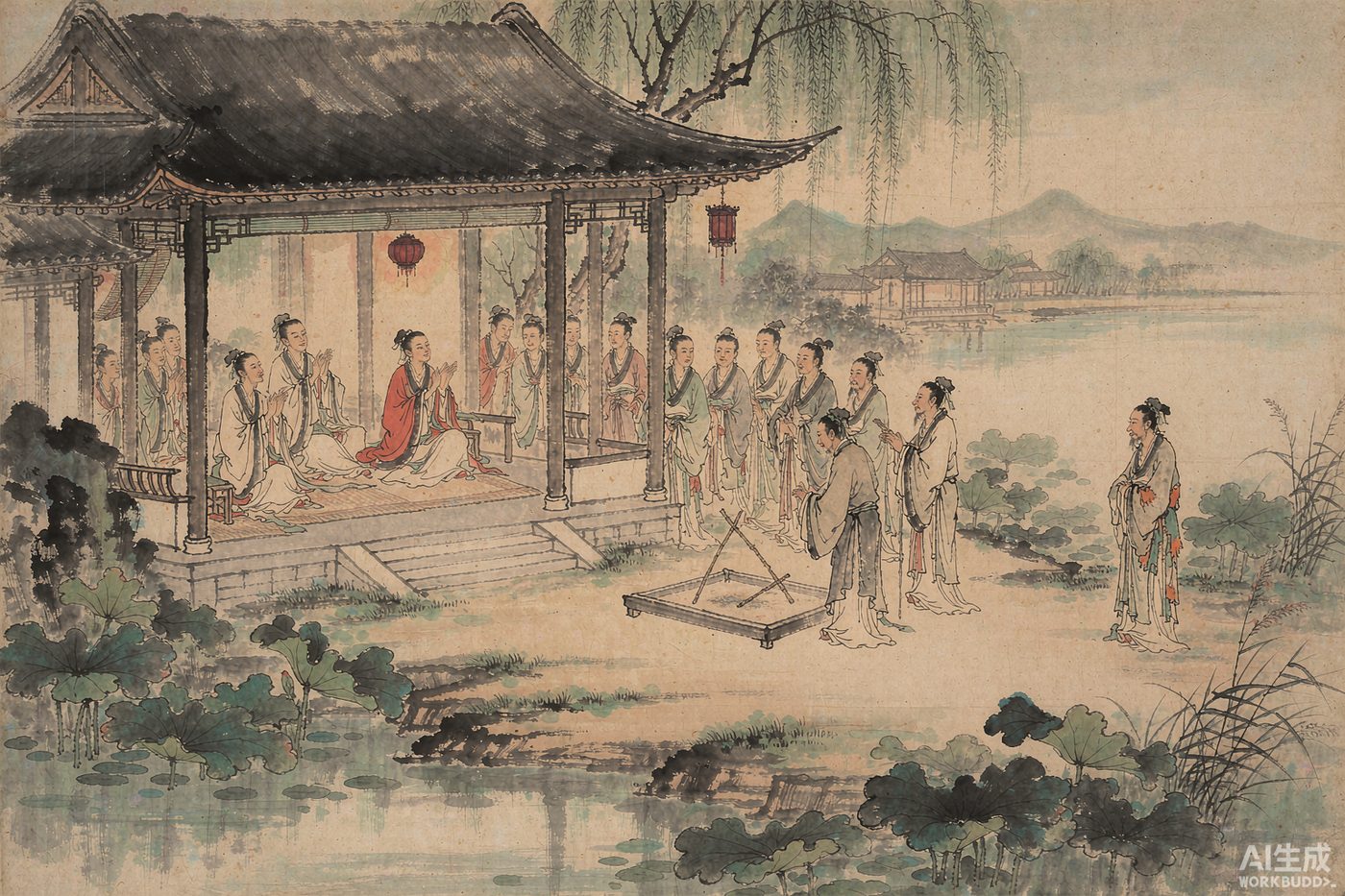
Again, before the provincial examination of the jiawu year, some scholars begged the planchette spirit to show them the question. The spirit wrote three characters: Cannot be spoken. The scholars begged bitterly and would not stop, so it wrote: It lies exactly on “cannot be spoken.” They were more bewildered than ever, and begged the spirit to show them plainly.

The spirit wrote a single character: to sign.

They knocked and asked again — but it did not answer.

Before long, the question was posted: the chapter of the Analects that begins, To know it is not so good as to love it.
Original classical Chinese text · 原文

康熙戊辰,会试举子求乩仙示题,乩仙书「不知」二字。举子再拜求曰:「岂有神仙而不知之理?」乩仙乃大书曰:「不知不知又不知。」众人大笑,以仙为无知也。是科,题乃「不知命,无以为君子也」三节。又甲午乡试前,秀才求乩仙示题,仙书「不可语」三字。众秀才苦求不已,乃书曰:「正在『不可语』上。」众愈不解,再求仙明示之,仙书一「署」字,再叩之,则不应矣。已而,题是「知之者,不如好之者」一章。

From 《乩仙示題》, Zibuyu juan 21. Translated in full. 康熙戊辰 is 1688 and 甲午 is 1714; 會試 is the metropolitan examination and 鄉試 the provincial; 乩仙 is the planchette spirit; 「不知命,無以為君子也」 is Analects 20.3, the closing chapter of the book; 「知之者不如好之者」 is Analects 6.18 — 'to know it is not so good as to love it'; the phrase 不可語 alludes to Analects 8.9, 'the people cannot be made to understand' (民不可使知之… 可與語 versus 不可與語, from 6.21).

Source. From Zibuyu (What the Master Would Not Discuss) (子不语), by Yuan Mei , c. 1788. The original text is in the public domain; this English rendering and the accompanying notes are original work.
Where this fits in the universe: The Underworld Examination · Reading the Fate: The Doom Is Fixed, the Address Is Not

Keep Reading

Related Stories

Qing dynasty · Qianlong–Jiaqing era · 谐铎

The Poor Scholar and the Planchette

窮士扶乩

A starving poet is barred from a salt merchant's garden party. He claims he can call spirits with a planchette, and the greatest poet of the previous dynasty obliges him — for one night only.

SatirePoetryUnderworld
Qing dynasty · Qianlong era, c. 1760–1800 · 谐铎

Top of the List by Accident

泄气生员

A dull-witted candidate named Xia Qitong is told by a diviner that he will come first. He does — because a minister happened to break wind while the new examiner was asking him for instructions, and the examiner, hearing 下气通, wrote the name down as 夏器通.

OfficialdomSatireFate
Qing dynasty · Qianlong era, c. 1750–1795 · 子不语

Master Crane Stillness

鹤静先生

A planchette spirit joins a Hangzhou poetry circle and is wonderfully useful — he dates the rain, he stops fevers, he matches the rhyme for wild goose sixty times over. Ask him about great matters and the brush simply lies still. Asked to show himself, he hangs himself from an archway on Solitary Hill.

GhostPoetryDivination