Stories/ 子不语/ The Rite of the Whole Bones

The Rite of the Whole Bones

道家有全骨法

SourceZibuyu (What the Master Would Not Discuss)
AuthorYuan Mei
EraQing dynasty, c. 1760–1790
Writtenc. 1788
GhostTaoistDeityJustice
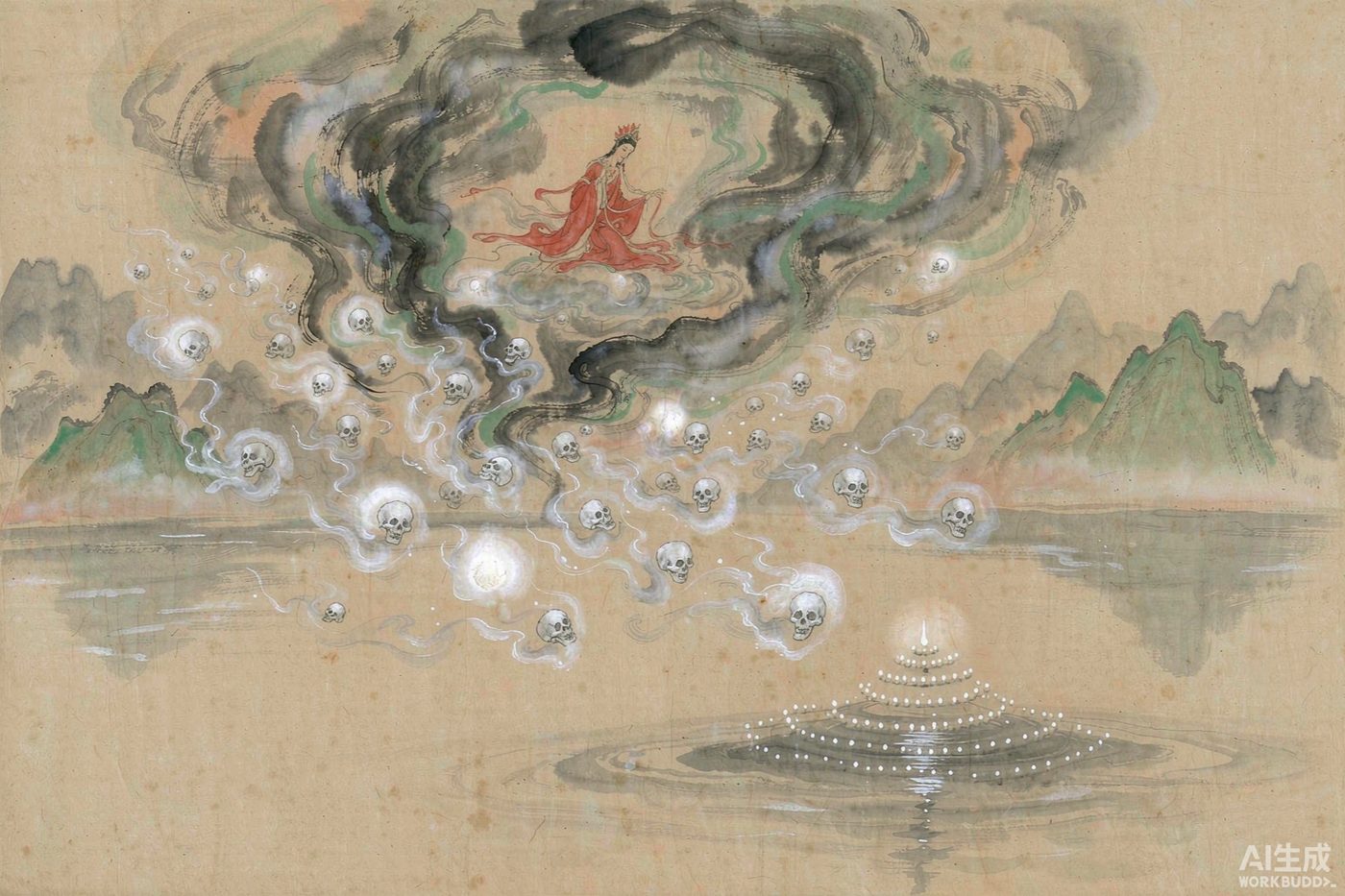
A night altar on a tea hillside above West Lake, a goddess descending in clouds of rose light above spirit-lamps arranged like a tower and a wheel on the water, and pale wisps coiling around dozens of skulls that knit themselves whole
Illustration generated by AI, based on the ancient Chinese text.

When Dragon Well in Hangzhou was first opened for tea planting, a merchant named Ye was in charge of the work, and a certain Ni chose the auspicious date for the breaking of ground.

Ten years later Ye died, and Ni suddenly fell violently ill. A host of ghosts possessed him, their voices all unlike one another, crying: “Give us back our bones! Give us back our bones!” — a chirping clamor in which the accents of Chu and Yue, Wu and Lu were all mingled together.

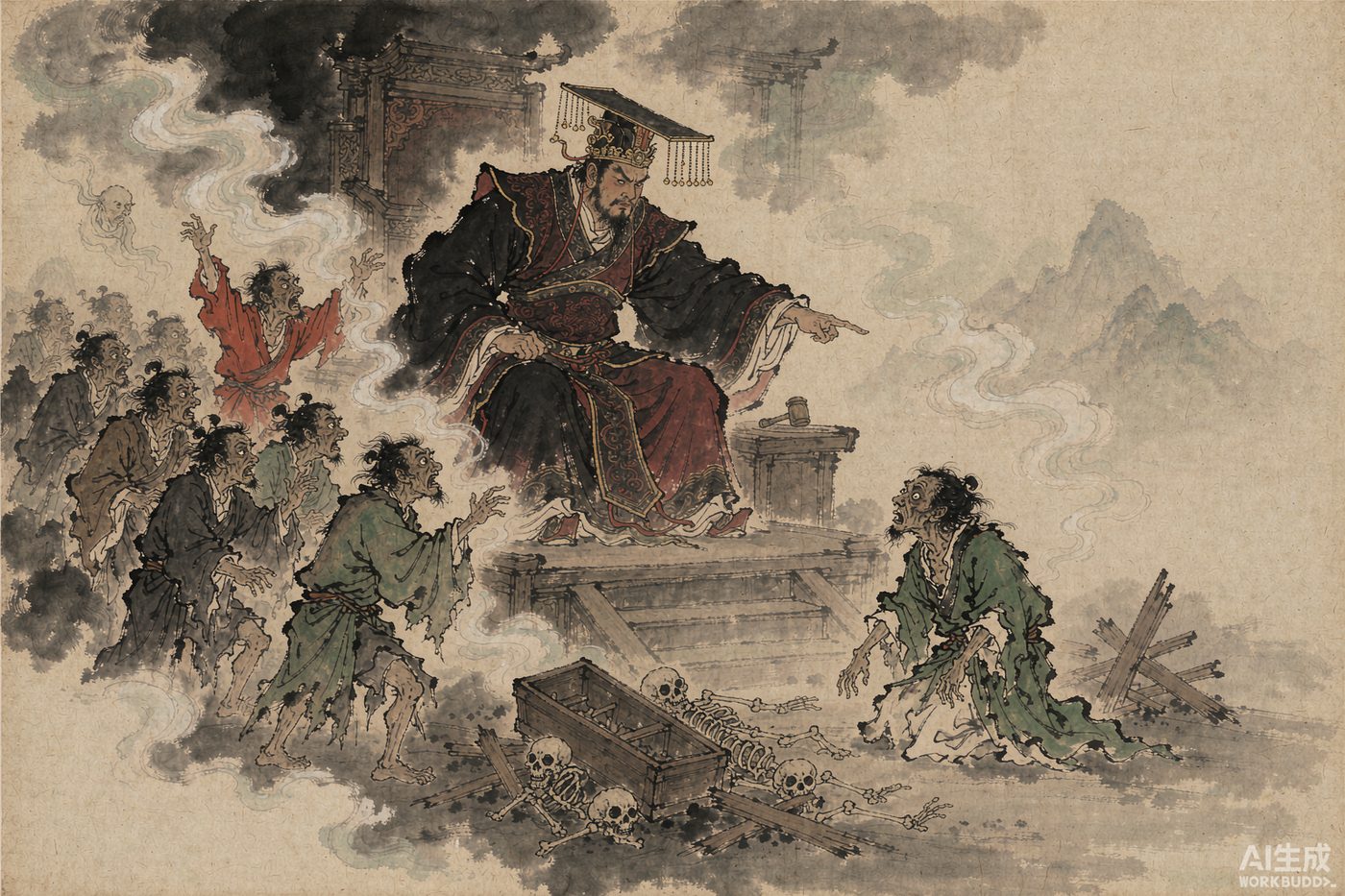
Last came one who called himself General Fu of the Chen dynasty. “I helped Xiao Mohe in his campaigns south and north,” he said, “and I have been buried here a thousand years. How dare you and Ye injure my bones on your own authority?”

The family gathered round and pleaded: “This was ordered by the authorities; our master had no power to resist. General, can you not forgive him?”

“Public business cannot be disobeyed — that is true,” said the general. “But you and Ye were bound in duty to report the digging up of bones and exposure of coffins to the authorities. Had they refused to listen, you would have been without guilt. Instead you never informed the officials at all, but threw the bones of our several dozen company together at random — men wearing women’s skulls, the old joined to young feet — scattered and broken as we are to this day. How is a ghost to rest?”

The family begged to redeem the matter with Buddhist rites.

“Buddha can do nothing,” said the general. “Only the Taoists have the rite of whole bones. Go and ask them.”

So the Ye family sought out the Dipper votaries Shi Liunan and Wan Jinpeng, went and besought them, and an altar was set up at Dragon Well.

For seven days they performed the rite. Then the spirit-lamps were seen blazing over West Lake, scattered across the water — now stacking high into a pagoda, now lining out like a file of wild geese, now gathering into a great cartwheel, now scattering into ten thousand drifting fireflies.

In a moment the Mother of the Dipper descended, rosy-clouded and jeweled, so severe in her adornment that none could look at her closely. She dragged in two prisoners — Ye himself, and Ni — and both knelt before the steps. The several dozen ghosts crowded forward to beat them, and the Mother of the Dipper rebuked them.

“This too was your allotted doom. No more vengeance. I shall order the envoys of the Nine Shades to gather up every broken bone and make them whole for you.”

In a little while the dozens of skulls were each wreathed in white vapor, spinning and rolling into balls, and their broken places were made whole.

The general, over ten feet tall in golden armor, led his company of ghosts in bowing thanks to the Mother of the Dipper. Ye too was unbound, and bowed with folded palms, and departed. And Ni’s sickness was healed at once.

Wan Jinpeng told me this himself.
Original classical Chinese text · 原文

杭州龙井初开时,商人叶姓者司其事。有倪某者,为叶择开工日期。后十年,叶身故,倪忽暴病,有群鬼附其身,语音不一,曰:「还我骨!还我骨!」声啾啾然,楚、越、吴、鲁音皆杂有也,最后有自称陈朝傅将军者曰:「我助萧摩诃南征北讨,葬此千年,汝何得与叶某擅伤我骨?」家人环求曰:「此官府所命,主人力不能抗,将军何不相谅耶?」将军曰:「此虽公事不可违,然汝与叶某理宜将掘骨暴棺事告知官府。官府不从,便与汝无罪。今汝等并不告官,而擅将我等数十人骨混行抛掷,以致男装女头,老接少脚,至今丛残缺散,鬼如何安?」家人请用佛法解禳,将军曰:「佛无能为,惟道家有全骨法,汝往求之。」 于是,叶家人访有礼斗人施柳南、万近蓬等,往而拜求,遂设坛于龙井。作法七日,见西湖神灯赫然,散满水上,或叠高为塔,或横排为雁字,或团聚如大车轮,或散作流萤万点。须臾,斗母下降,霞佩璎珞,严妆不可逼视。牵二囚来,即叶某与倪姓也,皆跪阶前。鬼数十争来笞击,斗母喝曰:「此亦汝等劫数,毋庸仇怨。我命九幽使者尽提残骨,为汝等补还可也。」少顷,髑髅数十具皆有白气萦绕,旋滚成团,其缺处皆圆满矣。将军长丈馀,披金甲,率群鬼拜谢斗母。叶亦解锁,合掌膜拜而去,倪病遂愈。此事近蓬为余言。

From 《道家有全骨法》, Zibuyu juan 18. Translated in full. 龍井 is Dragon Well, the famous tea hill by West Lake in Hangzhou; 蕭摩訶 is Xiao Mohe, the celebrated general of the Chen dynasty (557–589), which dates General Fu's grave to about twelve hundred years before the tale; 禮斗 is the Taoist rite of worshipping the Dipper; 斗母 is Doumu, Mother of the Dipper, the goddess of the Northern Bushel; 九幽 is the Nine Shades, the depths of the underworld.

Source. From Zibuyu (What the Master Would Not Discuss) (子不语), by Yuan Mei , c. 1788. The original text is in the public domain; this English rendering and the accompanying notes are original work.
Where this fits in the universe: Cultivation: How Beings Change Their Nature

Keep Reading

Related Stories

Qing dynasty · Qianlong era, c. 1736–1798 · 谐铎

The Geomancer's Bones

地师身后劫

A boy picking wild flowers breaks the bones in a pauper's grave, and the dead man — a famous fengshui master — comes to take his life. The City God has one question for him: you sold good burial sites for a living, so why could you not find one for yourself?

GhostJusticeUnderworld
Southern Song dynasty · 12th century · 夷坚志

The Tomb at the Drill Ground

建康太和古墓

A cavalry commander wants a mound on the drill ground levelled because it spoils the polo — and because he has ideas about what is inside it. The woman buried there comes and asks him not to. He does it anyway, and takes several thousand ounces of gold. What follows is not a curse.

GhostJusticeOfficialdom
Qing dynasty · Qianlong era, c. 1736–1798 · 子不语

The Corpse Who Rose for Silver

僵尸贪财受累

A tutor is lodged for one night in a newly bought house. Looking out, he sees a red-tinged flame coming out of a white coffin and remembers a story about a coffin full of gold and silver. He breaks it open. What rises up after him is a corpse with a string of ingots over its shoulder — and the ingots, not the man, are what it is really after.

MonsterGhostMoney