Stories/ 子不语/ The Scale of Merit

The Scale of Merit

神秤

SourceZibuyu (What the Master Would Not Discuss)
AuthorYuan Mei
EraQing dynasty · Qianlong era, c. 1750–1795
Writtenc. 1788
JusticeUnderworldMoneyOfficialdom
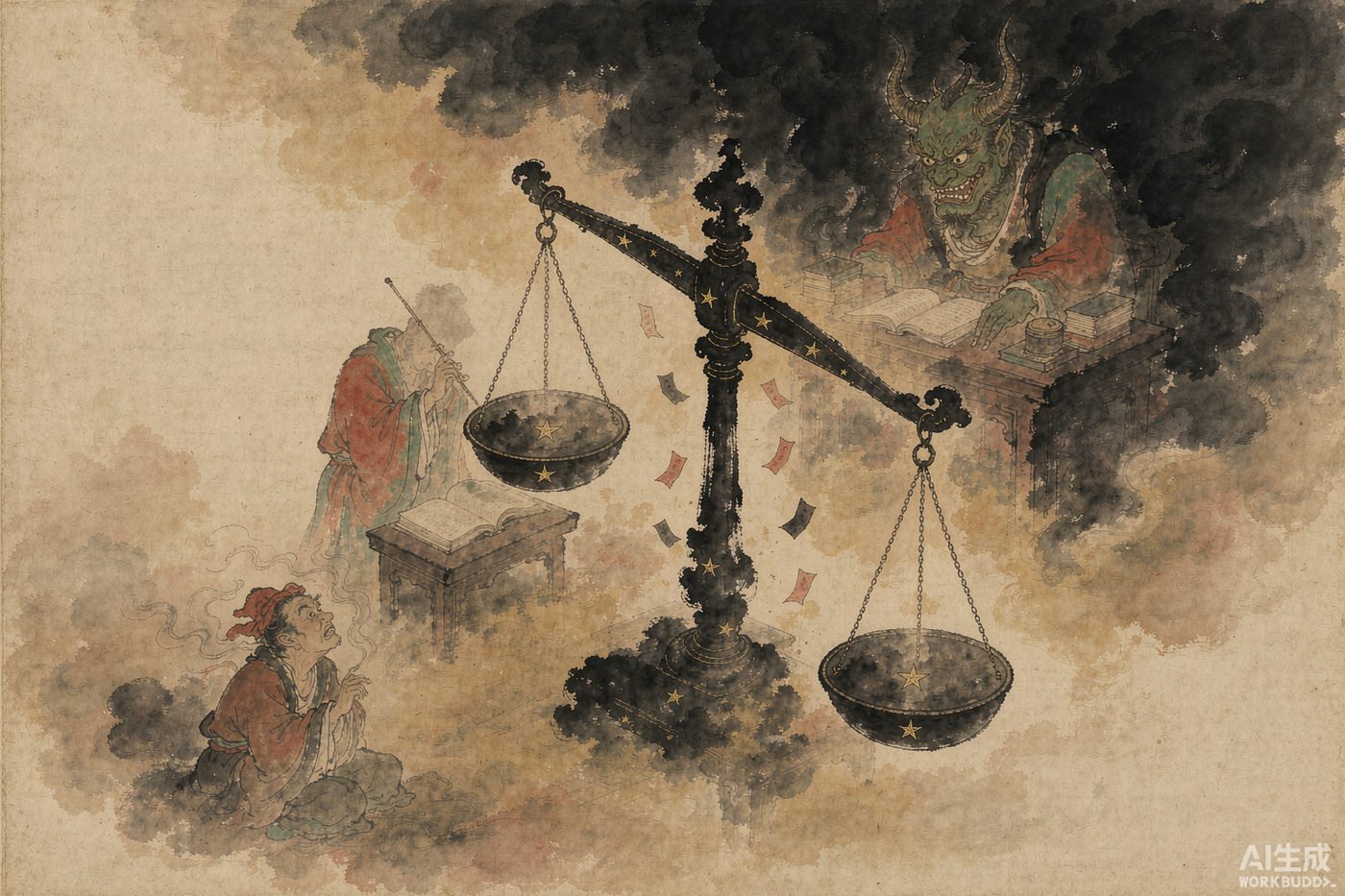
A great bronze balance scale glowing with golden stars in a dark hall, red and black paper slips being tipped into its pans, a green-faced judge seated behind ledgers
Illustration generated by AI, based on the ancient Chinese text.

Zhang Yuqi was a clerk in the revenue office of Wujin county. Taking the tax money and grain up to Suzhou, he passed the district of Henglin and fell down flat in broad daylight.

After a day he came to himself, and said that a man in golden armour had seized him and taken him to a great courtyard, where the man called out: “Master, a wicked man is here.”

At the head sat a green-faced, fanged figure, who said: “Since he is a wicked man, have him detained.”

The man in golden armour knelt and begged: “Yuqi is on the emperor’s business; it is not convenient to hold him. Let him go back to the light, and when his task is done we shall examine him at leisure.”

The green-faced one allowed it, and Zhang revived.

He delivered the grain at Suzhou, took his receipt, and came back. Passing Henglin again, he lodged at an inn, and dreamed that the man in golden armour came once more and led Yuqi in to see the master — the same green-faced one.

The master gave judgement: “Bring the book of Yuqi’s life’s merits and offences, weigh them, and then sentence him.”

His attendants brought a scale, shining with golden stars, its sliding weight made of purple-gold stone. For every good deed a red slip, for every evil deed a black slip; and these were thrown into the pans. In a moment the red was light and the black was heavy, and Zhang trembled without ceasing.

Then someone took a roll of documents marked with a red slip and threw it in, and all the black in the pan was pressed down by it, and the red slip was heavy beyond measure.

The green-faced one said: “With so great a merit, he may be released to the light, and have his span increased by a twelve-year.”

Yuqi woke with a start, and told people of it. They asked him: “Could you tell what the document was?”

He said: “It was a case I handled myself — how could I not know it? It was the confiscation of the estate of Liu, the provincial treasurer of Changzhou, whose personal name was so-and-so. When Liu was being confiscated, of the fields and property entered in the registers the tenants owed a great deal in arrears, and the county magistrate wanted to press and collect it to the amount. I outwardly fell in with what he said, and at night I deliberately failed to guard against fire, and burned the whole lot. For that I was beaten, and the matter ended there. The thing that weighed down the scale must have been this business.”

Yuqi is alive to this day.
Original classical Chinese text · 原文

张玉奇,武进县户房书吏也。解钱粮至苏州,过横林地方,白日仆地。越一日苏,自言被金甲人擒去,至大院落呼曰:「大师父,恶人来矣。」上坐青面獠牙者,云:「既是恶人,著即拘禁。」金甲人跪请曰:「玉奇有朝廷公事在身,未便羁留,且放还阳,候其事毕,再行审讯未迟。」青面者许之,张遂活。 解粮至苏,掣批归,仍过横林,宿旅店中,梦金甲人又来,将玉奇引见大师父,即青面者。大师父判曰:「取玉奇生平功过簿来,称其轻重,再行治罪。」左右取一秤至,金星照耀,其权以紫金石为之。凡善事用红标签,恶事用黑标签,分投秤盘中。顷刻间,红轻黑重矣,张战栗不已。俄而,有人取红签文书一卷投之,则秤盘中诸黑尽为所压,红签重不可量。青面者曰:「有此大功德,可放还阳,增寿一纪。」 玉奇惊醒,以此语人。人问:「可认得是何文书?」曰:「我所承办,岂有不认!此常州刘藩司名某者抄家案也。」刘被抄时,所籍田产,佃户陈欠甚多,县令某欲按数比追。玉奇阳承奉其言,而夜中故意不戒于火,尽焚之,以此被杖,其事遂已。想压秤者,是此事也。玉奇至今尚存。

From 《神秤》, Zibuyu juan 17. Translated in full. 戶房書吏 is the clerk of the revenue section of a county yamen; 解錢糧 is escorting the tax grain and silver to the prefecture; 功過簿 is the ledger of merits and offences; 權 is the sliding weight of a steelyard; 一紀 is twelve years; 抄家 is the confiscation of a disgraced official's estate.

Source. From Zibuyu (What the Master Would Not Discuss) (子不语), by Yuan Mei , c. 1788. The original text is in the public domain; this English rendering and the accompanying notes are original work.
Where this fits in the universe: The Ledger: How Cause and Effect Keeps Accounts

Keep Reading

Related Stories

Qing dynasty · Qianlong–Jiaqing era · 续子不语

The Ghost Who Seized Surplus

掠剩鬼

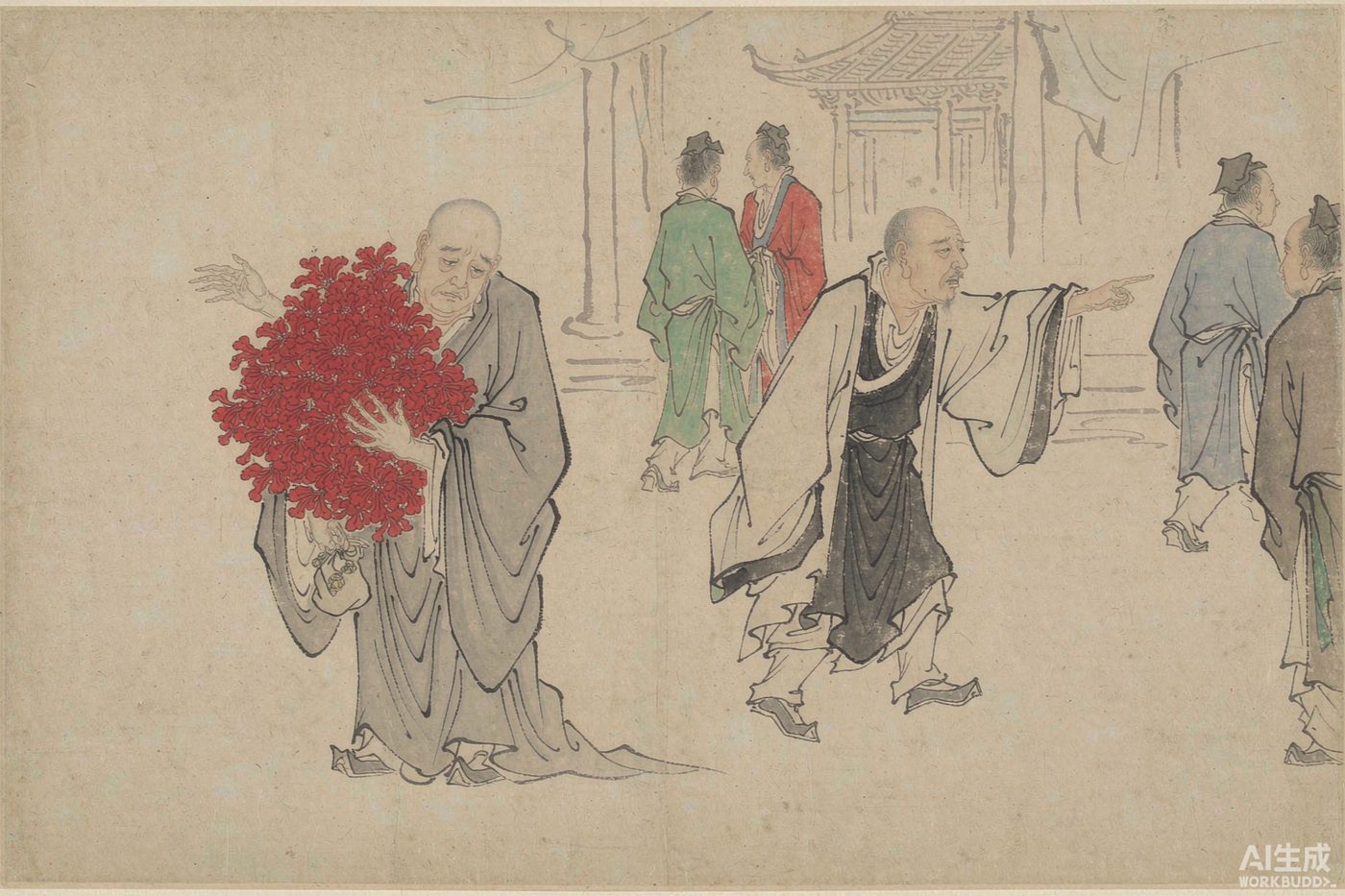
A dead merchant buys his old friend lunch and explains his new appointment: he has been assigned to seize the surplus. Then he gives him a bouquet that is very heavy.

GhostTricksterUnderworld
Qing dynasty · Qianlong–Jiaqing era · 谐铎

One Cash

一錢落職

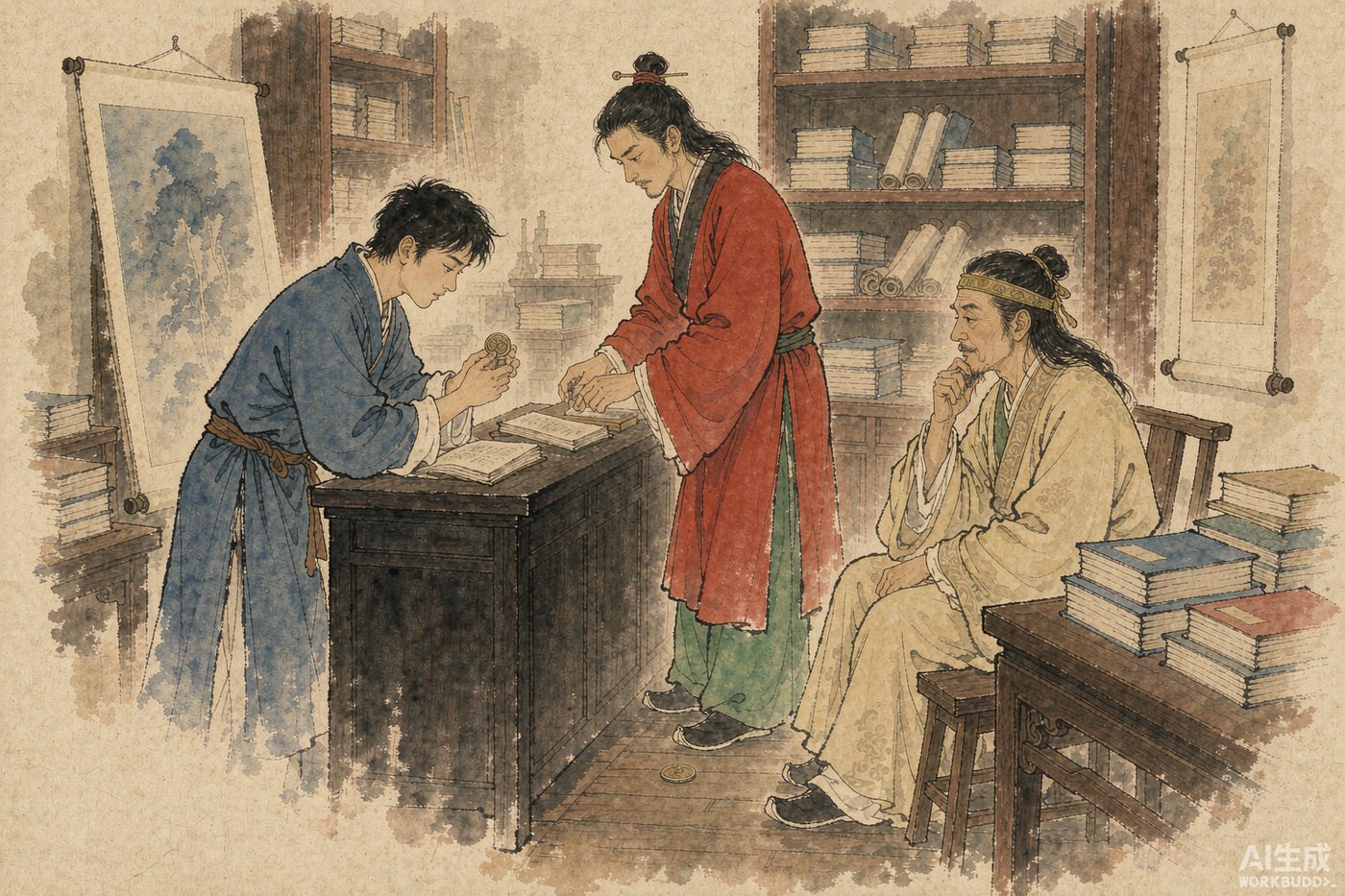
He is dismissed for corruption before he has taken up his post, having committed no crime in office. The charge is one coin — trodden on in a bookshop gutter years earlier, by a man who was watching.

SatireOfficialdomJustice
Qing dynasty · Qianlong era, c. 1736–1798 · 谐铎

The Halo of Seven Lives

顶上圆光

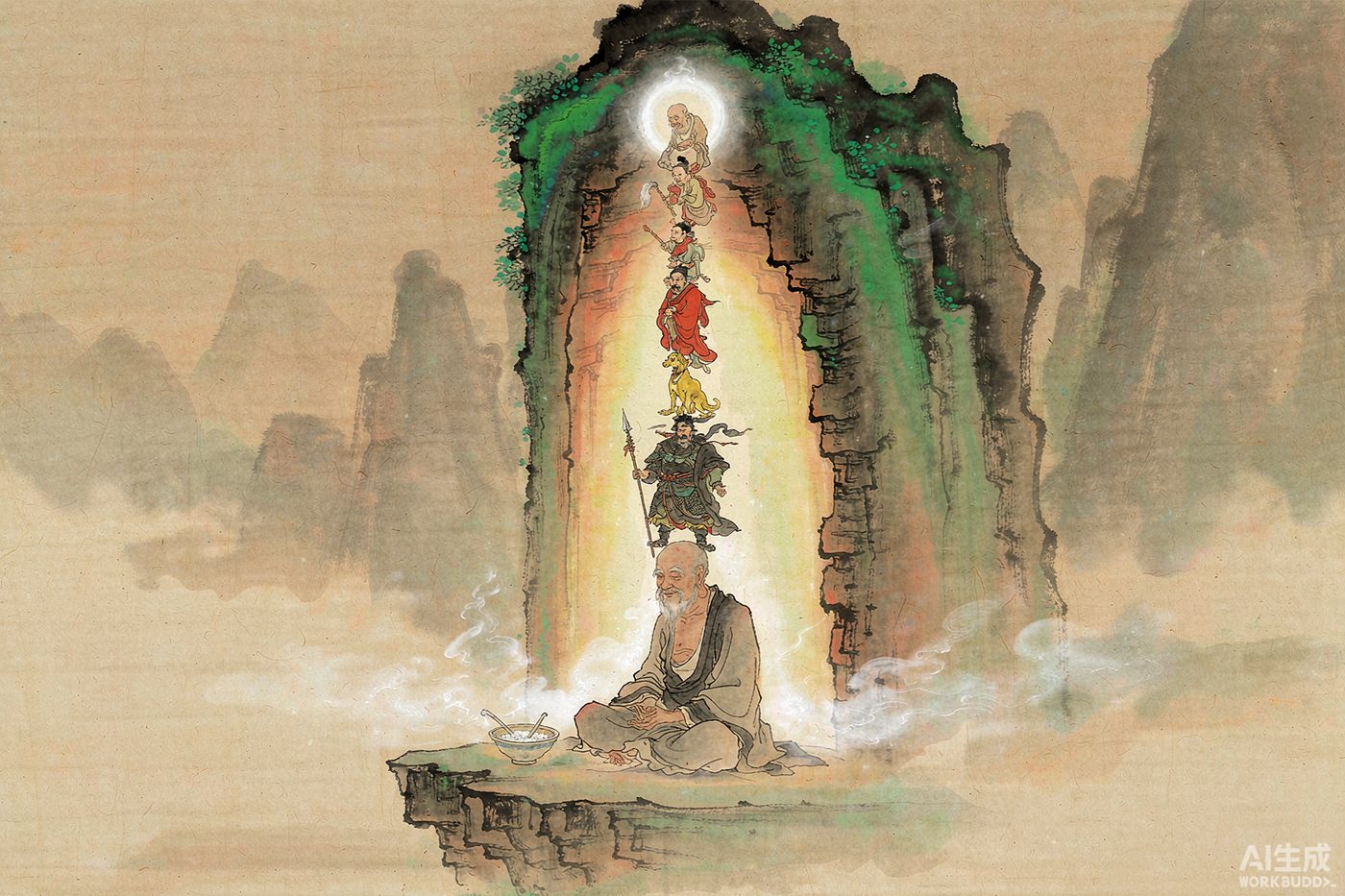
A traveller sheltering in a cave on Huangshan watches the old monk's halo fill with figures: a general hung with severed heads, a dog at prayer, a bribe-taking minister, a courtesan, a baby — stacked seven high. The monk wakes and names them. They are all him.

BuddhistKarmaImmortal