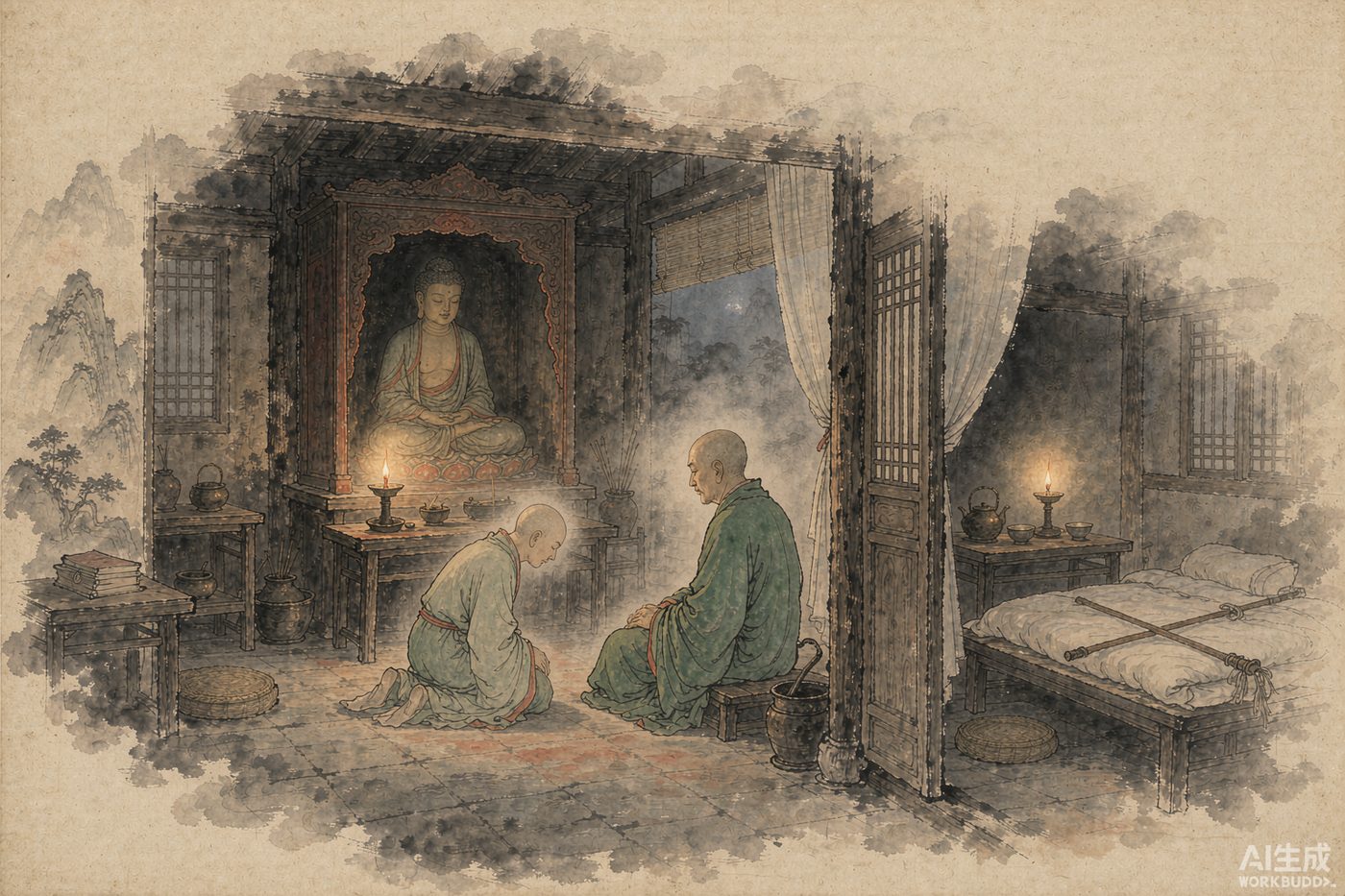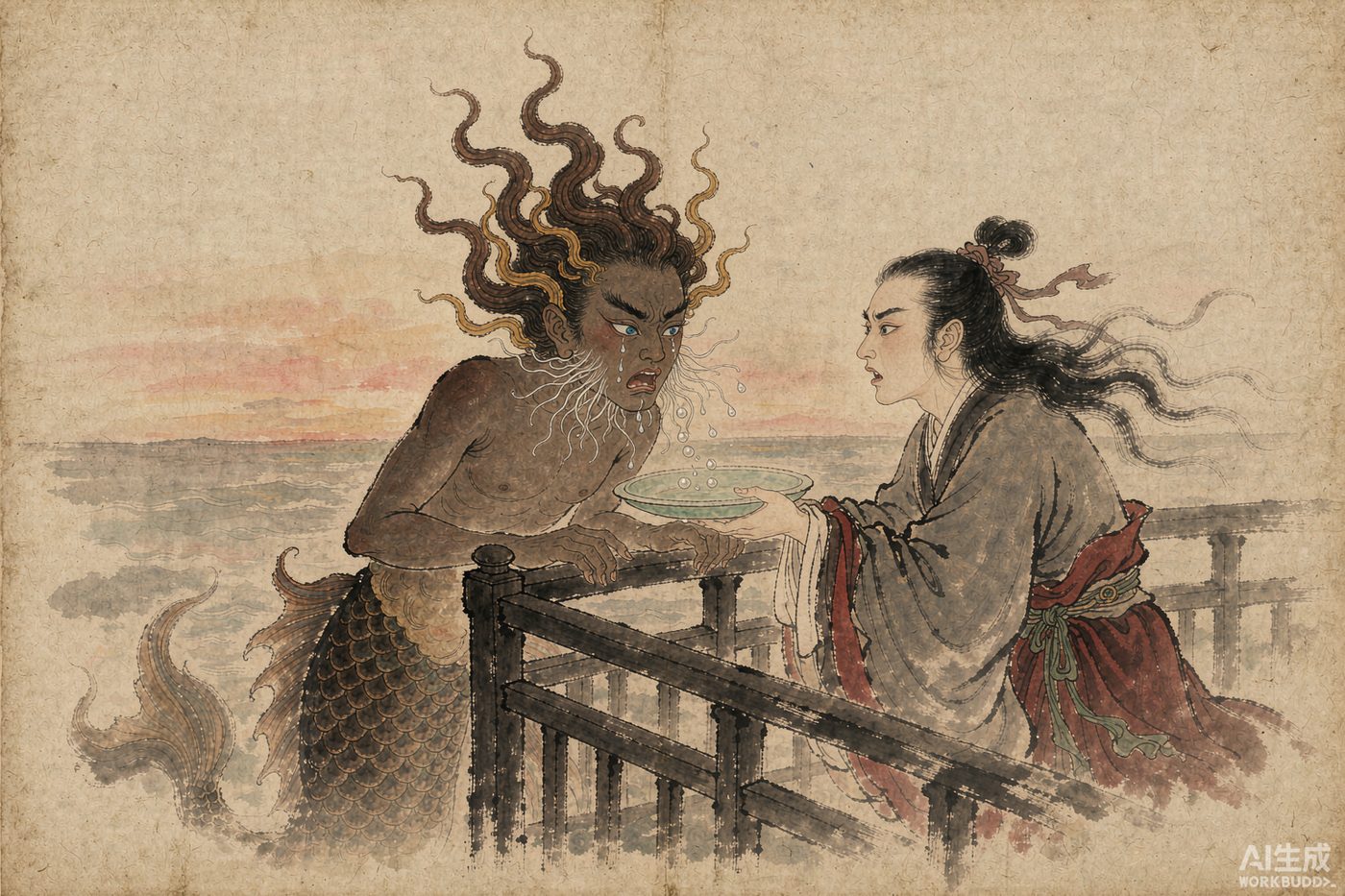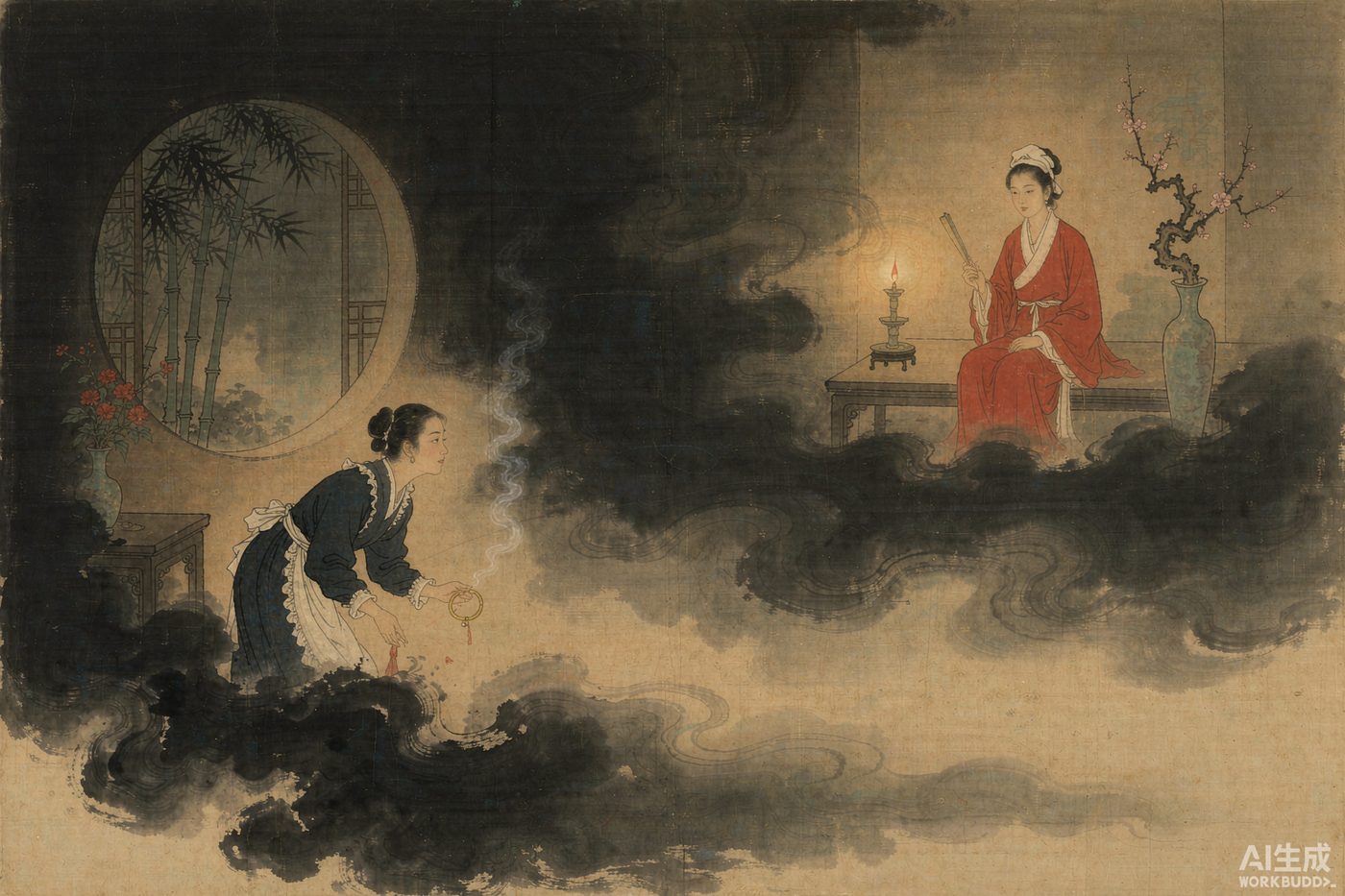
A girl of Qinchuan named Huo Xiaoying was of extraordinary beauty. Her father quarrelled with a local magnate over a field boundary; the magnate framed him on another charge, and the old man died in prison. The mother wept: “We have no man in the house — who will avenge my husband? I fear his white bones will lie unjustly buried, a black gaol for a thousand autumns!”
The daughter, with tears, stepped forward: “Your unworthy child is young and small, unable to be a Zhao E. But whoever kills the enemy, I will serve him with broom and tray.”
Moved by her sincerity, the mother daily prayed this vow at the foot of the western mountain.
One day the magnate went to town to celebrate the magistrate’s birthday and passed the western mountain. A tiger leapt out of the brush and bit his throat, killing him. Mother and daughter were rejoicing — when suddenly a tiger came trailing its tail and walked straight up into the hall. They paled and shrank back. But the tiger only wandered, looking about, with no malice at all.
The mother closed the door and said: “Was it not you who killed the man on the road today?”
The tiger nodded.
“You have done us a righteous service in avenging our wrong. We orphaned mother and daughter will surely burn incense and bow to repay your great virtue. But what brings you to our door — and what do you wish?”
The tiger glared, as if angered that she had broken her word.
“Do you think I broke my promise? The covenant stands — I should indeed present my daughter to tend your clothes. But our ways of sleeping and eating are different. How could we become man and wife? And I am near my declining years, with no son to lean on; I had meant to rely on a son-in-law for support. You avenged the dead — will you not also show mercy to the living?”
At this the tiger’s spirit fell; it drooped its head, about to leave — yet at every step it looked back nine times, reluctant to part.
The girl stepped boldly forward. “Stay. I have a word. I pledged myself to you before; how dare I forget? Sharing a quilt — you know that cannot be. But if you do not forget the old vow, I will clear a room and keep you company all my life, keeping the name of husband and wife.”
The tiger nodded again and again, and accepted gladly.
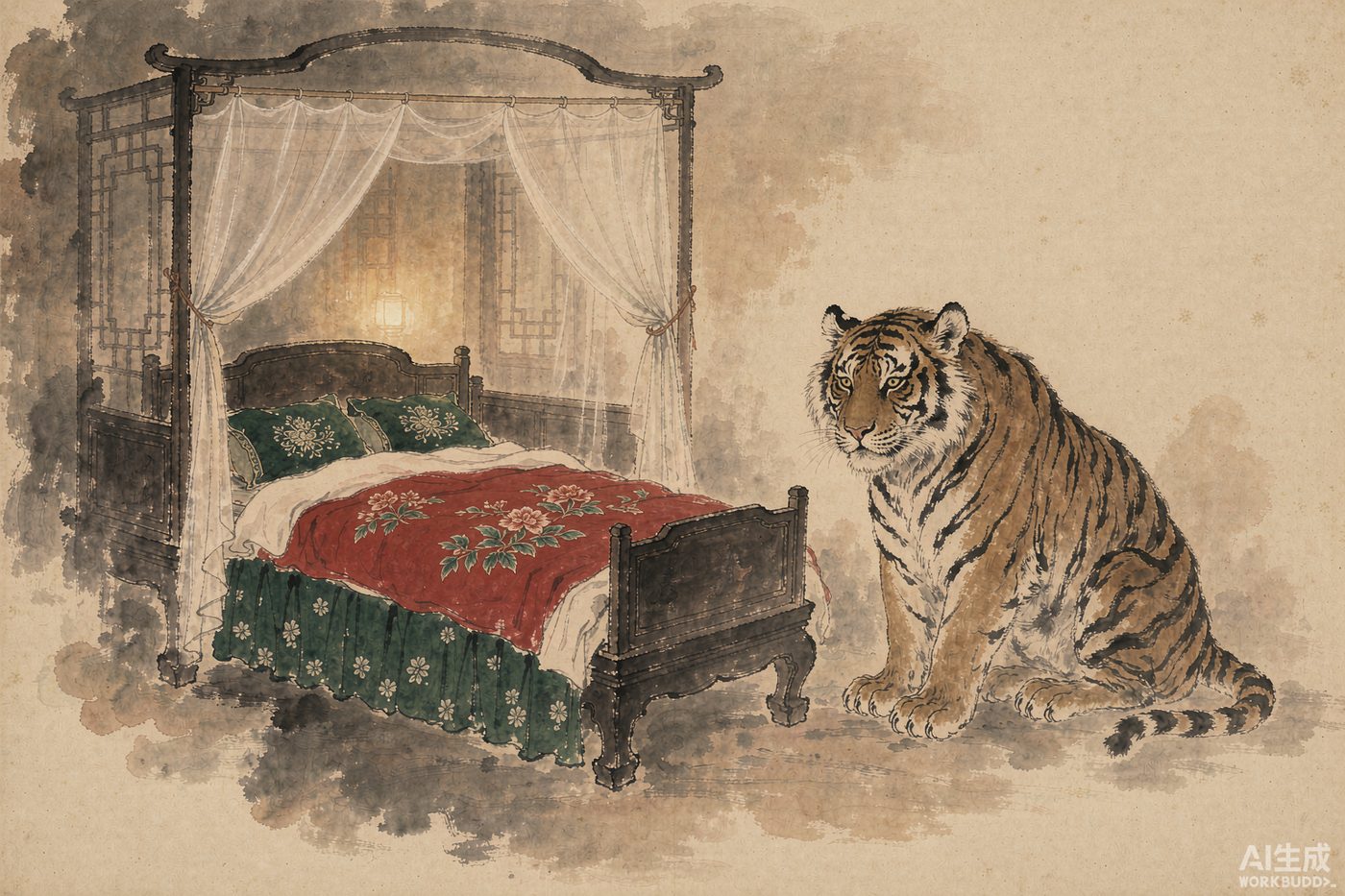
She led it behind the curtain and made a lair by the embroidered couch; they ate at the same table and lived in the same room. When she rose to dress, the tiger hid by the toilet-case, peeping sideways. At night it waited until she had undressed and gone to bed, then lay under the bed, awake the whole night, fearing its snore would disturb her pure dream. When choice food ran short it carried deer-meat to her; if she fell a little ill it paced the room in anguish, and only rejoiced when she recovered. She grew used to it.
But the mother, old and helpless, began to blame the girl for her poor choice, and her courtesy to the tiger waned. One night the tiger left. The mother wanted to find a real husband. The girl said: “To betray a virtue is ill-omened; to fail a kindness is no blessing. And a woman who pledges her heart to a man — must it come to a matter of bodies?” She would not consent.
Later the girl died of a broken heart and lay in the hall. The tiger came howling and weeping, tears like rain; all who dressed her coffin saw it. She was buried by the ancestral grave, and the tiger came to watch three times a day. On every festival it carried mountain fruit to lay on her mound. For three years, as one day. And when the mother sank into poverty and could not keep herself, the tiger still brought roe-deer and hares daily to sustain the household.
The Duo comment: One who is love-foolish must lack a proud bone. A tiger that is foolish has lost its tiger-nature. Yet at one word’s discord it turns its head and leaves — is that not still the tiger-nature, hard to tame? Foolish yet able to be proud is true pride; proud yet able to be foolish is true foolishness.