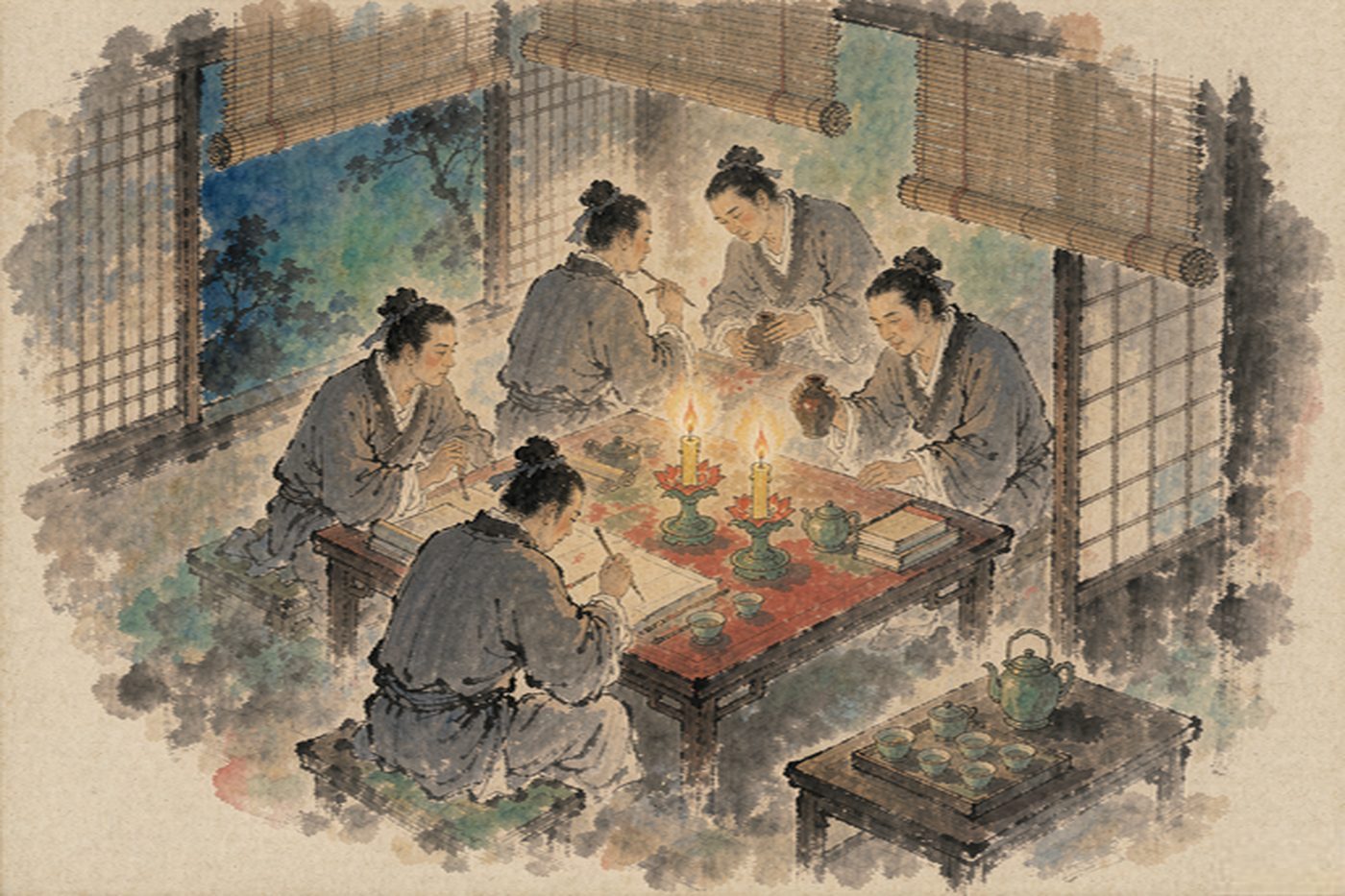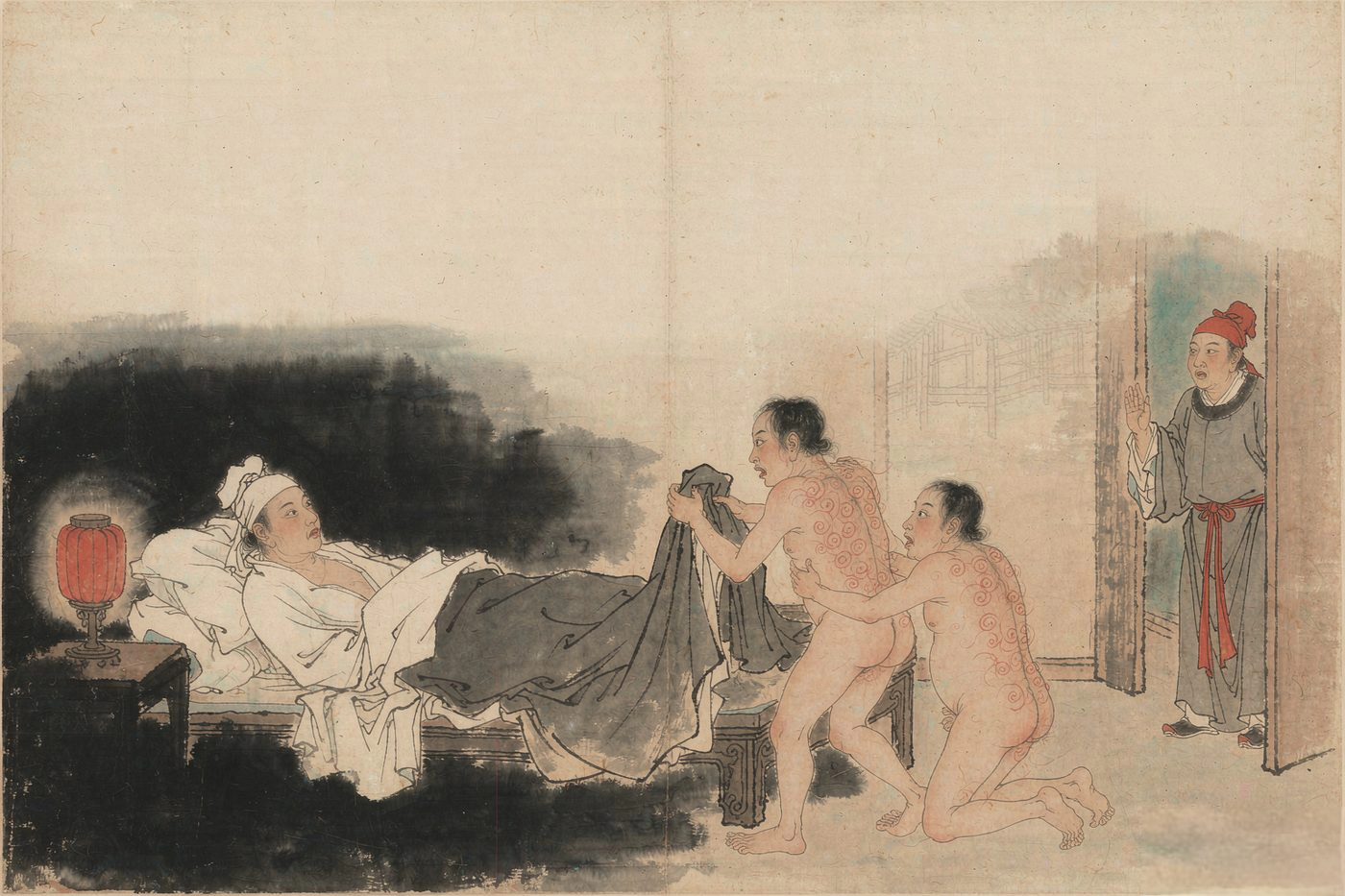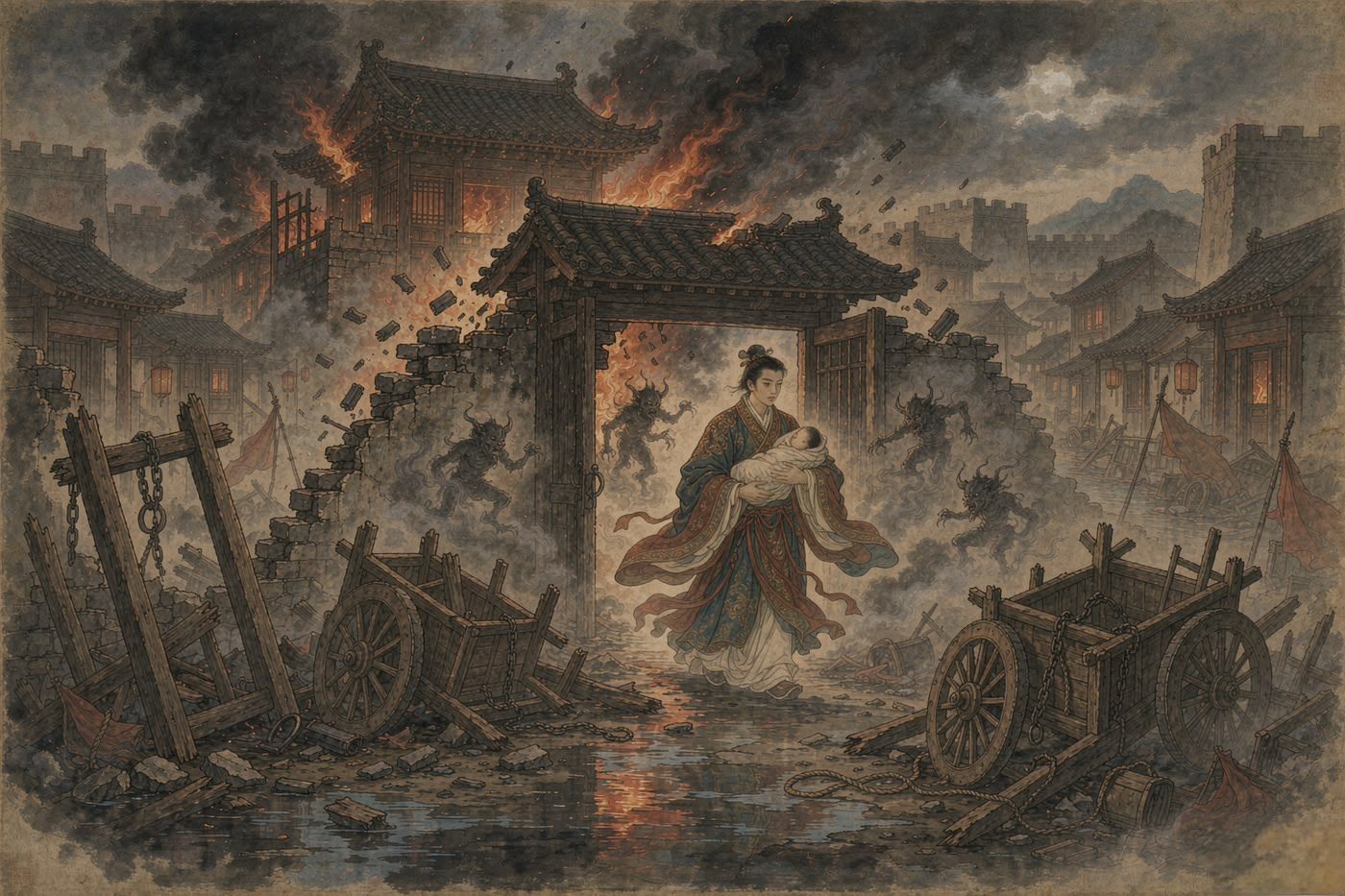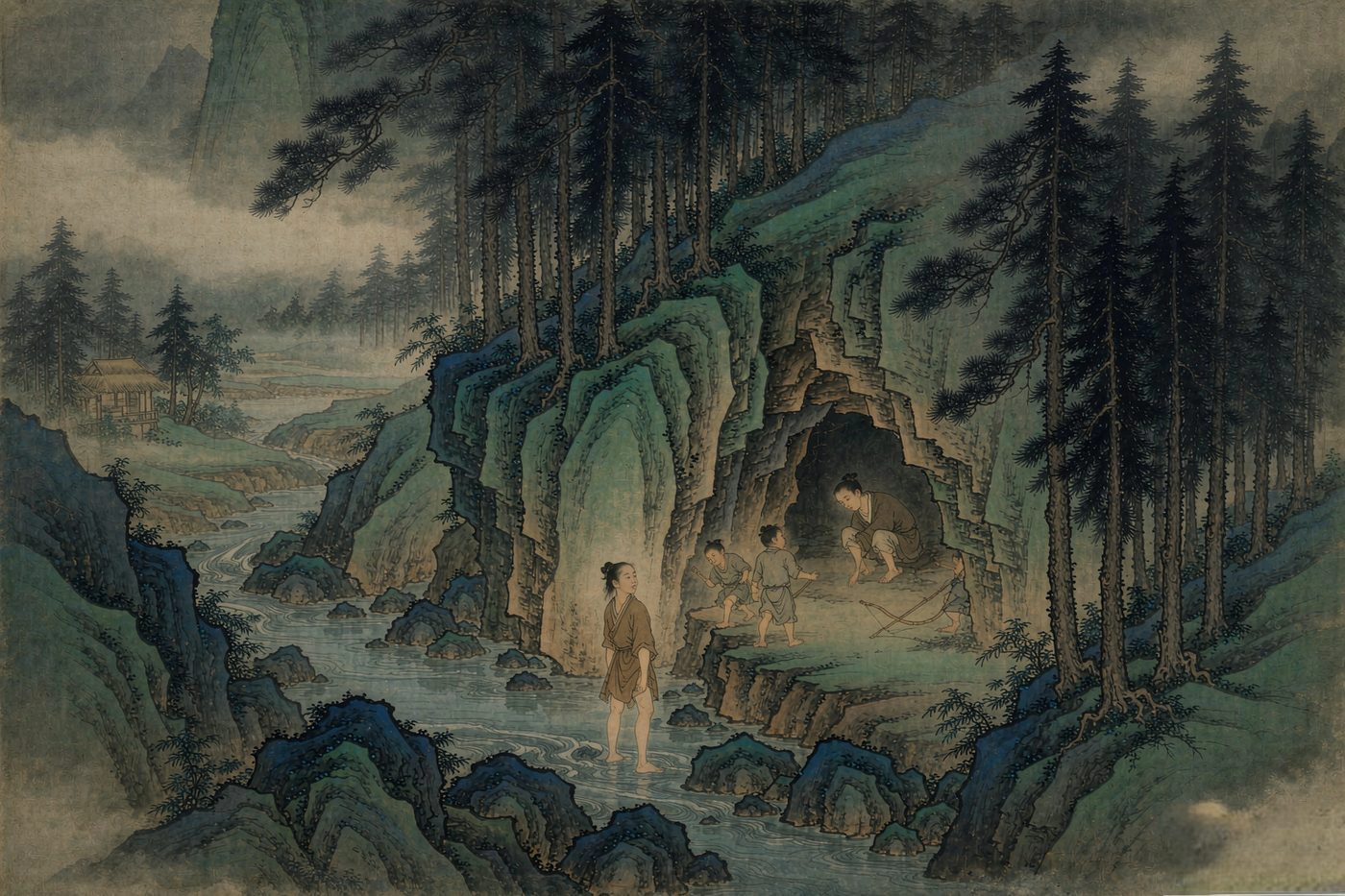
A modern reader comes to a ghost story expecting it to close. The thing will be driven off, or it will be exposed for what it is, or the man will die, and in any of the three cases the account is finished and can be put down. A very large class of classical Chinese strange tales declines to do this. They stop in the middle of things, and the last line is a date.
The four characters are 至今猶存 — she is there still. They end 《茶僕崔三》. A variant ends 《王二》: 後二十年猶存 — twenty years later she was still there. 《五郎君》 ends 五郎君竟據鄭氏焉 — and in the end the Fifth Young Lord kept her. None of these is a resolution. All three are a status report.
It is worth being clear about what this is not. It is not the same as the endings catalogued under Marrying Across the Border, which are endings of the bond — absorption, death in the true form, or severance. Those tell you what happened to the relationship. 至今猶存 tells you what happened to the account: nothing. The tale is over because the informant ran out of things to say, not because anything was settled.
1. The date is the ending
《王二》 follows a hunter who meets a naked woman in a stream, lives with her in a cave, brings her home to a wife who has already borne him three children, and watches the two women live in harmony while the newcomer bears two more sons, slips away when strangers call, goes off into the hills for a month at a time, and never once eats cooked food. Then: 後二十年猶存.
The eccentricity of that close is easy to miss. Twenty years is not a literary number. It is the number somebody counted. The sentence means: I asked again, and she was still in the house.
2. The creature survives the plot
《茶僕崔三》 goes further. The hunter brother spreads his nets, catches a three-foot spotted wildcat, skins it, and cooks it. The man weeps. Then she is standing by the lamp again, furious — and her account of the loss is the funniest line in the book:
幸我是時未離家,僅殺了一婢,壞衫子一領而已
Fortunately I had not left the house just then — all you managed was one of my maids killed, and a single gown spoiled.
They killed the wrong body. And then 駐留如初,至今猶存 — she stayed on exactly as before; she is there still. The story has run its full course, produced a corpse, and the corpse was staff. Hong Mai records the failure of the plot without remark.
3. The shrug
A related close reports the outcome and refuses to grade it. 《張鮎魚》 ends 幸不死耳 — fortunately, he did not die. That is all the tale claims. 《衢州少婦》 ends 衆駭追之,茫無所覩矣 — they chased in a panic, and there was nothing at all to see. Nobody learned anything. Nobody was punished. The neighbours went home.
4. Two endings, printed side by side
The refusal escalates into something deliberate in 《小紅琴》. A zither is inscribed with eight characters — in the year of the cycle, the matter rests with Little Red — and the prophecy is fulfilled exactly: twelve years to the year, and the man dies ten li short of Yangzhou, where there is a bridge called Little Red Bridge. The account is complete.
And then Hong Mai adds a second explanation. Wang had been immoderate in rewarding the troops; the stores were empty when he left; his successor could not maintain the level, cut back, and came to a strange end on that account — and 淮蜀東西數千里,而兩人之亡皆七月十二日, the two men, thousands of li apart, died on the same day. 吁亦異哉 — ah, how strange.
Both accounts are printed. Neither is chosen.
5. Why it matters
The instinct to resolve is an instinct to fictionalise. A story that closes neatly has usually been shaped by someone who knows how it should go — and in Chinese the shaping has a name and a form: 異史氏曰, the Master of Strange Histories says, the commentator’s tag Pu Songling attached to his tales to deliver the moral. The absence of that tag is not silence. It is a claim about genre.
Hong Mai is a reporter. He names his informants, prints rival versions, notes where a method is recorded in no book, and closes with the date on which the matter stood. When he writes 至今猶存 he is telling you that the household in question is still living next door to something, and that this is the truthful end of the matter as far as anyone knows.
For a reader, the practical consequence is that the question “what does it mean?” often has no answer in these texts, and the question “what happened next?” usually does. The tales are interested in the second.
For a writer, the more useful lesson is that an unresolved ending is not an unfinished one. 至今猶存 is a deliberate, load-bearing close: it hands the reader an ongoing situation instead of a verdict, and it is more unsettling than any revelation of a true form, because the situation is still running.