Stories/ 夷坚志/ The Torturer and the Life-Taking Ghost

The Torturer and the Life-Taking Ghost

蔡乙兇報

SourceYijian Zhi (Record of the Listener)
AuthorHong Mai
EraSouthern Song dynasty · 12th century
Writtenc. 1160–1200
GhostJusticeKarma
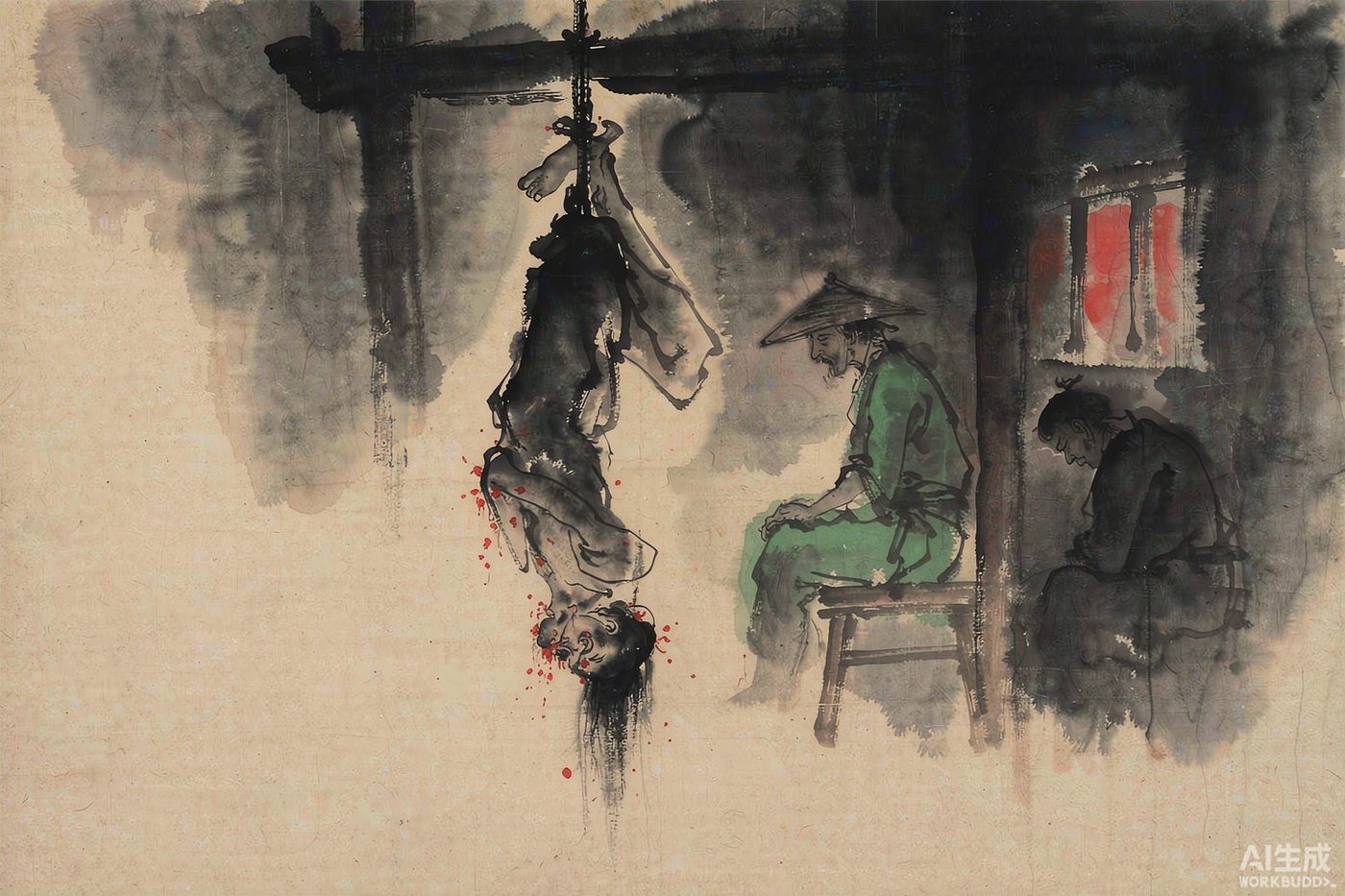
A prison cell at night where a man hangs upside down on the wall bleeding from every orifice while shadowy warders pretend to sleep, ink-wash painting
Illustration generated by AI, based on the ancient Chinese text.

Cai Yi of Chenzhou came from a poor family; his parents both dead, he hired on under the prison warden Chen San and so learned the trade. His nature was both cruel and pitiless, and all he saw with his eyes was wickedness, so in time he was pushed by the evil men to become their tool.

Every prisoner who fell into his hands, even for the slightest offense, he tormented with poison and cruelty, his face utterly loathsome; the commandery came to call him “the life-taking ghost.”

Past forty, one night as he guarded prisoners in the jail, past midnight the others heard what seemed a voice calling Cai Yi, furious; they rose to look and found him already hung upside down on the wall. His companions, most of whom disliked the man, were pleased and pretended to sleep, not interfering.

At dawn they saw his four limbs and nine orifices oozing blood, and only then helped him back. That night it happened again: he moaned and wailed as if whipped, sometimes stalking and bracing himself exactly as if bound; he prayed for death but could not die. The agony lasted a year; as he neared his end he lowed like an ox and vomited several pints of blood, then gave a great cry and died.

Original classical Chinese text · 原文

陳州人蔡乙者家素貧父母俱亡受雇於獄級陳三之門遂習其業秉性既兇忍而目之所見又皆不善事也久而為惡徒所推凡囚入其手雖負罪至微亦𺲸毒虐容貌絶可憎郡中至謂取命鬼年至四十餘一夕守囚於獄夜過半衆聞若有呼蔡乙聲甚振怒起視之已倒挂於壁問儔侣多疾其為人方快之佯睡不問明旦則見四體九竅浥浥流血始掖以歸是夜復然呻謈悲哀如受鞭笞或濶步撐拄全類纒縛祈死不能痛苦經歲臨瞑作牛鳴嘔血數斗然後大叫而絶

From 《蔡乙兇報》, Yijian Zhi. Translated in full. 陳州 is Chenzhou; 獄級 is a prison warden, the lowest rung of the penal staff; 取命鬼 is the life-taking ghost, the nickname the commandery gave Cai Yi. The tale is a compact karmic reversal: the torturer becomes the tormented.

Source. From Yijian Zhi (Record of the Listener) (夷坚志), by Hong Mai , c. 1160–1200. The original text is in the public domain; this English rendering and the accompanying notes are original work.
Where this fits in the universe: Ghosts · The Ledger: How Cause and Effect Keeps Accounts

Keep Reading

Related Stories

Qing dynasty · Qianlong era, c. 1750–1795 · 子不语

The Scale of Merit

神秤

A revenue clerk is hauled before a green-faced judge of the dead, and his life's record is literally weighed — red slips for good deeds, black for bad, thrown into a scale with golden stars. His whole life comes up wanting. Then one red dossier goes in and outweighs everything.

JusticeUnderworldMoney
Southern Song dynasty · 12th century · 夷坚志

The Ghost Who Came Home

籌洋村鬼

A woodcutter meets a dead neighbor on the path; the ghost asks him to tell his mother to leave food at the door, because he lives on just as before. After his death his widow remarried and her sons were beaten — so the ghost waits on the ridge and beats the stepfather bloody.

GhostFamilyJustice
Southern Song dynasty · 1192, the guichou year of Shaoxi · 夷坚志

The Judge of the West Lake

西湖判官

A three-foot crab caught at a city gate turns out, in a dream, to be the Judge of the West Lake — an underworld official begging not to be boiled. The general wakes too late: his sons have already eaten it, and the curse falls on the household.

UnderworldJusticeAnimal